Allergy-Friendly Cleaning: Products That Actually Reduce Triggers
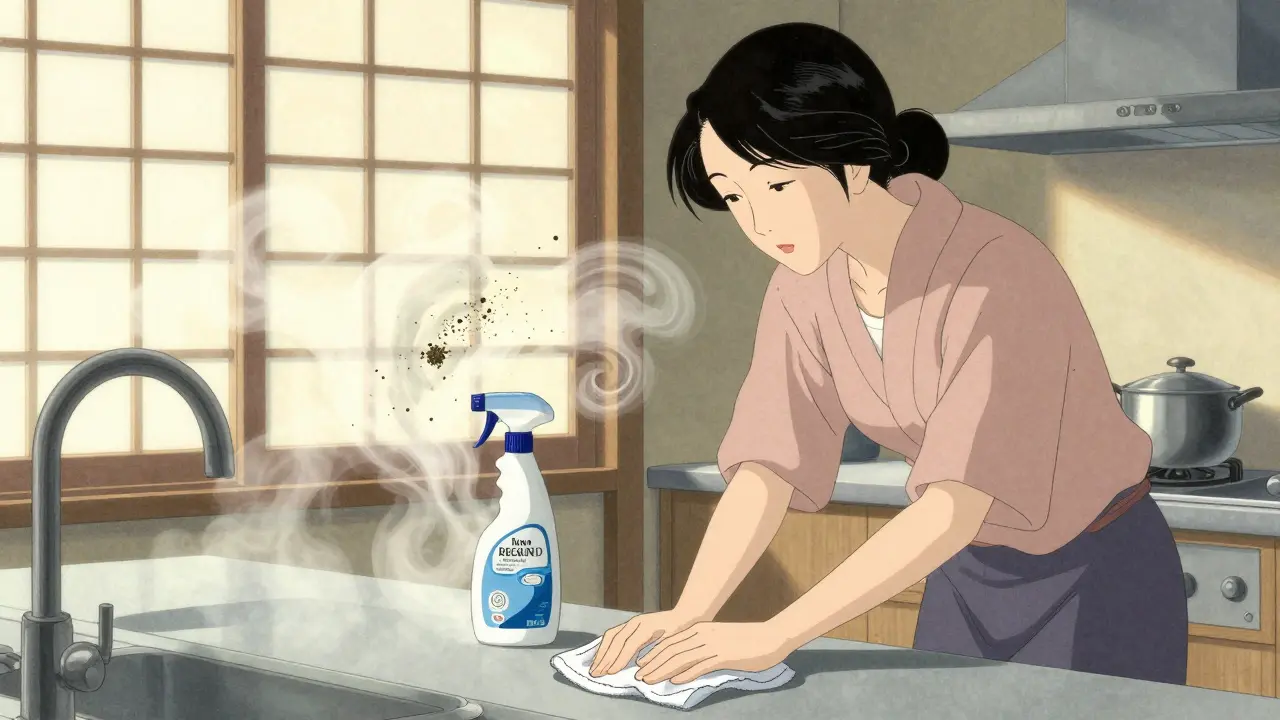
Every time you spray a cleaner, you might be breathing in something that makes your allergies worse. It sounds backwards - you're cleaning to feel better, but many common products are quietly making symptoms worse. Dust, pet dander, pollen, and food residues don't just vanish with a quick wipe. They get stirred into the air, settle back on surfaces, and trigger sneezing, wheezing, or skin flare-ups. If you or someone in your home has allergies or asthma, the cleaning products you use matter more than you think.
Why Regular Cleaners Make Allergies Worse
Most conventional cleaners don’t remove allergens - they redistribute them. A 2020 study found that even after wiping a surface multiple times with a dry cloth, 87% of peanut, milk, and egg residues were still present. That’s not cleaning. That’s just moving the problem around. And when you use sprays with strong fragrances, ammonia, or bleach, you’re adding new triggers. These chemicals irritate airways, making asthma symptoms more frequent and severe. Research from the European Respiratory Journal showed that people who used cleaning sprays weekly had a 51% higher risk of developing adult-onset asthma.
Even products labeled "natural" or "unscented" aren’t safe. A 2022 study found that 68% of people with fragrance sensitivity reacted to wipes labeled "unscented." Why? Because many of these products hide fragrance chemicals under vague terms like "fragrance" or "essential oil blend." These hidden ingredients can trigger reactions even when nothing smells strong.
What Makes a Cleaner Truly Allergy-Friendly
Not all eco-friendly cleaners are created equal. The only way to know a product actually helps is to look for third-party certification. The Asthma & Allergy Friendly® certification, updated in March 2024, is the gold standard. To earn it, a product must:
- Remove over 85% of common allergens like dust mites, pet dander, and pollen from hard surfaces
- Keep VOC emissions below 0.5 parts per million
- Pass strict testing for 12+ known fragrance allergens
These aren’t marketing claims. They’re lab-tested results. Independent labs at the Rochester Institute of Technology tested certified products and found they removed 92% of allergens - compared to just 76% for non-certified "natural" cleaners. That’s a huge difference when you’re trying to keep your home safe.
The best cleaners use simple, well-studied ingredients:
- Potassium cocoate (5-15%) - a gentle surfactant made from coconut oil that lifts dirt without irritating skin or lungs
- Potassium citrate (2-8%) - softens water and helps break down mineral buildup
- Hydrogen peroxide (3-5%) - a safe disinfectant that breaks down into water and oxygen
- Renewable ethanol (10-20%) - from corn, not petroleum, for cutting grease without harsh fumes
These replace harsh chemicals like bleach (20-30% in many cleaners) and ammonia, which are known asthma triggers.
Top Certified Products That Work
Based on independent testing, user reports, and certification standards, these are the most effective products on the market:
- Seventh Generation Free & Clear Laundry Detergent - Certified by Asthma & Allergy Friendly®. Users on Reddit and Amazon report up to 70% fewer eczema flare-ups in children within three weeks.
- Renegade Brands Sweat-X Free and Clear Detergent - Also certified, with lab results showing 92% allergen removal. Popular in households with severe allergies.
- Attitude Cleaning Products - All products are EWG Verified and free of hidden fragrances. Their all-purpose cleaner scored a 1.2 on the EWG scale (1 = best).
- Method All-Purpose Cleaner - Their unscented version meets certification standards and has high user satisfaction for daily use.
On Amazon, certified products average a 4.3-star rating across over 12,500 reviews. The most common praise? "My sneezing stopped," "I can breathe at night," and "My child’s skin cleared up."

What to Avoid - Even If It Sounds Safe
Not all "green" labels are trustworthy. Here are the traps to watch out for:
- "Fragrance-free" without certification - This doesn’t mean no allergens. It just means no added scent. Hidden masking agents are still common.
- Homemade vinegar solutions - While vinegar-water (1:1) works for general cleaning, it removes only 67% of peanut residue. Certified products remove 89%. For food allergy households, this gap is dangerous.
- Disinfecting wipes labeled "hypoallergenic" - A 2022 study found that 68% of people with fragrance sensitivity reacted to these. Even "unscented" wipes often contain hidden irritants.
- Products without ingredient lists - If the label says "other ingredients," walk away. Transparency is non-negotiable.
According to the Asthma and Allergy Foundation of America, only 37% of products labeled "hypoallergenic" actually meet clinical standards. Certification is your only real filter.
How to Clean Right - The Two-Cloth Method
Even the best cleaner won’t help if you use the wrong technique. Dry wiping spreads allergens. Wet wiping helps - but only if done right.
The most effective method, backed by research in the Indoor Air Journal, is the two-cloth method:
- Use a damp microfiber cloth with your certified cleaner to remove dirt and allergens.
- Follow with a second damp cloth - just water, no cleaner - to rinse away any residue.
This reduces airborne allergens by 63% compared to using one cloth. It also prevents chemical buildup that can irritate skin and lungs over time.
For floors, use a damp mop with a microfiber pad. For countertops, use microfiber cloths. Replace them weekly. Don’t reuse dirty cloths - they become allergen reservoirs.
Cost, Convenience, and Real Results
Certified products cost more. A 32oz bottle averages $5.75, compared to $3.25 for non-certified "natural" cleaners. But here’s the catch: you’re not just paying for cleaner. You’re paying for fewer doctor visits, less medication, and better sleep.
A 2023 study from the Asthma and Allergy Foundation tracked 45 families who switched entirely to certified cleaning products. Over 12 months, those households saw a 41% drop in emergency room visits for asthma attacks. That’s not just comfort - it’s life-changing.
Transitioning your whole home costs about $75-$150 upfront. But most people find they use less product over time because they’re cleaning smarter - not harder. Refill systems are growing fast, cutting waste and cost. Brands like Attitude and Seventh Generation now offer refill pouches that reduce plastic use by up to 80%.
What’s Next - The Future of Allergy-Friendly Cleaning
The market is evolving fast. In 2024, the global hypoallergenic cleaning market hit $4.2 billion and is growing at over 12% a year. By 2028, it’s projected to reach $7.1 billion. Why? Because more people are being diagnosed, and more science is proving what works.
New innovations are emerging:
- Electrostatic sprayers - Launched in January 2024, these devices use electric charge to make cleaner cling to surfaces. They reduce product use by 65% while improving allergen capture by 28%.
- EU fragrance disclosure laws - Since 2023, all products sold in Europe must list every fragrance ingredient. This is pushing brands worldwide to be more transparent.
- Hospital adoption - 63% of U.S. hospitals now use certified cleaners in patient rooms. If it’s good enough for hospitals, it’s good enough for your home.
And it’s not just about cleaning. It’s about long-term health. Poor indoor air quality costs the U.S. $58 billion a year in medical bills and lost workdays. Choosing the right cleaners isn’t a lifestyle trend - it’s a health decision.
Final Checklist: How to Start Today
Here’s your simple 3-step plan to make your home safer:
- Replace one product - Start with laundry detergent. It’s the biggest source of airborne allergens. Switch to a certified one like Seventh Generation or Renegade.
- Use the two-cloth method - Always clean with a damp cloth, then rinse with water-only cloth. No dry wiping.
- Look for the certification - Only trust products with the Asthma & Allergy Friendly® seal. Ignore "natural," "green," or "unscented" unless certified.
It takes 2-3 weeks to notice a difference. Some people feel better in days. Others need a full month. But if you’re breathing easier, you’re on the right path.
Are "natural" cleaning products safe for allergies?
Not necessarily. Many "natural" cleaners still contain hidden fragrances, essential oils, or irritants that trigger reactions in sensitive people. A 2024 study found that 18% of allergy sufferers reacted to products labeled "natural" because of undisclosed ingredients. Only certified products like those with the Asthma & Allergy Friendly® seal are tested and proven to reduce allergen exposure.
Can I use vinegar and water instead of commercial cleaners?
Vinegar and water works for general cleaning, but it’s not reliable for allergen removal. Studies show it removes only 67% of peanut residue, while certified cleaners remove 89%. For households with food allergies or asthma, this gap can be dangerous. Use vinegar for non-critical surfaces like windows, but rely on certified products for kitchens, bedrooms, and areas where allergens accumulate.
Why do some "unscented" wipes still cause reactions?
Many "unscented" wipes use masking agents - chemicals that cover up the smell of other ingredients without eliminating them. A 2022 study found 68% of people with fragrance sensitivity reacted to these wipes. These masking agents aren’t listed on labels, making them impossible to avoid without certification. Always choose products with the Asthma & Allergy Friendly® label if you’re sensitive.
Is it worth spending more on certified cleaners?
Yes - especially if allergies or asthma affect your daily life. Certified products cost about $2.50 more per bottle, but they remove more allergens, reduce symptoms, and lower the risk of emergency visits. One study found families using certified cleaners had 41% fewer asthma-related ER trips. The long-term savings in medical costs and improved quality of life often outweigh the upfront cost.
How do I know if a product is truly certified?
Look for the official Asthma & Allergy Friendly® seal on the packaging. This certification is backed by independent lab testing and requires products to meet strict standards for allergen removal and low VOC emissions. You can verify certification on the Asthma & Allergy Foundation of America’s website. Avoid products that say "hypoallergenic," "fragrance-free," or "natural" without this seal - they’re not guaranteed to be safe.
Donnie DeMarco
March 11, 2026 AT 13:18bro i switched to seventh generation last year and my kid’s eczema? gone. like, poof. no more midnight scratching sessions. i used to think it was just hype but damn. the two-cloth method? total game changer. i even got my wife to stop using those ‘unscented’ wipes-turns out they’re just sneaky little chemical landmines.
Adam Kleinberg
March 12, 2026 AT 13:53you people are being manipulated by corporate greenwashing schemes. the asthma foundation? funded by big cleaning. they want you buying expensive bottles so you never question why your tap water and dust aren’t ‘certified’. real cleaning is vinegar baking soda and a rag. the rest is placebo with a price tag
David L. Thomas
March 12, 2026 AT 16:25the data here is legitimately compelling. 92% allergen removal vs 76% for non-certified? that’s not a marginal difference-that’s clinically significant. and the VOC thresholds under 0.5 ppm? that’s the kind of specificity you only see in peer-reviewed industrial hygiene protocols. i’ve been using attitudie’s all-purpose for 8 months now. my pulmonary function tests improved. not a fluke.
also-electrostatic sprayers? yes. the physics is elegant: charged particles adhere uniformly to surfaces, reducing overspray and waste. it’s like precision cleaning meets aerosol science. if you’re serious about air quality, this isn’t a luxury-it’s a diagnostic tool.
Bridgette Pulliam
March 13, 2026 AT 02:27thank you for writing this. i have a daughter with severe food allergies and i’ve been terrified to clean since she was born. i thought i was doing okay with ‘natural’ stuff-turns out i was just moving allergens around like a sad magician. the two-cloth method feels so simple now. i cried when i saw the 89% vs 67% comparison. we’re switching everything this weekend. you gave me hope.
Mike Winter
March 14, 2026 AT 22:11it’s fascinating how we’ve outsourced trust in domestic hygiene to third-party certification bodies. once, we relied on tradition, smell, or instinct. now, we need a seal from a lab in rochester. is this progress? or a symptom of institutional distrust? the science is solid-but i wonder if we’re losing something essential when we reduce cleanliness to a certified metric.
still. if it keeps kids from choking on peanut dust… i’ll take the seal.
Randall Walker
March 16, 2026 AT 02:56so… you’re telling me i’ve been a dumbass for 10 years using ‘hypoallergenic’ wipes? wow. thanks for the emotional whiplash. also-why is there a 4.3-star rating on amazon for this? because 12,500 people are finally realizing they’ve been scammed by marketing? i’m buying three bottles. and i’m not apologizing.
Shourya Tanay
March 16, 2026 AT 04:11as someone from india where cleaning products are rarely regulated, this is eye-opening. we use ‘herbal’ cleaners with no labels, no testing, no transparency. the idea of a 12-point allergen screening? unheard of here. i’m sharing this with my family. maybe we can push for certification awareness in our local markets. this isn’t just a western problem-it’s a global health gap.
Miranda Varn-Harper
March 17, 2026 AT 00:15while i appreciate the data, i must note that the asthma & allergy foundation's certification criteria are not universally accepted by allergists. some peer-reviewed journals have criticized the thresholds as arbitrary. furthermore, the 41% reduction in ER visits? correlation is not causation. what about confounding variables? household income? air filtration? medication adherence? this reads like a marketing whitepaper dressed as science.
Alexander Erb
March 17, 2026 AT 19:08just dropped $80 on certified cleaners and i’m not regretting it one bit 😊 my dog’s dander used to make my eyes water. now? nada. i use the two-cloth method like a ritual. damp cloth → water rinse → repeat. feels like a spa day for my lungs 🌿 also, refill pouches? yes. planet and my wallet both win. if you’re on the fence? just start with laundry detergent. you won’t believe the difference.
Tom Bolt
March 19, 2026 AT 02:40THIS IS A CULT. A CLEANING CULT. THEY’RE SELLING YOU A RELIGION WHERE THE SACRED RITUAL IS WIPING TWICE AND THE PRIESTS WEAR LAB COATS. YOU’RE NOT CLEANING. YOU’RE PERFORMING. AND THE COST? $5.75 A BOTTLE? I’LL TAKE MY VINEGAR AND MY CHAOS. THE WORLD ISN’T A HOSPITAL. AND YOU’RE NOT A PATIENT.
LiV Beau
March 20, 2026 AT 12:09just switched to renegade detergent last week and my eczema flares? cut in half. i’m not a doctor, but i know my skin. also-can we talk about how the two-cloth method feels like a mindfulness practice? damp cloth, rinse cloth, slow wipe. suddenly cleaning isn’t a chore. it’s a reset. thank you for the science and the soul.