CBD Products and Prescription Medications: What You Need to Know About Dangerous Interactions

More people are trying CBD for sleep, pain, or anxiety - but few realize it might be quietly messing with their prescription meds. If you're taking blood thinners, heart meds, thyroid pills, or seizure drugs, mixing them with CBD could be risky. It’s not just a theory. Real cases have landed people in the hospital because their medication levels spiked too high. And the worst part? You won’t feel it coming.
Why CBD Interacts with Your Medications
CBD doesn’t just float through your body. It goes straight to your liver, where enzymes break down most of the drugs you take. Specifically, it shuts down two key enzymes: CYP3A4 and CYP2C19. These are the same ones that process about 60% of all prescription medications. When CBD blocks them, your body can’t clear those drugs the way it should. The result? Medication builds up in your bloodstream - sometimes to dangerous levels.
This isn’t like drinking alcohol with a pill. This is more like putting a brick in your liver’s machinery. Even if you take CBD at night and your medication in the morning, the enzyme blockage lasts for days. That’s why chronic users are at higher risk. A single dose might not do much, but daily use? That’s when things get serious.
Medications That Can Turn Dangerous With CBD
Not all drugs are equally risky. The real red flags are medications with a narrow therapeutic index - meaning the difference between a helpful dose and a toxic one is tiny. These include:
- Warfarin (Coumadin): A blood thinner. CBD can make it too strong, raising your risk of internal bleeding. Seven documented cases required emergency dose changes.
- Amiodarone: Used for irregular heartbeat. CBD can cause toxic buildup, leading to lung or liver damage.
- Levothyroxine (Synthroid): For hypothyroidism. Even small changes in blood levels can throw off your metabolism, causing fatigue, weight gain, or heart palpitations.
- Clobazam, Valproate, Lamotrigine: Anti-seizure drugs. CBD can push levels too high, causing dizziness, confusion, or liver stress - especially dangerous for epilepsy patients already on multiple meds.
- Tacrolimus and Sirolimus: Immunosuppressants after organ transplants. CBD can cause life-threatening toxicity. The Portland Clinic advises avoiding CBD entirely if you’re on these.
There’s a simple way to spot high-risk meds: look for the grapefruit warning. If your pill bottle says “avoid grapefruit,” it’s using the same liver enzyme (CYP3A4) that CBD blocks. That’s not a coincidence - it’s a red flag.
What the Experts Are Saying
Doctors aren’t guessing. They’re seeing the effects firsthand. Dr. Peter Grinspoon from Harvard Medical School says: “Some medications should never be taken with CBD.” The FDA has issued multiple warnings, noting CBD can cause “serious side effects” by altering how drugs work. Dr. Orrin Devinsky at NYU Langone says CBD can raise blood levels of certain meds to “potentially dangerous levels.”
And it’s not just about prescriptions. CBD can also interact with over-the-counter drugs like Benadryl, sleep aids, and even herbal supplements like St. John’s Wort. If you’re taking anything regularly - even if it’s “natural” - assume it could interact.
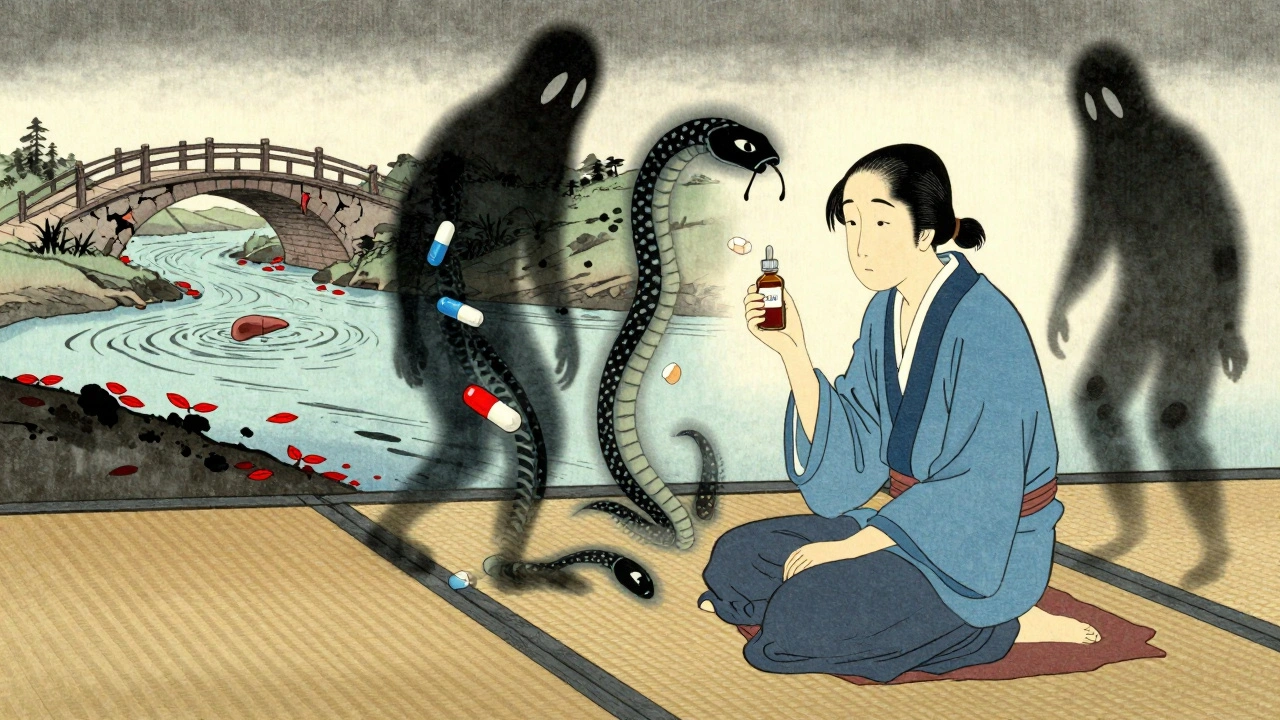
How CBD Affects Your Liver
Beyond drug interactions, CBD itself can stress your liver. In clinical trials of Epidiolex - the FDA-approved CBD seizure drug - about 20% of patients saw elevated liver enzymes. That’s a sign your liver is working overtime or getting damaged. The risk goes up with higher doses and longer use. If you already have liver disease, CBD is generally not recommended. The FDA’s prescribing info for Epidiolex says it’s contraindicated in moderate to severe hepatic impairment.
And here’s something many don’t realize: CBD can make you sleepy. If you’re already taking opioids, benzodiazepines (like Xanax), antidepressants, or even allergy meds like Benadryl, adding CBD can turn that drowsiness into dangerous fatigue. People have fallen, driven poorly, or passed out because the combo hit them harder than expected.
What You Should Do - Step by Step
If you’re on prescription meds and thinking about trying CBD, don’t guess. Don’t rely on online forums. Do this:
- Check your meds for grapefruit warnings. If any have them, CBD is likely unsafe without medical supervision.
- Make a full list of everything you take. Include prescriptions, OTC drugs, supplements, and even occasional use (like melatonin or ibuprofen).
- Talk to your pharmacist. They’re trained to spot interactions. Many will run a free drug interaction check for you - no appointment needed.
- Don’t start high. If your doctor says it’s okay, begin with 5-10 mg of CBD per day. Wait at least 3-5 days before increasing.
- Space out timing. Take your medication and CBD at least 4 hours apart. It won’t stop the enzyme blockage, but it reduces peak overlap.
- Get blood tests. For high-risk drugs like warfarin or thyroid meds, ask your doctor to check levels before and after starting CBD.
There’s no magic safe dose. A 10 mg CBD gummy might be fine for one person and risky for another. It depends on your liver, your meds, and your genetics.
What About “Low-Dose” CBD?
You might hear claims like, “If it’s under 25 mg, it’s safe.” That’s misleading. There’s no proven threshold where CBD stops affecting liver enzymes. Even 5 mg can interfere with critical meds. One study found interactions at doses as low as 10 mg per day. The idea that “small amounts are harmless” isn’t backed by clinical evidence - and it’s dangerous advice.
Some researchers argue the risk is overblown, but those claims come from small, non-clinical studies. Real-world cases - like patients bleeding out from warfarin interactions or transplant recipients getting infections from tacrolimus toxicity - prove the danger is real.

What’s Changing in the Industry
Thankfully, things are improving. In 2020, only 32% of CBD brands offered third-party lab reports. By 2023, that jumped to 68%. These Certificates of Analysis tell you exactly how much CBD - and what else - is in the product. Look for them. Avoid anything without them.
The FDA is also stepping up. Starting in Q3 2024, CBD packaging must include clearer warnings about drug interactions. That’s a big deal. It means the government now acknowledges this isn’t just a theory - it’s a public health issue.
There’s even a free tool called CANN-DIR (from Penn State) that lets you plug in your meds and see if CBD could interact. It’s not perfect, but it’s a solid starting point.
Bottom Line: Don’t Risk It Without a Plan
CBD isn’t inherently evil. For some people, it helps. But it’s not a harmless supplement. It’s a powerful compound that changes how your body handles medicine. If you’re on prescriptions - especially blood thinners, heart meds, thyroid drugs, or seizure meds - treat CBD like a new drug. Not a tea. Not a wellness trend. A potential hazard.
Ask your doctor. Talk to your pharmacist. Get your blood tested. Don’t assume it’s safe because it’s “natural.” Your life might depend on it.
Can I take CBD with my blood thinner like warfarin?
No - not without close medical supervision. CBD can significantly increase warfarin levels in your blood, raising your risk of dangerous bleeding. At least seven documented cases required emergency dose adjustments. If you’re on warfarin, talk to your doctor before using CBD. You’ll likely need more frequent INR blood tests.
Is CBD safe if I’m on thyroid medication?
It’s risky. CBD can interfere with how your body absorbs or breaks down levothyroxine (Synthroid), leading to under- or over-treatment. Symptoms like fatigue, weight gain, or heart palpitations could signal a problem. If you use CBD, get your TSH and free T4 levels checked before and after starting it.
What if my pill says “avoid grapefruit”?
That’s a major red flag. Grapefruit and CBD both block the CYP3A4 enzyme in your liver. If your med has this warning, CBD can cause the same dangerous buildup of drug levels. Avoid CBD entirely unless your doctor confirms it’s safe - and even then, monitor closely.
Can CBD cause liver damage on its own?
Yes. In clinical trials of Epidiolex, about 20% of patients had elevated liver enzymes - a sign of liver stress. The risk increases with higher doses and long-term use. If you have existing liver disease, CBD is generally not recommended. Always get liver function tests if you’re using CBD regularly.
Should I stop CBD before surgery?
Yes. CBD can interfere with anesthesia and pain medications, and it may increase bleeding risk. Most anesthesiologists recommend stopping CBD at least one week before surgery. Tell your surgical team about all supplements you take - including CBD.
Are all CBD products the same in terms of interactions?
No. Full-spectrum CBD contains other cannabinoids and terpenes that may affect liver enzymes differently than isolate. But the main interaction risk comes from CBD itself - not the other compounds. Even CBD isolate can block CYP3A4. The key is dosage and consistency, not product type. Always choose brands with third-party lab reports.
Can I take CBD with antidepressants or anti-anxiety meds?
It’s possible, but risky. CBD can increase sedation when combined with SSRIs, benzodiazepines, or tricyclic antidepressants. This can lead to extreme drowsiness, dizziness, or impaired coordination. If you’re on these meds, start with a very low CBD dose (5 mg), avoid alcohol, and monitor for increased fatigue. Never combine without talking to your doctor.
How long does CBD stay in my system?
CBD’s half-life is 18-32 hours, depending on how you take it and how often. With daily use, it builds up and can linger for days. The enzyme-blocking effect doesn’t stop when you stop taking it - it can last 3-5 days. That’s why spacing doses doesn’t always prevent interactions.
Next Steps
If you’re currently taking CBD with prescription meds, don’t panic - but don’t ignore it either. Schedule a quick call with your pharmacist. Bring your medication list and your CBD product label. Ask: “Could this interact with anything I’m taking?”
If you’re thinking about starting CBD, pause. Get your meds reviewed first. Use the CANN-DIR tool. Check for grapefruit warnings. Talk to your doctor. Your safety isn’t worth guessing.
Conor Forde
December 1, 2025 AT 15:22So let me get this straight - you’re telling me my ‘chill tea’ is basically a silent liver assassin that turns my blood thinner into a death sentence? 🤯 I thought CBD was for people who want to zen out, not end up in the ER with a hole in their spleen. Someone call the FDA and tell ‘em to slap a skull-and-crossbones on every gummy.
Matt Dean
December 2, 2025 AT 04:31Of course it interacts. You think Big Pharma didn’t know this? They *want* you to think CBD is safe so you stop buying their $500/month pills. This is a cash grab disguised as wellness. CBD doesn’t ‘interact’ - it *exposes* how fragile your prescription regimen really is. Wake up.
ANN JACOBS
December 4, 2025 AT 04:18It is with profound humility and a deep sense of scientific responsibility that I offer the following reflection: the pharmacokinetic modulation of cytochrome P450 isofunctions by cannabidiol represents not merely a pharmacological curiosity, but a paradigmatic shift in how we conceptualize the boundaries between botanical therapeutics and conventional pharmaceuticals. The implications for individualized medicine, particularly in populations with polypharmacy burdens, cannot be overstated. One must approach this with the reverence due to a biological system of exquisite, yet perilously delicate, equilibrium.
Lucinda Bresnehan
December 5, 2025 AT 03:35My grandma takes levothyroxine and started CBD for her arthritis - no issues. She’s 78, eats kale, and doesn’t even own a smartphone. Maybe it’s not about the CBD… maybe it’s about the dosage, the quality, and the person? Not everyone’s a lab rat. Just saying.
patrick sui
December 5, 2025 AT 09:52Let’s break this down biochemically: CYP3A4 inhibition isn’t binary - it’s dose-dependent, time-dependent, and genetically polymorphic. A 10mg CBD isolate in a lean 25yo with wild-type CYP3A4*1/*1 may have negligible effect, while a 100mg full-spectrum tincture in a 65yo with CYP2C19 poor metabolizer status and NAFLD? That’s a pharmacokinetic grenade. We’re conflating population-level risk with individual exposure. The grapefruit analogy is useful but oversimplified - it ignores entourage effects, route of administration, and hepatic first-pass variability. Also: lab reports matter, but so does dosing frequency. Daily 5mg ≠ occasional 50mg.
And yes - if you’re on warfarin, get your INR checked weekly for the first month. Don’t be that guy who thinks ‘natural’ = ‘safe’.
Shannon Gabrielle
December 5, 2025 AT 21:22Oh wow. So the government finally admits CBD isn’t just glitter in a jar? Took ‘em long enough. Meanwhile, my cousin in Texas is selling ‘CBD-infused cat treats’ and calling it ‘veterinary wellness.’ I’m not mad - I’m just disappointed in humanity.
Declan O Reilly
December 6, 2025 AT 22:05Look - I get it. Science says it’s risky. But I’ve been on blood pressure meds for 12 years and I’ve taken 10mg CBD every night for 18 months. I feel calmer. My BP’s stable. My doctor knows. I didn’t just ‘wing it.’
Maybe the real danger isn’t CBD - it’s the fear of asking questions. We’re so scared of ‘interactions’ we forget to talk to the people who actually know how our bodies work. The pharmacist? The doctor? The person who’s been taking the same meds since college?
Don’t fear the molecule. Fear the silence.
Walker Alvey
December 7, 2025 AT 22:37Wow. Someone actually wrote a 2000-word essay on why CBD isn’t a magic fairy dust. I’m shocked. Next they’ll tell us water can drown you if you drink too much.
Michelle Smyth
December 9, 2025 AT 05:24How quaint. A 10mg CBD gummy is ‘risky’? Darling, I take 300mg of fluoxetine, 20mg of propranolol, and 100mg of ashwagandha before breakfast - all while sipping kombucha and doing yoga. If your liver can’t handle a little plant medicine, maybe you should’ve been a banker.
Dennis Jesuyon Balogun
December 9, 2025 AT 14:00You speak of enzymes and half-lives like they’re sacred texts. But in Nigeria, we don’t have labs to test INR or liver enzymes. We have mothers who give their children CBD oil for seizures because the hospital is 80km away and the medicine costs more than rice. You say ‘consult your doctor’ - but what if your doctor has never heard of CBD? What if your pharmacy sells it next to palm oil?
This isn’t a Western pharmacology problem. It’s a global equity problem. Yes, CBD interacts. But so does poverty. And ignorance. And access. We need warnings - yes. But we also need compassion. Not fear.