Cervical Cancer Prevention: How HPV Vaccination and Pap Testing Save Lives
Every year, hundreds of thousands of women around the world are diagnosed with cervical cancer. But here’s the truth: cervical cancer is one of the few cancers we can actually prevent. Not just reduce - prevent. And it’s not magic. It’s science. Two simple tools - the HPV vaccine and regular Pap testing - have turned what was once a leading cause of cancer death in women into a nearly avoidable disease.
Why HPV Is the Key
Cervical cancer doesn’t appear out of nowhere. It starts with the human papillomavirus, or HPV. In fact, more than 99% of all cervical cancer cases are caused by HPV. Not all types of HPV are dangerous, but certain high-risk strains - especially types 16 and 18 - are responsible for about 70% of cases. These viruses spread through skin-to-skin contact during sexual activity. Most people will get HPV at some point in their lives. For most, the immune system clears it without any problems. But for some, the infection sticks around, slowly turning healthy cells into precancerous ones. Left unchecked, those cells can become cancer.The HPV Vaccine: A Game-Changer
The HPV vaccine changed everything. Before 2006, when the first vaccine was approved, there was no way to stop the virus before it caused harm. Now, we have vaccines that protect against the most dangerous strains. The current standard in the U.S. is Gardasil-9, which shields against nine types of HPV - including the two that cause 70% of cervical cancers and five others linked to 15% more cases. The vaccine isn’t just effective - it’s astonishingly so. A 2024 study in Scotland followed nearly 140,000 women who got the full HPV vaccine between ages 12 and 13. Over the next 15 years, not a single one developed invasive cervical cancer. Zero. That’s the first time in history a national population has seen complete prevention of this disease. In Sweden, girls vaccinated before age 17 saw an 88% drop in cervical cancer. In the U.S., young women who got vaccinated saw a 62% drop in cervical cancer deaths over the last decade. It’s not just about catching the virus early. The vaccine works best when given before any exposure. That’s why health experts recommend vaccinating kids at age 11 or 12. At that age, their immune systems respond strongly, and they’re likely not yet sexually active. One dose isn’t enough? Not anymore. New data from Kenya and Costa Rica shows a single dose of the HPV vaccine gives 97% protection against high-risk HPV strains - lasting at least three years. That’s a game-changer for countries with limited healthcare access. The World Health Organization now lists single-dose HPV vaccines as prequalified, meaning they can be used globally with confidence.But Vaccines Alone Aren’t Enough
Even with perfect vaccination, not every woman will be protected. Some people don’t get the vaccine. Others get it late. Some never had access. That’s why Pap testing still matters - even for vaccinated women. The Pap test, or Pap smear, checks for abnormal cells in the cervix. It’s been around since the 1940s, and it saved millions of lives before vaccines existed. Today, it’s often paired with HPV testing. For women aged 25 to 65, the American College of Obstetricians and Gynecologists now recommends HPV testing alone every five years as the best screening method. If the HPV test is negative, you’re at very low risk for cervical cancer in the next several years. That means fewer visits, less anxiety, and fewer unnecessary procedures. Don’t wait for symptoms. Cervical cancer rarely causes pain or bleeding in its early stages. By the time you feel something, it might already be advanced. That’s why screening starts at 21, no matter if you’re vaccinated or not. If you’re vaccinated, you still need screening - because the vaccine doesn’t protect against every strain, and it doesn’t help if you were already infected before vaccination.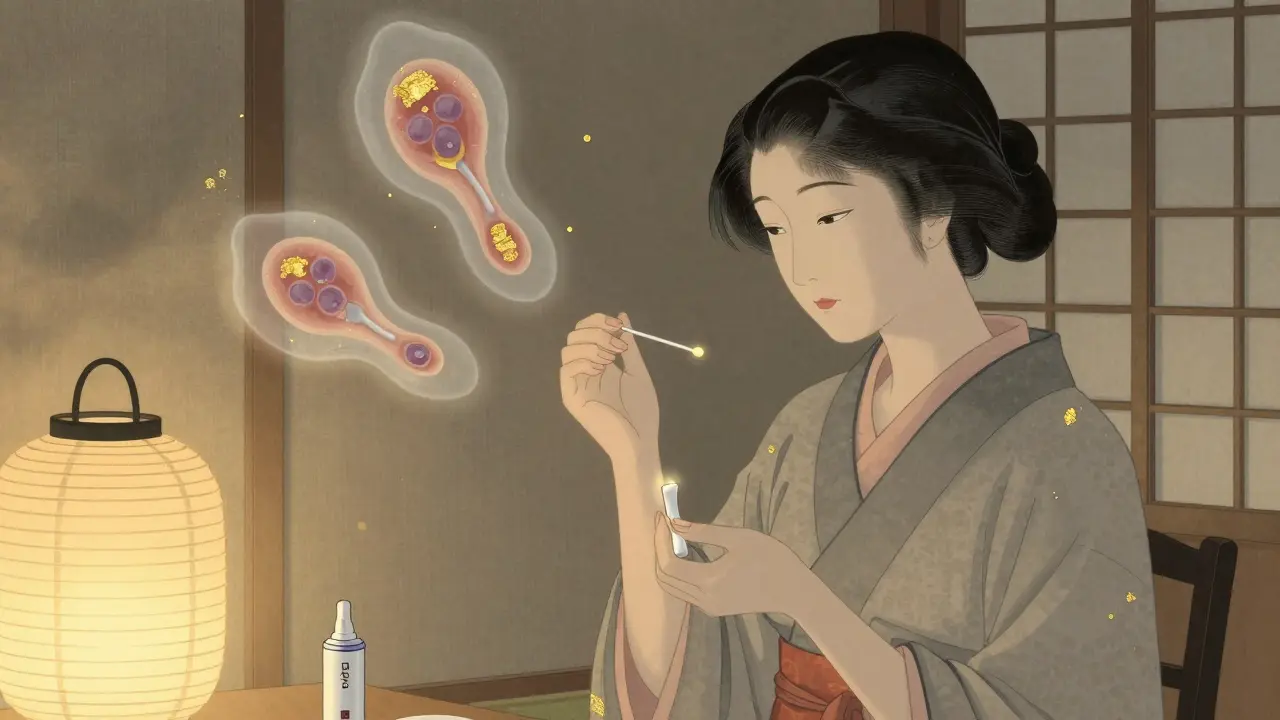
What the Data Says About Real-World Results
Australia, which started vaccinating girls in 2007, is on track to eliminate cervical cancer by 2028. The UK has seen a 90% drop in precancerous cell changes among vaccinated women. In the U.S., the picture is mixed. National vaccination rates are still stuck at about 60% for teens. But in states with strong school-based programs and public health campaigns, coverage hits 80% or higher. Rural areas, where access is limited, are seeing rising rates of cervical cancer - even as overall numbers drop. The gap isn’t just about access. Misinformation plays a big role. Some parents still believe the vaccine encourages early sexual activity. There’s no evidence of that. Others worry about side effects. The most common side effect? A sore arm. Serious reactions are extremely rare - rarer than being struck by lightning. The CDC has tracked over 120 million doses given in the U.S. and found no pattern of serious harm.Screening and Vaccination: A One-Two Punch
Think of vaccination and screening like a seatbelt and airbag. One prevents the crash. The other saves you if it happens anyway. HPV vaccination prevents infection. Pap and HPV testing catch any damage that slips through. For vaccinated women:- Start screening at age 25 with HPV testing every five years.
- Co-testing (HPV + Pap) is also acceptable every five years.
- Pap alone every three years is still an option if HPV testing isn’t available.
- Start Pap testing at age 21, every three years until 25.
- At 25, switch to HPV testing every five years.

The Future: Self-Sampling and Global Equity
One of the biggest barriers to screening is access. Many women - especially in rural areas, low-income communities, or countries without strong health systems - never get a Pap test. That’s changing. In January 2024, the FDA approved the first at-home HPV self-sampling kit. Women can collect their own cervical cells using a simple swab and mail it in. Early studies show it’s just as accurate as clinic-based tests. This could increase screening rates by 40% in places where women avoid doctors due to stigma, cost, or distance. Globally, the WHO aims to eliminate cervical cancer by 2030. Their targets are clear: 90% of girls vaccinated by 15, 70% of women screened by 35 and 45, and 90% of precancer cases treated. Right now, only 13% of girls worldwide have completed the full HPV vaccine series. But with single-dose vaccines now approved and Gavi committing over $1 billion to deliver them to 50+ low-income countries, that number could rise fast.What You Need to Do Right Now
If you’re a parent:- Get your child vaccinated at age 11 or 12. It’s safe, simple, and life-saving.
- If your child is older - 13 to 26 - it’s not too late. Catch-up vaccination still works.
- For adults 27 to 45, talk to your doctor. The vaccine may still help if you haven’t been exposed to all the strains.
- Don’t skip your screenings. Even if you’re vaccinated.
- Ask for HPV testing at age 25. It’s more accurate and less frequent than Pap alone.
- If you’ve missed a test, schedule one now. No shame. No delay.
- Ask about single-dose HPV vaccines - they’re now available in many low-income regions.
- Look for mobile clinics or school-based programs.
- Self-sampling kits are coming to more places. Push for them.
It’s Not Just About You
Cervical cancer prevention isn’t a personal choice - it’s a public health win. When one person gets vaccinated, they protect others. When one woman gets screened, she might save her own life - and her family’s future. We have the tools. We know how to use them. What’s missing isn’t science. It’s action.The first generation of girls vaccinated in the early 2000s are now in their 30s. And for the first time in history, we’re seeing what a world without cervical cancer looks like. It’s not a fantasy. It’s happening. In Scotland. In Australia. In parts of the U.S. and Europe. The question isn’t whether we can eliminate this cancer. It’s whether we’ll choose to.
Is the HPV vaccine safe?
Yes. Over 120 million doses have been given worldwide, with no serious safety concerns. The most common side effect is soreness at the injection site. Fainting after vaccination is rare and usually due to anxiety, not the vaccine itself. Extensive monitoring by the CDC and WHO confirms its safety profile.
Do I still need Pap tests if I got the HPV vaccine?
Yes. The HPV vaccine doesn’t protect against all cancer-causing strains, and it doesn’t help if you were already infected before vaccination. Screening catches any changes the vaccine missed. Even vaccinated women should start HPV testing at age 25 every five years.
Can I get the HPV vaccine if I’m over 26?
Yes, but it’s not routinely recommended for everyone over 26. If you’re between 27 and 45 and haven’t been fully vaccinated, talk to your doctor. The vaccine may still offer protection if you haven’t been exposed to all nine strains. Insurance coverage may vary, so check with your provider.
Is one dose of the HPV vaccine enough?
For people starting the vaccine before age 15, two doses are standard. But new data shows a single dose provides 97% protection against high-risk HPV strains - lasting at least three years. The WHO now accepts single-dose regimens, especially in low-resource settings. For those starting at 15 or older, three doses are still recommended unless single-dose is the only option.
Why are cervical cancer rates rising in some U.S. areas?
In rural and underserved areas, low vaccination rates and lack of access to screening are the main reasons. Women in these areas are less likely to get the vaccine as teens and less likely to get regular Pap or HPV tests. When prevention gaps exist, cancer rates rise - even when national averages are falling.
Can men get the HPV vaccine?
Yes. The HPV vaccine protects men against cancers of the throat, anus, and penis, as well as genital warts. It also helps prevent transmission to partners. The CDC recommends vaccination for boys at age 11-12, with catch-up through age 26. Vaccinating boys helps protect entire communities.
What’s the difference between a Pap test and an HPV test?
A Pap test looks for abnormal cells on the cervix. An HPV test checks for the virus itself. HPV testing is more accurate and can be done less often - every five years instead of every three. For women 25 and older, HPV testing alone is now the preferred method. Pap tests are still used if HPV testing isn’t available.
Can I do an HPV test at home?
Yes. The FDA approved the first at-home HPV self-sampling kit in January 2024. You use a small swab to collect a sample from your vagina and mail it to a lab. Studies show it’s just as accurate as a clinic test. This option is especially helpful for people who avoid doctors due to stigma, cost, or distance.
Cassandra Collins
December 15, 2025 AT 22:54Elizabeth Bauman
December 16, 2025 AT 07:19Mike Smith
December 17, 2025 AT 12:23Ron Williams
December 18, 2025 AT 08:17anthony epps
December 19, 2025 AT 00:24Andrew Sychev
December 20, 2025 AT 14:35Dan Padgett
December 21, 2025 AT 14:26Hadi Santoso
December 22, 2025 AT 10:07Arun ana
December 23, 2025 AT 18:05Kayleigh Campbell
December 25, 2025 AT 15:56Colleen Bigelow
December 26, 2025 AT 05:08Souhardya Paul
December 27, 2025 AT 17:12