Circadian Rhythm Disorders: Jet Lag and Delayed Sleep Phase Disorder Explained
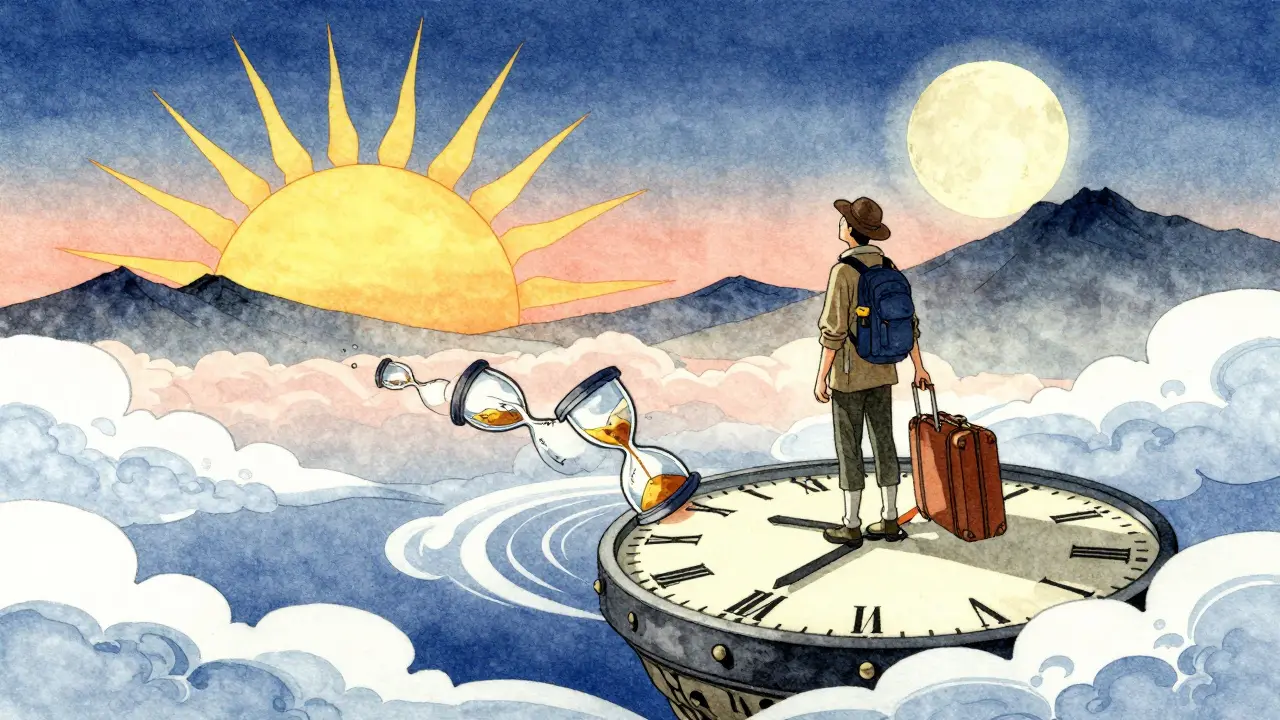
Most people think sleep problems are just about being tired. But what if your body is fighting against a clock inside your head? That’s exactly what happens with circadian rhythm disorders. Two of the most common types are jet lag and delayed sleep phase disorder. One is temporary, caused by flying across time zones. The other is long-term, and it’s not just being a night owl-it’s your biology refusing to match the world’s schedule.
What Is a Circadian Rhythm?
Your body runs on a 24-hour internal clock. It’s not just about sleep. It controls when you feel alert, when your body releases cortisol, when your digestion kicks in, even when your body temperature drops. This rhythm is controlled by a tiny cluster of cells in your brain called the suprachiasmatic nucleus. It gets its main signal from sunlight. When your eyes see light, especially in the morning, it tells your brain: “It’s time to wake up.” When it gets dark, it says: “Time to wind down.” This clock isn’t perfect. Left to itself, it runs a little longer than 24 hours-about 24.2 hours. That’s why staying up later is easier than forcing yourself to go to bed earlier. It’s biology, not laziness.Jet Lag: When Your Clock Gets Lost
Jet lag hits when you cross two or more time zones. Suddenly, your body thinks it’s 3 a.m. when the sun is up in New York. Your stomach growls at midnight. You’re wide awake at 2 a.m. and asleep at noon. It’s exhausting. The worse the jet lag, the more time zones you cross-and especially if you’re flying east. Going east means you’re trying to fall asleep earlier than your body wants. Your internal clock resists this. Studies show eastward travel causes about 1.5 hours of misalignment per time zone, while westward travel only causes about 1 hour. That’s why flying from Vancouver to Tokyo (16 hours ahead) is brutal, but flying to Los Angeles (3 hours behind) is manageable. Symptoms? Excessive sleepiness, brain fog, trouble concentrating, digestive upset. Psychomotor tests show performance drops by 20-30% during peak jet lag. Most people recover in about one day per time zone crossed. So, a five-time-zone trip? Expect 5-7 days to feel normal again.Delayed Sleep Phase Disorder: More Than Just Staying Up Late
Delayed sleep-wake phase disorder (DSWPD) isn’t about choice. It’s a biological condition. People with DSWPD naturally fall asleep between 3 a.m. and 6 a.m. and wake up between 10 a.m. and 1 p.m. If they’re allowed to follow this schedule, they sleep just fine-7-8 hours, restful, no issues. The problem? Society doesn’t work on a 3 a.m. schedule. School starts at 8 a.m. Jobs start at 9 a.m. Family dinners happen at 6 p.m. So they’re forced to fight their own biology. The result? Chronic sleep deprivation, mood swings, poor concentration, and a higher risk of depression. It’s common in teens and young adults. Studies show 7-16% of this group have DSWPD. Why? Genetics play a big role. Variants in genes like PER3, CLOCK, and CRY1 shift the internal clock later. Melatonin-the sleep hormone-starts rising about two hours later in people with DSWPD than in others. That’s why they can’t fall asleep before 3 a.m., no matter how hard they try.Jet Lag vs. DSWPD: Key Differences
| Feature | Jet Lag | Delayed Sleep Phase Disorder |
|---|---|---|
| Duration | Days to a week | Months to years (at least 3 months for diagnosis) |
| Trigger | Traveling across time zones | Genetic and biological factors |
| Sleep Quality | Normal when aligned with new time zone | Normal on own schedule, poor when forced to conform |
| Peak Onset Time | Varies by direction of travel | Consistently 3 a.m.-6 a.m. |
| Recovery | 1-1.5 days per time zone crossed | Requires active treatment; doesn’t resolve on its own |
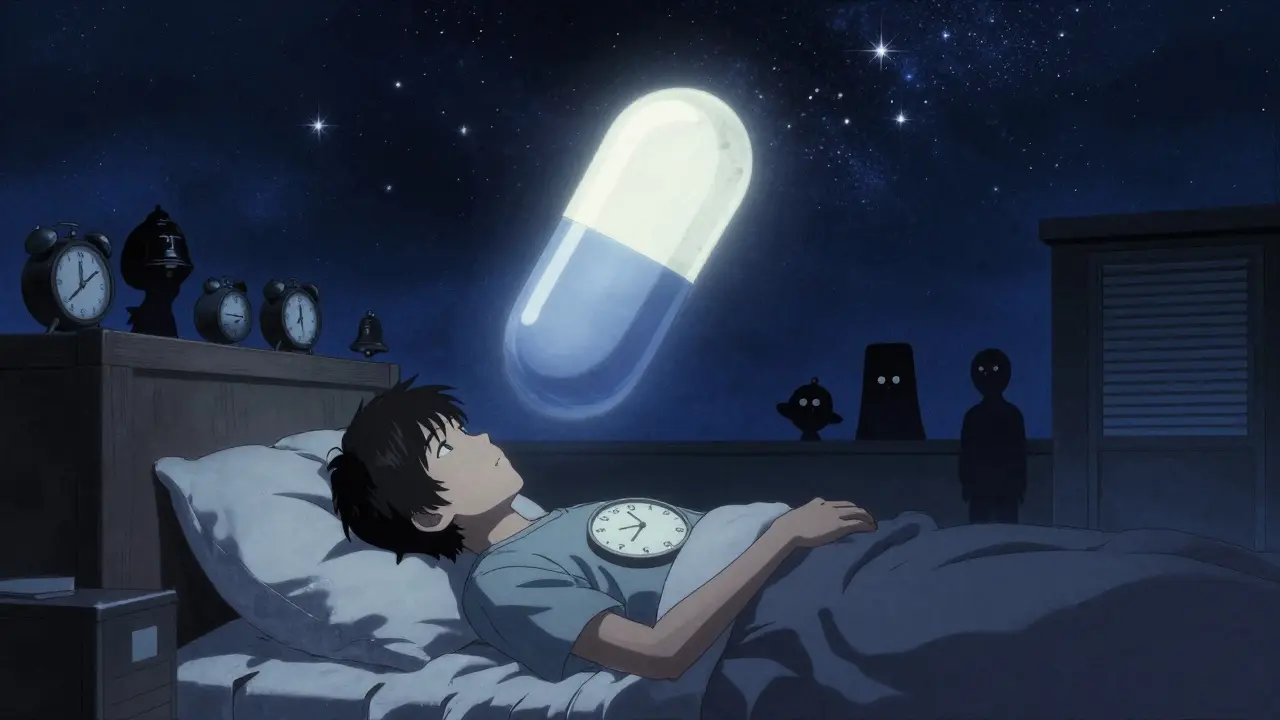
What Works: Treatment That Actually Helps
For Jet Lag
The key is light. Your body listens to light like a master switch. - Going east? Get bright light in the morning. Avoid bright light in the evening. Use sunglasses if you’re out after sunset. - Going west? Seek light in the late afternoon and early evening. Avoid morning light. Use the “rule of 15”: 15 minutes of bright light exposure per day to shift your clock. Start adjusting your sleep schedule 3-5 days before your trip. Shift bedtime and wake time by 1 hour each day. Melatonin can help, but timing matters. Take 0.5 mg about 2 hours before your target bedtime in the new time zone. Don’t take it at 10 p.m. if you’re trying to sleep at 8 p.m.-it won’t work.For Delayed Sleep Phase Disorder
This isn’t something you can fix with willpower. You need a structured plan. 1. Morning bright light therapy: Sit in front of a 10,000-lux light box for 30-60 minutes within an hour of waking. Even on cloudy days, natural light works if you’re outside. This tells your brain: “It’s morning.” 2. Evening melatonin: Take 0.5 mg (not 3 mg-most people overdose) 5-7 hours before your desired bedtime. That’s usually around 7-10 p.m. for someone trying to sleep at midnight. Don’t take it with food-it delays absorption. 3. Strict schedule: No exceptions. Even on weekends. If you sleep until 1 p.m. on Saturday, your body resets. You’ll be back to square one on Monday. A 2022 review found that combining light therapy and melatonin produces a 2.1-hour phase advance over 4 weeks. Light alone? Only 1.3 hours. The combo works better.Why People Fail at Treatment
Most people try melatonin and give up after a week. They take 3 mg because they think “more is better.” It’s not. High doses can make you groggy and disrupt your rhythm further. Others try to “catch up” on weekends. They sleep until noon on Saturday. That resets their clock. Monday morning feels like another jet lag. One study found 78% of people with DSWPD couldn’t stick to a schedule on weekends. That’s why progress stalls. And then there’s the reliance on stimulants. Modafinil, caffeine, energy drinks-they mask the problem. But they don’t fix the rhythm. In fact, using them too late in the day makes the delay worse.The Bigger Picture: Why This Matters
Ignoring circadian rhythm disorders isn’t harmless. Long-term misalignment increases your risk of type 2 diabetes by 29% and cardiovascular disease by 23%, according to data from the UK Biobank. Your metabolism, immune system, and brain health all depend on a steady rhythm. Schools and workplaces are starting to notice. Some universities now offer later class times for students with documented sleep disorders. Companies like Google and Microsoft have experimented with flexible hours to improve productivity. New tools are emerging too. Apps like Timeshifter use algorithms to create personalized light and sleep schedules based on your travel plans or daily routine. A 2023 trial showed users recovered from jet lag 63% faster than those using traditional advice.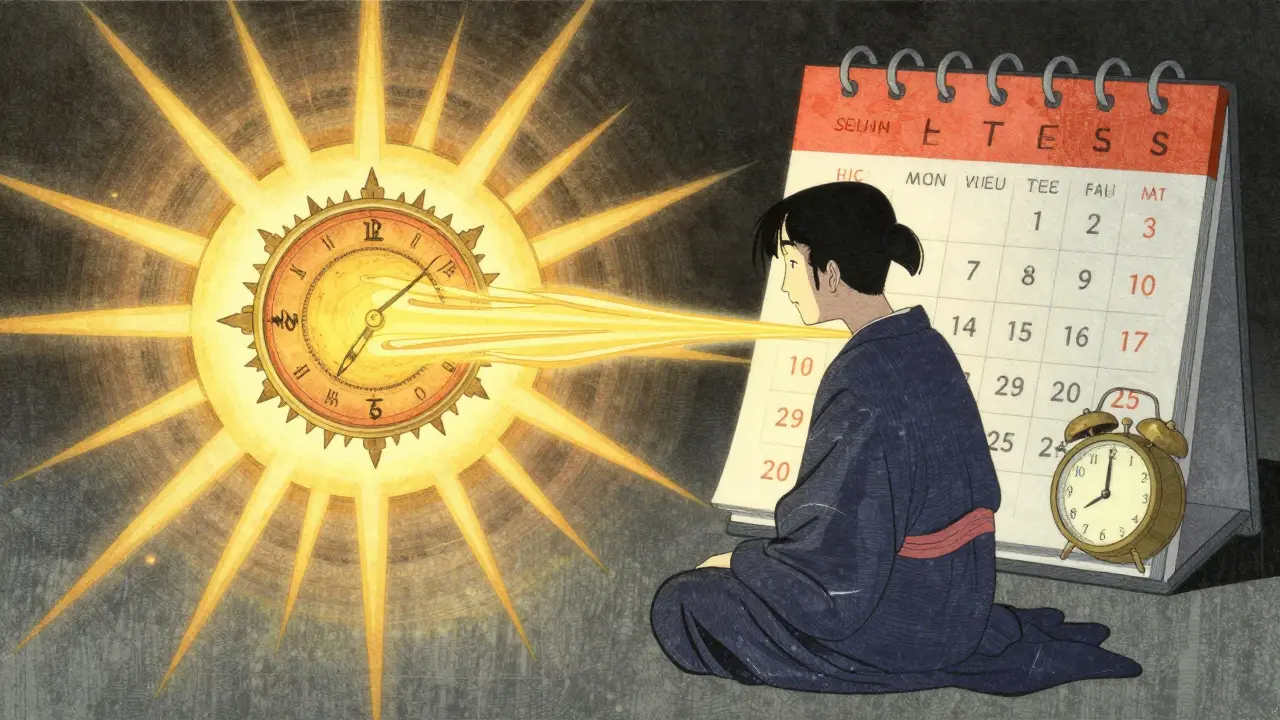
What to Do Next
If you’re constantly tired, struggling to wake up, or feel like your body is on the wrong time zone-don’t assume it’s just stress or bad habits. Start tracking your sleep for two weeks. Use a simple journal or a free app. Note when you naturally fall asleep and wake up, even on weekends. If your sleep window is consistently 3 a.m. to 10 a.m., and you’re forced to be awake at 7 a.m., you might have DSWPD. Talk to a sleep specialist. A blood test for melatonin timing (DLMO) can confirm it. Light therapy devices are available over the counter. Melatonin (0.5 mg) is available without a prescription in most places. This isn’t about fixing your schedule. It’s about syncing your biology with your life. And it’s possible.What Doesn’t Work
- Sleeping in on weekends to “catch up.” It resets your clock. - Taking high-dose melatonin (3 mg or more). It’s ineffective and can cause next-day drowsiness. - Relying on alcohol to fall asleep. It fragments sleep and worsens circadian disruption. - Waiting for it to “get better on its own.” DSWPD doesn’t resolve without intervention. - Believing you’re just “not a morning person.” It’s not personality-it’s biology.Final Thoughts
Jet lag is a visitor. Delayed sleep phase disorder is a tenant. One you can outlast. The other you have to retrain. Your body has a rhythm. It’s not broken. It’s just out of sync. With the right tools-light, timing, consistency-you can bring it back. No pills. No magic. Just science.Is jet lag worse when flying east or west?
Jet lag is worse when flying east because your body has to advance its internal clock-going to bed earlier than it naturally wants to. The human circadian rhythm runs slightly longer than 24 hours, so delaying sleep (westward travel) is easier than advancing it (eastward travel). Studies show eastward travel causes about 1.5 hours of misalignment per time zone, compared to 1 hour per time zone westward.
Can melatonin fix delayed sleep phase disorder?
Melatonin alone helps, but it’s not enough. Taking 0.5 mg of melatonin 5-7 hours before your desired bedtime can shift your rhythm, but it works best when combined with morning bright light therapy and strict sleep scheduling. Many people take too much-3 mg or more-which can cause grogginess and make symptoms worse. The key is timing and dose, not quantity.
Is delayed sleep phase disorder the same as being a night owl?
No. Being a night owl is a preference. Delayed sleep phase disorder is a medical condition. People with DSWPD can’t fall asleep before 3 a.m. even if they try. They sleep well when left to their natural schedule, but suffer when forced to wake early for work or school. It’s not laziness-it’s biology. Genetic studies show it’s linked to specific gene variants.
How long does it take to fix a delayed sleep schedule?
It takes 4-6 weeks of consistent effort. Shifting your sleep time by 15-30 minutes per day, with morning light and evening melatonin, can lead to a 2-hour advance in sleep timing. Most people see progress within 2 weeks, but sticking to the schedule-even on weekends-is what makes it stick. Abrupt changes or skipping days reset the progress.
Should I see a doctor for jet lag or delayed sleep phase disorder?
For occasional jet lag, self-care usually works. But if you’re struggling with sleep for months, especially if you’re forced to wake early and can’t fall asleep before 3 a.m., see a sleep specialist. They can confirm if it’s DSWPD using a melatonin test (DLMO) and recommend light therapy, melatonin timing, and schedule adjustments. Underdiagnosis is common-only 4% of people with symptoms get diagnosed.
Lexi Karuzis
January 29, 2026 AT 09:25Okay but have you ever considered that circadian rhythm disorders are just a government tool to control our sleep patterns? They want us tired so we don’t think too much… Also, light therapy? That’s just LED mind control disguised as science. I saw a video on 4chan that showed the 10,000-lux boxes are calibrated to emit subliminal frequencies that sync with the CIA’s sleep disruption program. And melatonin? That’s synthetic. They’re poisoning our pineal glands. You think you’re fixing your clock-you’re just letting them reprogram you.
Brittany Fiddes
January 31, 2026 AT 02:51Oh please. This is why Britain used to have proper work hours-before America turned everything into a self-help cult. You don’t need ‘light boxes’ or ‘melatonin timing’-you need discipline. In my day, people woke up at dawn because they respected the sun, not because they bought a $300 gadget from Amazon. And calling it a ‘medical condition’? That’s just weak millennials outsourcing their laziness to biology. If your body can’t adapt to 8 a.m., maybe you’re not meant to be in the workforce. We used to just get up. No apps. No excuses.
Amber Daugs
February 1, 2026 AT 08:58Wow. Just… wow. I’ve seen so many people fall for this ‘it’s not laziness, it’s biology’ nonsense. But let’s be real-people who can’t wake up before 10 a.m. are the same ones scrolling TikTok until 4 a.m. while eating cold pizza. It’s not genes, it’s choice. And now we’re giving them medical labels so they can get ‘accommodations’? Next thing you know, people will be getting disability for being ‘too tired to shower.’ This is the slow collapse of personal responsibility. Wake up. Literally.
Ambrose Curtis
February 1, 2026 AT 09:30Guys, i’ve been dealing with dswpd since i was 15 and let me tell you-this post is 100% spot on. i used to take 3mg melatonin like it was candy and wonder why i felt like a zombie. then i dropped to 0.5mg at 8pm and started sitting by the window at 7am even in winter. it’s not magic, but it works. i’m not saying it’s easy-i’ve missed 3 jobs and lost 2 relationships because i was ‘too tired’-but this stuff is real. stop blaming people. their biology is literally broken. and yeah, i still sleep till 11am on weekends… but i don’t reset my clock. i just nap. it’s a war, not a fix.
Linda O'neil
February 3, 2026 AT 01:09THIS. I’ve been coaching people with sleep issues for 12 years and I can’t tell you how many clients I’ve seen who thought they were just ‘night owls’-until we tracked their actual sleep. One guy thought he was ‘just tired’-turns out he was sleeping 8 hours a night… from 4am to 12pm. He was failing his classes. His girlfriend left him. He thought it was depression. It was circadian. Once we got the light therapy and melatonin timing right-he got a promotion. It’s not about willpower. It’s about syncing your biology with your life. You can fix this. It’s not magic. It’s science. And you’re not broken-you’re just out of phase.
Robert Cardoso
February 4, 2026 AT 17:52Let’s cut through the pseudoscience. The suprachiasmatic nucleus doesn’t run on ‘light signals’-it’s a feedback loop shaped by evolutionary pressure, not photoreceptors. The 24.2-hour cycle is a statistical artifact from small sample sizes in lab rats. The ‘1.5 hours per time zone’ metric? That’s from a 1987 paper that never accounted for individual variability. And melatonin? It’s a hormone, not a sleep pill. You’re not ‘shifting’ your clock-you’re chemically suppressing wakefulness. This entire framework is a reductionist fantasy. The real issue? Society doesn’t accommodate neurodiversity. Fix the system, not the person.
James Dwyer
February 6, 2026 AT 07:28Just wanted to say thank you for writing this. I’ve been living with DSWPD for 10 years and no one ever understood. I thought I was broken. I thought I was lazy. This post made me feel seen. I started using the 0.5mg melatonin at 9pm and light therapy in the morning. It’s been 3 months. I still sleep at 3am… but now I wake up at 11am and I don’t feel guilty. I’m not ‘fixing’ myself-I’m learning to live with my rhythm. And honestly? I’m more productive now than when I was forcing myself to wake up at 6. You’re not alone.
jonathan soba
February 6, 2026 AT 09:29Interesting how the article casually dismisses cultural context. In countries where siestas are normal, or where work hours are flexible, DSWPD is virtually nonexistent. The disorder isn’t biological-it’s a product of rigid Western labor structures. The real pathology isn’t your sleep cycle-it’s the 9-to-5 dogma. Light therapy? A Band-Aid. The solution is structural: four-day workweeks, later school start times, asynchronous jobs. Until then, you’re just treating symptoms while the system remains unchanged.
matthew martin
February 6, 2026 AT 23:47Man. I read this whole thing while sipping cold coffee at 2:47 a.m. and I felt like someone finally handed me a flashlight in a dark tunnel. I used to think I was defective-like my brain was glitched. Turns out I’m just wired to the moon, not the clock. I tried the 0.5mg melatonin at 8:30 p.m. and sat by the window at 7 a.m. like a weirdo with a lamp. It didn’t turn me into a morning person. But it turned me into someone who doesn’t hate Mondays anymore. I still nap. I still sleep late. But now I don’t apologize for it. My rhythm isn’t wrong-it’s just different. And maybe that’s okay. Maybe we don’t all need to be synchronized. Maybe we just need to stop pretending everyone should wake up at the same time.