Constipation During Pregnancy: Causes, Prevention, and Safe Treatments
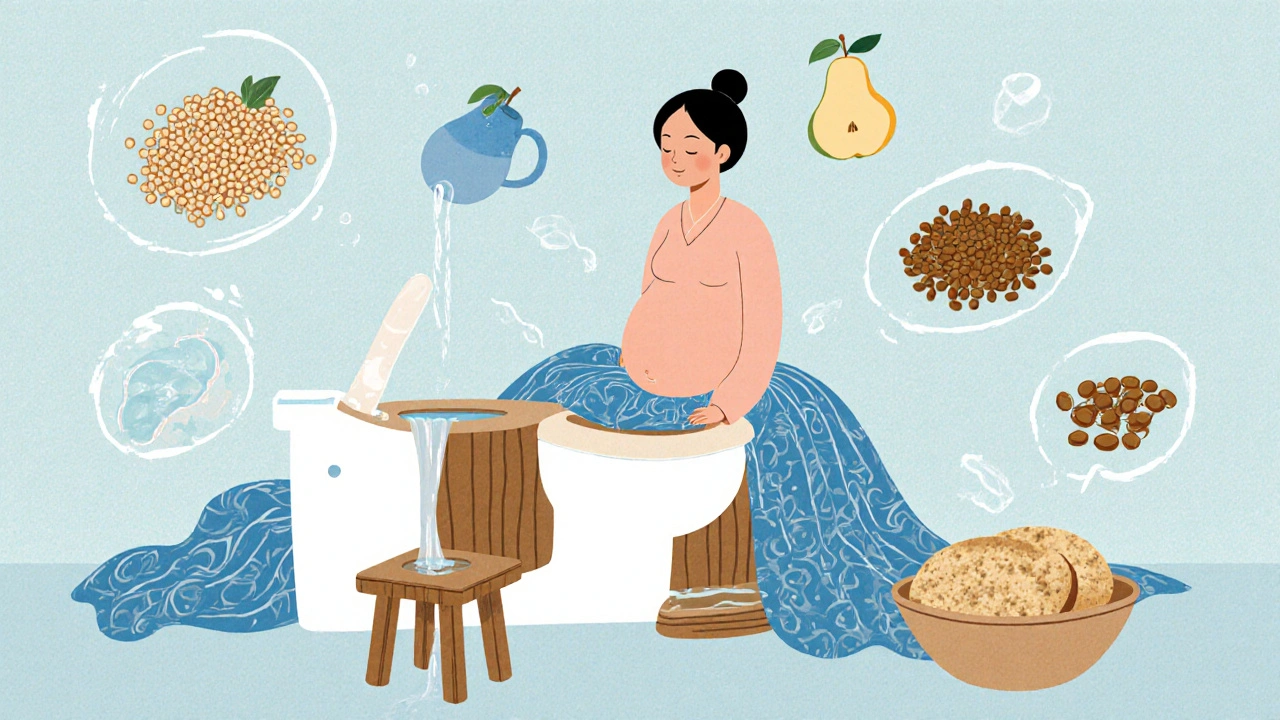
Constipation during pregnancy isn’t just uncomfortable-it’s incredibly common. Up to 40% of pregnant women deal with it at some point, especially in the first and third trimesters. If you’re struggling to go, you’re not alone. But that doesn’t mean you have to suffer through it. The good news? Most cases can be managed safely with simple, proven changes to diet, movement, and daily habits-no risky meds needed.
Why does constipation happen during pregnancy?
Your body changes in dozens of ways when you’re pregnant, and your digestive system is one of the most affected. The main culprit? Progesterone. This hormone, which surges early in pregnancy, relaxes smooth muscles all over your body-including the ones in your intestines. Slower muscle contractions mean food moves more slowly through your gut, giving your body more time to absorb water from stool. The result? Hard, dry poop that’s tough to pass.
As your pregnancy progresses, your growing uterus starts pressing on your colon. This physical squeeze can block the normal path stool takes, making it even harder to move things along. Add to that iron supplements-commonly prescribed to prevent anemia-and you’ve got a perfect storm. Iron can be a major trigger for constipation, and many women don’t realize their prenatal vitamin is part of the problem.
Dehydration also plays a role. Many pregnant women cut back on fluids because they’re worried about frequent bathroom trips. But less water means drier stool. And let’s not forget stress or changes in routine. Travel, work shifts, or even just a new sleep schedule can throw off your bowels.
What does constipation look like during pregnancy?
It’s not just about how often you go. The American College of Obstetricians and Gynecologists defines constipation as having fewer than three bowel movements a week, along with at least two of these symptoms:
- Straining during bowel movements
- Hard or lumpy stools
- Feeling like you haven’t fully emptied your bowels
- Feeling blocked or needing to use your fingers to help pass stool
If you’re going daily but your stools are still hard and you’re straining, you’re still constipated. Don’t wait until you haven’t gone in a week to take action. Early tweaks make a big difference.
What you can do right now: 5 proven prevention tips
Prevention beats treatment every time. Here’s what actually works, backed by clinical guidelines and real-world experience:
- Boost your fiber. Aim for 25 to 30 grams of fiber daily. That’s about 1 cup of cooked lentils (15g), 1 medium pear (6g), and 1 slice of whole wheat bread (2g). Most prenatal vitamins don’t come close to meeting this need. Swap out white bread, rice, and pasta for whole grains. Add beans, chia seeds, or ground flaxseed to smoothies or yogurt.
- Drink more water. Fiber needs water to work. If you’re eating more fiber but not drinking enough, you’ll make constipation worse. Start with 8 to 10 glasses a day. Keep a water bottle with you. Add lemon or cucumber if plain water feels boring.
- Move your body. You don’t need to run a marathon. A 20-minute walk after meals helps trigger natural bowel contractions. Prenatal yoga, swimming, or even gentle stretching can help too. Movement keeps things moving.
- Don’t ignore the urge. If you feel the need to go, go. Holding it in trains your body to ignore signals. This gets worse over time. Keep a small stool under your feet when you sit on the toilet-it mimics a squatting position, which straightens the rectum and makes it easier to pass stool.
- Check your iron. If you’re taking iron supplements and your constipation started after you began them, talk to your provider. Sometimes switching to a lower dose or a different form (like ferrous gluconate instead of ferrous sulfate) helps. Don’t stop taking it without talking to your doctor first.

Safe treatments if prevention isn’t enough
If you’ve tried the basics and you’re still stuck, there are safe, effective options that won’t harm your baby.
Stool softeners like docusate sodium (Colace) are often recommended by OB-GYNs. They work by pulling water into the stool, making it softer and easier to pass. They’re not stimulants, so they don’t cause cramping. Most women see improvement in 2 to 3 days.
Bulk-forming laxatives like psyllium (Metamucil) or methylcellulose (Citrucel) add fiber and water to stool. They’re safe during pregnancy and work similarly to eating more fiber-but faster. Start with a low dose to avoid bloating. Always take them with a full glass of water.
Osmostic laxatives like polyethylene glycol (Miralax) draw water into the colon. They’re considered safe for short-term use in pregnancy and are often the go-to recommendation for persistent constipation. Unlike stimulant laxatives, they don’t cause dependency or cramping.
Avoid stimulant laxatives like senna, bisacodyl, or castor oil unless your doctor specifically says so. They trigger strong intestinal contractions, which can cause cramping and, in rare cases, trigger contractions in late pregnancy. They’re not worth the risk unless absolutely necessary.
What doesn’t work-and what to avoid
There are a lot of myths out there. Here’s what you should skip:
- Castor oil. It’s sometimes suggested as a natural remedy, but it can cause severe cramping and even premature labor. Not worth it.
- Enemas. While they might give quick relief, they’re not recommended during pregnancy. They can disrupt your natural bowel rhythm and increase infection risk.
- Herbal teas with senna or cascara. Even if labeled “natural,” these are stimulant laxatives. Same risks as pills.
- Overdoing fiber too fast. Jumping from 10g to 40g of fiber overnight will cause bloating, gas, and worse discomfort. Increase slowly-add 5g every few days.
When to call your doctor
Most constipation is harmless, but some signs mean it’s time to get checked:
- Bleeding from the rectum (could be hemorrhoids or something more serious)
- Severe abdominal pain or cramping
- Vomiting or inability to pass gas
- Constipation that lasts more than two weeks despite trying safe treatments
- Unexplained weight loss or fatigue along with constipation
These could signal a more serious issue like bowel obstruction, anemia, or thyroid problems-all of which need medical attention.

Real-life tips from women who’ve been there
One mom, 32, found that drinking warm lemon water first thing in the morning made a noticeable difference. Another started doing pelvic floor stretches before bed and noticed her bowel movements became easier within a week. A third switched from iron pills taken at night to taking them with orange juice in the morning-vitamin C helps with iron absorption and reduced her constipation.
One common thread? Consistency. These weren’t magic fixes. They were small, daily habits that added up.
What to expect after delivery
Constipation often improves after birth, especially once you stop taking iron supplements and your hormone levels start to normalize. But if you had a vaginal tear or episiotomy, you might hold back out of fear of pain. That makes constipation worse. Start moving gently, drink plenty of fluids, and don’t be afraid to use a stool softener if needed. Your body is healing-let it.
And if you’re breastfeeding, don’t worry-fiber, water, and safe laxatives like Miralax or psyllium won’t affect your milk supply. They’re considered compatible with nursing.
Is constipation during pregnancy dangerous for the baby?
No, constipation itself doesn’t harm the baby. The baby is protected inside the uterus, and stool buildup in your colon doesn’t reach the placenta. But if constipation leads to severe straining, it can cause hemorrhoids or anal fissures, which are uncomfortable but treatable. The bigger risk is ignoring symptoms that could point to another condition, like a bowel obstruction.
Can I take fiber supplements while pregnant?
Yes, fiber supplements like psyllium (Metamucil) or methylcellulose (Citrucel) are safe and often recommended. They’re not absorbed by your body, so they don’t cross the placenta. Just make sure to drink plenty of water with them-otherwise, they can make constipation worse.
Why does my prenatal vitamin make me constipated?
Most prenatal vitamins contain iron, and iron is a common cause of constipation. Ferrous sulfate, the most common form, is especially hard on the digestive system. Ask your provider if you can switch to a lower dose or a gentler form like ferrous gluconate or heme iron. You can also try taking it with food or vitamin C to improve absorption and reduce side effects.
Is Miralax safe during pregnancy?
Yes, Miralax (polyethylene glycol) is considered safe for short-term use during pregnancy. It works by drawing water into the colon, softening stool without stimulating contractions. It’s not absorbed into your bloodstream, so it doesn’t reach the baby. Many OB-GYNs recommend it as a first-line treatment for stubborn constipation.
How long does pregnancy constipation last?
It can last throughout pregnancy, especially if you’re on iron supplements or have a slower digestive system. Most women find relief after delivery, particularly once they stop taking iron pills and hormone levels drop. But if it continues past a few weeks postpartum, talk to your doctor-it might need a different approach.
Final thoughts: Small changes, big results
Constipation during pregnancy feels isolating, but it’s normal-and manageable. You don’t need fancy remedies or risky pills. Focus on the basics: more fiber, more water, gentle movement, and listening to your body. If you need a little extra help, safe options like stool softeners or Miralax exist for a reason. Don’t suffer in silence. Talk to your provider, make small adjustments, and give yourself grace. Your body is doing something incredible. Let it work with you, not against you.
Herbert Scheffknecht
November 20, 2025 AT 07:58Look, I get it, your body’s basically a haunted house full of hormones and shifting organs, but you’re not helpless. You don’t need a whole manual. Just eat more greens, drink water like your life depends on it, and stop sitting like a statue. That’s it. No magic pills. No fear-mongering. Just move and eat. Simple.
People turn this into a crisis when it’s just biology doing its weird, slow thing.
Bette Rivas
November 20, 2025 AT 11:01As a registered dietitian who’s worked with dozens of pregnant patients, I can confirm the fiber-water-movement triad is the gold standard. But here’s what no one tells you: timing matters. Taking iron with vitamin C-rich food (like orange juice or bell peppers) boosts absorption by up to 300% and reduces GI side effects dramatically.
Also, don’t underestimate the role of magnesium. Many prenatal vitamins are low in it, and magnesium glycinate can help relax intestinal smooth muscle naturally. Talk to your provider about adding 200–300mg daily if you’re still struggling after 2 weeks of dietary changes. It’s safer than laxatives long-term.
Jessica Engelhardt
November 21, 2025 AT 09:52Oh please. They say ‘avoid castor oil’ like it’s some evil potion. My grandma used it to induce labor and it worked perfectly. Why do they hide these ‘natural’ remedies? Big Pharma doesn’t want you to know you can trigger contractions with a $2 bottle of oil instead of a $200 hospital visit.
They’re scared you’ll realize doctors are just selling fear and pills. You want to go? Go. You want to move? Move. Stop letting them control your body with ‘guidelines’.
Greg Knight
November 22, 2025 AT 13:28Let me tell you something real. I helped my wife through her third pregnancy with this exact stuff. She was miserable-constipated, bloated, exhausted. We tried everything. The biggest game-changer? The footstool. Yeah, you heard me. Just a little wooden block under her feet while she sat on the toilet. Changed everything. It mimics squatting, which is how humans were meant to poop. No joke.
She also switched her iron to ferrous gluconate and started drinking warm water with lemon every morning before breakfast. Within 3 days, she was going regularly without any meds. It’s not glamorous, but it works. Don’t overcomplicate it. Just be consistent. Small steps, every day. That’s the secret.
prasad gali
November 24, 2025 AT 00:29Let’s be honest-this whole ‘fiber and water’ advice is just corporate wellness propaganda. The real issue is glyphosate in your food. It disrupts your gut microbiome, slows motility, and binds with iron to create a perfect storm of constipation. Organic produce, filtered water, and probiotics are the real solution. Not Miralax. Not Metamucil. These are Band-Aids for a poisoned system.
Also, prenatal vitamins are loaded with synthetic folic acid, not methylfolate. That’s another silent killer of gut health. You’re not constipated because of progesterone-you’re constipated because your body is detoxing from industrial toxins. Wake up.
Paige Basford
November 24, 2025 AT 21:42I’m not saying you’re wrong, but… have you considered that maybe your body just needs more rest? Like, actual sleep. Not just ‘lying down’ but deep, uninterrupted REM. I was constipated for months during my second pregnancy and it wasn’t the iron or the fiber-it was chronic stress and sleep deprivation. My OB didn’t mention it, but my doula did.
Once I started napping and turning off screens an hour before bed, everything normalized. Maybe it’s not just your colon-it’s your nervous system. Just saying.
rachna jafri
November 25, 2025 AT 15:08They say Miralax is safe? LOL. Did you know polyethylene glycol is used in antifreeze? Yeah, you read that right. They dilute it and slap a ‘pregnancy-safe’ label on it like it’s a miracle. But what happens when it accumulates in your system over weeks? No one tests that. And why is the FDA letting this through? Because they’re bought off by big pharma.
My cousin took it for 4 months and ended up with chronic bowel dysfunction. Now she’s on meds for life. Don’t be her. Eat dates. Drink warm water. That’s real medicine.
Will Phillips
November 25, 2025 AT 16:41Everyone’s acting like this is some deep mystery but it’s just basic biology. You eat white bread, you drink soda, you sit all day, you take iron like a zombie-of course you’re constipated. Stop blaming hormones. Blame your lifestyle. Fix your diet. Move your ass. Drink water. That’s it. No doctor needed. No supplement needed. Just stop being lazy.
And if you’re still struggling after that? Maybe you’re not meant to be a mom. Just saying.
Ankita Sinha
November 26, 2025 AT 04:02My aunt in Kerala used to make a paste of soaked figs, ajwain seeds, and warm milk every night. She said it was ‘gut medicine’ passed down from her grandmother. I tried it during my second trimester and pooped like a champ. No pills. No fuss. Just old-school wisdom.
Why don’t we ever hear about these remedies? Because they’re not profitable. But they work. Try it. Soak 3 dried figs overnight, blend with a pinch of ajwain and a splash of warm milk. Drink before bed. I swear it’s magic.
Abdula'aziz Muhammad Nasir
November 26, 2025 AT 17:08Thank you for this clear, practical guide. In Nigeria, many women rely on herbal teas and traditional remedies without understanding their risks. This post offers a balanced approach that respects both cultural practices and medical safety.
I especially appreciate the emphasis on hydration and movement. In our communities, women often reduce fluid intake to avoid frequent urination, not realizing it worsens constipation. Education like this saves lives.
Also, the note about breastfeeding compatibility is vital-many mothers fear any intervention will affect milk supply. Reassurance like this helps them make informed choices without guilt.
darnell hunter
November 28, 2025 AT 13:36While the content is largely accurate, the use of the term ‘perfect storm’ is scientifically imprecise and emotionally manipulative. Additionally, the recommendation to ‘add lemon or cucumber’ to water lacks empirical support and introduces a confounding variable that may mislead readers.
Furthermore, the phrase ‘don’t suffer in silence’ implies a moral obligation to disclose bodily functions, which may be inappropriate in certain cultural contexts. A more neutral framing would enhance objectivity.
Hannah Machiorlete
November 29, 2025 AT 08:14i literally cried reading this because i thought i was broken. i’ve been going once every 4 days and felt like a monster. my husband thinks i’m being dramatic. but this? this made me feel seen. thank you. i’m starting the footstool thing tomorrow. and maybe miralax. i don’t care what anyone says. i need to not feel like a rock is stuck in me.
Kenneth Meyer
November 30, 2025 AT 00:51Constipation during pregnancy is a mirror. It reflects how disconnected we’ve become from our own bodies. We’re told to optimize, to control, to fix-but what if the answer isn’t more intervention, but more surrender? More listening? More patience?
The body isn’t malfunctioning. It’s adapting. Slowing down. Protecting. The urge to ‘fix’ it with fiber and laxatives is a symptom of our cultural fear of stillness. Maybe the real cure isn’t in what you eat or drink, but in how you breathe while you sit on the toilet.
Let your body move at its own pace. Not yours. Not your doctor’s. Its own.