Diabetic Neuropathy Pain: Medications and Foot Care Guide
Living with diabetic neuropathy means dealing with a constant background hum of pain, tingling, or burning in your feet and legs. It is not just an annoyance; it is a sign that prolonged high blood sugar has damaged your nerves. About half of all people with diabetes develop this condition, and for roughly 10-26% of them, the pain is severe enough to disrupt sleep and daily life. The hard truth? No current medication can reverse the nerve damage that has already occurred. However, you can manage the symptoms effectively. This guide breaks down the best medications for relief and the non-negotiable foot care habits that keep you safe.
Understanding the Goal of Treatment
Before picking a pill, it helps to set realistic expectations. The primary goal of treating painful diabetic neuropathy (PDN) is symptom management, not cure. Clinical trials consistently show that even the most effective medications typically reduce pain by only 30-50% compared to a placebo. While that might sound modest, a 50% reduction in chronic pain can dramatically improve your quality of life, sleep, and mood. The American Academy of Neurology (AAN) and other major health bodies emphasize that finding the right treatment often involves a trial-and-error process tailored to your specific health profile.
FDA-Approved Medications for Nerve Pain
When it comes to prescription drugs, four main options have received FDA approval specifically for diabetic neuropathy. These are considered the gold standard because they have undergone rigorous testing for this specific use.
| Medication | Class | Typical Dose | Key Benefit | Common Side Effects |
|---|---|---|---|---|
| Duloxetine (Cymbalta) | SNRI | 60 mg daily | Treats both pain and depression | Nausea, dry mouth, fatigue |
| Pregabalin (Lyrica) | Gabapentinoid | 75-150 mg daily (divided) | Fast onset, helps with anxiety/sleep | Dizziness, drowsiness, weight gain |
| Tapentadol ER (Nucynta ER) | Opioid-like analgesic | Standard oral dosing | Effective for severe breakthrough pain | Nausea, constipation, risk of dependence |
| Capsaicin 8% Patch (Qutenza) | Topical agent | Applied by clinician | Localized relief without systemic side effects | Burning sensation during application |
Duloxetine: The Dual-Action Option
Duloxetine is often a first-line choice because it belongs to a class of drugs called SNRIs (serotonin-norepinephrine reuptake inhibitors). It works by increasing the levels of neurotransmitters that help block pain signals in the brain and spinal cord. A major advantage here is comorbidity: about 25-33% of patients with diabetic neuropathy also suffer from depression. Duloxetine tackles both issues simultaneously. In clinical studies, it showed a standardized mean difference (SMD) of 0.50 for pain improvement, which is considered a moderate effect. Users often report feeling better mentally within a few weeks, though physical pain relief may take up to 4-6 weeks to fully kick in.
Pregabalin: Fast Relief with Trade-offs
Pregabalin is another powerhouse in the gabapentinoid family. It binds to calcium channels in the nervous system, reducing the release of pain-causing chemicals. It acts quickly, reaching peak concentration in your blood within 1-1.3 hours. Many patients praise its ability to calm the "electric" shocks of nerve pain and help them sleep. However, it is a Schedule V controlled substance due to potential misuse. Side effects like dizziness (reported in 30% of users) and somnolence (20%) are common, so starting at a low dose and titrating up slowly is crucial. Cost is also a factor; while generic versions exist, they can still be significantly more expensive than other options like duloxetine.
Off-Label Options That Work
Doctors frequently prescribe medications off-label for neuropathy. Gabapentin, the predecessor to pregabalin, is widely used and much cheaper-often costing around $4.00 for a 90-day supply. It requires careful dose titration but is highly effective for many. Amitriptyline, a tricyclic antidepressant (TCA), is recommended by the Toronto Consensus Panel as a first-line therapy despite lacking specific FDA approval for neuropathy. It has a Number Needed to Treat (NNT) of 3.1, meaning it’s very efficient at helping people achieve 50% pain reduction. However, it causes dry mouth in 57% of users and constipation in 40%, which can be difficult for older adults or those with heart conditions.

The Critical Role of Foot Care
Medications manage the pain, but foot care prevents the disasters. When you have neuropathy, you lose protective sensation. You might step on a tack or get a blister from tight shoes and never feel it. Without feeling the injury, it can turn into an ulcer, then an infection, and potentially lead to amputation if untreated. The American Diabetes Association states that 15% of neuropathy patients develop foot ulcers within five years. Prevention is entirely in your hands.
Daily Inspection Routine
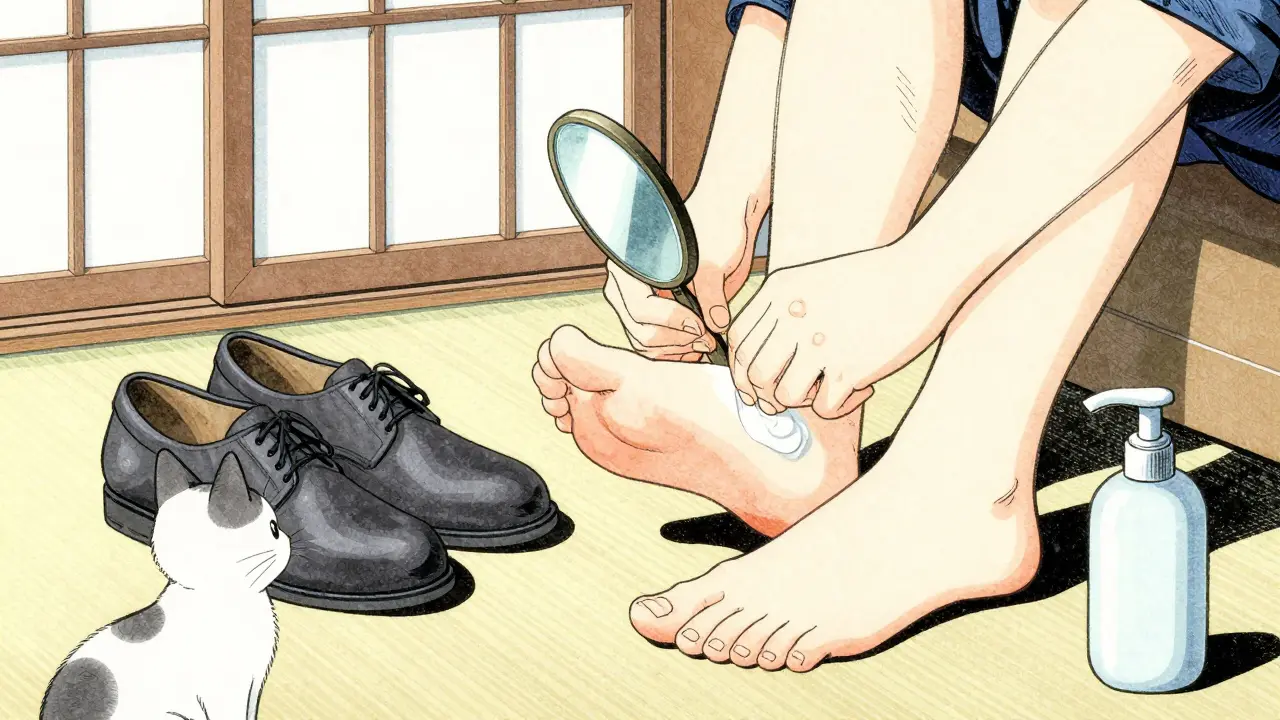
You must check your feet every single day. Use a mirror to look under your soles, between your toes, and around your toenails. Look for:
- Cuts, sores, or blisters
- Redness, swelling, or warmth (signs of infection)
- Ingrown toenails
- Calluses or corns
If you cannot see the bottom of your feet well, ask a partner or caregiver to help. Never ignore a small cut; clean it gently with soap and water and apply an antibiotic ointment.
Moisture and Skin Management
Diabetes often leads to dry skin, which cracks easily. Apply moisturizer to your feet daily, but strictly avoid putting lotion between your toes. Excess moisture there promotes fungal infections like athlete's foot. Keep your nails trimmed straight across to prevent ingrown nails, and never try to cut calluses yourself-see a podiatrist for that.
Proper Footwear
Your shoes are your armor. Wear well-fitting shoes with good support. Avoid walking barefoot, even indoors. Before putting on your shoes, reach inside and feel for any debris, pebbles, or wrinkles in the lining that could cause friction. Consider specialized therapeutic footwear if you have deformities or previous ulcers.
Choosing the Right Path: Decision Criteria
Selecting a medication isn't one-size-fits-all. Your doctor will consider several factors:
- Comorbidities: Do you have depression? Duloxetine might be best. Do you have kidney issues? Gabapentin and pregabalin doses need adjustment. Do you have heart problems? TCAs like amitriptyline may be risky due to QT prolongation.
- Sleep Issues: If insomnia is a major problem, pregabalin or amitriptyline (taken at night) can help you rest.
- Cost and Insurance: Generic gabapentin and duloxetine are generally affordable. Pregabalin can be costly without insurance coverage. Check your formulary before committing to a long-term regimen.
- Side Effect Tolerance: Can you handle dizziness? Dry mouth? Weight gain? Discuss these trade-offs openly with your provider.
Emerging Treatments and Future Outlook
Research is moving fast. Newer agents like mirogabalin are undergoing FDA review, showing promise with fewer side effects than older gabapentinoids. Additionally, SGLT2 inhibitors, originally designed for blood sugar control, are being studied for their neuroprotective effects in trials like DAPA-NEURO. There is also growing interest in precision medicine, using genetic testing (like CYP2D6 polymorphisms) to predict how well you will respond to duloxetine. For now, however, the combination of established medications and rigorous foot care remains the most reliable strategy.
Can diabetic neuropathy pain be cured?
No, current medical science cannot reverse established nerve damage caused by diabetes. The focus of treatment is on managing pain symptoms and preventing further damage through strict blood sugar control and foot care.
What is the best medication for diabetic neuropathy?
There is no single "best" medication for everyone. Duloxetine and pregabalin are often first-line choices due to strong evidence. Gabapentin is a cost-effective alternative. The best choice depends on your other health conditions, side effect tolerance, and insurance coverage.
How long does it take for neuropathy medication to work?
It varies by drug. Pregabalin may provide some relief within days, but full benefits often take 4-6 weeks. Duloxetine and other antidepressants usually require 4-8 weeks at a therapeutic dose to show maximum pain reduction. Patience and consistent dosing are key.
Why is foot care so important for neuropathy?
Neuropathy reduces sensation in your feet, meaning you might not feel injuries like cuts or blisters. Untreated minor injuries can rapidly turn into serious ulcers and infections, leading to hospitalization or amputation. Daily inspection prevents this progression.
Are opioids safe for diabetic neuropathy pain?
Opioids like tapentadol are generally reserved for severe, refractory cases where other treatments fail. They carry risks of addiction, tolerance, and side effects. Guidelines recommend using them cautiously and only under strict medical supervision.