Diet and Autoimmunity: Evidence for Anti-Inflammatory Eating Patterns

When your immune system turns on your own body, food can become one of your most powerful tools-not a cure, but a way to quiet the noise. Autoimmune diseases like rheumatoid arthritis, Hashimoto’s thyroiditis, and inflammatory bowel disease aren’t just about genetics or bad luck. They’re deeply tied to inflammation, and what you eat every day can either fuel it or calm it down. This isn’t about fads or detoxes. It’s about real science showing that certain eating patterns can reduce flare-ups, lower pain levels, and even cut back on medication for some people.
What Does Anti-Inflammatory Eating Actually Mean?
There’s no single “anti-inflammatory diet.” Instead, it’s a group of eating styles that all share the same core idea: eat more whole, unprocessed foods and cut out the stuff that triggers inflammation. Think of it like tuning a radio. Your body is always sending signals-some calm, some loud and chaotic. These diets help turn down the static.
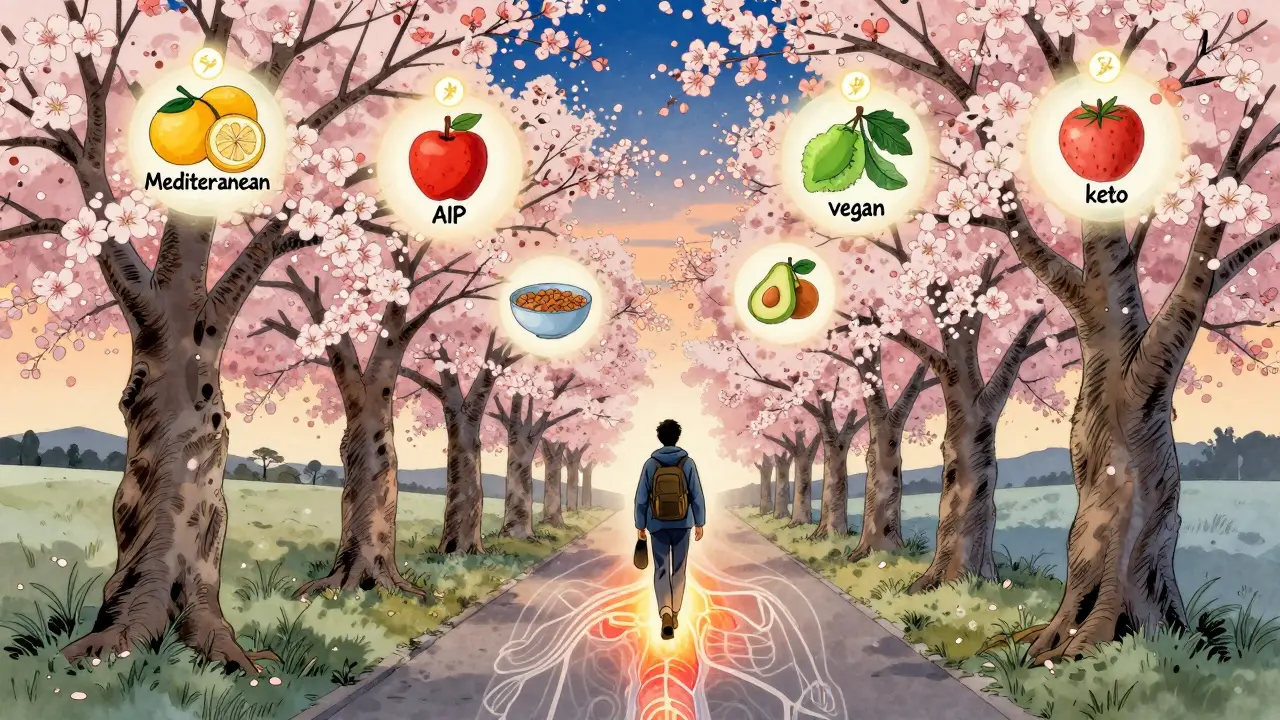
The most studied patterns include the Mediterranean diet, the DASH diet, vegetarian and vegan diets, the ketogenic diet, and the Autoimmune Protocol (AIP). They all emphasize vegetables, fruits, legumes, nuts, fatty fish, and olive oil. They all cut back on sugar, refined carbs, processed oils, and packaged snacks. The differences lie in how strict they are, not in their foundation.
For example, the Mediterranean diet doesn’t ban any food group. It just piles your plate with colorful plants, eats fish twice a week, and uses olive oil like water. The AIP diet starts by removing common irritants-gluten, dairy, eggs, nightshades, nuts, seeds-for 5 to 8 weeks, then slowly brings them back one at a time to see what triggers symptoms. It’s not for everyone, but for some, it’s life-changing.
The Science Behind the Plate
What makes these diets work isn’t magic. It’s biology.
Omega-3 fatty acids from salmon, sardines, and flaxseeds lower levels of cytokines-chemicals that drive inflammation. A 2023 study found that taking 2-4 grams of EPA and DHA daily reduced these inflammatory signals by 15-25%. That’s not a small drop. That’s the kind of change that can mean the difference between a flare and a good day.
Polyphenols from olive oil, berries, and dark leafy greens block a key inflammation pathway called NF-κB. In lab studies, they cut this pathway’s activity by 30-40%. That’s like turning off a fire alarm that’s stuck on loud.
Fiber is another big player. Eating at least 30 grams of fiber a day-mostly from vegetables, beans, and whole grains-feeds good gut bacteria. These bacteria make butyrate, a short-chain fatty acid that helps regulate the immune system. One study showed people with high fiber intake had 20% lower levels of IL-6, another major inflammatory marker.
And then there’s the ketogenic diet. It’s not just for weight loss. A November 2023 study from UCSF showed that when mice on a keto diet produced a molecule called β-hydroxybutyrate (βHB), it triggered their gut bacteria to release indole lactic acid (ILA). That compound blocked a type of immune cell-T helper 17-that plays a big role in multiple sclerosis and other autoimmune diseases. The mice had 40% less severe symptoms. Human trials are still small, but the mechanism is real.
Which Diet Has the Strongest Evidence?
Not all anti-inflammatory diets are created equal when it comes to proof.
The Mediterranean diet leads the pack. A 2021 trial with 2,500 people with rheumatoid arthritis found those who followed this diet had a 22% drop in disease activity scores and 18% lower CRP (a key inflammation marker) compared to those on a standard diet. Adherence was high-85% stuck with it after six months. It’s flexible, delicious, and backed by decades of research.
Vegetarian and vegan diets also show solid results. A meta-analysis of over 21,000 people found vegetarians had 26% lower CRP levels than meat-eaters, as long as they’d been eating this way for at least two years. But there’s a catch: vitamin B12 deficiency jumps 300% without supplementation. You can’t just go plant-based and hope for the best.
The ketogenic diet is promising but still early. The mouse study was eye-opening, but human data is limited. One small trial in people with multiple sclerosis showed improved energy and reduced fatigue, but dropout rates were high. People struggled with the strict carb limits and the initial fatigue that comes with shifting into ketosis.
The AIP diet has the most compelling personal stories. In observational studies, 60-70% of people with Hashimoto’s or IBD reported symptom improvement. One person on a health forum said eliminating nightshades cut their psoriatic arthritis pain in half. But here’s the problem: there are no large, randomized trials. That means we don’t know if it’s the diet itself or the placebo effect, or maybe just the act of paying more attention to food.
What About the Western Diet?
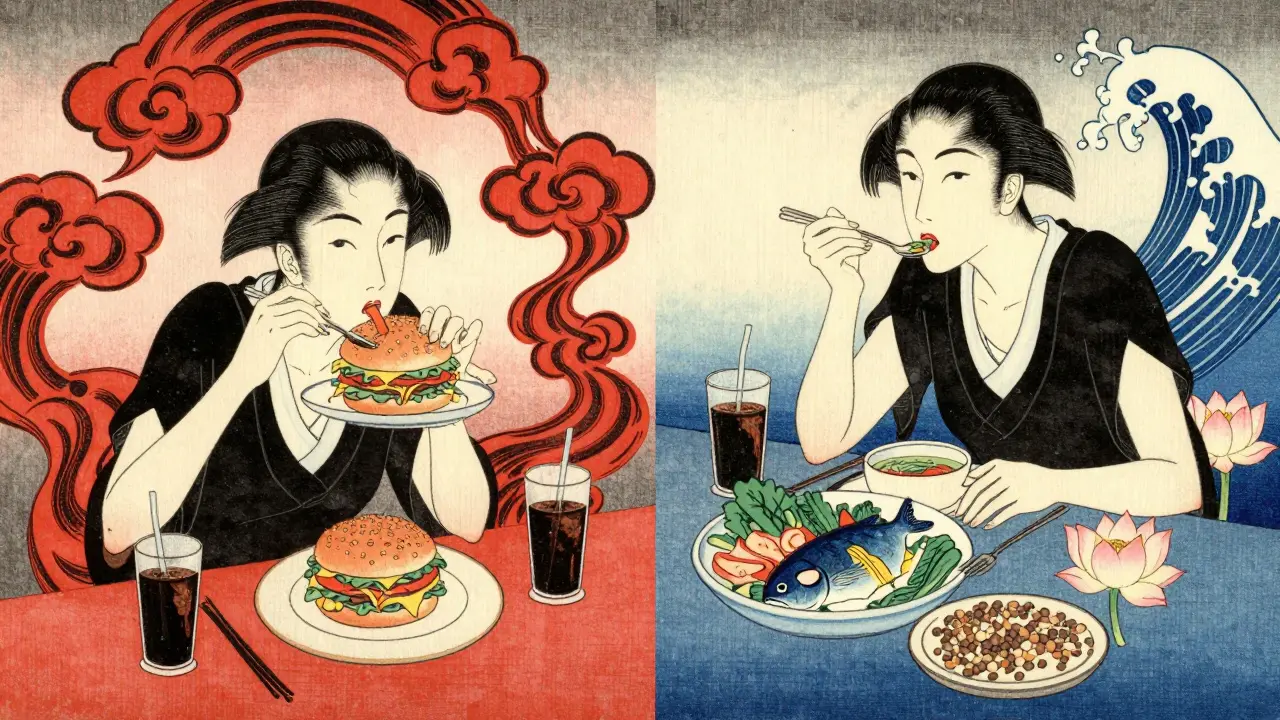
The opposite of anti-inflammatory eating is the standard Western diet-lots of fried food, sugary drinks, processed meats, white bread, and snack packs. Studies consistently show people who eat this way have 30-50% higher CRP levels than those who don’t. It’s not just about weight. It’s about your immune system being stuck in overdrive.
One study compared people with high and low “Western diet scores” and found the high-scoring group had more joint pain, more gut inflammation, and worse fatigue. It’s not that one burger will ruin you. It’s that constant exposure to these foods keeps your body in a low-grade war mode.
Real People, Real Results
Science tells us what’s possible. Real people tell us what works.
On Reddit’s r/Autoimmune community, a 2022 survey of 1,247 people found 68% felt better after changing their diet. Forty-two percent specifically credited the AIP diet. One person wrote: “After 3 weeks on Mediterranean eating, my morning stiffness went from 2 hours to 30 minutes.” Another said, “I used to have IBD flares every month. Now it’s every quarter.”
But it’s not all easy. The same survey said 78% struggled with social situations. Birthday cake, family dinners, work lunches-those are hard. One person wrote: “I had to say no to my best friend’s wedding dinner because I couldn’t risk the gluten.”
The Arthritis Foundation surveyed 1,482 people. Seventy-two percent said diet helped “somewhat to very much.” But 58% said they were confused by conflicting advice. That’s the biggest barrier-not lack of willpower, but lack of clear, trustworthy guidance.
How to Start Without Overwhelm
You don’t need to overhaul your life overnight.
Start with one change: swap out one processed snack for a handful of almonds or an apple. Add one more serving of vegetables to your dinner. Use olive oil instead of butter. Drink water instead of soda.
If you want to go deeper, try the Mediterranean diet first. It’s the easiest to stick with. No elimination. No counting macros. Just eat more plants, more fish, more whole grains, and less junk.
If you suspect food triggers your symptoms, consider a guided elimination like AIP-but don’t do it alone. Work with a registered dietitian who knows autoimmune conditions. A 2022 study found that 83% of people who got professional help stuck with their diet after 12 months. Only 42% did it on their own.
Track your symptoms. Note what you eat, how you feel, your energy, joint pain, digestion. You might be surprised. One person found dairy didn’t bother them-but eggs did. Another discovered nightshades (tomatoes, peppers, potatoes) made their skin flare. Everyone’s different.
The Bigger Picture
Anti-inflammatory eating isn’t a replacement for medicine. It’s a partner. People on these diets often need fewer painkillers, less steroids, or lower doses of immunosuppressants. That means fewer side effects and better quality of life.
The global market for anti-inflammatory foods is growing fast-$14.7 billion in 2022, projected to hit $22.3 billion by 2027. More rheumatologists are talking about diet now. In 2018, 28% discussed it with patients. By 2023, that jumped to 42%. That’s progress.
Future research is heading toward personalization. Companies are testing gut microbiomes to recommend custom diets. The NIH is running a 5-year trial called DIETA, which will randomize 1,000 early rheumatoid arthritis patients to either Mediterranean or standard diets. Results are due in 2026.
For now, the message is clear: food matters. Not because it’s a cure, but because it’s a tool. And tools, when used well, can change everything.
Can diet really help with autoimmune diseases?
Yes, growing evidence shows that anti-inflammatory eating patterns can reduce disease activity, lower inflammation markers like CRP, and improve symptoms like joint pain, fatigue, and gut issues in conditions like rheumatoid arthritis, Hashimoto’s, and IBD. While not a cure, diet can reduce reliance on medication and improve quality of life. Studies show up to a 30% drop in CRP levels and 22% reduction in disease activity scores with the Mediterranean diet.
What foods should I avoid if I have an autoimmune condition?
Common inflammatory triggers include added sugars, refined carbohydrates (white bread, pastries), processed oils (soybean, corn oil), trans fats, excessive saturated fats (especially from red meat), and ultra-processed foods. For some people, dairy, gluten, eggs, nightshades (tomatoes, peppers, potatoes, eggplant), nuts, and seeds can also worsen symptoms. Elimination diets like AIP help identify personal triggers.
Is the ketogenic diet safe for autoimmune diseases?
Preliminary evidence is promising. A 2023 study showed β-hydroxybutyrate, produced during ketosis, blocked immune cells linked to multiple sclerosis in mice. Small human trials report improved energy and reduced fatigue. But long-term safety and adherence are concerns. Dropout rates in trials are 35-45%, and some people experience fatigue, constipation, or nutrient gaps. It’s not for everyone-consult a dietitian before starting.
How long does it take to see results from an anti-inflammatory diet?
Some people notice changes in 2-4 weeks-less morning stiffness, better digestion, more energy. For deeper improvements, like reduced inflammation markers or fewer flares, it usually takes 6-12 weeks. Elimination diets like AIP require 5-8 weeks of strict removal before reintroducing foods. Consistency matters more than speed.
Do I need to follow a strict diet forever?
Not necessarily. Many people find they can relax their diet after identifying triggers. For example, someone who felt better eliminating nightshades might still eat them occasionally without a flare-up. The goal isn’t perfection-it’s sustainability. The Mediterranean diet, for instance, is designed to be a lifelong pattern, not a short-term fix. Flexibility is part of long-term success.
Can I get all the nutrients I need on a plant-based autoimmune diet?
Yes-but only with planning. Vitamin B12 is a major concern; deficiency risk jumps 300% without supplementation. Iron, zinc, omega-3s (from algae or flax), and vitamin D also need attention. Include fortified foods, supplements, and a variety of legumes, seeds, leafy greens, and whole grains. A registered dietitian can help you build a balanced plate.
Why don’t doctors recommend these diets more often?
While many doctors recognize the potential, major medical societies like the European League Against Rheumatism (EULAR) state that evidence is still insufficient to recommend specific diets as standard care. Large, randomized trials are limited. But awareness is growing-42% of rheumatologists now discuss diet with patients, up from 28% in 2018. The science is catching up to patient experience.
Milad Jawabra
March 3, 2026 AT 14:14Yo this is spot on. I’ve been on AIP for 14 months and my RA pain dropped from a 7/10 to a 2/10. No more prednisone. No more swollen fingers. Just almonds, salmon, and broccoli. I used to think food was just fuel. Now I know it’s my body’s peace treaty. 🙌
marjorie arsenault
March 4, 2026 AT 08:28So glad someone finally said this without the jargon. I started swapping soda for sparkling water and added one veggie to dinner. Two weeks later, my brain fog lifted. Not magic. Just… less poison. You don’t need to be perfect. Just better. 💪
Deborah Dennis
March 5, 2026 AT 22:58Shivam Pawa
March 7, 2026 AT 12:56Donna Zurick
March 7, 2026 AT 13:51I tried keto for 3 weeks. Felt like a zombie. Then I switched to Mediterranean - olive oil on everything, lentils, grapes, sardines. My energy doubled. No more 3pm crashes. If you’re scared to start, just do one thing. Like, right now. Go eat an apple.
Tobias Mösl
March 7, 2026 AT 23:30Let me guess - you’re one of those people who thinks gluten is a government bioweapon. The real problem? Your immune system is weak because you’re on 17 supplements and never leave the house. Eat a burger. Live a little. Your ‘inflammation’ is just anxiety dressed up as a diet trend.
Justin Rodriguez
March 9, 2026 AT 07:34One thing missing from this post: cost. Mediterranean diet isn’t cheap if you’re buying wild salmon and organic olive oil. Not everyone can afford it. I eat canned sardines, frozen spinach, and brown rice. It works. You don’t need fancy stuff. Just consistency.
Raman Kapri
March 10, 2026 AT 01:35Megan Nayak
March 10, 2026 AT 17:32What if the real ‘inflammation’ is the system that makes us believe we need to ‘fix’ ourselves through food? Capitalism sells us diets. The medical industrial complex sells us drugs. We’re just swapping one addiction for another. Who benefits? The organic food industry. The supplement industry. The wellness influencers. Not you.
RacRac Rachel
March 11, 2026 AT 04:20OMG YES. I started with one avocado a week. Then I added turmeric to my eggs. Then I stopped eating cereal. Three months later, my psoriasis cleared. I cried. It wasn’t a miracle. It was just my body finally getting what it needed. You got this. 🌿💖
Jane Ryan Ryder
March 11, 2026 AT 22:13Oh great. Another ‘eat more veggies’ lecture from the woke elite. My grandpa ate bacon, white bread, and soda. Lived to 92. You think your kale smoothie is gonna save you? Newsflash: inflammation is natural. Your body isn’t broken. You’re just scared of real food.
Callum Duffy
March 12, 2026 AT 20:34While the empirical evidence supporting dietary modulation of inflammatory markers is increasingly robust, one must acknowledge the significant heterogeneity in individual responses. The Mediterranean pattern, in particular, demonstrates reproducible outcomes in population-level studies. Nevertheless, clinical application requires individualized assessment, particularly in the context of comorbidities and nutritional adequacy.
Zacharia Reda
March 14, 2026 AT 03:06Wait - so if I eat a burger once a week, I’m back to square one? I thought this was about progress, not purity. I ditched soda, added lentils, and still have pizza on Fridays. My CRP dropped 30%. Who cares if I’m not ‘perfect’? You’re not a diet robot.
Jeff Card
March 15, 2026 AT 04:29I’ve been through three flares. This post got me to try the Mediterranean diet. Not because it’s perfect. But because it’s sustainable. I eat what I like - just more of it. Fish. Beans. Olives. Apples. And I stopped stressing about every bite. That’s the real win.