Excipients in Generics: How Inactive Ingredients Affect Tolerance and Patient Safety
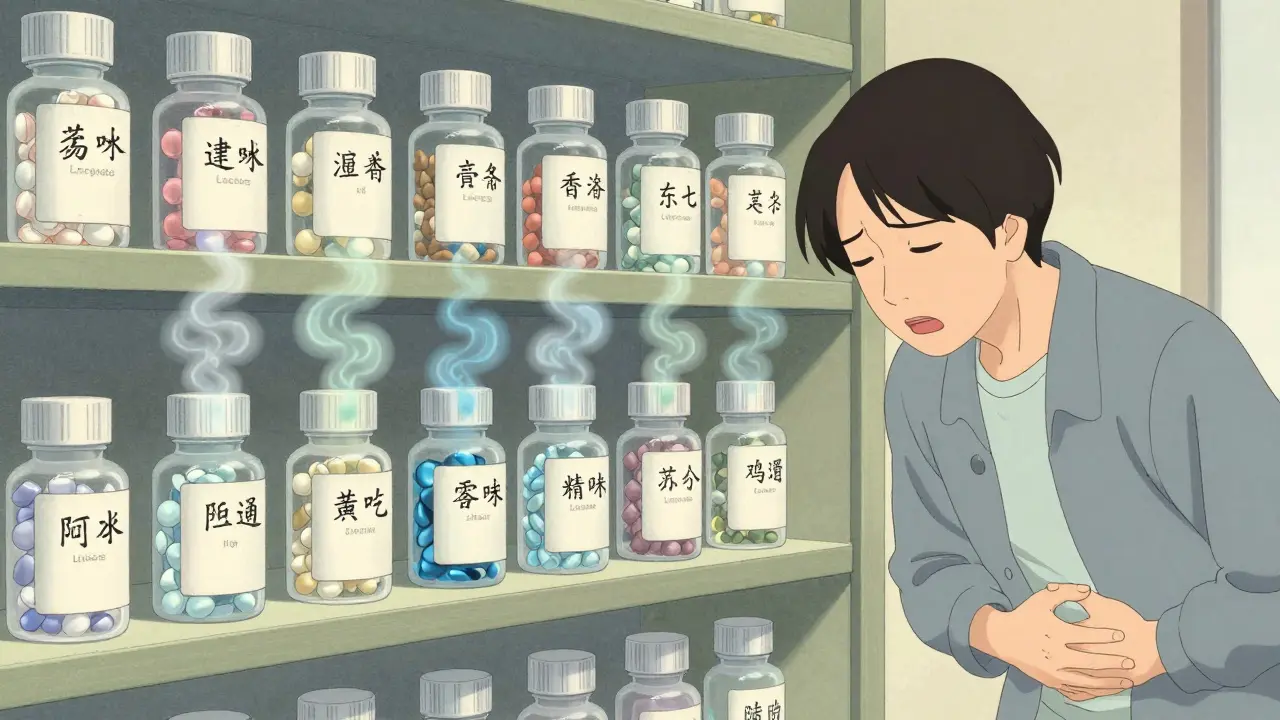
When you pick up a generic pill at the pharmacy, you assume it’s the same as the brand-name version. Same active ingredient. Same effect. Same safety. But what if the real difference isn’t in what the pill does - but in what it’s made of?
The Hidden Ingredients That Can Make You Sick
Generic drugs are required by the FDA to have the same active ingredient as the brand-name version, and they must deliver it at the same rate and amount. That’s bioequivalence. But here’s the catch: excipients - the so-called "inactive" ingredients - don’t have to match. And these aren’t harmless fillers. They’re chemicals that can trigger real, sometimes severe, reactions in sensitive people. Think of excipients as the unsung crew behind the scenes. They help the pill hold its shape, dissolve properly, taste better, or last longer on the shelf. But they’re not inert. A 2019 study from Brigham and Women’s Hospital and MIT analyzed over 42,000 oral medications and found that 90.2% of them contained at least one excipient linked to allergic reactions or intolerances. The average pill had nearly nine of these ingredients. Some of the most common? Lactose, corn starch, dyes like FD&C Blue #2, preservatives like parabens, and lubricants like magnesium stearate.Why Lactose Is the Silent Culprit
Lactose is in about half of all oral tablets. It’s cheap, stable, and easy to compress. But if you’re lactose intolerant - and millions are - even a small amount can cause problems. The FDA says tolerance varies from person to person. Some people react to just 1-2 grams. A single tablet might contain 50-200 milligrams. Multiply that by three pills a day, and you’re hitting 600 mg or more. That’s enough to trigger bloating, cramps, diarrhea, and nausea in sensitive individuals. One Reddit user, u/MedicCheck, reported switching from brand Synthroid to a generic version and suddenly dealing with severe stomach pain. After digging into the ingredients, they found the generic contained FD&C Blue #2 - a dye they were allergic to. The active ingredient, levothyroxine, was identical. But the excipients? Totally different. And that made all the difference.Brand vs Generic: The Real Differences
Brand-name drugs usually have consistent formulations across batches. Generics? Not so much. Different manufacturers use different excipients to cut costs or streamline production. That means two generic versions of the same drug - say, metformin - can have completely different ingredient lists. One might use lactose. Another might use mannitol. One might have artificial coloring. Another might be dye-free. A 2021 study in the Journal of Generic Medicines found that 73.5% of pharmacists had patients report side effects after switching from brand to generic - side effects that disappeared when they switched back. These weren’t placebo effects. They were real reactions to excipients. And the FDA admits it: differences in excipients can change a drug’s safety profile under certain conditions.
Who’s Most at Risk?
Not everyone reacts. But some groups are far more vulnerable:- People with known food allergies or intolerances (lactose, gluten, sulfites)
- Children and older adults - their bodies process chemicals differently
- People with autoimmune conditions or chronic gut issues
- Those taking multiple medications daily - more excipients = higher cumulative exposure
What You Can Do
You don’t have to guess. Here’s how to protect yourself:- Check the label. The FDA requires all prescription drugs to list ingredients on the packaging. Look for excipients like lactose, corn starch, FD&C dyes, parabens, or sulfites.
- Use the FDA’s Inactive Ingredient Database. Search by drug name and find the exact excipients in each version. It’s updated quarterly and free to use.
- Ask your pharmacist. Pharmacists can tell you which generic manufacturer makes which version. Some manufacturers specialize in dye-free, lactose-free, or gluten-free formulations.
- Track your symptoms. Did your rash start after switching to a new generic? Did your stomach cramps begin when you changed brands? Write it down. Share it with your doctor.
- Request a specific generic. If one version makes you feel worse, ask for another. You’re not being difficult - you’re being informed.
Why This Isn’t Just a "Patient Problem"
Doctors and pharmacists are starting to pay attention. The American College of Allergy, Asthma, and Immunology recommends a four-step approach when excipient intolerance is suspected: identify the timing, check the ingredients, test by elimination, and document the reaction. But most medical schools still don’t teach this. The real issue? Documentation. Brand-name drugs list every ingredient clearly. Generic manufacturers? Often not. You might need to call the manufacturer directly to get the full list. That’s not convenient - but it’s necessary.The Future Is Personalized Excipients
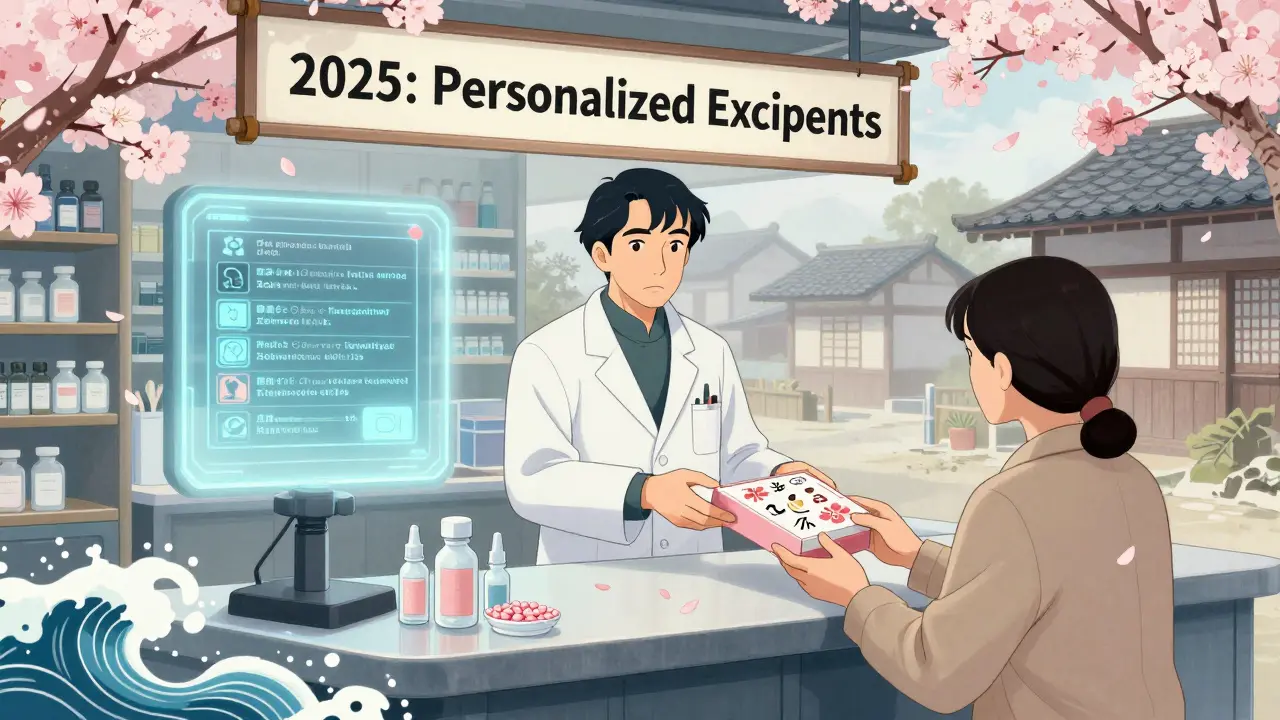
The industry is waking up. In 2023, the FDA launched the Excipient Safety Modernization Initiative to include patient-reported data in their databases. MIT developed an AI tool that predicts individual excipient tolerance based on genetic markers. By 2025, the FDA plans to require full excipient disclosure in electronic prescriptions. And the global market for specialty excipients - lactose-free, dye-free, gluten-free - hit $18.7 billion in 2022 and is growing fast. Sixty-three percent of pharmaceutical executives believe personalized excipient profiles will be a major differentiator by 2030. That means someday, your prescription might come with a version tailored to your body - not just your diagnosis.Bottom Line
Generics save money. That’s good. But they’re not always interchangeable when it comes to your body’s tolerance. The active ingredient is only half the story. The rest? It’s in the fillers, the dyes, the preservatives - the "inactive" stuff that isn’t inactive at all. If you’ve ever felt worse after switching to a generic - or had symptoms that disappeared when you switched back - you’re not imagining it. Your body is reacting. And you deserve to know why.Are generic drugs always safe if they have the same active ingredient?
No. While generics must match the active ingredient in strength and absorption, they can contain completely different excipients - the inactive ingredients that help the pill work. These can trigger allergic reactions, intolerances, or digestive issues in sensitive people. Two generic versions of the same drug may have different fillers, dyes, or preservatives, leading to different side effects.
Can excipients in pills cause real symptoms like bloating or rashes?
Yes. Common excipients like lactose, FD&C dyes (especially Yellow #5 and Blue #2), parabens, and sulfites are linked to real symptoms in sensitive individuals. Lactose can cause bloating, cramps, and diarrhea. Dyes can trigger hives or headaches. Preservatives like parabens may cause skin rashes or gut irritation. Studies show these reactions are not rare - they’re underreported.
How do I find out what excipients are in my generic medication?
Check the drug’s packaging - manufacturers are required to list all ingredients. You can also search the FDA’s Inactive Ingredient Database online using the drug’s brand or generic name. If the label doesn’t list everything, call the manufacturer directly. Pharmacists can help you identify which company makes your version and provide ingredient details.
Should I avoid all generics because of excipients?
No. Most people tolerate generics without issue. But if you have known allergies, intolerances, or unexplained side effects after switching to a generic, it’s worth investigating the excipients. You can often switch to a different generic manufacturer that uses a cleaner formulation - one without lactose, dyes, or problematic preservatives.
Are there generic drugs made without common allergens like lactose or dyes?
Yes. Many manufacturers now offer lactose-free, dye-free, and gluten-free versions of common medications. These are often labeled as "specialty" or "sensitive formulation" generics. Ask your pharmacist for options. The market for these formulations is growing fast, with over $18 billion spent globally in 2022.
Can my doctor prescribe a specific generic brand?
Yes. While insurance often pushes the cheapest option, your doctor can write "dispense as written" or specify the manufacturer on the prescription. This ensures you get the same version every time, especially if you’ve had a reaction to a different one. Pharmacists can then source that specific generic for you.
Why don’t doctors know more about excipients?
Most medical training focuses on active ingredients and disease treatment, not formulation chemistry. Excipients aren’t taught in detail, and many doctors assume all generics are interchangeable. But pharmacists and patients are increasingly raising awareness - and the FDA now acknowledges that excipients can affect safety. As more data emerges, this is starting to change.
Ted Conerly
January 11, 2026 AT 16:25For years I thought generics were just cheaper versions of the same thing. Turns out I was wrong. I switched to a generic metformin and started getting daily stomach cramps. Switched back to the brand - gone. Checked the label - lactose was the culprit. I’m not even lactose intolerant, but apparently my gut is picky. Now I always check the excipients. It’s not paranoia, it’s just smart.
Mario Bros
January 12, 2026 AT 09:09Bro. I had the same thing with Synthroid. Switched to generic, got migraines and heart palpitations. Thought I was losing it. Then I found out it had FD&C Blue #2. I’m allergic to that dye. Took me 6 months to connect the dots. Pharmacist didn’t even know. You’re not crazy. It’s the system.
Bradford Beardall
January 12, 2026 AT 17:07Interesting how this ties into global pharma practices. In India, generics are the norm, but excipient labeling is often minimal or in local languages only. I’ve seen patients react to corn starch or talc - ingredients never listed clearly. The FDA’s move toward full disclosure is overdue, but it’s also a wake-up call for developing markets where transparency is even weaker. This isn’t just a US problem - it’s a global health equity issue.
McCarthy Halverson
January 14, 2026 AT 02:22Check the label. Ask your pharmacist. Write it down. Switch if needed. Simple. No drama. Just facts.
neeraj maor
January 15, 2026 AT 06:03They don’t want you to know this. Big Pharma and the FDA are in cahoots. Generics are allowed to have toxic fillers because it keeps costs down and keeps you dependent. The real cure? Stop taking pills altogether. Natural remedies, fasting, raw foods - that’s the truth they’re hiding. The dyes? They’re for mind control. Lactose? It’s a biochip carrier. You think this is about allergies? It’s about control.
Ritwik Bose
January 15, 2026 AT 18:14Thank you for sharing this vital information 🙏. As someone who has witnessed family members suffer silently after switching medications, this article brings clarity and dignity to their experiences. Knowledge is indeed power, and your guidance empowers patients to advocate for themselves with grace and confidence. May more healthcare providers follow this example.
Paul Bear
January 16, 2026 AT 20:39Let’s be precise: the FDA’s bioequivalence standard only governs pharmacokinetic parameters - AUC and Cmax. Excipients are regulated under 21 CFR 314.94 as components of the drug product, but their safety profile is not subject to comparative evaluation between brand and generic. This is a regulatory gap, not an oversight. The onus is on the prescriber and patient to identify intolerances through pharmacovigilance. The data you cite is valid, but the systemic failure lies in the absence of mandatory excipient interoperability in EHRs.
Jaqueline santos bau
January 18, 2026 AT 18:14I KNEW IT. I told my doctor for months that the generic made me feel awful, and she just said I was being dramatic. Then I found out it had red dye #40 - the same dye that made my daughter break out in hives. Now I’m not just mad, I’m furious. How many people are suffering silently because doctors don’t care? This isn’t about medicine - it’s about negligence.
Kunal Majumder
January 19, 2026 AT 08:11Same here. I take levothyroxine and switched to a cheap generic - started feeling like I had the flu every day. Switched back to the one with mannitol instead of lactose - boom, energy returned. My pharmacist said most people don’t know this. Tell your friends. Don’t just take what’s handed to you.
Aurora Memo
January 19, 2026 AT 20:55This is such an important conversation. I’ve worked with elderly patients who blame their fatigue or rashes on aging, when it’s really a dye or preservative they’ve never reacted to before. We need more education - not just for patients, but for nurses, pharmacists, even medical students. Small details like this can change lives. Thank you for shining a light on it.
chandra tan
January 20, 2026 AT 21:00In India, we call these "fillers" the silent killers. I’ve seen people with celiac disease get sick from generic tablets with wheat starch. No one checks. No one tells them. Even the pharmacists assume the patient knows. We need labels in local languages and public awareness campaigns. This isn’t just a Western problem - it’s everywhere.