FDA’s Abbreviated New Drug Application Process Explained: How Generic Drugs Get Approved
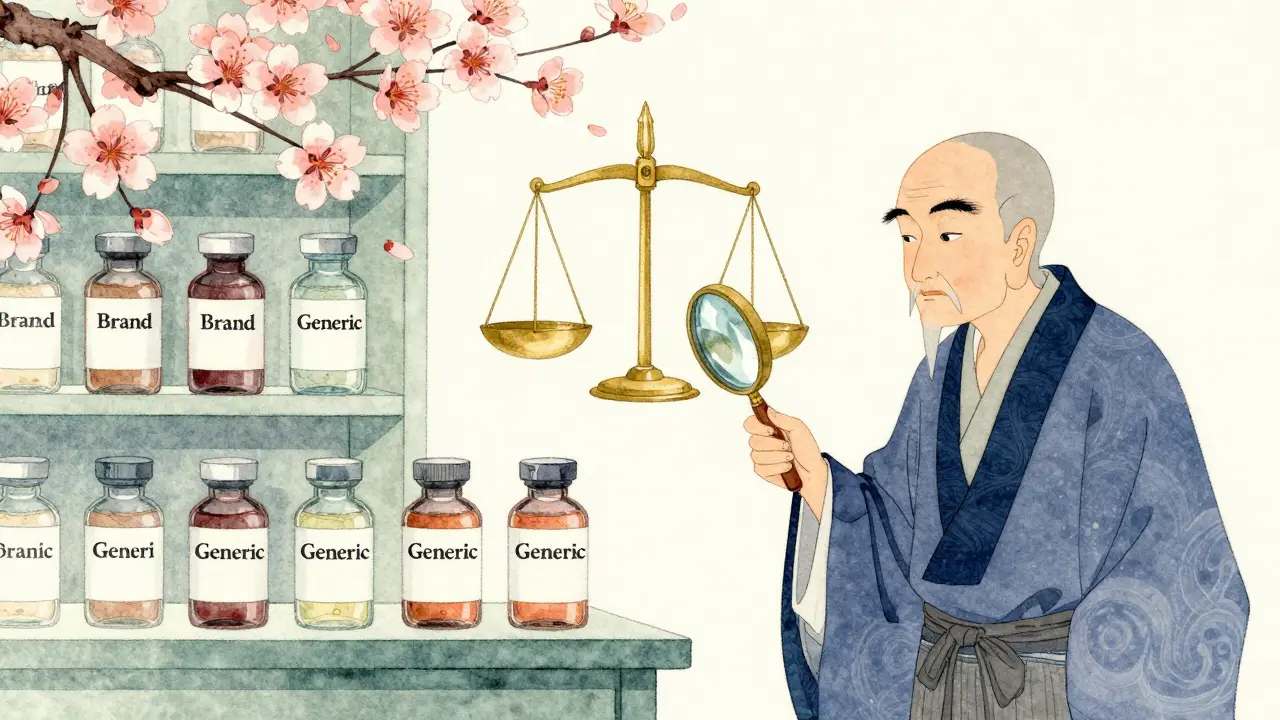
When you pick up a prescription at the pharmacy and see a generic version of your brand-name drug, you’re seeing the result of a highly structured, science-driven process called the Abbreviated New Drug Application (ANDA). This isn’t just a shortcut-it’s a carefully designed pathway that lets generic drug makers bring affordable medications to market without repeating every clinical trial ever done. The ANDA process is how over 90% of prescriptions in the U.S. are filled with generic drugs, saving the healthcare system $373 billion in 2021 alone.
What Is the ANDA Process, Really?
The ANDA process was created by the Hatch-Waxman Act of 1984, a law signed by President Ronald Reagan to balance two goals: encouraging innovation in brand-name drugs and making affordable generics available. Before this law, generic companies had to prove a drug was safe and effective from scratch-just like the original maker. That meant spending hundreds of millions of dollars and waiting over a decade. The ANDA changed all that.
Instead of redoing clinical trials, generic manufacturers only need to prove their drug is therapeutically equivalent to the brand-name version, known as the Reference Listed Drug (RLD). The FDA already confirmed the RLD is safe and effective. The generic company just has to show their version works the same way in the body.
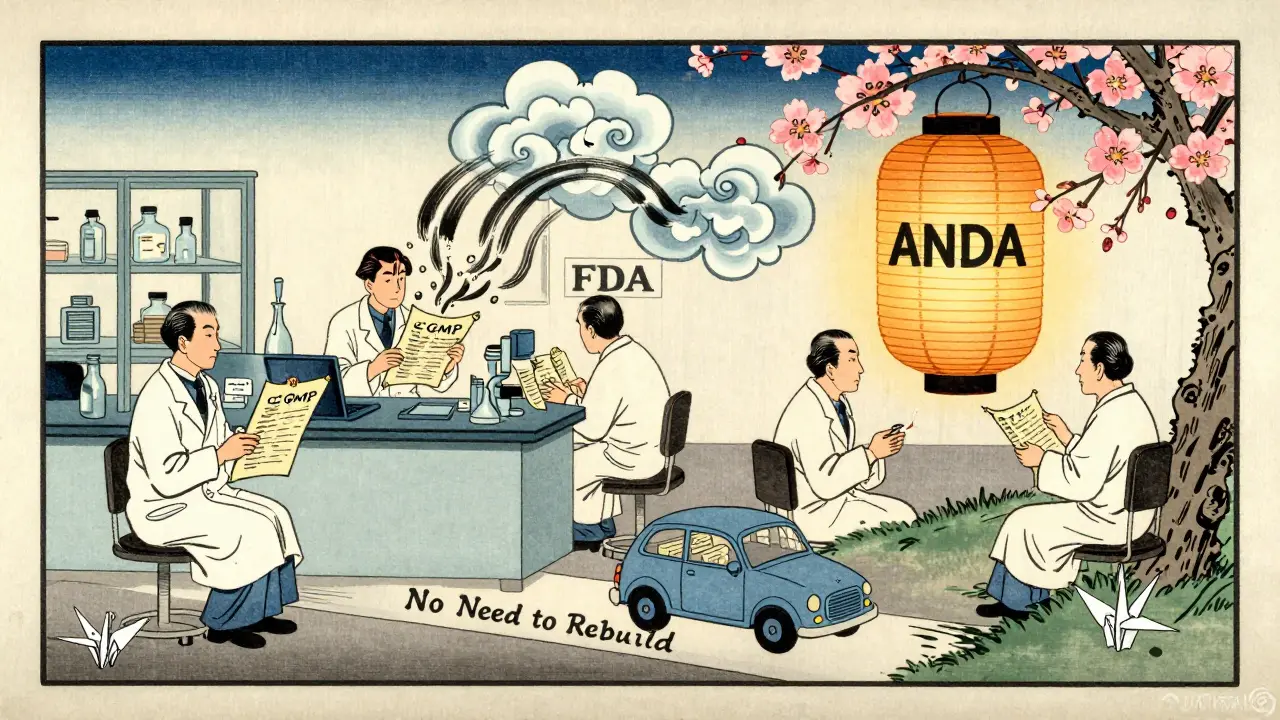
This isn’t about cutting corners. It’s about using existing science. Think of it like building a copy of a car. You don’t need to retest how the engine works if the original design has already passed safety checks. You just need to prove your version has the same parts, runs the same way, and performs under the same conditions.
What Must a Generic Drug Match?
To get approved through ANDA, the generic must be identical to the RLD in five key ways:
- Active ingredient: Same chemical compound, same amount.
- Strength: Same dosage per pill, injection, or other form.
- Route of administration: Same way it enters the body-oral, injection, topical, etc.
- Form: Same shape and delivery method-tablet, capsule, liquid, patch.
- Labeling: Same uses, warnings, and instructions (with minor exceptions).
Manufacturing must also follow current Good Manufacturing Practices (cGMP). That means the facility where the drug is made must meet strict standards for cleanliness, quality control, and documentation. The FDA inspects these facilities before approval. If they find issues, the application gets delayed-or denied.
How Does the ANDA Review Work?
The FDA’s Office of Generic Drugs (OGD) handles every ANDA. The process has four clear stages:
- Submission and Filing Review: The applicant submits the ANDA electronically through the FDA’s Electronic Submission Gateway. Within 60 days, the filing division checks if the application is complete. If it’s missing key data or forms, it gets returned.
- Discipline Reviews: Teams of scientists review different parts of the application: chemistry, manufacturing, bioequivalence, labeling, and microbiology. Each team looks for gaps or inconsistencies. A typical ANDA gets reviewed by 5 to 8 different teams.
- Information Requests and Responses: If any team finds a problem, they issue an Information Request (IR). The applicant must respond with more data, studies, or clarifications. This is where most delays happen. In 2022, 78% of applicants received at least one IR. Some get 10 or more.
- Final Decision: If all teams agree the application is complete and meets standards, the FDA approves it. If there’s still an issue, they issue a Complete Response Letter (CRL). If the drug is ready but blocked by patents or exclusivity, it gets a Tentative Approval.
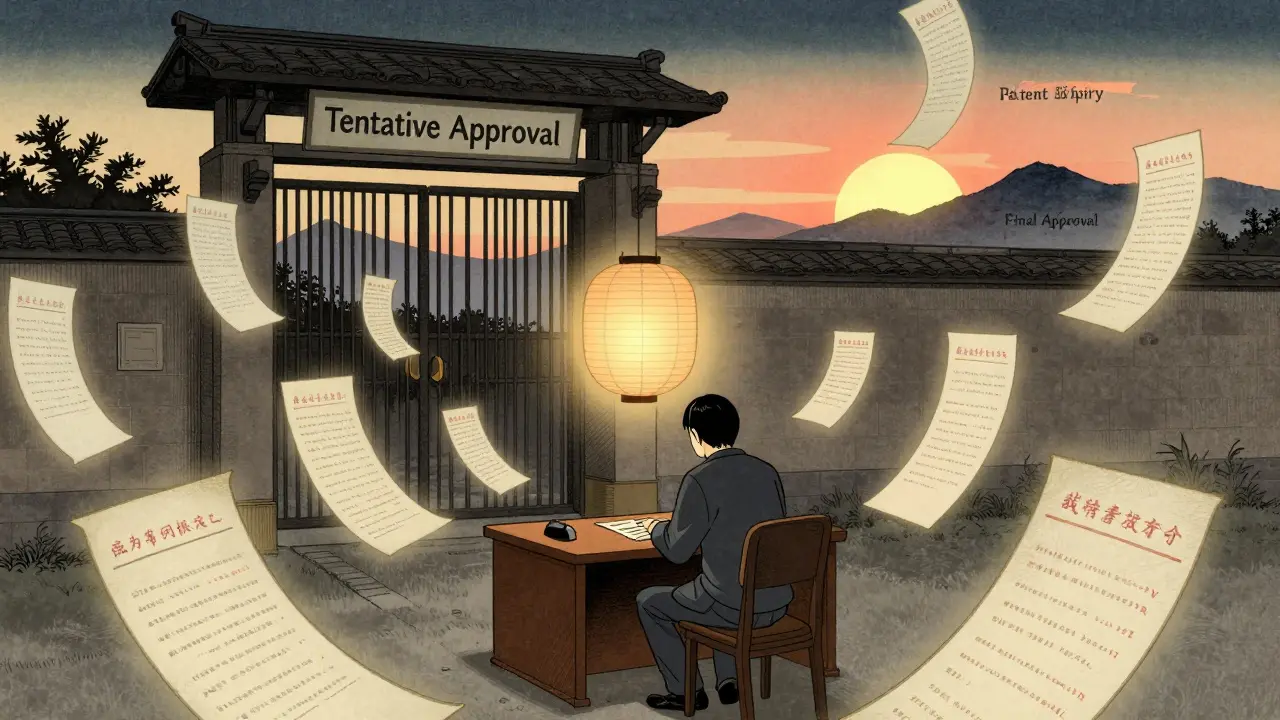
Tentative Approval is important. It means the FDA thinks the generic is scientifically sound-but it can’t be sold yet because the brand-name drug still has patent protection. Once that patent expires, the Tentative Approval becomes Final Approval automatically.
ANDA vs. NDA: Why It’s So Much Faster
Compare the ANDA to the traditional New Drug Application (NDA). An NDA for a brand-new drug requires full preclinical studies (animal tests), Phase 1, 2, and 3 clinical trials (in humans), and long-term safety monitoring. That process can take 10 to 15 years and cost over $2 billion.
An ANDA skips all that. It only needs bioequivalence data-proof that the generic drug enters the bloodstream at the same rate and to the same extent as the brand-name version. That’s usually shown through a small, controlled study in 24 to 36 healthy volunteers. The cost? Between $1 million and $5 million. The time? Around 30 months from submission to approval, though the FDA aims for 10 months under GDUFA III rules.
That’s why generics cost 85% less than brand-name drugs. The savings aren’t from lower quality-they’re from smarter regulation.
What Goes Wrong? Common Reasons for Rejection
Not every ANDA gets approved on the first try. In fact, most don’t. The FDA’s 2022 data shows the top reasons for Complete Response Letters:
- 35% - Inadequate bioequivalence study design or data
- 28% - Manufacturing or facility compliance issues
- 22% - Labeling discrepancies or missing warnings
Bioequivalence is the most common sticking point, especially for complex products like inhalers, topical creams, or injectables. For example, a generic topical cream might have the same active ingredient, but if the base (the lotion or ointment) doesn’t deliver the drug the same way, the body absorbs it differently. That’s not acceptable. Companies often spend over $1 million and go through three trial iterations just to get this right.
Manufacturing problems are equally common. A facility might pass inspection one year, but if the FDA comes back a year later and finds a change in equipment or process without proper documentation, the application stalls. There’s no room for guesswork.
Who’s Using the ANDA Process?
The U.S. generic drug market is dominated by a few big players. Teva Pharmaceuticals holds about 22% of the market, followed by Viatris (15%) and Sandoz (12%). But 75% of ANDAs come from companies that have already approved five or more generic products. Experience matters.
Smaller companies often struggle with the complexity. One manufacturer shared on a regulatory forum that their first ANDA received 17 Information Requests, pushing their approval timeline out by 14 months. Another said their topical cream required three rounds of bioequivalence studies at a cost of $1.2 million.
But those who learn the system succeed. Teva’s VP of Regulatory Affairs said after their tenth ANDA, they hit a 92% approval rate within GDUFA timelines. They now use pre-ANDA meetings with the FDA-something 78% of successful applicants do-to iron out issues before submitting.
What’s Changing? The Future of ANDAs
The ANDA process isn’t stuck in 1984. It’s evolving. The FDA launched the Complex Generic Drug Products Initiative in 2018 to tackle harder-to-copy drugs like nasal sprays, injectables, and transdermal patches. These now make up 35% of pending ANDAs.
AI is also changing the game. In 2023, 78% of FDA reviewers used AI-assisted tools to analyze chemistry data, speeding up reviews without sacrificing accuracy. The FDA is also exploring real-world evidence-using data from actual patient use-to support approvals for complex generics.
And GDUFA III, which took effect in October 2022, set a new standard: the FDA must review 90% of original ANDAs within 10 months. That’s ambitious. It’s forcing both applicants and regulators to be more efficient.
Still, challenges remain. Patent thickets-where brand-name companies file multiple overlapping patents to delay generics-still block access. Risk Evaluation and Mitigation Strategies (REMS) are sometimes used to restrict generic distribution. And the FDA’s backlog of complex applications continues to grow.
Why This Matters to You
Every time you pay $10 for a generic blood pressure pill instead of $150 for the brand, you’re benefiting from the ANDA process. It’s not magic. It’s science, regulation, and competition working together. Generic drugs aren’t second-rate. They’re the same medicine, made under the same rules, tested to the same standard.
The ANDA process is why the U.S. has over 14,000 generic drug products on the market. It’s why prescriptions are affordable. And it’s why healthcare spending doesn’t spiral out of control.
As new drugs get more complex, the ANDA process will have to adapt. But its core principle remains: if it’s been proven safe and effective once, we don’t need to prove it again. We just need to prove it’s the same.
What is the difference between an ANDA and an NDA?
An NDA (New Drug Application) is used for brand-new drugs and requires full clinical trial data to prove safety and effectiveness. An ANDA (Abbreviated New Drug Application) is for generic versions of already-approved drugs. It doesn’t require repeating clinical trials-instead, it proves bioequivalence to the original drug, relying on the FDA’s prior findings. This makes ANDAs much faster and cheaper to develop.
What is a Reference Listed Drug (RLD)?
The Reference Listed Drug (RLD) is the original brand-name drug that the generic version is compared to. The FDA designates the RLD based on its approval history and availability. All ANDA applicants must prove their product is therapeutically equivalent to this specific drug. If the RLD is discontinued, the FDA may designate a new one.
What does Tentative Approval mean?
Tentative Approval means the FDA has determined the generic drug meets all scientific and manufacturing requirements for approval, but it cannot be sold yet because of legal barriers-usually patent protection or exclusivity rights held by the brand-name drug. Once those barriers expire, Tentative Approval automatically becomes Final Approval, and the generic can be marketed.
Why do some generic drugs take longer to get approved?
Complex generics-like inhalers, injectables, or topical creams-are harder to replicate because small changes in formulation or delivery affect how the drug works. These require more data, more studies, and more FDA review. Manufacturing issues, incomplete submissions, and patent disputes also delay approval. On average, the full ANDA process takes about 30 months, but complex products can take longer.
How does the FDA ensure generic drugs are safe?
The FDA requires generics to have the same active ingredient, strength, dosage form, and route of administration as the brand-name drug. They must also prove bioequivalence through controlled studies and meet the same manufacturing standards (cGMP). The FDA inspects manufacturing facilities and reviews every submission in detail. If a generic drug is found to be unsafe after approval, it’s pulled from the market just like a brand-name drug.
Are generic drugs really as effective as brand-name drugs?
Yes. The FDA requires generic drugs to be bioequivalent to the brand-name version, meaning they deliver the same amount of active ingredient into the bloodstream at the same rate. Studies show no meaningful difference in effectiveness or safety between generics and their brand-name counterparts. Millions of patients use generics every day with the same results.
Richard Harris
March 14, 2026 AT 02:17never knew generics had to go through all that. i always thought they just slapped a different label on it and called it a day. turns out it’s way more science than i gave it credit for. cool stuff.
Noluthando Devour Mamabolo
March 15, 2026 AT 07:51the ANDA framework is a masterclass in regulatory efficiency 🤓. bioequivalence validation + cGMP compliance = no redundant trials, no compromised safety. this is how you scale access without sacrificing integrity. the FDA’s OGD is quietly one of the most impactful public health engines on the planet.
Leah Dobbin
March 15, 2026 AT 10:36It’s fascinating how much of this is about *control* - controlling the narrative around equivalence, controlling the manufacturing environment, controlling the timeline. The system isn’t designed to be fast. It’s designed to be infallible. And that’s why, despite all the bureaucracy, we still trust generics. It’s not luck. It’s precision.
Alex MC
March 17, 2026 AT 02:58Been in pharma for 12 years. The real hero here isn't the FDA - it's the small labs that keep trying. One guy I knew spent 18 months, $900k, and 3 revisions on a topical cream because the emulsifier changed by 0.2%. He got approved. Now his product is in 300 clinics. That’s grit.
Also, AI review tools? Game changer. Used to take 8 weeks just to parse a chemistry section. Now it's 3 days. The FDA’s not perfect, but they’re adapting.
rakesh sabharwal
March 17, 2026 AT 17:28Let’s be honest - this whole system is a facade. The FDA approves generics, but the real bottleneck is patent trolling. Big Pharma files 17 overlapping patents just to delay competition. ANDA isn’t broken - it’s sabotaged. And don’t even get me started on REMS abuse. This isn’t regulation. It’s legal extortion.
Meanwhile, patients pay $10 for a pill that costs 7 cents to make. Someone’s making bank. It’s not the generic maker. It’s the lawyers.
Kathy Leslie
March 19, 2026 AT 06:08I’ve been on 5 different generics for my thyroid and never noticed a difference. But I’ve also seen people panic when their script switches brands. It’s not the drug - it’s the fear. Maybe we need better education more than better regulation.
Amisha Patel
March 20, 2026 AT 03:21So if the RLD gets discontinued, how do they pick the new one? Is it based on market share? Or which one was approved first? Just curious. No judgment.
Elsa Rodriguez
March 21, 2026 AT 07:27Ugh I HATE when my pharmacy switches my generic. Like yesterday I got a different one and I swear I felt weird for two days. I know it’s the same thing but my body knew. I’m not crazy. Someone else felt this right? I’m not alone??
Serena Petrie
March 22, 2026 AT 04:59Same drug. Same dose. Same results. Stop overthinking it.
Buddy Nataatmadja
March 24, 2026 AT 01:42Just came back from Jakarta - their generic system is wild. No ANDA equivalent. Just import and test. Some stuff’s great. Some’s… not. Makes me appreciate the U.S. process more. It’s slow, but it’s solid.
mir yasir
March 25, 2026 AT 18:19The regulatory architecture underpinning the ANDA framework represents a paradigmatic shift in pharmaceutical governance - a harmonization of scientific rigor with economic pragmatism. The bioequivalence paradigm, anchored in pharmacokinetic parameters, is not merely a procedural expedient, but a philosophically coherent epistemological foundation for therapeutic substitution. One must acknowledge the structural integrity of this model, particularly under GDUFA III’s time-bound mandates.