FDA Therapeutic Equivalency Codes: How Laws Determine If You Can Swap Generic Drugs

When your pharmacist hands you a generic pill instead of the brand-name version, you might not think twice. But behind that simple swap is a complex legal and scientific system built by the FDA to make sure you get the same effect-safely and reliably. This system is called Therapeutic Equivalency (TE) Codes, and it’s the reason most generic drugs in the U.S. can be legally substituted without your doctor’s approval.
What TE Codes Really Mean
Therapeutic Equivalency Codes are not just labels. They’re legal determinations. The FDA assigns them to multisource prescription drugs based on whether a generic version can be swapped for the brand-name drug without changing how well it works or how safe it is. These codes are published in the Approved Drug Products with Therapeutic Equivalence Evaluations, better known as the Orange Book. It’s updated every month, and every pharmacist in the country is expected to check it before substituting a drug. The code itself is one or two letters. The first letter tells you the big picture:- A means the generic is considered therapeutically equivalent to the brand-name drug. You can swap it with confidence.
- B means there are unresolved issues-bioequivalence problems, formulation differences, or lack of data. Pharmacists are generally not allowed to substitute these without a doctor’s order.
- AA is the gold standard: immediate-release oral pills with no bioequivalence concerns.
- AB means the product had initial issues but later proved equivalent after more testing.
- BT is for topical creams or gels with bioequivalence uncertainties.
- BN is for aerosol nebulizer products-hard to test, harder to substitute.
How the Law Makes Substitution Possible
The legal backbone for TE codes comes from the Hatch-Waxman Act of 1984. Before this law, generic drugs faced huge barriers. Companies had to repeat the same expensive clinical trials as brand-name makers, even if the active ingredient was identical. Hatch-Waxman changed that by creating the Abbreviated New Drug Application (ANDA) pathway. Now, generic manufacturers only need to prove their product is bioequivalent to the original-no need to retest safety and effectiveness from scratch. But here’s the key: the law doesn’t force substitution. It gives pharmacists the permission to substitute, as long as the drug has an A code. Each state has its own pharmacy laws, but they all use the FDA’s Orange Book as the official reference. In California, for example, Business and Professions Code Section 4073 says substitution is only allowed for products with an A rating. New York’s Education Department requires pharmacists to consult the most current Orange Book edition before swapping any drug. This means the FDA doesn’t set state rules-but its TE codes become the state rules. If a drug has a B code, even if it’s FDA-approved, pharmacists in nearly every state can’t legally substitute it without explicit permission from the prescriber.Why Some Generics Get B Codes
You might wonder: if a drug is approved by the FDA, why wouldn’t it get an A code? The answer lies in complexity. Simple pills-like metformin or lisinopril-are easy to test. They dissolve the same way, get absorbed the same way, and produce the same blood levels. But what about a topical cream that needs to penetrate skin at a specific rate? Or an inhaler that delivers a precise dose to the lungs? Or a long-acting injection that releases drug slowly over weeks? For these complex products, proving bioequivalence isn’t straightforward. Traditional blood tests may not capture how the drug behaves in the body. That’s why many of these drugs get B codes-especially those with designations like BT (topical), BN (nebulizers), or BC (extended-release). A 2022 survey by the National Community Pharmacists Association found that 42% of pharmacists struggled to interpret some B codes, especially for complex delivery systems. Many were unsure whether a BT-rated cream was truly different or just poorly studied. That uncertainty leads to hesitation. Even if the FDA says the drug is safe, pharmacists often won’t substitute it because they fear liability or patient complaints. And it’s not just pharmacists. Brand-name companies have used the system to delay competition. In 2022, the FDA received 1,247 citizen petitions challenging TE codes-up 17% from the year before. Many of these petitions were filed by brand manufacturers trying to keep complex drugs off the generic market by arguing the data wasn’t strong enough.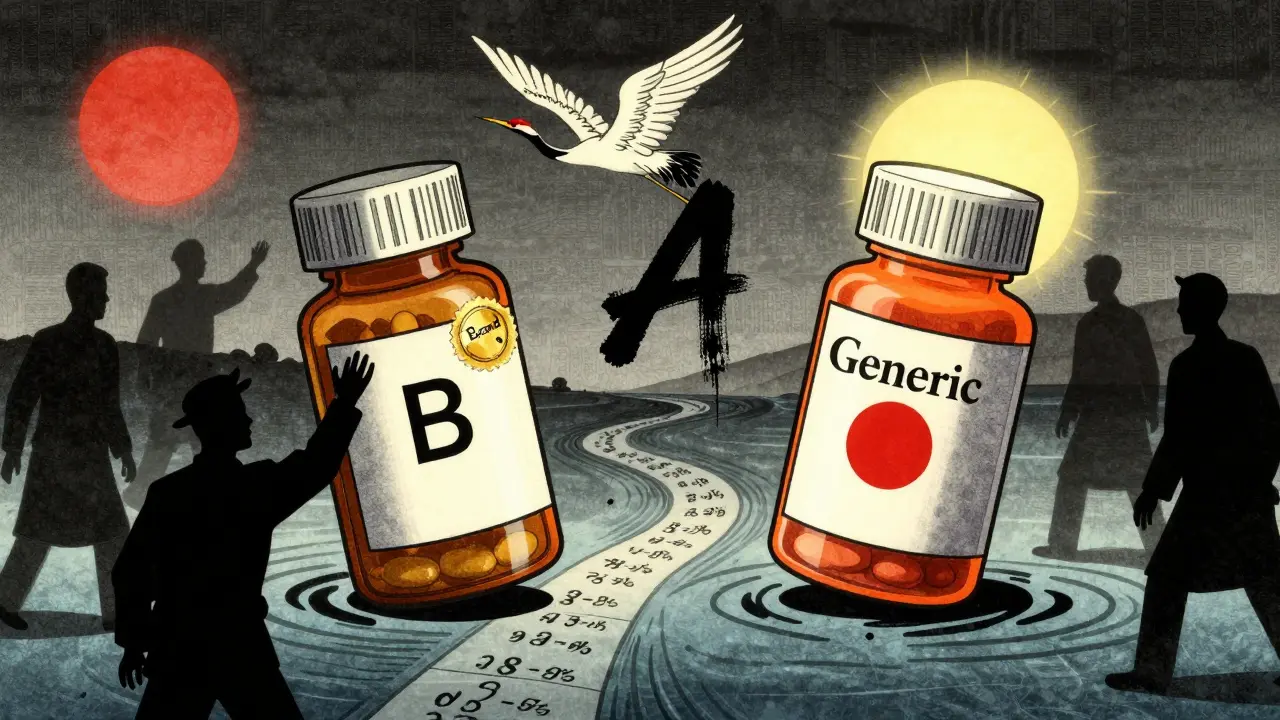
The Real Impact: Savings and Access
The system works. And it saves billions. In 2022 alone, generic drugs with A codes saved the U.S. healthcare system $298 billion, according to IQVIA. That’s 97% of all generic prescriptions. Since 1995, the entire TE code system has contributed to over $1.7 trillion in savings, as noted by former FDA official Dr. Lawrence Yu. But the savings aren’t just numbers. They’re real people getting life-saving medications they couldn’t afford otherwise. A patient on insulin, asthma inhalers, or blood thinners can switch to a generic with confidence-because the FDA has already verified it works the same way. Still, there’s a gap. As of October 2023, about 24.3% of FDA-approved multisource drugs had B codes. That’s over 3,400 products where substitution is restricted, even though they’re approved. Many of these are newer complex drugs that haven’t yet been fully evaluated under modern testing standards.What’s Changing Now
The FDA knows the system needs updating. In 2023, they launched the Complex Generic Drug Initiative to reduce the backlog of B-coded products. They’ve already cut the average review time for complex generics from 34 months in 2018 to 22 months in 2023. They’ve also released new guidance on how to evaluate therapeutic equivalence for tricky products like topical creams and inhalers. In August 2023, they published a draft document called Complex Products: Considerations for Demonstration of Therapeutic Equivalence. It’s a roadmap to convert more B codes to A codes using advanced testing methods-like in vitro dissolution modeling and real-world pharmacokinetic data. Plus, the Orange Book itself is going digital. Since January 2023, it’s been available through an API, meaning electronic health records can pull TE code data directly. That means pharmacists won’t have to manually look up codes anymore-they’ll see them right in the prescription screen. The goal? Reduce the percentage of B-coded drugs from 24.3% to under 15% by 2027. That’s the target set in the FDA’s 2023-2027 Strategic Plan for Generic Drugs.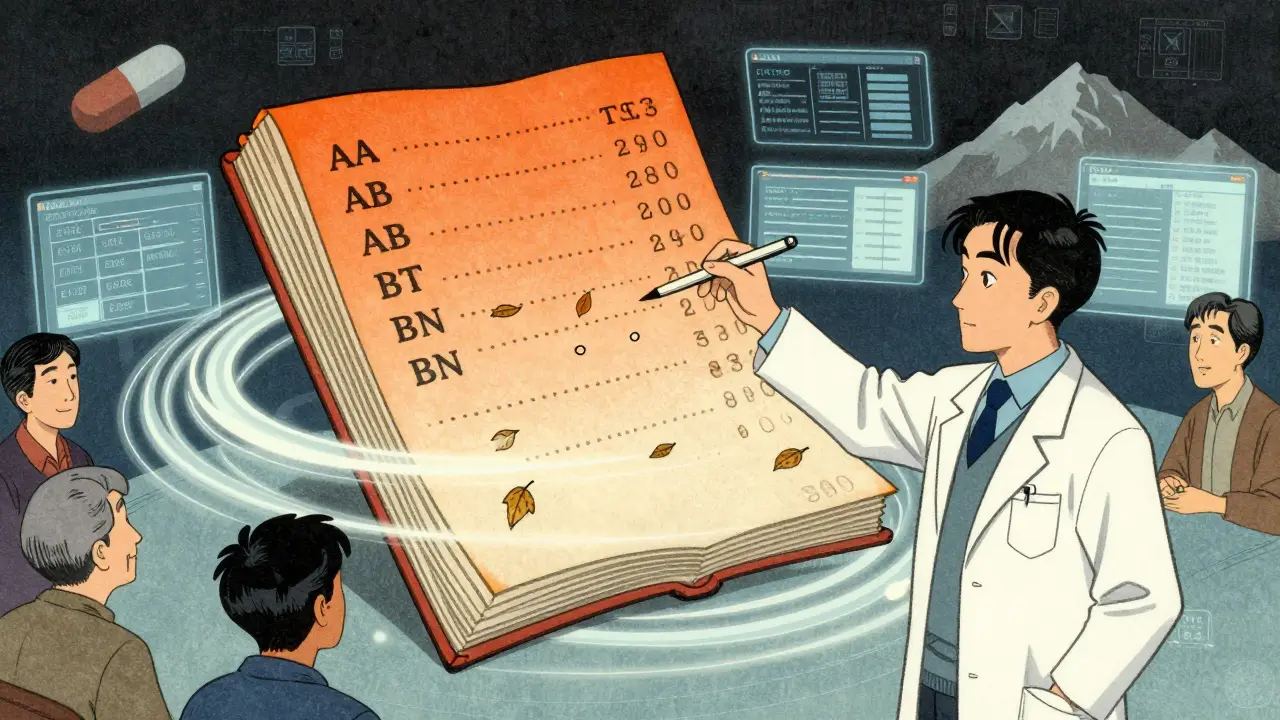
What This Means for You
If you’re prescribed a generic drug and your pharmacist swaps it for another generic, you can trust the system-unless it’s a B-coded product. In that case, your pharmacist should ask your doctor before switching. You can check the Orange Book yourself. Go to the FDA’s Drugs@FDA website and search for your drug. Look for the “Therapeutic Equivalence” section. If it says “A,” you’re good. If it says “B,” ask why. Don’t assume all generics are the same. Two different brands of the same drug can have different TE codes. One might be AA, another AB. That’s because small changes in inactive ingredients, manufacturing process, or release mechanism can affect how the body handles the drug. And if you’re on a complex medication-like a topical steroid, an inhaler, or a long-acting injection-don’t hesitate to ask your pharmacist if the generic you’re getting has an A code. If it doesn’t, your doctor might need to write “Dispense as Written” on the prescription.Frequently Asked Questions
Can a pharmacist substitute a generic drug without my doctor’s permission?
Yes, but only if the generic drug has an FDA-assigned "A" therapeutic equivalency code. All 50 U.S. states require pharmacists to check the Orange Book before substituting. If the drug has a "B" code, substitution is not permitted unless the prescriber specifically allows it.
Are all generic drugs in the Orange Book considered interchangeable?
No. Only products with "A" codes are considered therapeutically equivalent and interchangeable. Many generics are FDA-approved but still carry "B" codes because of unresolved bioequivalence issues-especially for complex delivery systems like inhalers, creams, or extended-release tablets. These are not interchangeable by law.
Why do two generics of the same drug have different TE codes?
Because TE codes are assigned to specific products, not just drug names. Two generics of the same medication can have different formulations, inactive ingredients, or manufacturing processes. Even small differences can affect how the drug is absorbed. The FDA evaluates each product individually, so one might get an "AA" code while another gets an "AB" or even a "B" code.
Do over-the-counter (OTC) drugs have TE codes?
No. TE codes apply only to prescription drugs approved under Section 505 of the Federal Food, Drug, and Cosmetic Act. OTC medications are regulated differently and are not evaluated for therapeutic equivalence by the FDA.
How often is the Orange Book updated?
The Orange Book is updated monthly with new drug approvals, withdrawn products, and revised TE codes. Pharmacists are required to use the most current edition when making substitution decisions. The FDA also provides a digital API for real-time access through electronic health record systems.
Shawn Peck
January 30, 2026 AT 18:38So let me get this straight - if your pill has an A code, you can swap it like candy. If it's a B? Good luck. Pharmacist won't touch it. Simple as that. No drama. No guesswork. Just letters that save you money or screw you over. FDA's got the cheat sheet. You just gotta know how to read it.
Sarah Blevins
January 30, 2026 AT 18:57The therapeutic equivalency framework is a meticulously constructed regulatory apparatus grounded in bioequivalence criteria established under the Hatch-Waxman Act. The distinction between A and B codes is not arbitrary but is derived from statistically validated pharmacokinetic parameters, including Cmax and AUC, with 90% confidence intervals constrained within 80–125%. The persistence of B codes for complex drug products reflects methodological limitations in current in vivo and in vitro models, not regulatory negligence.
Jason Xin
January 31, 2026 AT 18:09Yeah, and yet somehow the guy who got his asthma inhaler switched from the brand to a 'B-coded' generic ended up in the ER. Not because it didn't work - but because the damn thing spat out half the dose. Pharmacists don't want to be the one who gets sued. So they play it safe. And that's fine. But the system? It's still playing catch-up with science.
Kathleen Riley
January 31, 2026 AT 18:12One is compelled to contemplate the ontological status of the generic drug: Is it a mere simulacrum of the original, or does it possess an intrinsic therapeutic essence that transcends its chemical composition? The TE code, as a bureaucratic signifier, attempts to resolve this metaphysical dilemma through empirical quantification - yet it remains an imperfect proxy for the lived experience of pharmacological equivalence.
Beth Cooper
February 2, 2026 AT 01:43Wait… so the FDA says it’s safe, but the brand companies keep petitioning to block generics? Hmm. And you think that’s just about science? Nah. Big Pharma’s got lobbyists writing the Orange Book. They don’t want you saving $300 a month on insulin. They want you hooked on the $800 brand version. The B codes? That’s just their loophole to keep you paying.
Rohit Kumar
February 2, 2026 AT 22:52In India, generics are everywhere. No Orange Book. No TE codes. We trust the manufacturer, the doctor, and the price. If it works, it works. If it doesn’t, you switch. No bureaucracy. No letters. Just people getting medicine. Maybe the American system isn’t about safety - maybe it’s about control.
Carolyn Whitehead
February 4, 2026 AT 07:01Honestly I just take whatever the pharmacy gives me. I don't even look at the label anymore. If it's the same color and shape as last time, I'm good. I trust them. And hey, I saved like $50 this month. Win win right?
Beth Beltway
February 6, 2026 AT 05:58Let’s be real - the FDA’s 'A' code is a lie. They approve generics based on outdated bioequivalence models. How do you prove a topical cream works the same when they test it on 20 people in a lab? Real people have different skin, different diets, different metabolisms. And now you're telling me I can swap my steroid cream with some cheap knockoff? That’s not science. That’s corporate negligence wrapped in a government stamp.
Marc Bains
February 6, 2026 AT 20:26Big shoutout to the pharmacists who actually read the Orange Book. Most of them are overworked, underpaid, and still take the time to check codes because they care. If you're on a complex med - ask them. Don't assume. They're the real heroes here. And yeah, if it's a B code, ask your doc to write 'Dispense as Written.' It's your right.
kate jones
February 8, 2026 AT 15:09Therapeutic equivalence is predicated upon the demonstration of bioequivalence through rigorous in vivo studies, as codified under 21 CFR 320.22. The designation of a product as 'AA' or 'AB' reflects not merely regulatory convenience, but the cumulative evidentiary weight of pharmacokinetic parameters, including Cmax, AUC0–t, and AUC0–∞, all subject to statistical validation. The persistence of 'B' codes for complex products underscores the inadequacy of current analytical paradigms, not a failure of regulatory intent.
Kelly Weinhold
February 9, 2026 AT 02:45I used to stress about generics but now I just chill. I got my blood pressure med switched to a generic last year and I feel better than ever. Money saved, same results. Honestly, if the FDA says it’s safe, I’m gonna trust them. Plus, my wallet’s happier. Life’s too short to overthink pills.
Kimberly Reker
February 9, 2026 AT 21:48My grandma’s on a B-coded inhaler and her pharmacist refused to swap it even though the price was half. She was so relieved. That’s the system working right. Not everyone knows to ask, but the fact that pharmacists have to check the Orange Book? That’s protection. Not red tape. Real people need this.
Eliana Botelho
February 11, 2026 AT 04:17Okay but what if the TE code is wrong? Like what if they just slapped an A on something because they’re tired of waiting? And then you get some weird side effect and nobody remembers which generic you got? And then you die and it’s like ‘oh well, it had an A code so it’s fine.’ That’s not safety. That’s a gamble. And we’re all just rolling the dice every time we pick up a prescription.
Shawn Peck
February 12, 2026 AT 22:51And now they’re making the Orange Book digital? Finally. My pharmacist still uses a printed copy from 2021. That’s like using a rotary phone to order a pizza. If the system’s gonna save us money, at least let it update faster.