Finding Medications Abroad and Getting Local Prescriptions: A Practical Guide for Travelers
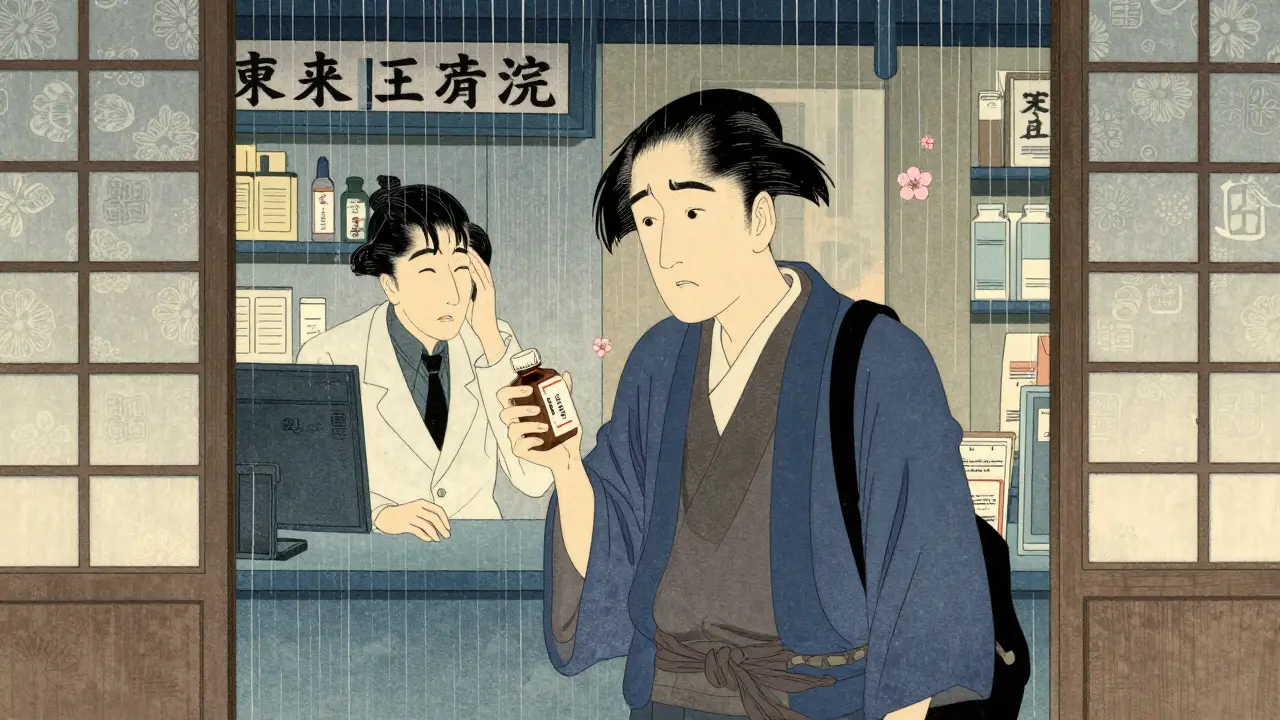
Imagine you’re halfway through a trip in Tokyo, and your anxiety medication runs out. You walk into a pharmacy, hand over your prescription, and the pharmacist shakes their head. "Not allowed here." That’s not a movie scene-it’s a real experience for thousands of travelers every year. The truth is, finding medications abroad isn’t just about knowing where to buy pills. It’s about understanding laws, paperwork, and cultural differences that can turn a minor health issue into a travel disaster.
Why Your Prescription Doesn’t Travel Well
Not all drugs are created equal around the world. What’s legal in the U.S. might be banned in Japan, tightly controlled in Singapore, or sold over-the-counter in Mexico. The reason? International drug control treaties from the 1960s still shape today’s rules. The International Narcotics Control Board (INCB) tracks these laws, and as of October 2025, only 68 out of nearly 200 countries have published clear guidelines for travelers carrying medications. That leaves most people guessing. For example:- Hydrocodone: Legal with a prescription in the U.S., completely illegal in Japan.
- Codeine: Available without a prescription in Mexico, but requires special authorization in Australia.
- Benzodiazepines like Xanax or Valium: Banned entirely in Malaysia, even with a valid prescription.
- Pseudoephedrine: Found in many cold medicines in the U.S., but prohibited in Australia, New Zealand, and the UAE because it’s used to make methamphetamine.
What You Need to Carry (And What to Leave Behind)
If you’re traveling with prescription meds, here’s what actually works:- Original containers only. Never transfer pills to a pill organizer. Customs officials in over 97% of countries require the original pharmacy label with your name on it.
- Doctor’s letter. This isn’t optional if you’re carrying controlled substances. It must be on letterhead, include your full name, the generic drug name (not brand), dosage, quantity, and the ICD-11 diagnosis code (like F41.1 for generalized anxiety disorder). Many Schengen countries require this.
- Notarized translations. If you’re going to a non-English-speaking country, get your prescription and doctor’s letter translated and notarized. Over 60% of countries require this-especially places like Japan, South Korea, and the UAE.
- Quantity limits. Most countries allow a 90-day supply for personal use. But Japan caps narcotics at 30 days. Singapore allows only 14 days. Exceed that? Your meds get seized.
How to Get a Local Prescription Abroad
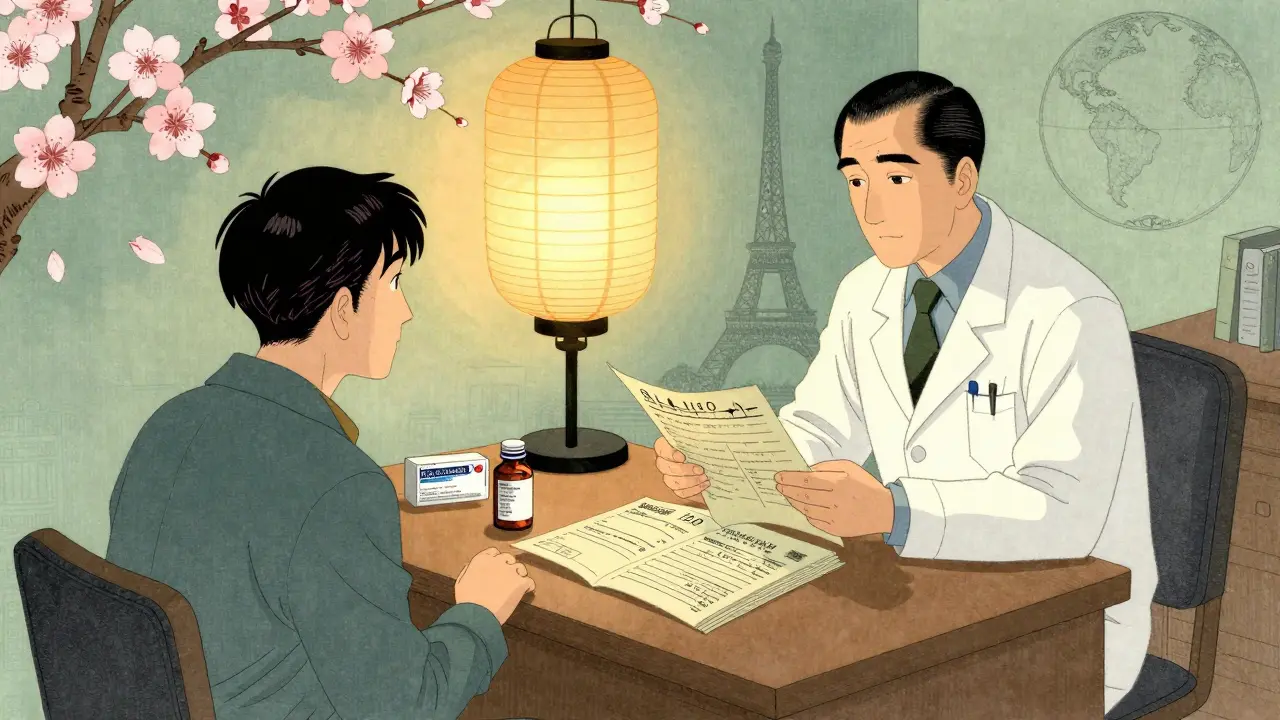
Sometimes, you can’t bring your meds. Sometimes, they’re unavailable. That’s when you need to get a local prescription. First, find a clinic that accepts foreign patients. The International Association for Medical Assistance to Travellers (IAMAT) has over 1,400 verified clinics worldwide. These are trusted by travelers for a reason-they know how to handle foreign prescriptions. Here’s how it works:- Bring your original prescription, doctor’s letter, and medical records.
- Visit a local doctor. They’ll review your history and decide if they can issue a local prescription.
- Some countries require you to see a doctor in person before refilling any controlled substance-even if you’ve been on the same med for years.
- Pharmacies in the EU, Canada, and parts of Latin America often accept foreign prescriptions with minimal hassle. In Southeast Asia or the Middle East? Expect more scrutiny.
Country-by-Country Reality Check
Some destinations are easy. Others? Not so much.| Region | Ease of Access | Biggest Risks | Success Rate for Travelers |
|---|---|---|---|
| European Union | High | None for most meds | 98.7% |
| Canada | High | None under new import law | 95% |
| Japan | Very Low | Banned opioids, stimulants | 11% |
| Singapore | Low | Strict 14-day limit | 24% |
| UAE | Low | Requires pre-approval for sedatives | 18% |
| Thailand | Moderate | Some psychotropics restricted | 72% |
| Malaysia | Very Low | Bans all benzodiazepines | 8% |
What You Should Do Before You Leave
Don’t wait until you’re stranded. Start planning 8-12 weeks before departure.- Check your destination’s rules. Go to their embassy website. Search for "medication" or "controlled substances." If you can’t find it, email them directly.
- Contact your doctor. Ask for a letter with ICD-11 codes, generic names, and dosage. Ask them to sign a copy for customs.
- Get translations notarized. Use a certified translator. Google Translate won’t cut it.
- Call your airline. Ask if they have special procedures for carrying medications.
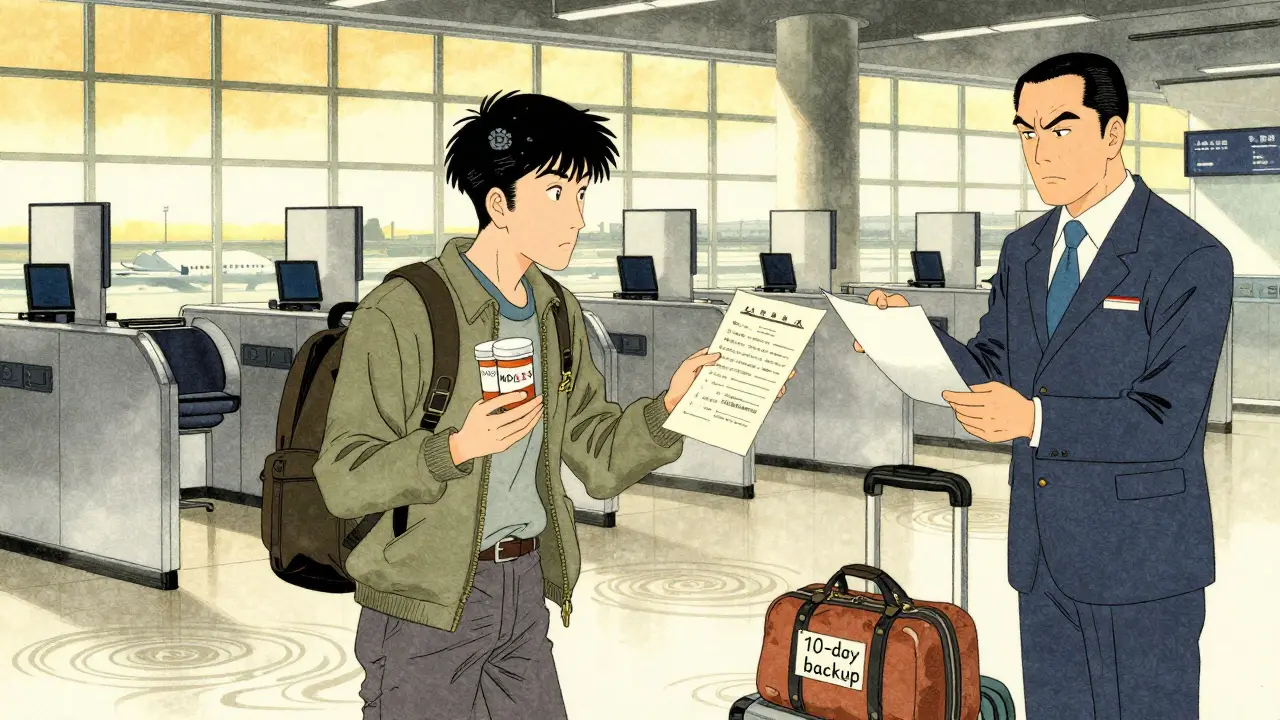
- Carry extras. Pack a 10-15 day backup in your carry-on. In case your luggage gets lost.
What Happens When Things Go Wrong
People lose vacations over this. A Reddit thread from September 2025 titled "My Ambien confiscated in Dubai despite doctor’s note" had over 1,400 upvotes and 289 comments. One traveler spent three days in a customs holding room because they didn’t have a notarized translation. Common mistakes:- Using a pill organizer instead of original bottles.
- Bringing more than a 90-day supply.
- Not having the doctor’s letter with ICD-11 codes.
- Assuming your U.S. prescription works everywhere.
Emerging Solutions and What’s Coming
Good news: change is coming. The WHO introduced a standardized international medication documentation template in May 2025. It’s set to roll out in 2026. This will make doctor’s letters, translations, and approvals much more uniform. The U.S. Affordable and Safe Prescription Drug Importation Act of 2025 (H.R. 3162) lets travelers bring in meds from certified pharmacies in Canada, the UK, EU, and Switzerland starting May 1, 2026. It’s a big step toward fixing the broken system. Services like MediFind and MyTravelMed are helping travelers navigate this. MediFind has an 85% success rate across 28 countries. But even these services can’t override local laws. They just make the process faster.Final Checklist: Don’t Leave Home Without It
- Original prescription bottles with pharmacy labels
- Doctor’s letter on letterhead with ICD-11 codes
- Notarized translation (if needed)
- Copy of the letter and prescription (separate from originals)
- 10-15 day backup supply in carry-on
- Printout of destination country’s medication rules
- Emergency contact: U.S. embassy + local clinic (from IAMAT)
Can I bring my ADHD medication to Europe?
It depends. In most EU countries, you can bring a 90-day supply with a doctor’s letter and original packaging. But stimulants like Adderall or Vyvanse are controlled substances. Some countries, like France and Germany, require pre-approval. Always check with the embassy of your destination country. Never assume your U.S. prescription is enough.
What if my medication isn’t available abroad?
Find an IAMAT-certified clinic. Bring your original prescription, doctor’s letter, and medical records. A local doctor can often prescribe an equivalent medication. For example, if you take Lexapro, they might prescribe escitalopram instead. Don’t try to self-medicate or buy from unlicensed pharmacies-counterfeit drugs are common.
Is it legal to mail my meds to myself overseas?
No. Almost every country bans importing medications by mail unless it’s through a certified pharmacy. Even if you label it "personal use," customs will seize it. Always carry medications with you in your luggage.
Do I need a translation if I’m going to Spain?
Not always, but it helps. Spain is part of the EU, so your prescription is often accepted as-is. But if you’re carrying a controlled substance like a narcotic or stimulant, having a notarized Spanish translation reduces delays. Many pharmacists speak English, but customs officers may not.
What should I do if my meds get confiscated?
Stay calm. Ask for a written receipt of seizure. Contact your country’s embassy immediately. They can’t force a country to return your meds, but they can help you find local care, connect you with a doctor, or guide you through legal options. Never argue with customs-it makes things worse.
andres az
February 13, 2026 AT 22:05Let me guess-this whole guide is just a front for Big Pharma’s global supply chain control. The INCB? More like the International Narcotics Control Board *for Big Pharma*. They’re the ones who invented the ‘90-day rule’ to keep you dependent on their overpriced pills. And don’t get me started on ‘notarized translations’-that’s just a bureaucratic tax on the sick. You think they care about your anxiety? Nah. They care about the 300% markup on generic SSRIs in Dubai. Wake up, sheeple.
Neha Motiwala
February 15, 2026 AT 15:27I just got back from Bali and let me tell you-this is the most dangerous thing I’ve ever experienced. I had my Xanax in the original bottle, doctor’s letter, notarized translation, even a notarized selfie holding the prescription-I still got pulled aside for 6 hours. They said my ICD-11 code was ‘insufficiently spiritual.’ I swear to god, the customs officer looked at me like I was trying to smuggle demon essence. I had to beg a local monk to bless my meds before they’d let me go. I’m still traumatized.
Craig Staszak
February 16, 2026 AT 21:53I’ve been traveling for 12 years and this is actually solid advice. The EU thing is legit-I had my German prescription filled in Portugal without a hitch. Just carry the original bottles and don’t overthink it. The real issue is people assuming their U.S. meds are universal. They’re not. Treat it like a visa-you don’t get to assume entry. You gotta apply. Simple.
alex clo
February 17, 2026 AT 06:54While the intent of this guide is commendable, several of its assertions lack empirical grounding. For instance, the claim that ‘97% of countries require original containers’ is not substantiated by WHO or INCB data. Furthermore, the assertion that ICD-11 codes are universally mandated is misleading-many jurisdictions accept clinical summaries without diagnostic coding. A more balanced approach would acknowledge regional variability rather than presenting a rigid protocol as canonical.
Joanne Tan
February 17, 2026 AT 11:45OMG I JUST GOT MY ADDERALL CONFISCATED IN THAILAND AND I WAS SO FURIOUS. I DIDN’T KNOW ABOUT THE 90-DAY RULE. I HAD 120 PILLS. I THOUGHT I WAS BEING SMART BY BRINGING EXTRA. NOW I’M ON A PRESCRIPTION FOR MELATONIN AND I FEEL LIKE A ZOMBIE. PLEASE LISTEN TO THIS GUIDE. IT SAVED MY TRIP. I’M SO GLAD I READ IT BEFORE I LEFT.
Ojus Save
February 18, 2026 AT 10:03so i went to dubai last year and my zolpidem got taken. i didnt know about pre-approval. i just had my bottle and a doctor note. they asked for like 3 forms and a blood sample. i gave up and bought some local sleep aid that made me hallucinate i was talking to a camel. lesson learned. always check the embassy website. its boring but saves your vacation.
Annie Joyce
February 20, 2026 AT 05:15This guide is basically the difference between ‘I’m fine’ and ‘I’m in a holding cell with a confused pharmacist holding my pills like they’re contraband.’ I used to think ‘just carry your meds’ was enough. Then I got stuck in Seoul for three days because my Valium bottle didn’t have the pharmacy’s phone number printed on it. (Yes, that’s a real thing.) The notarized translation? Worth every penny. The doctor’s letter? My lifeline. This isn’t bureaucracy-it’s survival.
Rob Turner
February 20, 2026 AT 21:46One thing this doesn’t mention: cultural context. In Japan, they don’t just ban meds because they’re ‘dangerous’-they’re terrified of addiction because of past meth epidemics. In the UAE, sedatives are tied to social control narratives. This isn’t just paperwork. It’s about understanding why these rules exist. Empathy beats compliance every time. If you approach it as ‘I’m a patient, not a criminal,’ you’ll get farther.
Luke Trouten
February 22, 2026 AT 02:16The assertion that ‘most countries require notarized translations’ is overstated. The EU, Canada, Australia, and New Zealand routinely accept English-language prescriptions without translation. Even in Japan, pharmacists at major international hospitals often speak English. The real barrier is not language-it’s the lack of centralized, accessible regulatory information. The WHO’s 2026 template will help, but until then, travelers should rely on embassy contacts and IAMAT-not arbitrary notarization requirements.
Gabriella Adams
February 23, 2026 AT 12:22I am a pharmacist in Toronto and I can confirm: the EU’s cross-border prescription system is revolutionary. I’ve processed German, Italian, and Dutch prescriptions without issue. The key is the standardized EU prescription format. Outside of that? It’s chaos. But the U.S. is still stuck in the 1990s. We need a North American Medication Mobility Agreement. Until then, yes-carry your letter, your bottles, your backups. But also lobby your reps. This shouldn’t be this hard.
Kristin Jarecki
February 25, 2026 AT 06:13While the emotional weight of this guide is compelling, its statistical claims require verification. The 98.7% success rate in the EU is not corroborated by EU Commission data. Similarly, the 22% year-over-year increase in benzodiazepine incidents lacks citation. For travelers seeking reliable information, I recommend consulting the U.S. State Department’s Travel Advisory page, the WHO’s International Drug Control Unit, and the International Pharmaceutical Federation’s guidelines. This guide is useful as a checklist, but not as a primary source.
Jonathan Noe
February 27, 2026 AT 00:02Everyone’s missing the real issue: the U.S. doesn’t have a national formulary for travelers. We’re the only developed country that doesn’t issue a standardized international medical card. Canada, Germany, Australia-they all have them. We don’t. So travelers are left to navigate 200 different systems alone. That’s not negligence-it’s a policy failure. If you’re reading this, email your rep. Demand H.R. 3162 be expanded to include a U.S. Traveler’s Medication Passport. This isn’t about convenience. It’s about dignity.
Rachidi Toupé GAGNON
February 27, 2026 AT 17:12Just did this in Vancouver last month. Brought my Lexapro from the States. Original bottle. Doctor’s letter. 90-day supply. Walked into a pharmacy. Pharmacist said ‘yep, we can fill that.’ No drama. No forms. No panic. Canada’s 2025 import law is a game-changer. If you’re heading north, you’re golden. The rest of the world? Still a minefield. But hey-at least we’ve got one country that gets it. 🇨🇦
Jim Johnson
February 27, 2026 AT 18:27my buddy got his adderall taken in singapore and spent 3 days in a hotel room while they ‘reviewed his case.’ he cried. i told him to chill. he didn’t. but here’s the thing-after he got home, he switched to non-stimulant meds. no more stress. no more travel nightmares. i know it’s scary to change, but sometimes the system forces you to heal. maybe this is the universe’s way of saying ‘slow down.’
Vamsi Krishna
February 28, 2026 AT 15:35Let me tell you why this is all fake. The INCB doesn’t even exist. It’s a CIA front. The whole ‘notarized translation’ thing? That’s just to keep poor people from traveling. They want you to pay $300 for a translator so you can’t afford to go anywhere. And the ‘90-day limit’? That’s because Big Pharma owns the pharmacies abroad and they want you to buy their overpriced pills. I’ve been to 17 countries and never once had a problem. I just carry my meds in a Ziploc. No letter. No bottle. No fear. They can’t prove it’s not yours. They don’t have DNA tests for pills. Wake up.