Gout: Understanding Purine Metabolism and How Urate-Lowering Medications Work
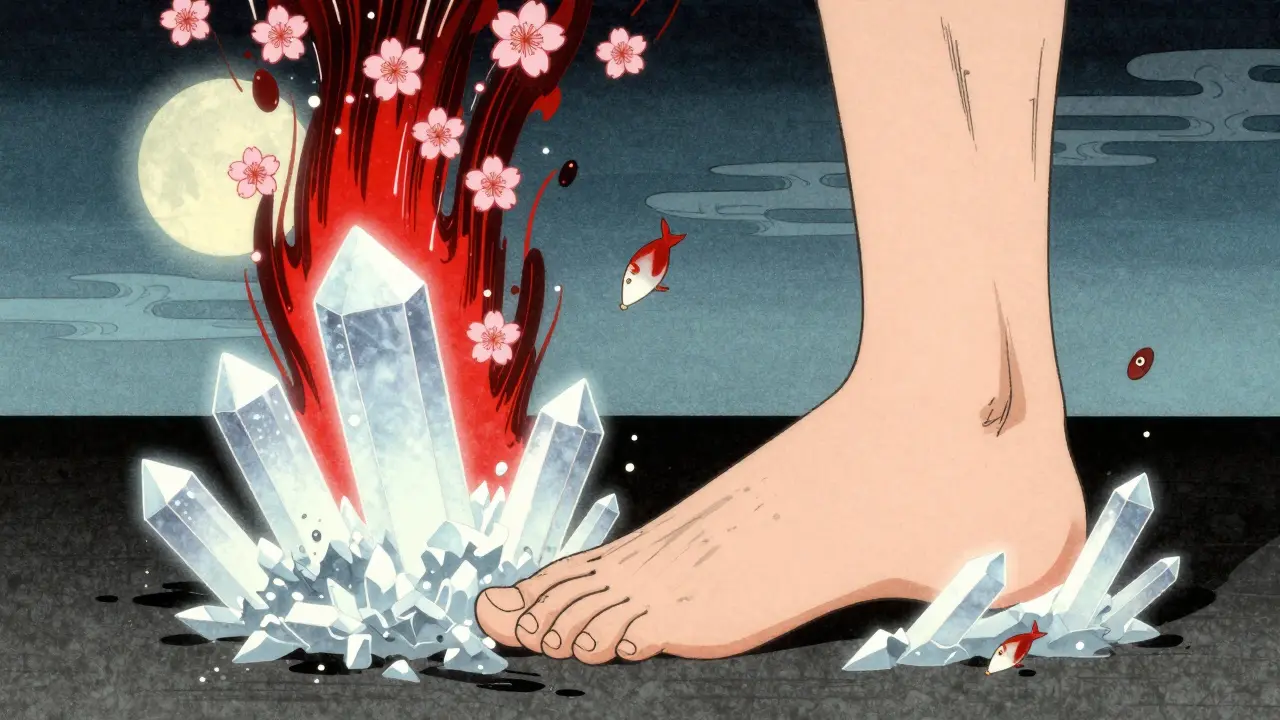
When your big toe swells up out of nowhere, burning like fire and too tender to even touch a sheet, it’s not just bad luck. It’s gout. And behind that pain is a quiet biochemical storm-your body can’t handle the waste from the food you eat. That waste? Uric acid. And when it builds up, it forms sharp crystals in your joints. This isn’t just about diet or drinking too much beer. It’s about how your body breaks down purines, and whether your kidneys or liver are keeping up.
What Happens When Purines Go Wrong
Purines are natural parts of your DNA and RNA. They’re also in the food you eat-especially red meat, organ meats, and certain seafood. When your body breaks down purines, it turns them into uric acid. In most animals, an enzyme called uricase turns that uric acid into something harmless that’s easily flushed out. But humans lost that enzyme millions of years ago. So we’re stuck with uric acid as the end product.Normally, your kidneys filter out about 65% of uric acid, and the rest gets processed by your gut. But if you’re producing too much, or your kidneys aren’t clearing enough, uric acid piles up. At 6.8 mg/dL, it hits saturation. That’s when crystals start forming. And once those crystals are in your joint, your immune system goes into overdrive. That’s the redness, heat, and crushing pain of a gout flare.
It’s not just about what you eat. Genetics matter too. Some people have mutations in genes like SLC2A9 or URAT1 that make their kidneys reabsorb too much uric acid instead of letting it pass. Others overproduce it because their enzymes, like PRPP amino transferase, run too fast. This isn’t laziness or overindulgence-it’s biology.
How Urate-Lowering Medications Fix the Problem
Treating gout isn’t about waiting for flares and popping painkillers. It’s about lowering uric acid levels so crystals dissolve and don’t reform. That’s where urate-lowering therapy (ULT) comes in. There are three main types, each targeting a different part of the problem.Xanthine oxidase inhibitors (XOIs) block the final step of uric acid production. Allopurinol, approved in 1966, is the oldest and still the most common. It stops xanthine oxidase from turning xanthine into uric acid. Most people start at 100 mg a day. But here’s the catch: most people stay at that dose. And that’s not enough. Studies show that 92% of patients hit their target uric acid level when allopurinol is slowly increased to 300 mg or higher. Yet only 29% of doctors follow this titration protocol. If you’re on allopurinol and still having flares, ask your doctor to raise your dose.
Febuxostat, a newer XOI, works the same way but is stronger. At 80 mg daily, it gets 67% of patients to target levels. But it comes with a warning. In 2019, the FDA added a black box warning after a major study found more heart-related deaths in people taking febuxostat compared to allopurinol. If you have heart disease, this isn’t your first choice.
Uricosurics help your kidneys dump more uric acid. Probenecid does this by blocking URAT1, a transporter that pulls uric acid back into your blood from your kidneys. It works well-if your kidneys are healthy. But if your creatinine clearance is below 50 mL/min, it’s not safe. Lesinurad was approved in 2015 but pulled from the market in 2019 because it caused kidney damage. Newer drugs like verinurad are in trials and show promise, especially when paired with febuxostat.
Uricase agents are the nuclear option. Pegloticase is an enzyme that breaks down uric acid into allantoin, which your body flushes out easily. It works fast-many patients see tophi (those lumpy uric acid deposits under the skin) shrink or disappear in months. But it’s expensive: over $16,000 a month. It also triggers immune reactions in 26% of users, so you need premedication. And it only works if you don’t develop antibodies against it. It’s reserved for severe, treatment-resistant gout.

Cost, Access, and Real-World Struggles
Allopurinol costs $4.27 a month. Febuxostat? $59. Pegloticase? $16,428. That’s not just a price difference-it’s a treatment barrier. Many patients can’t afford the newer drugs. Others can’t get insurance to approve pegloticase. One Reddit user spent 17 appeals just to get it covered. That’s not healthcare-it’s a battle.Side effects are another reason people quit. About 42% of allopurinol users get a rash. For 12%, it’s severe enough to stop the drug. Febuxostat can raise liver enzymes. And here’s the irony: starting ULT can actually trigger flares. That’s because as crystals dissolve, they stir up inflammation. That’s why guidelines say you need to take colchicine (0.6 mg daily) for at least six months when you start any urate-lowering drug. Yet most doctors don’t mention it.
A 2022 survey found that 61% of gout patients stop their meds within a year. Why? They think it’s not working. Or they got a rash. Or the dosing was confusing. But the truth? They just didn’t get enough support. Gout isn’t cured in a week. It takes months, sometimes years, to dissolve crystals. And that requires patience, monitoring, and a doctor who knows how to titrate doses.
Diet Matters-But Not Like You Think
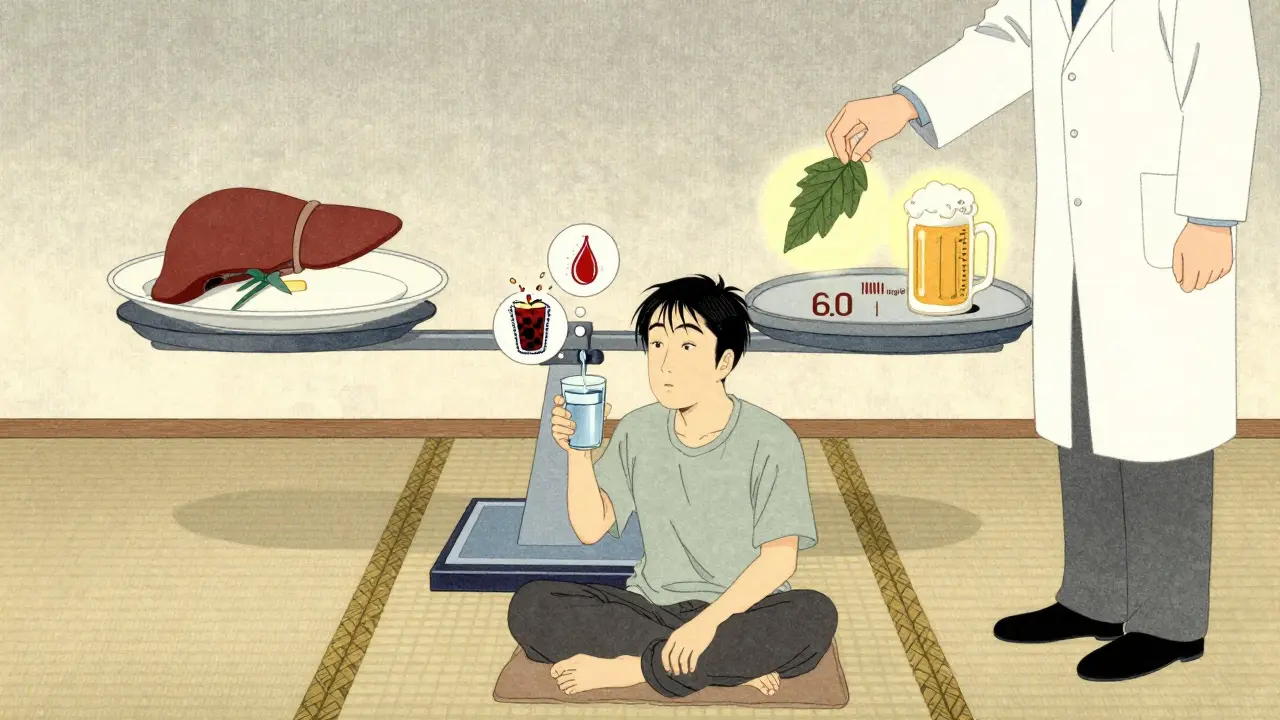
You’ve heard: avoid beer, shellfish, and liver. That’s true. A 100g serving of liver has 240-400 mg of purines. Anchovies? 500 mg. Beer? 10-20 g per liter. But here’s the reality: even if you go vegan and cut out alcohol, your uric acid might only drop 1-2 mg/dL. That’s not enough to reach the target of 6.0 mg/dL for most people. Diet helps, but it’s not the cure.What matters more is weight. Obesity increases uric acid production and reduces kidney clearance. Losing 10% of your body weight can cut uric acid by 1.5 mg/dL. That’s more than any dietary change. And sugary drinks? High-fructose corn syrup increases purine production. Swap soda for water. It’s one of the easiest wins.
What’s Next in Gout Treatment
The future of gout treatment is personalization. Researchers are looking at genetic markers like SLC2A9 variants to predict who responds to which drug. New drugs like arhalofenate, which lowers uric acid and reduces inflammation at the same time, are in late-stage trials. Longer-acting uricase versions are being tested so patients don’t need weekly infusions.Regulators are catching up too. The FDA now requires all new XOIs to prove they’re safe for the heart. The EMA requires genetic testing for HLA-B*58:01 before prescribing allopurinol-because people with that gene have a 10% risk of a life-threatening skin reaction. Testing for it costs less than $100. Why isn’t it standard?
What You Need to Do Right Now
If you have gout, here’s what actually works:- Get your serum uric acid tested. Know your number. Anything above 6.8 mg/dL is too high.
- If you’re on allopurinol and your level is still above 6.0, ask for a dose increase. Go up by 100 mg every 2-4 weeks until you hit target.
- Start or continue colchicine (0.6 mg once or twice daily) for at least six months after starting ULT.
- Monitor kidney and liver function every 3-6 months, especially if you’re on febuxostat.
- Drink water. Lose weight. Cut out sugary drinks. Avoid binge drinking. But don’t blame yourself if diet alone doesn’t fix it.
- If you’ve tried everything and still have flares or tophi, ask about pegloticase. It’s expensive, but it can be life-changing.
Gout is not a lifestyle failure. It’s a metabolic disease. And it’s treatable-if you know how. The drugs work. The guidelines exist. The problem is access, awareness, and follow-through. You don’t need to suffer through another flare. You just need the right plan-and a doctor who won’t let you quit too soon.
Philip Leth
January 3, 2026 AT 16:49Man, I thought gout was just from too much beer and steak. Turns out my body’s just broken in a very specific, ancient way. Feels weird to blame biology instead of my taste buds.
Joy F
January 4, 2026 AT 03:37Let’s be real-this isn’t medicine, it’s corporate theater. Uricase? $16K a month? Meanwhile, the same pharma giants that profit off this are lobbying to keep HLA-B*58:01 testing optional. They don’t want you cured-they want you compliant. This is capitalism dressed in white coats.
And don’t get me started on ‘diet doesn’t matter.’ Sure, it doesn’t fix it alone-but if you’re eating processed junk, drinking soda, and ignoring sleep, you’re not a patient, you’re a walking clinical trial.
They’ll give you allopurinol and call it a day. Meanwhile, the real fix? Systemic change. But that’s too inconvenient for a pill-pushing system.
Ian Detrick
January 5, 2026 AT 02:32There’s something deeply human about this whole thing. We lost the enzyme that kept us safe from our own waste-millions of years ago-and now we’re stuck paying the price with pain, pills, and panic. It’s not just biology. It’s evolution’s ghost haunting our joints.
But here’s the hope: we’re starting to understand it. Not just treat symptoms, but fix the root. That’s progress. Slow, messy, expensive-but real.
Angela Goree
January 5, 2026 AT 04:10America’s healthcare system is a joke. $16,000 a month for a drug that works? And you need 17 appeals just to get it? In Russia, they just give you colchicine and tell you to drink water. No bureaucracy. No drama. Just treatment.
Why are we letting insurance companies decide who gets to live without pain? This isn’t healthcare-it’s a lottery.
Kerry Howarth
January 5, 2026 AT 10:59Great breakdown. Key takeaway: dose allopurinol properly. Most docs don’t. And always take colchicine for 6 months after starting ULT. Simple. Effective. Ignored.
Tiffany Channell
January 7, 2026 AT 06:29Of course the ‘diet doesn’t matter’ crowd shows up. People love to hear they’re not at fault. But if you’re obese, sedentary, and drinking soda daily, blaming genetics is just denial with a PhD.
And yes, allopurinol rashes are real. But you don’t just quit-you get tested for HLA-B*58:01 first. If you didn’t, you weren’t trying.
Angela Fisher
January 8, 2026 AT 16:52They don’t want you to know this, but gout is a mind control experiment. The uric acid crystals? They’re not from food-they’re from fluoride in the water. The FDA knows. The WHO knows. But they silence anyone who talks about it.
Why do you think they push allopurinol? It’s cheap. It keeps you dependent. And it makes them billions. The real cure? Reverse osmosis filters. And ditch all processed food. But you won’t hear that from your ‘doctor’-because they’re paid by the pharmas.
I’ve been gout-free for 3 years since I started drinking distilled water and eating only raw vegetables. No pills. No infusions. Just truth.
They call me crazy. But when your tophi disappear, who’s crazy?
Tru Vista
January 9, 2026 AT 04:40Wait so febuxostat causes heart death? But it’s still on the market? And people take it? LMAO. Also, probenecid? That’s the 1950s drug. Who even uses that anymore?
And why are we still talking about allopurinol like it’s the future? It’s 2025.
Vincent Sunio
January 9, 2026 AT 06:48While the scientific exposition is largely accurate, one must question the pedagogical framing. To assert that gout is ‘not a lifestyle failure’ is to dangerously understate the role of metabolic discipline. The human body is not a passive vessel; it is a dynamic system that responds-often catastrophically-to chronic derangement.
Furthermore, the dismissal of dietary intervention as ‘not enough’ is statistically misleading. The cumulative effect of reduced purine load, fructose avoidance, and hydration is synergistic and clinically significant when applied with rigor.
One does not absolve responsibility by labeling biology as destiny. That is the hallmark of a culture in decline.
Shanahan Crowell
January 10, 2026 AT 19:49Hey-if you’ve got gout, you’re not broken. You’re just under-supported. Get your uric acid checked. Ask for the higher dose. Stick with colchicine. Drink water. Lose weight. It’s not glamorous. But it works.
You’ve got this. And you’re not alone.
Haley Parizo
January 12, 2026 AT 09:04They took away our uricase. We didn’t evolve to handle this. We were never meant to live this long, this sedentary, this sugar-soaked. This isn’t your fault. It’s the world’s. And now we’re paying for it in joint pain.
But here’s the power move: we’re learning how to fix it. Not with shame. Not with guilt. With science. With dosing. With patience.
They told us it was ‘just a diet thing.’ We know better now.
Neela Sharma
January 14, 2026 AT 01:14From Delhi to Detroit, this pain is the same. No medicine can replace the quiet dignity of walking without wincing. I’ve seen grandmothers in India with gout, sipping bitter neem tea, refusing pills because they cost more than rice. Yet they still walk to the temple. Every day.
Maybe the real cure isn’t in the lab. Maybe it’s in the courage to keep moving-even when your body screams.