Grapefruit and Immunosuppressant Medications: What You Need to Know
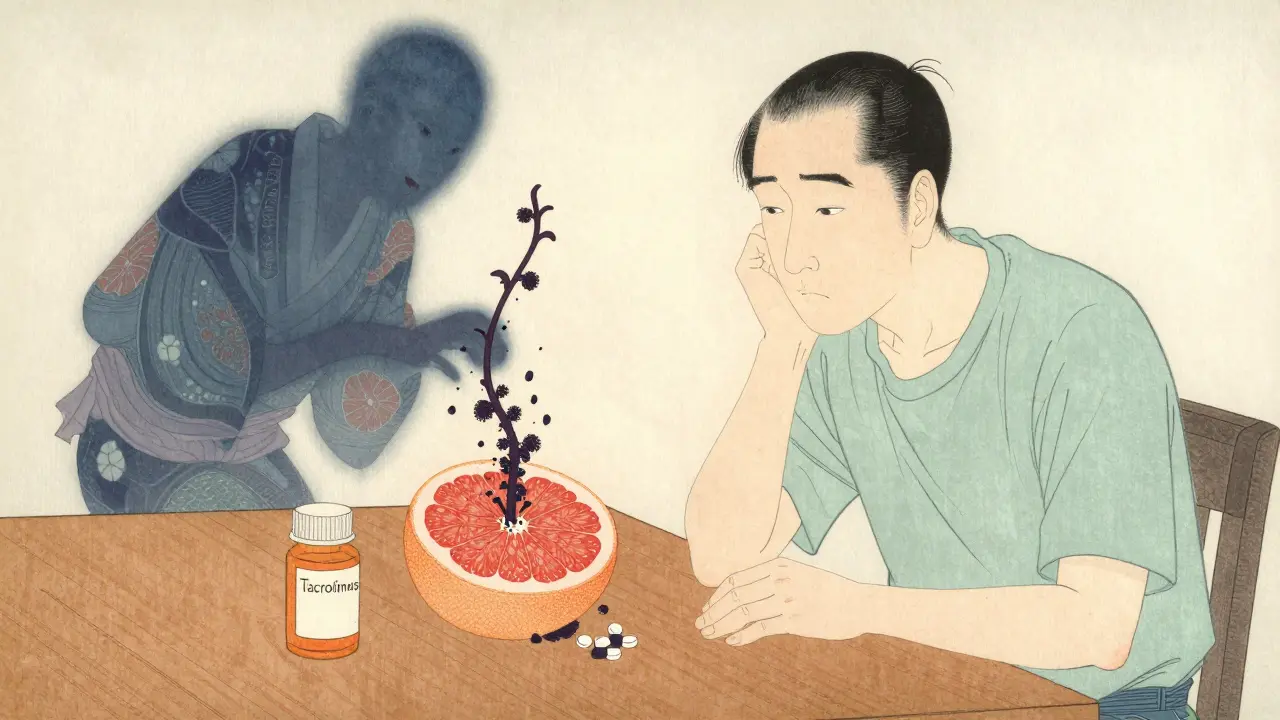
If you're taking immunosuppressant drugs after a transplant, a simple glass of grapefruit juice could put your life at risk. This isn't a myth or a warning from an overcautious doctor-it's a well-documented, life-threatening interaction that has been studied for over 30 years. The grapefruit interaction with medications like cyclosporine, tacrolimus, and sirolimus isn't just a minor concern. It can cause drug levels in your blood to spike by 200% to 300%, leading to kidney failure, severe infections, or even death.
Why Grapefruit Is Dangerous with Immunosuppressants
Grapefruit doesn't just interact with these drugs-it hijacks your body's natural defense system. When you take an immunosuppressant pill, your body relies on an enzyme called CYP3A4 to break it down in the gut before it enters your bloodstream. This enzyme acts like a gatekeeper, keeping drug levels within a safe range. But grapefruit contains chemicals called furanocoumarins-mainly 6',7'-dihydroxybergamottin and bergamottin-that permanently disable this enzyme. Once blocked, up to 80% more of the drug slips into your blood unchecked.
This isn't a slow, gradual effect. One 8-ounce glass of grapefruit juice can raise blood levels of tacrolimus by 30-50% and sirolimus by over 200% within hours. For transplant patients, this means the difference between a therapeutic dose and a toxic one. The enzyme doesn't recover quickly. Even 72 hours after consuming grapefruit, CYP3A4 activity remains suppressed by more than 20%, according to clinical studies published in Clinical Pharmacology & Therapeutics.
Which Immunosuppressants Are Most Affected?
Not all immunosuppressants are equally risky. The three most dangerous when mixed with grapefruit are:
- Cyclosporine (Sandimmune, Neoral): Blood levels can increase by 50-100%. Toxic levels exceed 500 ng/mL, while the therapeutic range is 100-400 ng/mL.
- Tacrolimus (Prograf, Envarsus XR, Astagraf XL): Levels rise 30-50% after grapefruit. Toxic levels are above 20 ng/mL; normal is 5-15 ng/mL.
- Sirolimus (Rapamune): The most extreme case. Grapefruit can push levels 200-300% higher. Toxicity can occur with even small amounts.
These drugs share three critical traits: they're metabolized almost entirely by CYP3A4 in the gut, they have low oral bioavailability (only 20-50% of the pill normally gets absorbed), and they have an extremely narrow therapeutic window. That means the dose that prevents rejection is only 2-4 times lower than the dose that causes organ damage.
Real-World Consequences
Patients don't always realize how serious this is until it's too late. A kidney transplant recipient on Reddit shared that after drinking grapefruit juice once, their tacrolimus level jumped from 8.2 ng/mL to 24.7 ng/mL in 36 hours. They were hospitalized with acute kidney injury. In another case, a liver transplant patient on the American Transplant Foundation forum developed tremors, nausea, and dangerously high potassium levels after a single serving of grapefruit.
Transplant centers report that 15-20% of unexpected immunosuppressant toxicity cases between 2021 and 2022 were linked to grapefruit consumption. Many patients didn't think it was a big deal-"I only had a little juice," they said. But research from the University of Pittsburgh Medical Center shows that as little as 200 mL (less than one cup) of juice is enough to cause a dangerous spike.

What About Other Citrus Fruits?
Not all citrus is dangerous. Regular oranges, tangerines, and lemons are generally safe. But Seville oranges-used in marmalade-contain the same furanocoumarins as grapefruit. Pomelos, which are closely related to grapefruit, are just as risky. Even grapefruit extracts in supplements or flavorings can trigger the interaction.
Some patients assume that switching from juice to whole fruit is safer. It's not. A single half-fruit contains enough furanocoumarins to block CYP3A4. The FDA's 2023 consumer update warns that "no amount of grapefruit is considered safe" when taking these medications.
How Long Does the Effect Last?
This is one of the most misunderstood parts. Many patients think if they avoid grapefruit on the day they take their pill, they're fine. That's not true. Because the enzyme inhibition is irreversible, your body needs time to grow new enzymes. Studies show CYP3A4 activity remains reduced by 35% at 48 hours and 24% at 72 hours after just one serving. That’s why transplant pharmacists and the American Academy of Family Physicians recommend avoiding grapefruit for at least 72 hours before starting or changing immunosuppressant doses.

What Should You Do?
If you're on an immunosuppressant, here’s what you need to do:
- Avoid all grapefruit products. That includes juice, fresh fruit, frozen pulp, and flavored teas or supplements.
- Check your medication guide. Every prescription for cyclosporine, tacrolimus, or sirolimus now has a bolded FDA warning: "CONCOMITANT USE WITH GRAPEFRUIT IS CONTRAINDICATED."
- Ask your pharmacist. They can scan your medications and tell you if any other drugs you're taking also interact with grapefruit. Everolimus (Zortress), added to the high-risk list in March 2023, is another example.
- Inform family and caregivers. Many patients don’t realize their loved ones might serve them grapefruit without knowing the danger.
- Use the new monitoring tools. Johns Hopkins launched a mobile app in January 2023 that scans medication barcodes and instantly alerts users to grapefruit interactions.
What If You Accidentally Ate It?
If you consumed grapefruit and are on an immunosuppressant, don’t panic-but don’t wait. Contact your transplant team immediately. Most centers have protocols in place: they’ll check your blood levels within 24 hours and may reduce your dose by 25-50% until levels stabilize. Delaying can lead to kidney damage, liver toxicity, or life-threatening infections.
The Bigger Picture
This interaction affects around 300,000 transplant recipients in the U.S. alone. With 40% of kidney transplant patients over age 65-and seniors often eating grapefruit for its vitamin C and fiber-the risk is growing. The British Liver Trust found that 68% of transplant patients still don’t fully understand how dangerous this interaction is. Even though the FDA mandated warning labels in 2010, non-compliance remains high.
Pharmaceutical companies are trying to help. Envarsus XR, a modified-release version of tacrolimus, reduces-but doesn’t eliminate-the risk. Still, the safest approach remains complete avoidance.
There’s no cure for this interaction. No timing trick, no workaround, no "safe" amount. The science is clear: if you’re on one of these drugs, grapefruit has no place in your diet.
Can I have orange juice instead of grapefruit juice?
Yes, regular orange juice is generally safe. Unlike grapefruit, sweet oranges and tangerines don’t contain furanocoumarins, the compounds that block the CYP3A4 enzyme. However, avoid Seville oranges, which are used in marmalade-they have the same dangerous chemicals as grapefruit. Always check labels if you’re unsure.
How long after eating grapefruit should I wait before taking my medication?
Don’t rely on waiting. The enzyme inhibition lasts up to 72 hours. Even if you ate grapefruit three days ago, it could still affect how your body processes your drug. The only safe approach is complete and continuous avoidance. If you’ve consumed grapefruit recently, contact your transplant team before taking your next dose.
Do grapefruit interactions happen with IV medications?
No. This interaction only happens with oral medications because CYP3A4 is primarily active in the gut. If your immunosuppressant is given intravenously, grapefruit won’t affect it. However, most transplant patients take these drugs orally, so this doesn’t apply to most people. Always confirm how your medication is administered with your doctor.
Can I eat grapefruit if I take my medication at a different time of day?
No. The enzyme inhibition isn’t temporary or time-dependent. Once CYP3A4 is blocked, your gut can’t metabolize the drug for up to three days-no matter when you take your pill. Separating the timing won’t help. The only safe option is to avoid grapefruit entirely.
Are there any supplements or vitamins that interact with grapefruit like this?
Yes. Grapefruit can interact with dozens of other drugs, including statins, blood pressure medications, and some antidepressants. But for transplant patients, the focus should be on immunosuppressants. Even if you’re not on other medications, the risk with cyclosporine, tacrolimus, or sirolimus is high enough to require total avoidance. Don’t assume supplements are safe-they can contain hidden citrus extracts.
Grace Kusta Nasralla
March 25, 2026 AT 16:46Stephen Alabi
March 26, 2026 AT 05:54Chris Crosson
March 27, 2026 AT 22:01Katie Putbrese
March 28, 2026 AT 11:34J. Murphy
March 28, 2026 AT 16:13Jesse Hall
March 29, 2026 AT 17:50Donna Fogelsong
March 30, 2026 AT 18:58Sean Bechtelheimer
April 1, 2026 AT 04:50Seth Eugenne
April 2, 2026 AT 13:05rebecca klady
April 4, 2026 AT 08:31Namrata Goyal
April 5, 2026 AT 12:01Alex Arcilla
April 6, 2026 AT 02:50Brandon Shatley
April 6, 2026 AT 04:27Blessing Ogboso
April 6, 2026 AT 15:55