Hemolytic Anemia from Medications: Recognizing Red Blood Cell Destruction
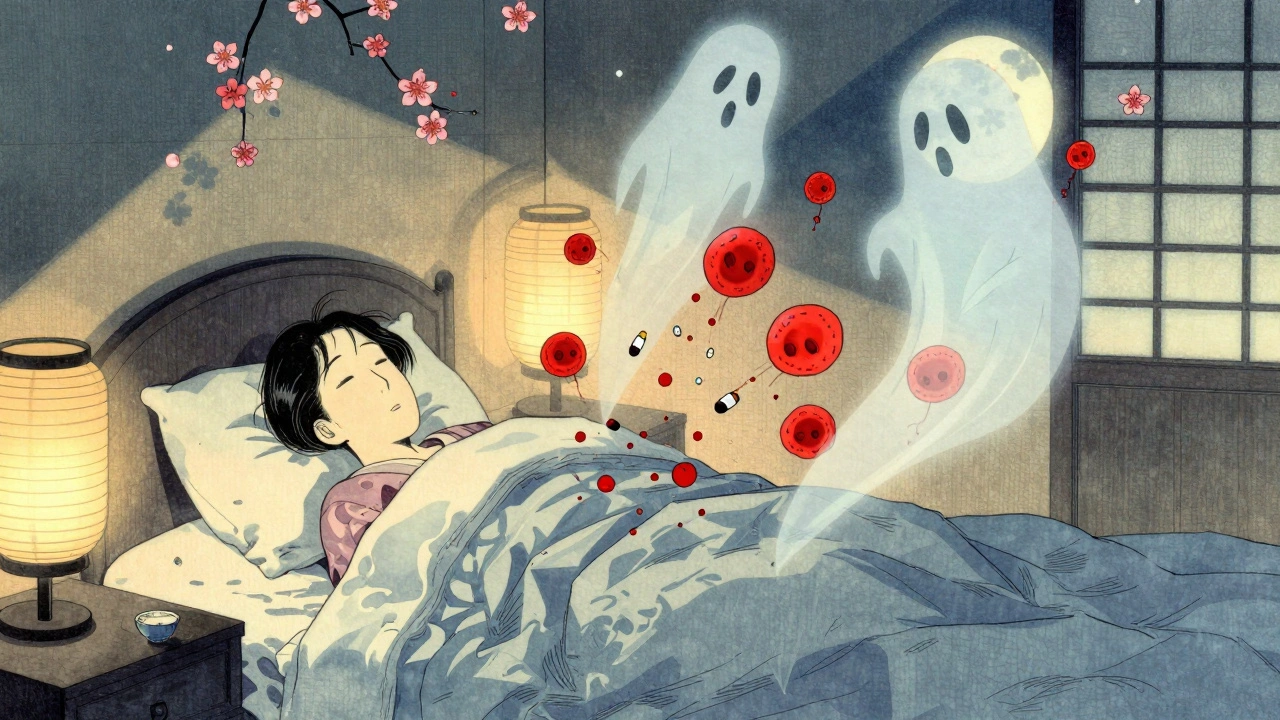
When a medication you’ve been taking suddenly starts destroying your red blood cells, it’s not just a side effect-it’s a medical emergency. Drug-induced immune hemolytic anemia (DIIHA) is rare, but when it happens, it can turn a routine prescription into a life-threatening situation. Your body, fooled by the drug, turns against its own red blood cells, shredding them before they’ve even completed their 120-day lifespan. The result? Fatigue so deep it feels like your bones are made of lead, breathlessness climbing the stairs, skin turning yellow, and a heart racing just to keep up.
How Medications Trigger Red Blood Cell Destruction
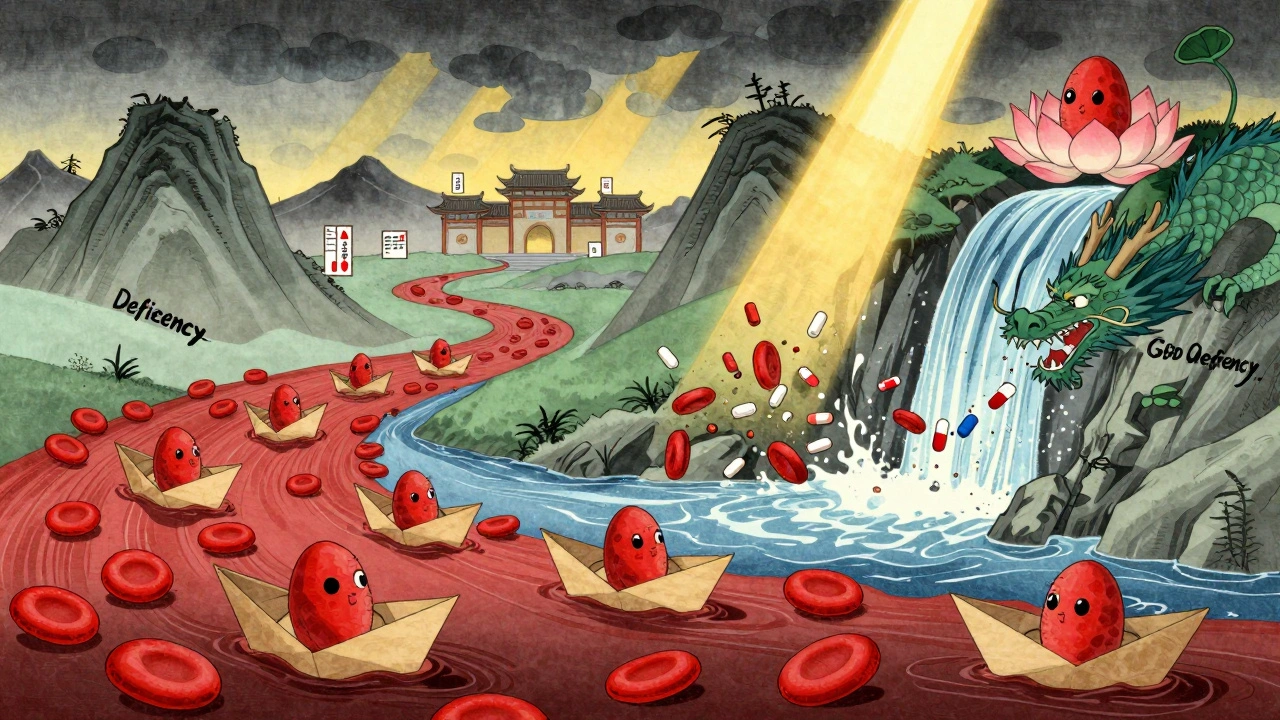
Not all drug-induced hemolytic anemia works the same way. There are two main paths: immune-mediated destruction and oxidative damage. The first is like a mistaken identity crisis. Drugs like cefotetan, ceftriaxone, or piperacillin stick to the surface of your red blood cells. Your immune system sees this as an invasion and sends antibodies to attack. These antibodies tag your red blood cells for destruction, mostly in the spleen. This process usually takes 7 to 10 days after starting the drug-long enough that many doctors miss the connection. The second path is oxidative stress. Some drugs, like dapsone, phenazopyridine, or even topical benzocaine, directly damage hemoglobin inside red blood cells. This causes hemoglobin to clump into abnormal structures called Heinz bodies. These damaged cells get trapped and destroyed in the spleen. This is especially dangerous if you have G6PD deficiency-a genetic condition affecting 10-14% of African American men and 4-15% of people of Mediterranean descent. In these individuals, even a single dose of a triggering drug can cause rapid hemolysis within 24 to 72 hours.Which Medications Are Most Likely to Cause This?
Cephalosporins are the biggest culprits, making up about 70% of immune-mediated cases. Among them, cefotetan, ceftriaxone, and piperacillin are the top three. These are common antibiotics given in hospitals for infections like pneumonia or urinary tract infections. Even if you’ve taken them before without issue, a new immune response can develop with repeated exposure. Other common offenders include:- Methyldopa (an older blood pressure drug, now rarely used)
- Levodopa (for Parkinson’s)
- Levofloxacin (a fluoroquinolone antibiotic)
- Nonsteroidal anti-inflammatory drugs (NSAIDs) like ibuprofen or naproxen
- Penicillin and its derivatives
- Phenazopyridine (Pyridium, used for urinary pain)
- Dapsone (used for leprosy and certain skin conditions)
- Primaquine and sulfa drugs (especially risky in G6PD-deficient people)
What Symptoms Should You Watch For?
The signs aren’t always obvious at first. Early symptoms mimic general fatigue or the flu:- Fatigue (reported in 92% of cases)
- Weakness (87%)
- Shortness of breath (76%)
- Rapid heartbeat (tachycardia, >100 bpm in 68%)
- Pale skin (73%)
- Yellowing of skin or eyes (jaundice, 81%)
- Dark urine (from hemoglobin breakdown)
How Doctors Diagnose It
There’s no single test. Diagnosis relies on connecting the dots between your meds, symptoms, and lab results. Here’s what they look for:- Elevated indirect bilirubin (>3 mg/dL): From broken-down hemoglobin
- High LDH (>250 U/L): Released when red blood cells rupture
- Low haptoglobin (<25 mg/dL): This protein soaks up free hemoglobin-it gets used up fast during hemolysis
- Peripheral blood smear: Looks for spherocytes (small, round red cells) in immune cases, or Heinz bodies (clumped hemoglobin) in oxidative cases
- Direct antiglobulin test (DAT): Positive in 95% of immune-mediated DIIHA cases. But it can be negative early on or with certain drugs
What Happens If You Don’t Act Fast?
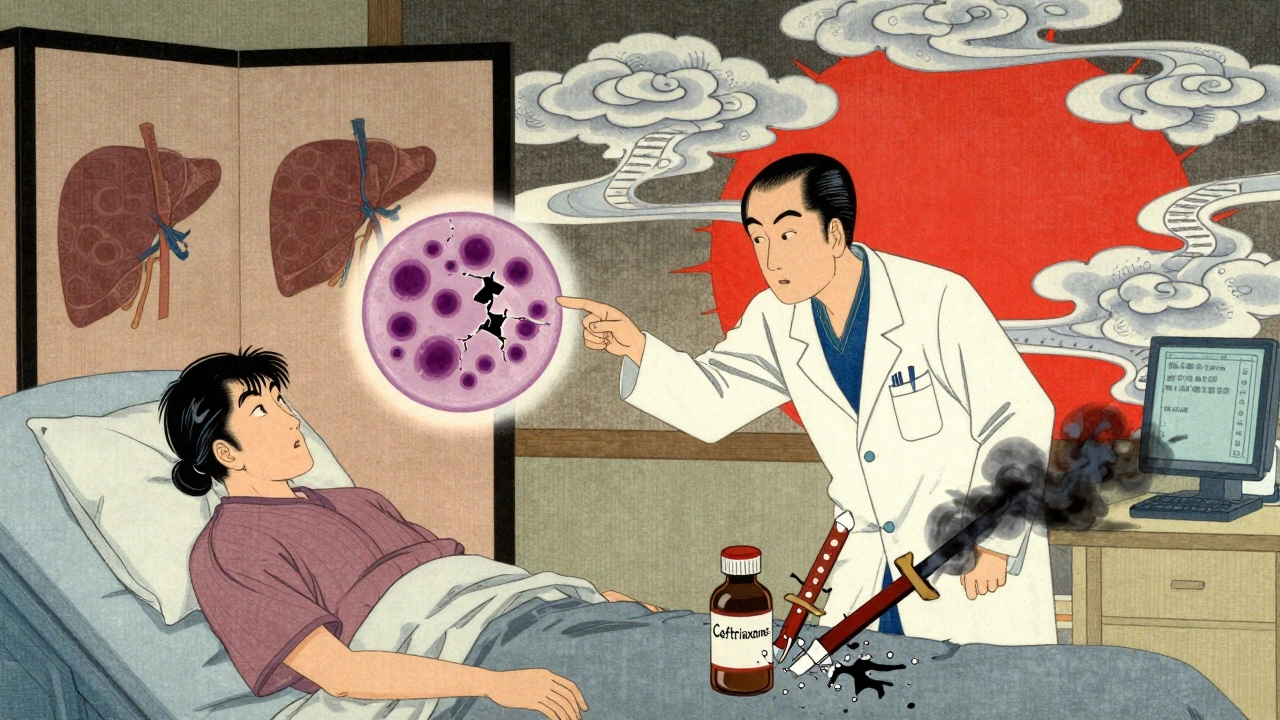
Delaying treatment isn’t just risky-it’s dangerous. A 2024 multicenter study found that 43% of DIIHA cases were initially misdiagnosed as other types of anemia or infections. That means people were given iron supplements, steroids, or antibiotics that did nothing-and the hemolysis kept going. Worse, DIIHA puts you in a hypercoagulable state. Even though you’re losing red blood cells, your blood thickens. A 2023 study showed 34% of severe DIIHA patients developed blood clots-deep vein thrombosis or pulmonary embolism. That’s why even mild cases often require anticoagulation.How It’s Treated
The most important step? Stop the drug. Immediately. No exceptions. Once the drug is out of your system, hemolysis usually stops within 24-48 hours. Hemoglobin levels begin to recover in 7-10 days, and full recovery typically takes 4-6 weeks. Beyond stopping the drug:- Transfusions: Given if hemoglobin drops below 7-8 g/dL or if you’re symptomatic (dizziness, chest pain, heart failure)
- Corticosteroids: Like prednisone (1 mg/kg/day). Used in immune cases, but their benefit is unclear-many patients recover without them
- Immunoglobulins: IVIG (1 g/kg/day for 2 days) for cases where antibodies keep attacking even after drug removal
- Immunosuppressants: Rituximab, azathioprine, or cyclosporine for persistent, severe cases. About 78% respond within 3-6 weeks
- Methylene blue: Only for severe methemoglobinemia (>30% levels). But NEVER use it in G6PD-deficient patients-it can trigger deadly hemolysis
What’s New in Treatment?
New treatments are emerging. Two 2024 clinical trials show promise:- Efgartigimod (NCT05678901): A drug that removes harmful antibodies. In trials, 67% of patients responded within 4 weeks.
- Complement inhibitors (NCT05812345): These block the immune system’s final step of red blood cell destruction. Early results look strong for severe cases.
What You Can Do
If you’re on any of the medications listed here and feel unusually tired, jaundiced, or short of breath:- Stop the drug immediately
- Call your doctor or go to the ER
- Bring a full list of all medications, including supplements and OTC drugs
- Ask for: CBC, reticulocyte count, bilirubin, LDH, haptoglobin, DAT, and peripheral smear
- If you’re of African or Mediterranean descent, ask about G6PD testing-but wait 2-3 months after recovery for accuracy
When to Worry About Your Medications
If you’ve ever had unexplained anemia, jaundice, or dark urine after starting a new medication-even if it was months ago-tell your doctor. Some immune responses can be delayed. Others, like oxidative damage in G6PD deficiency, can strike with the first dose. There’s no need to panic. Most people take these drugs without issue. But if you’re at risk-whether from genetics, age, or past reactions-know the signs. Early recognition saves lives.Can over-the-counter drugs cause hemolytic anemia?
Yes. Even common OTC drugs like NSAIDs (ibuprofen, naproxen) and topical benzocaine (in throat sprays or teething gels) can trigger hemolysis. Benzocaine is especially dangerous in people with G6PD deficiency. Phenazopyridine (Pyridium), sold OTC for urinary discomfort, is a known cause of oxidative hemolysis. Always check medication labels and ask your pharmacist if you have a history of anemia or are of African or Mediterranean descent.
Is hemolytic anemia from drugs permanent?
No. In over 95% of cases, stopping the offending drug leads to full recovery within 4 to 6 weeks. The body replaces destroyed red blood cells naturally. Permanent damage only occurs if treatment is delayed and severe complications like heart failure or organ damage develop. Early action is the key to avoiding long-term issues.
Can you get hemolytic anemia from vaccines?
There are no confirmed cases of vaccine-induced immune hemolytic anemia in current medical literature. While rare autoimmune reactions to vaccines have been reported, DIIHA specifically involves drugs that bind to red blood cells or cause oxidative stress. Vaccines do not have this mechanism. If you develop anemia after vaccination, the cause is likely unrelated.
What should I do if I have G6PD deficiency?
Avoid all known oxidative drugs: dapsone, phenazopyridine, sulfonamides, primaquine, nitrofurantoin, methylene blue, and certain antimalarials. Always carry a list of safe and unsafe medications. Inform all healthcare providers-doctors, dentists, pharmacists-about your G6PD deficiency before any treatment. Even a single dose of a triggering drug can cause life-threatening hemolysis.
Why is the direct antiglobulin test (DAT) sometimes negative?
The DAT detects antibodies attached to red blood cells. In early DIIHA, antibodies may not have fully bound yet. Some drugs create weak or transient attachments that don’t show up on standard tests. Certain medications, like methyldopa, can cause false-positive DAT results even without hemolysis. If clinical signs point to DIIHA but DAT is negative, repeat the test or use specialized assays to detect drug-dependent antibodies.
Shannon Gabrielle
December 1, 2025 AT 08:04So let me get this straight - a fucking ibuprofen can turn your blood into a warzone? And we’re still letting people pop these like candy? Someone call the FDA, I think their job description got lost in the shuffle between vape pens and TikTok trends.
Dennis Jesuyon Balogun
December 3, 2025 AT 06:40From a hematology standpoint, the immune-mediated mechanism is a textbook example of molecular mimicry gone rogue - the drug haptenizes RBC membranes, triggering IgG/IgM opsonization, complement cascade activation, and extracorpuscular phagocytosis via splenic macrophages. The DAT negativity conundrum? Classic drug-dependent antibody kinetics - transient epitope exposure, low-affinity binding, or IgA/IgM isotypes evading standard Coombs assays. Efgartigimod’s FcRn blockade is elegant - it short-circuits the IgG recycling loop, accelerating pathogenic antibody clearance. We’re entering an era where precision immunomodulation replaces brute-force steroids.
soorya Raju
December 4, 2025 AT 16:16wait so u r telling me the gov't knows this but still sells these drugs?? and vaccines are safe but pills are death?? sounds like the pharma cartel is running the show... i heard they even put nanobots in the meds to keep us sick... that's why they want you to keep taking them... dont trust the system bro
Grant Hurley
December 5, 2025 AT 14:18yo i took naproxen for my back and felt like i got hit by a bus for 2 days… thought it was just me being weak. now i’m gonna go check my old blood work. thanks for the heads up man. also, g6pd? never heard of it till now. my cousin from india said he can’t eat fava beans… maybe that’s it?
Lucinda Bresnehan
December 7, 2025 AT 00:31As someone who’s had a few scary episodes of unexplained fatigue and jaundice after antibiotics, this is SO important. I didn’t know what was happening - my doctor just said ‘it’s probably viral.’ Please, if you’ve ever felt off after a new med - even if it was months ago - get those labs done. Hemoglobin, LDH, haptoglobin. Don’t wait for the ER. You’re not overreacting. Your body’s screaming.
ANN JACOBS
December 8, 2025 AT 22:28It is, without a shadow of a doubt, a matter of profound public health significance that the general populace remains largely unaware of the potentially catastrophic hematological consequences of commonly prescribed and over-the-counter pharmaceutical agents. The pathophysiological cascade initiated by drug-induced immune hemolysis - characterized by accelerated erythrocyte destruction, unconjugated hyperbilirubinemia, and compensatory reticulocytosis - demands not only clinical vigilance but also patient education at the primary care level. The advent of FcRn antagonists such as efgartigimod represents a paradigm shift, yet accessibility and awareness remain critically uneven across socioeconomic strata. We must institutionalize pharmacogenomic screening, particularly for populations with high prevalence of G6PD deficiency, as a routine component of pre-prescription counseling.
Kshitij Shah
December 9, 2025 AT 05:17in india we call this ‘blood poisoning’ from ‘chemicals’ - grandma always said don’t take random pills, even if it’s ‘just painkiller’. now i see she was right. my uncle took phenazopyridine for UTI and turned yellow in 2 days. hospital came fast, he’s fine now. but why do doctors still give this stuff without asking ‘are you from south asia?’
Nnaemeka Kingsley
December 9, 2025 AT 08:12bro this saved my life. i took ceftriaxone for pneumonia last year and felt like death. doc said ‘it’s just the infection’. i went back 2 weeks later, got the labs - haptoglobin was 8. dat was neg. they missed it. now i carry a list of bad meds in my wallet. if you feel weird after a pill - trust your gut. ask for the tests. your red cells are fighting for you.