How to Choose OTC Eye Drops for Allergies, Dryness, and Redness
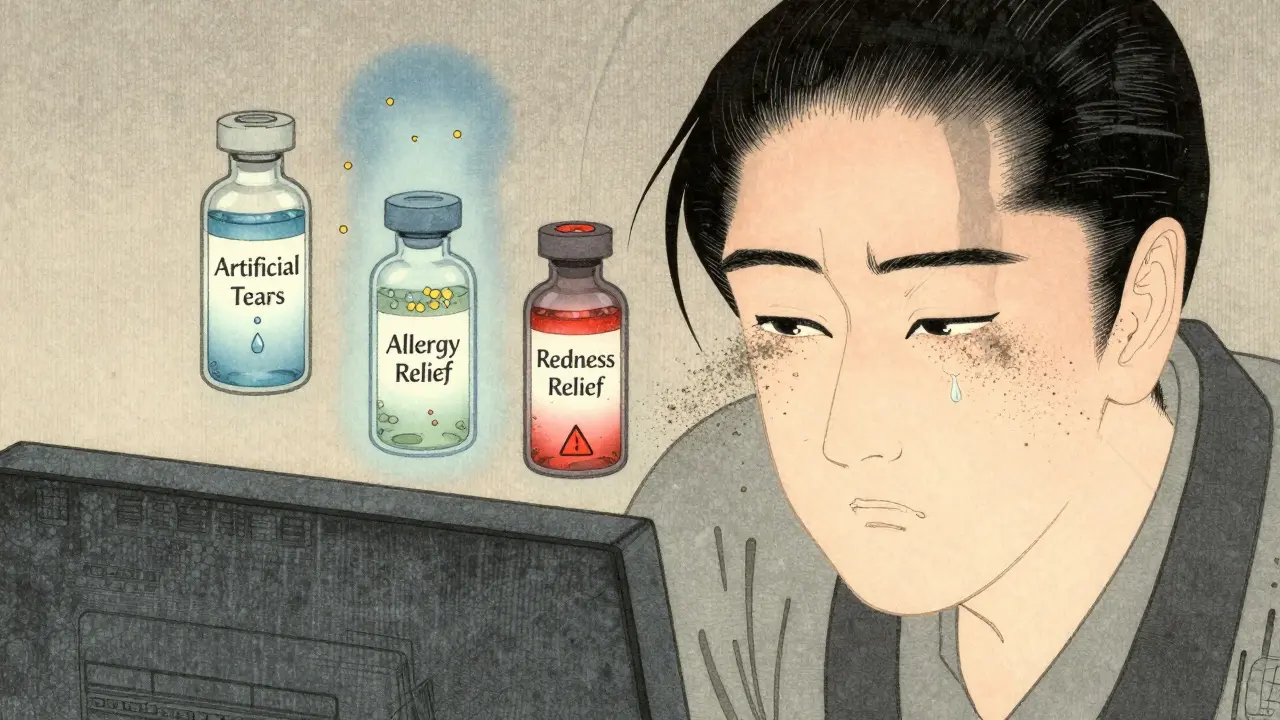
Choosing the right over-the-counter (OTC) eye drops isn’t as simple as grabbing the brightest bottle on the shelf. Millions of people use them every day for dryness, allergies, or redness - but using the wrong kind can make things worse. If your eyes feel gritty after staring at a screen, itch when pollen is in the air, or look bloodshot after a long day, you need to match the drop to the problem. Not all eye drops are created equal, and mixing them up can lead to more irritation, longer recovery, or even damage to your tear film.
Know What’s Actually Wrong With Your Eyes
Before you buy anything, figure out what’s causing the discomfort. Many people assume redness means allergies, or that dryness is just from being tired. But the causes are different, and so are the treatments.Dryness usually feels like sand in your eyes, especially after hours on a computer or in dry air. It gets worse as the day goes on. This is often aqueous deficient dry eye - your eyes aren’t making enough watery tears. Or it could be evaporative dry eye - your tears evaporate too fast because the oily layer on top is broken. That’s common if you have clogged eyelid glands from screen use or makeup.
Allergies bring itching, swelling, watery discharge, and redness. It’s usually seasonal, but can happen year-round if you’re sensitive to dust, pets, or mold. The key sign? Itching. If it’s not itchy, it’s probably not allergic.
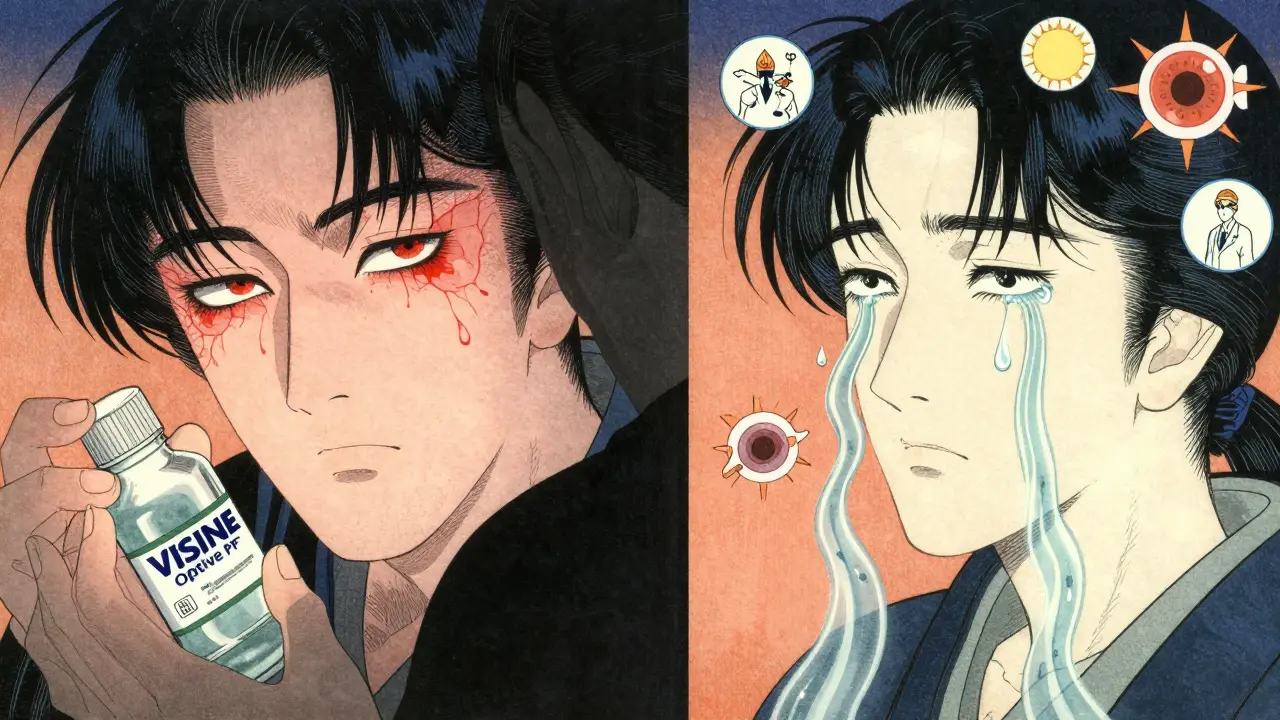
Redness alone? That’s tricky. Red eyes can come from dryness, allergies, fatigue, or even overuse of redness-relief drops. Many people reach for Visine or Lumify to clear up redness, but if the root cause is dryness, those drops can make it worse by cutting off blood flow to the eye surface.
Three Main Types of OTC Eye Drops - And What They Do
OTC eye drops fall into three clear categories. Each targets one problem. Using the wrong type won’t help - and might hurt.
- Artificial Tears - These replace missing moisture. They’re the go-to for dryness. Look for names like Systane, Refresh, or Soothe. Some contain lubricants like polyethylene glycol or propylene glycol. Others, like Systane Complete PF, add oils (mineral oil, castor oil) to stop tears from evaporating. For severe dryness, try Thealoz Duo, which has trehalose and sodium hyaluronate - proven to improve corneal healing by 40% in clinical tests.
- Allergy Relief Drops - These block histamine, the chemical that triggers itching and swelling. The best OTC options are ketotifen (Zaditor) or olopatadine (Pataday). Pataday works for up to 24 hours with one drop a day. Zaditor needs two doses. Generic versions work fine too, but check the active ingredient. Avoid drops that combine antihistamines with decongestants (like Opcon-A) - they give quick relief but cause rebound redness in over 40% of users after two weeks.
- Anti-Redness Drops - These shrink blood vessels with vasoconstrictors like tetrahydrozoline (Visine) or brimonidine (Lumify). They make eyes look white fast. But here’s the catch: they don’t fix the cause. If your redness comes from dryness or allergies, these drops mask the problem. Worse, they can cause rebound redness - your eyes turn redder than before after stopping use. Studies show 68% of frequent users get worse within two weeks. Only use these for occasional, short-term redness (like after a party), not daily.
Preservatives Can Make Things Worse
Most multi-dose bottles contain preservatives like polyquaternium-1 to keep the solution sterile. Sounds good - until you use them more than four times a day. Then, those preservatives start irritating your eye surface. Studies show 22% of chronic users develop tiny corneal scratches called punctate keratitis.
If you need drops more than four times a day, switch to preservative-free single-use vials. Brands like Refresh Optive PF, Soothe XP, or Thealoz Duo come in these. They cost more - $12 to $22 for 30 vials - but they’re safer for daily use. No preservatives means less burning, less stinging, and no long-term damage.
What Works Best for Each Condition
Let’s cut through the noise. Here’s what experts and real users say works.
For Dry Eyes from Screens or Air Conditioning:
- Use Systane Ultra or Refresh Optive - both last 6-8 hours. Systane Ultra tested at 8.2 hours of moisture retention in clinical trials.
- If your eyes feel oily or gritty later in the day, try Systane Complete PF. Its blend of mineral oil and castor oil rebuilds the tear film’s oily layer.
- For severe dryness, go preservative-free: Refresh Optive PF or Soothe XP. Use one vial every 2-4 hours as needed.
For Allergies (Itchy, Watery Eyes):
- Pataday (olopatadine 0.1%) - One drop a day. 89% of users report all-day relief. FDA-approved for 24-hour use.
- Zaditor (ketotifen 0.035%) - Twice daily. Cheaper, still effective. Good for seasonal flare-ups.
- Avoid combo drops like Opcon-A. They’re fast but dangerous for regular use.
For Redness (Only If Temporary):
- Lumify (brimonidine 0.025%) - Reduces redness for 8 hours with low rebound risk (only 5.2% of users).
- Avoid Visine, Clear Eyes, or other tetrahydrozoline drops. They cause rebound redness in 68% of frequent users.
- If redness sticks around for more than 3-4 days, stop using redness drops and see what’s really going on.
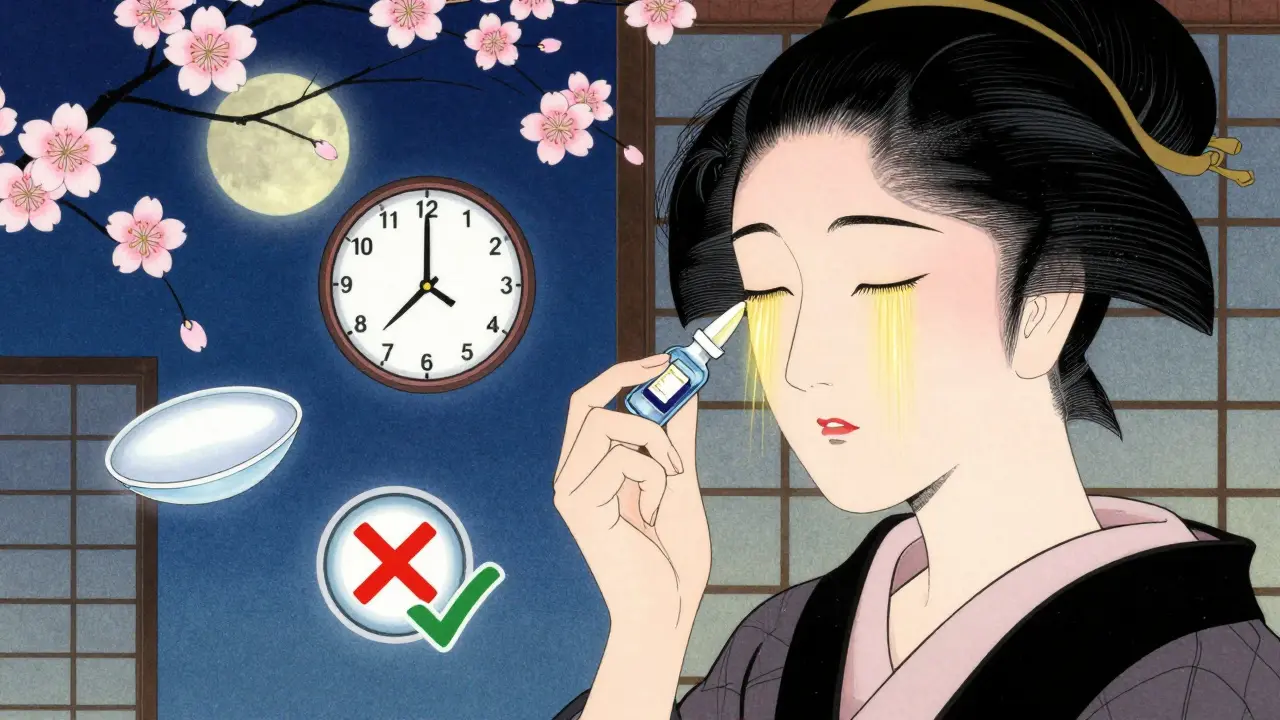
How to Use Eye Drops Correctly
Even the best drop won’t work if you use it wrong. Most people apply them incorrectly.
- Tilt your head back slightly.
- Pull down your lower eyelid to make a small pocket.
- Hold the bottle over your eye - don’t touch your eye with the tip.
- Squeeze one drop into the pocket.
- Close your eyes gently for 30 seconds. Don’t blink hard.
- Press lightly on the inner corner of your eye (near the nose) to keep the drop from draining out too fast.
Wait at least 5 minutes between different drops. If you’re using a gel, expect 2-3 minutes of blurry vision. That’s normal. Don’t drive or read until it clears.
What to Avoid
- Using redness drops for dryness. This is the #1 mistake. Decongestants reduce blood flow to your eyes - which lowers tear production. 83% of people who do this make their dry eye worse.
- Using preserved drops too often. If you’re using them 5+ times a day, switch to preservative-free.
- Sharing bottles. Even if they look clean, bacteria can grow in the tip. One bottle = one person.
- Using expired drops. Most last 3-6 months after opening. Check the label.
- Storing drops in the bathroom. Heat and moisture ruin them. Keep them at room temperature - except Thealoz Duo, which needs refrigeration after opening.
Real User Experiences
On Amazon, Systane Ultra has over 18,000 reviews with a 4.5/5 rating. Most 5-star reviews say: “Saved me from computer dryness.” Negative ones? “Stings when I first use it.” That’s normal for some formulas - it fades after a few days.
On Reddit’s r/dryeye, users swear by Refresh Relieva PF: “No blurring. Lasts 5 hours. I can work without blinking constantly.” Meanwhile, one user wrote: “Visine made my eyes twice as red after 3 days. I thought I was helping - I was hurting.”
Pataday has a 4.7/5 on Trustpilot. 89% say it’s the only thing that stops their allergy itching all day. Lumify gets 4.3/5 - loved for quick redness relief, but 31% of negative reviews mention headaches.
And here’s the data that matters: A 2023 survey of 1,200 dry eye patients found 67% started with redness drops - and 82% felt worse after two weeks. Those who used proper lubricating drops? 94% felt better within 14 days.
When to See a Doctor
OTC drops help with mild to moderate symptoms. But if after 2 weeks of using the right type, you still have:
- Pain or burning that doesn’t go away
- Blurred vision that lasts more than a few minutes
- Light sensitivity or discharge
- Swelling or changes in vision
Then it’s time to see an eye doctor. You might have an underlying condition - like meibomian gland dysfunction, Sjögren’s syndrome, or an infection - that needs more than drops.
Can I use allergy eye drops for dry eyes?
No. Allergy drops like Zaditor or Pataday are designed to block histamine and stop itching. They don’t add moisture. If your eyes are dry, you need artificial tears - not antihistamines. Using allergy drops for dryness won’t help and might delay proper treatment.
Why do some eye drops sting when I put them in?
A quick sting is normal for some formulas, especially if your eyes are already irritated. It usually lasts less than 10 seconds. If it burns for longer, the drop might contain preservatives you’re sensitive to, or the pH is off. Try switching to a preservative-free version like Refresh Optive PF - most people report less stinging.
Are gel eye drops better than liquid ones?
Gels last longer - 4 to 6 hours versus 1-2 for liquids. They’re ideal for nighttime use or if you have moderate to severe dryness. But they blur vision for 2-3 minutes after application. Use them before bed or when you’re not reading or driving. For daytime, stick with liquids unless your dryness is severe.
How long do OTC eye drops last after opening?
Most multi-dose bottles last 3-6 months after opening. Check the label - it’s usually printed on the box or bottle. Preservative-free single-use vials are good for one use only. Discard any vial you don’t use right away. Never save a partially used vial.
Can I use eye drops with contact lenses?
Yes - but only if they’re labeled “for contact lens wearers.” These are formulated to match your lens’s osmolarity (280-320 mOsm/L) so they don’t dry out your lenses. Brands like Blink Contacts or Refresh Relieva PF are safe. Avoid redness drops and gels - they can stick to lenses and cause irritation.
If you’re using eye drops daily for more than a few weeks, keep track of what works. Write down the brand, how often you use it, and how your eyes feel. That info helps you - and your eye doctor - make better choices.
Scott Conner
February 8, 2026 AT 12:19so i just got some refresh ultra because my eyes feel like sandpaper after zoom calls. no stinging, lasts like 5 hours. best thing since sliced bread. also stopped using visine. my eyes arent on fire anymore. lol.
Marie Fontaine
February 10, 2026 AT 00:59omg yes!! i use refresh relieva pf and its a game changer. no more blurry vision after drops. also never use the multi-dose bottles anymore. single use only for me. 10/10 recommend 🙌
Tatiana Barbosa
February 10, 2026 AT 13:45pataday is my holy grail. i used to think redness meant i needed visine. big mistake. once i switched to olopatadine, my allergy season went from hell to manageable. one drop, 24 hours. no more rubbing. no more swollen lids. i wish i knew this 5 years ago.
Alex Ogle
February 11, 2026 AT 02:52you know what’s wild? the fact that 83% of people who use redness drops for dry eyes make it worse. it’s like putting gasoline on a fire and calling it a solution. we’ve been conditioned to think ‘clearer’ means ‘healthier.’ but your eyes aren’t supposed to be white. they’re supposed to be hydrated. the whole industry is built on masking symptoms, not treating root causes. it’s capitalism disguised as self-care.
Brandon Osborne
February 12, 2026 AT 08:40you’re all just sheep. everyone’s talking about ‘preservative-free’ like it’s some miracle. but have you even read the ingredient list? polyethylene glycol? propylene glycol? those are in antifreeze. they’re toxic. you think your eyes are safe? you’re just slowly poisoning your cornea. stop listening to reddit and go see a real doctor. i’ve been doing this for 12 years. you’re all just wasting money.
Tricia O'Sullivan
February 12, 2026 AT 13:29Thank you for this comprehensive overview. I have been using Systane Ultra for several months now, primarily due to prolonged screen exposure in my remote work environment. The clinical data referenced regarding moisture retention aligns with my personal experience. I have transitioned to preservative-free single-use vials after experiencing mild irritation with multi-dose bottles. This shift has significantly reduced my ocular discomfort, particularly in the late afternoon. I concur with the advice regarding storage at room temperature; my bathroom shelf was never an ideal location. A well-researched and thoughtful guide.
Lyle Whyatt
February 13, 2026 AT 18:47man i used to be the guy who kept a bottle of visine in every room. car, desk, nightstand. then one day i woke up with my left eye looking like a tomato. turned out i’d been using it 6x a day for 3 months. the rebound redness was brutal. switched to refresh relieva pf and now i only use it twice a day. no more panic when i look in the mirror. also, the tip about pressing on the inner corner? that’s the secret sauce. i didn’t know that until i read this. thank you.
Ken Cooper
February 15, 2026 AT 03:58hey, just wanted to add-don’t forget to check the osmolarity if you wear contacts. i used refresh ultra and it dried out my lenses like crazy. switched to blink contacts and now i can wear my lenses for 12 hours without burning. also, never store drops in the sun. i left mine on the windowsill once. the bottle got warm. next day, my eye felt like i’d rubbed it with steel wool. lesson learned.
MANI V
February 16, 2026 AT 20:10you people are so naive. the eye drop industry is controlled by big pharma. they want you to keep buying bottles. they don’t want you to know that 90% of dry eye is caused by screen blue light and poor blink rate. the real solution? put your phone down. blink consciously. use warm compresses. none of that chemical nonsense. you’re all being manipulated. stop spending money and start living.
Susan Kwan
February 18, 2026 AT 19:02funny how everyone here is acting like they discovered fire. the article literally said all this. i’m impressed you read past the title.
Random Guy
February 18, 2026 AT 20:43so wait… i’ve been using lumify for my red eyes after gaming marathons… and now you’re telling me it’s a trap? like… a villain trap? like, i’m the bad guy? my eyes are so confused right now. i need a hug and a new bottle of the good stuff.
Ryan Vargas
February 19, 2026 AT 02:53the entire premise of this article assumes a Cartesian dualism between symptom and cause, which is a fundamental fallacy in ophthalmic pathology. the tear film is not a static system; it is a dynamic, homeostatic equilibrium governed by autonomic, hormonal, and environmental feedback loops. to prescribe a drop based on perceived etiology ignores the systemic nature of ocular surface disease. furthermore, the reliance on consumer surveys and Amazon ratings as clinical evidence is methodologically unsound. you’re not treating dry eye-you’re performing a placebo ritual with vials.
Tasha Lake
February 19, 2026 AT 22:35just wanted to say Thealoz Duo is a game-changer for me. Trehalose + sodium hyaluronate = magic. I’ve been using it daily for 6 months now. My corneal staining improved significantly. Also, refrigerate after opening. It’s not a suggestion-it’s a requirement. Don’t skip the chill.
Sam Dickison
February 21, 2026 AT 09:46the whole ‘don’t use redness drops for dryness’ thing? yeah. i did that for 2 years. thought i was fixing it. turned out i was just numbing the pain. switched to Systane Complete PF and now my eyes don’t feel like they’re made of sandpaper. also, the oily layer thing? i didn’t even know that existed. eye doc said i had meibomian gland dysfunction. this article saved my vision. thanks.
Brett Pouser
February 22, 2026 AT 12:10as someone who moved from India to the US, i didn’t realize how different the air is. back home, humidity kept my eyes fine. here? dry as a desert. i tried everything until i found Soothe XP. preservative-free. one vial in the morning, one at night. no stinging. no blurring. just peace. also, never store in the bathroom. learned that the hard way. now i keep mine in my bedroom drawer. small changes, big difference.