How to Confirm Your Name and Medication on a Prescription Label: A Step-by-Step Safety Guide

Imagine picking up your monthly blood pressure medication, walking home, and taking the first pill. You feel fine for a few days. Then you notice your heart rate is erratic. You call your doctor, who checks your chart and realizes you were prescribed a lower dose than what’s in that bottle. This isn’t a movie plot; it’s a preventable reality for many patients. According to the Institute for Safe Medication Practices (ISMP), labeling discrepancies account for 25% of preventable medication errors. That means one in four mistakes could be stopped if we simply looked closer at the sticker on our bottles.
Verifying your prescription label is not just about being cautious; it is the final safety checkpoint in the entire medication dispensing process. Studies show that active patient verification reduces the likelihood of taking incorrect medications by 67%. It takes less than thirty seconds, requires no special tools, and can save your life. Here is exactly how to do it right, every single time.
The Critical Elements on Every Prescription Label
Before you check anything, you need to know what belongs on the label. Federal regulations, specifically outlined in 21 CFR § 1306.12 by the Food and Drug Administration (FDA), mandate specific information. If any of these are missing or look wrong, stop immediately.
- Patient Name: Your full legal name as provided to the pharmacy.
- Medication Name: Both brand and generic names should appear when applicable.
- Strength: The dosage amount, such as '500 mg' or '10 mg'.
- Dosage Form: Whether it is a tablet, capsule, liquid, or patch.
- Directions for Use: Clear instructions like 'Take one tablet by mouth twice daily'.
- Prescriber's Name: The doctor who wrote the prescription.
- Pharmacy Contact Info: Name, address, and phone number of the dispensing pharmacy.
- National Drug Code (NDC): A unique 10- or 11-digit identifier required by the Drug Supply Chain Security Act.
The American Pharmacists Association (APhA) recommends that critical information be printed in no smaller than 12-point font. If the text is microscopic, ask for a large-print label. Clarity is a legal requirement, not a luxury.
Step-by-Step Verification Process
The Pharmacy Quality Alliance recommends a simple 30-second routine. Do this every time you pick up a new prescription or refill. Consistency builds habit, and habit prevents errors.
- Lighting Matters: Hold the bottle at eye level under good lighting. If you are at home, ensure the room has at least 500 lux of light. Poor lighting is the enemy of accuracy.
- Check Your Name First: Verify your full legal name appears exactly as you gave it to the pharmacy. Did they miss your middle initial? Is there a typo in your last name? A name mismatch often signals that the wrong patient’s medication was dispensed.
- Match the Medication Name: Does the name on the label match what your doctor discussed? Remember, doctors often use brand names while pharmacies may dispense generics. Ensure the generic name corresponds to the brand you expect. For example, Lipitor is atorvastatin. If you asked for Lipitor and see simvastatin, something is wrong.
- Validate the Strength: This is where dangerous errors hide. Check the milligrams (mg) or micrograms (mcg). A difference between 5 mg and 50 mg is massive. Read the number aloud to yourself.
- Review the Directions: Compare the "Sig" (directions) on the label with what your doctor told you. Did they say "once daily" but the label says "twice daily"? Do not guess. Call the pharmacist.
- Confirm Pharmacy Details: Ensure the pharmacy contact information is legible. You need to reach them quickly if you have questions later.
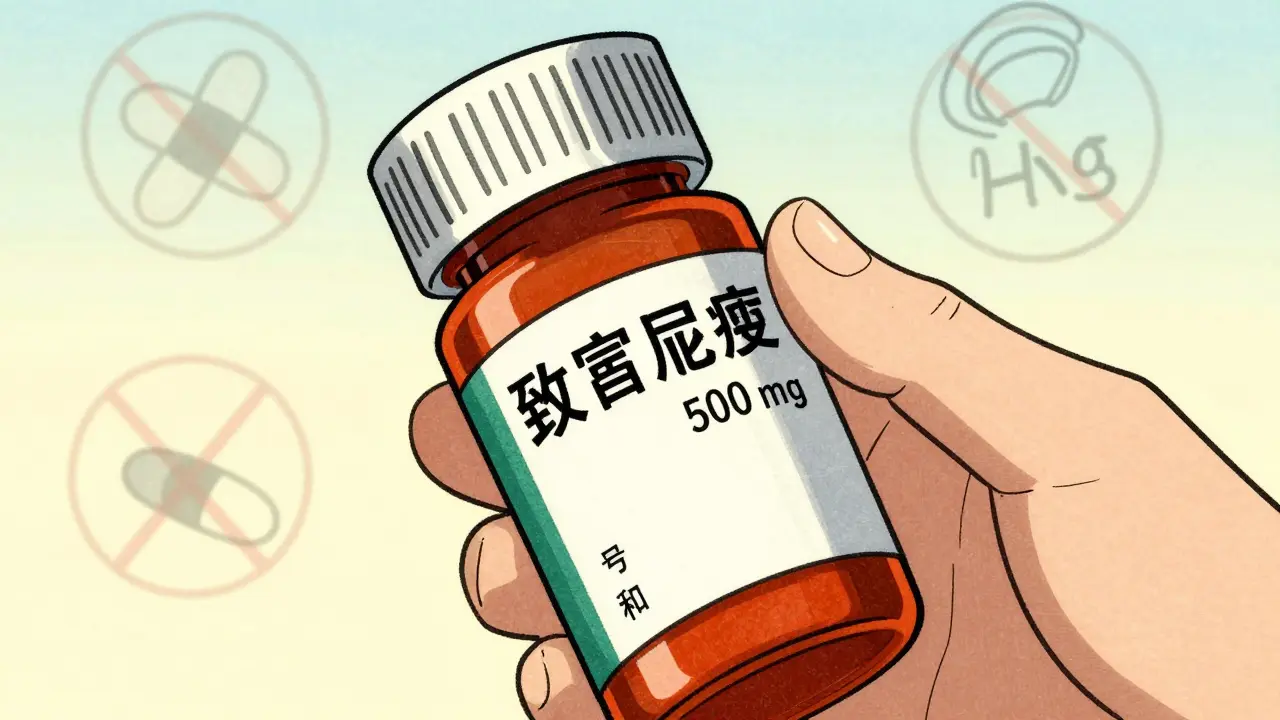
Common Pitfalls and How to Avoid Them
Even careful readers make mistakes. Understanding common failure points helps you stay vigilant.
| Error Type | Frequency | Solution |
|---|---|---|
| Wrong Strength | 42% of detected errors | Read the unit (mg vs mcg) and the number separately. |
| Wrong Medication | 28% of detected errors | Compare brand and generic names against your doctor's notes. |
| Wrong Patient Name | 15% of detected errors | Check spelling carefully, including middle initials. |
| Small Print | 37% of patients over 65 | Ask for large-print labels or use smartphone magnification. |
| Confusing Abbreviations | 29% of challenges | Ask the pharmacist to spell out directions in plain language. |
Visual impairment affects 12.7% of adults aged 40 and older. If you struggle to read small text, carry a pocket magnifier with 2x magnification. Alternatively, use the built-in zoom features on your smartphone, which are available on nearly all devices manufactured after 2018. Do not rely on memory alone.
Technology vs. Manual Verification
Digital tools like Medisafe and GoodRx offer barcode scanning capabilities. These apps are helpful supplements, especially for managing complex regimens with more than five medications. However, manual verification remains the most accessible method. Ninety-eight percent of U.S. pharmacies still use paper labels. Relying solely on an app introduces a new point of failure: battery life, internet connectivity, and app glitches.
Manual verification offers immediacy. You can check your medication at the counter before you leave the store. Digital verification often happens at home, after you have already taken the medication. While technology-assisted verification is superior for patients with multiple prescriptions, the human eye checking the physical label is the fastest way to catch obvious errors at the point of service.
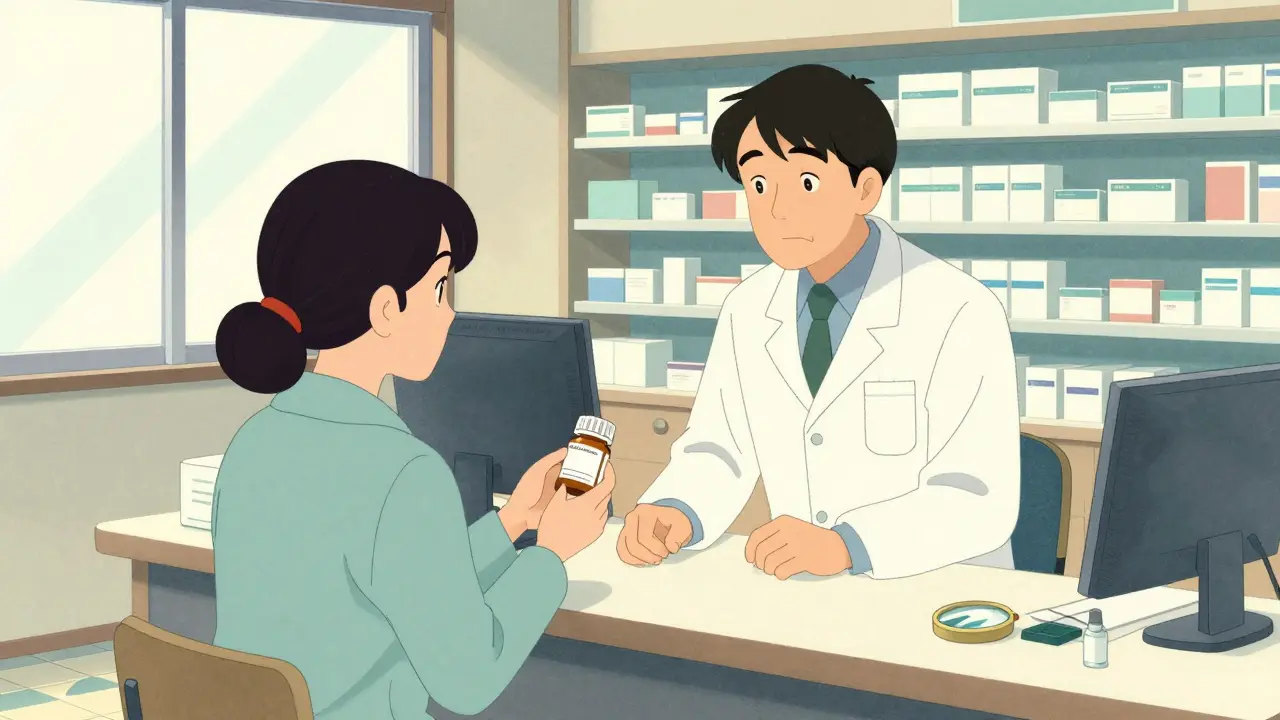
When to Speak Up
If anything looks off, do not assume it is your fault. Pharmacists are trained to handle these queries. In fact, speaking up is part of the safety protocol. Dr. Beth Kollisch, Director of Patient Safety at Johns Hopkins Medicine, states that patient verification is the "single most underutilized safety measure in outpatient pharmacy."
Consider this real-world example from a community forum: A user noticed their mother’s blood thinner strength was listed as 10mg instead of the prescribed 5mg. By checking the label against the doctor’s written instructions, they prevented a potentially fatal overdose. Another user discovered their roommate’s medication had accidentally been labeled with their own name. Without verification, they would have ingested the wrong drug entirely.
If you find an error, return to the pharmacy immediately. Do not take the medication until it is corrected. Most pharmacies will replace the bottle free of charge and investigate the root cause to prevent future incidents.
Future Trends in Label Safety
The industry is moving toward greater standardization. The FDA’s 2023 initiative aims to standardize prescription label formats across all pharmacies by December 31, 2025. This includes placing the patient’s name in a larger 24-point font at the top of the label. Additionally, QR codes linking to video verification instructions in multiple languages are expected to appear on 60% of prescriptions for seniors by 2026.
Until then, the responsibility falls on us. Verification is not a burden; it is a right. By taking thirty seconds to confirm your name and medication, you protect yourself and help improve the overall safety of the healthcare system.
What should I do if my name is spelled incorrectly on the prescription label?
Return to the pharmacy immediately. An incorrect name suggests the medication may belong to another patient. Do not take the medication until the label is corrected. This is a critical safety red flag.
Is it normal for the medication name on the label to differ from what my doctor said?
Yes, if it is the generic equivalent. Doctors often prescribe by brand name (e.g., Lipitor), while pharmacies dispense the generic (atorvastatin). Ensure the generic name matches the brand you expect. If unsure, ask the pharmacist to confirm the equivalence.
How can I verify my medication if I have poor eyesight?
Request large-print labels from your pharmacy. You can also use a pocket magnifier or the zoom feature on your smartphone. Many pharmacies offer verification stations with magnifiers. Do not hesitate to ask for assistance.
What is the National Drug Code (NDC) and why is it important?
The NDC is a unique 10- or 11-digit identifier for each medication product. It ensures traceability and authenticity. While you do not need to memorize it, its presence confirms the label meets federal regulatory standards.
Can digital apps replace manual label verification?
No. Apps are helpful supplements for managing complex regimens, but manual verification is immediate and does not depend on technology. Always check the physical label at pickup to catch errors before leaving the pharmacy.