How to Prevent Calcium Oxalate Kidney Stones: Hydration Goals and Diet Tips

Imagine waking up with pain so intense it feels like your side is being stabbed from the inside out. That is what passing a kidney stone, specifically a hard mass formed from minerals in the urine often feels like. For the roughly 12% of people who will develop these stones in their lifetime, the experience is not just painful-it is terrifying. The good news? You have more control over preventing them than you might think.
Most stones are made of calcium oxalate, a compound formed when calcium binds with oxalate in the urine. These account for 70-80% of all cases. They form when your urine becomes too concentrated, allowing crystals to stick together. The goal of prevention is simple but requires discipline: keep your urine dilute and chemically balanced so those crystals never get the chance to aggregate.
The Golden Rule: Hit Your Hydration Targets
Water is your first line of defense, but "drink more water" is too vague to be useful. You need specific numbers. The National Institutes of Health recommends aiming for a total fluid intake of 2.5 to 3.0 liters per day. Why that amount? Because the real metric is urine output. You want to produce at least 2.5 liters of urine daily.
If you are producing less than 1 liter of urine a day, your risk of recurrence skyrockets. Studies show that hitting that 2.0-2.5 liter urine output mark cuts your risk of getting another stone by 50%. It is a linear relationship: the more you drink (up to that threshold), the safer you are. Beyond 2.5 liters of urine output, the benefits diminish, so there is no need to chug gallons until you are bloated.
- Primary Goal: Drink enough to produce >2.5 liters of urine daily.
- Input Target: Consume 2.5-3.0 liters of fluids total per day.
- Visual Check: Your urine should look pale yellow or nearly clear. Dark yellow means you are dehydrated.
Not all fluids are created equal. Water is king. Coffee and even beer have shown protective effects in some studies, likely due to their diuretic properties increasing volume. However, avoid grapefruit juice entirely; it consistently increases stone risk. Also, skip the fizzy drinks. The phosphoric acid in colas can contribute to stone formation. Instead, try adding fresh lemon juice to your water. Half a cup of lemon juice concentrate diluted in water daily can boost your urinary citrate levels significantly, which helps prevent stones.
Dietary Strategy: Calcium, Oxalate, and Timing
Here is where most people get confused. You might think, "I have calcium stones, so I should stop eating calcium." That is dangerously wrong. Low dietary calcium actually increases your risk. Here is why: calcium binds to oxalate in your gut. If you eat calcium-rich foods, the oxalate attaches to the calcium and leaves your body through waste. If you don't eat enough calcium, the oxalate gets absorbed into your bloodstream, filtered by your kidneys, and ends up in your urine-where it meets free-floating calcium to form stones.
Aim for 1,000-1,200 mg of calcium daily from food sources. This equals about 2-3 servings of dairy products (like one cup of milk, one ounce of cheese, or three-quarters of a cup of yogurt). The key is timing. Eat these calcium-rich foods at the same time as meals containing oxalate. A study found that consuming calcium two hours before or after an oxalate-rich meal reduces binding efficacy by 40-50%. They must meet in the gut to work.
Be cautious with supplements. Calcium supplements may increase stone risk by 20% because they do not bind oxalate in the gut as effectively as food does. If you must supplement, choose calcium citrate over calcium carbonate, and take it with meals. But food is always better.
Foods to Limit: Sodium, Protein, and High-Oxalate Items
Sodium is a major culprit. When you eat too much salt, your kidneys excrete more calcium into your urine. The American Heart Association recommends keeping sodium under 2,300 mg daily. Every extra 1,000 mg of sodium can increase urinary calcium by 25-30 mg. Read labels carefully; processed foods are where most hidden sodium lives.
Animal protein also plays a role. Eating large amounts of meat lowers urinary citrate (a stone inhibitor) and increases uric acid. Keep animal protein to less than 30% of your total calories. For a 2,000-calorie diet, that’s about 75 grams of protein daily. Moderate restriction is usually sufficient; you do not need to go fully vegetarian unless advised by your doctor.
Finally, manage high-oxalate foods. You do not need to eliminate them completely, but you should limit portion sizes. Be aware of the oxalate content in common foods:
| Food Item | Serving Size | Oxalate Content (mg) |
|---|---|---|
| Spinach | 1/2 cup cooked | 755 |
| Rhubarb | 1/2 cup | 541 |
| Almonds | 1 ounce | 122 |
| Navy Beans | 1/2 cup | 89 |
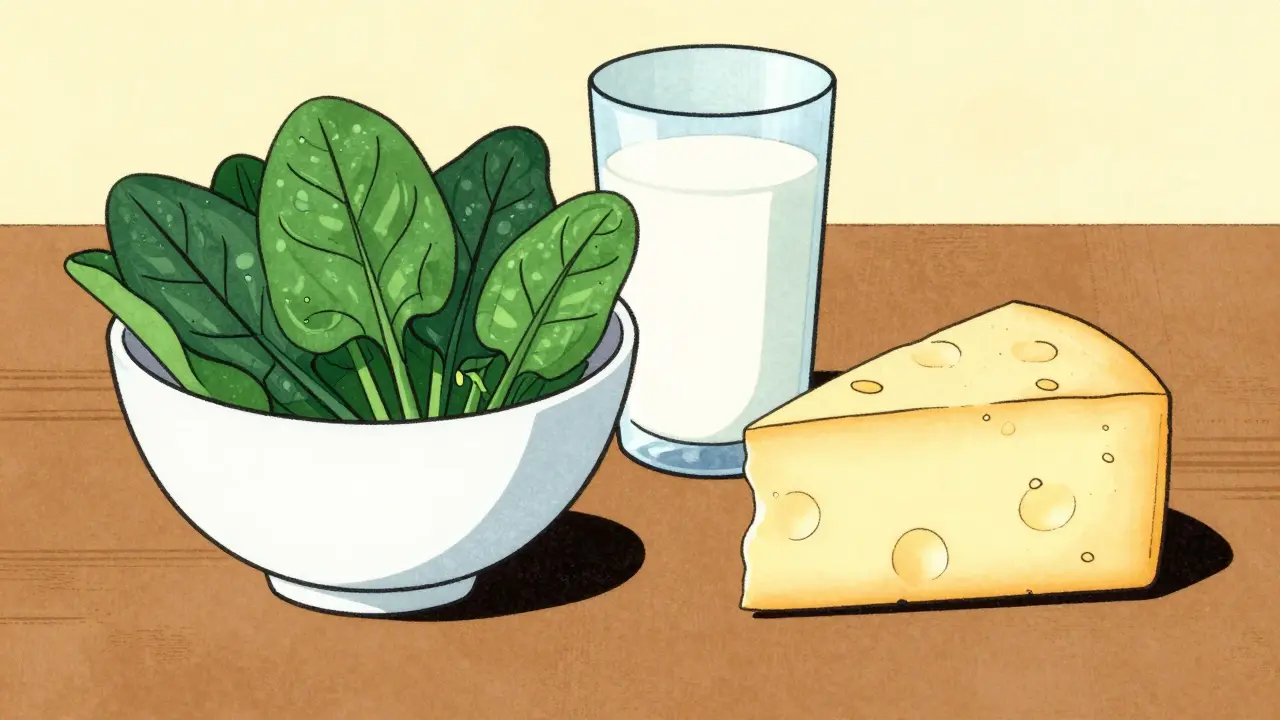
If you love spinach, pair it with a glass of milk or a piece of cheese during the meal to bind that massive oxalate load. Do not eat it alone.
When Medication Becomes Necessary
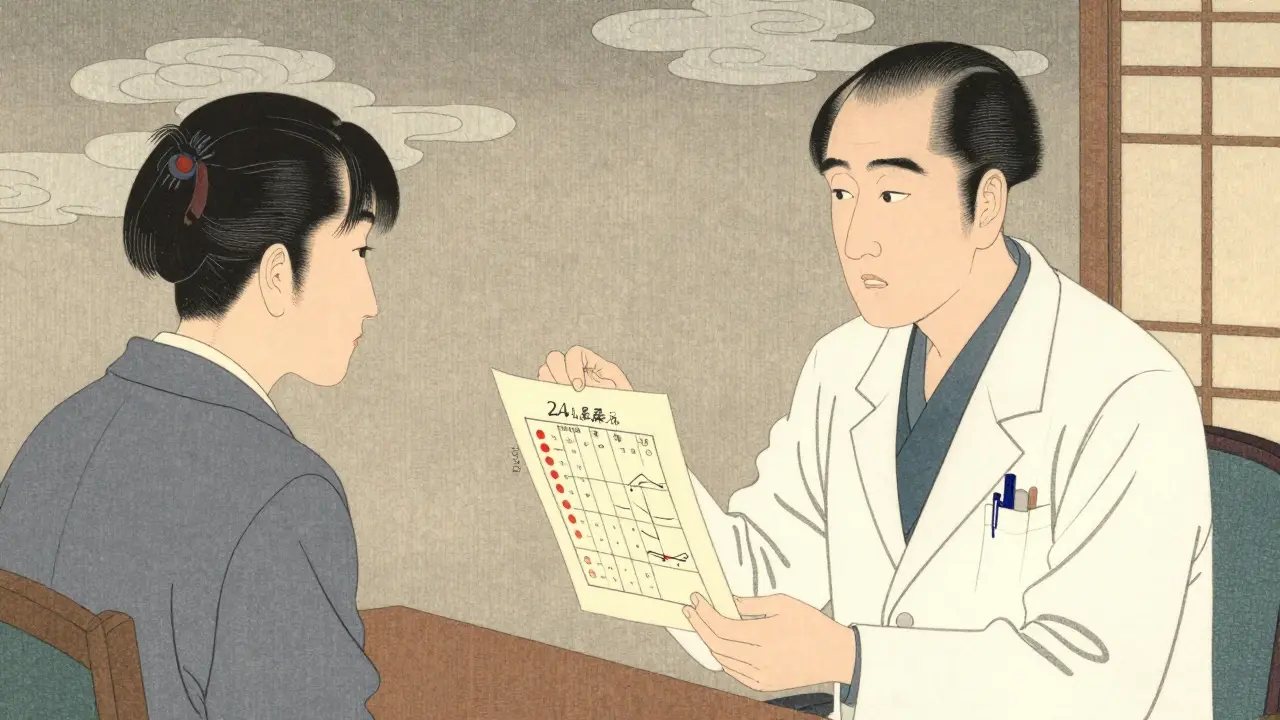
For many, lifestyle changes are enough. But if you have recurrent stones despite perfect adherence to diet and hydration, medication may be required. This decision is based on your 24-hour urine test results.
- Hypercalciuria (High Urine Calcium): Thiazide diuretics like hydrochlorothiazide (12.5-50 mg/day) can reduce stone recurrence by 30-50%. They help your kidneys retain calcium instead of excreting it. You must monitor potassium levels while on these drugs.
- Hypocitraturia (Low Urine Citrate): Potassium citrate supplementation (10-20 mEq twice daily) is the standard treatment. It raises urinary pH and adds citrate, which blocks stone formation. Avoid sodium citrate, as it can increase urinary calcium.
- Hyperuricosuria (High Uric Acid): Allopurinol (200-300 mg/day) may be prescribed if your urine uric acid exceeds 550 mg/24 hours, reducing recurrence by 35%.
Never self-prescribe these medications. They require medical supervision to balance electrolytes and avoid side effects.
Monitoring Your Progress
You cannot manage what you do not measure. The gold standard for prevention is a 24-hour urine collection test. This test establishes your baseline chemistry and helps tailor your strategy. Ideal targets include:
- Urine volume: >2.5 L/day
- Calcium: <250 mg/24 hours
- Oxalate: <40 mg/24 hours
- Citrate: >320 mg/24 hours
- Sodium: <200 mEq/24 hours
Adherence is hard. Only 35% of patients maintain adequate fluid intake at 12 months without support. Consider using mobile hydration tracking apps or setting hourly alarms on your phone. Structured educational programs combined with digital reminders have improved adherence rates to 68%.
Should I stop eating calcium to prevent kidney stones?
No. Restricting dietary calcium actually increases the risk of calcium oxalate stones. Calcium binds to oxalate in the intestines, preventing it from being absorbed into the bloodstream and reaching the kidneys. Aim for 1,000-1,200 mg of calcium daily from food sources like dairy, leafy greens, and fortified foods.
How much water should I drink to prevent stones?
You should aim to consume 2.5 to 3.0 liters of fluid per day to ensure your urine output exceeds 2.5 liters daily. Producing this volume of urine cuts the risk of stone recurrence by 50%. Monitor your urine color; it should be pale yellow or clear.
Can I eat spinach if I have kidney stones?
You can, but with caution. Spinach is very high in oxalate (755 mg per half-cup cooked). If you eat it, consume it simultaneously with a calcium-rich food like milk or cheese. This allows the calcium to bind the oxalate in your gut before it reaches your kidneys.
Does lemon juice really help prevent kidney stones?
Yes. Lemon juice is rich in citrate, which inhibits stone formation. Adding half a cup of lemon juice concentrate to your water daily can increase urinary citrate levels by 120-35 mg/day, providing significant protection against calcium oxalate stones.
What are the signs that my prevention strategy isn't working?
The only way to know for sure is through a 24-hour urine test. If your urine volume remains below 2.5 liters, or if markers like calcium, oxalate, or uric acid remain outside target ranges despite dietary changes, your strategy needs adjustment. Consult a urologist for potential medication adjustments.