How to Recognize Overdose in Pets from Human Medications
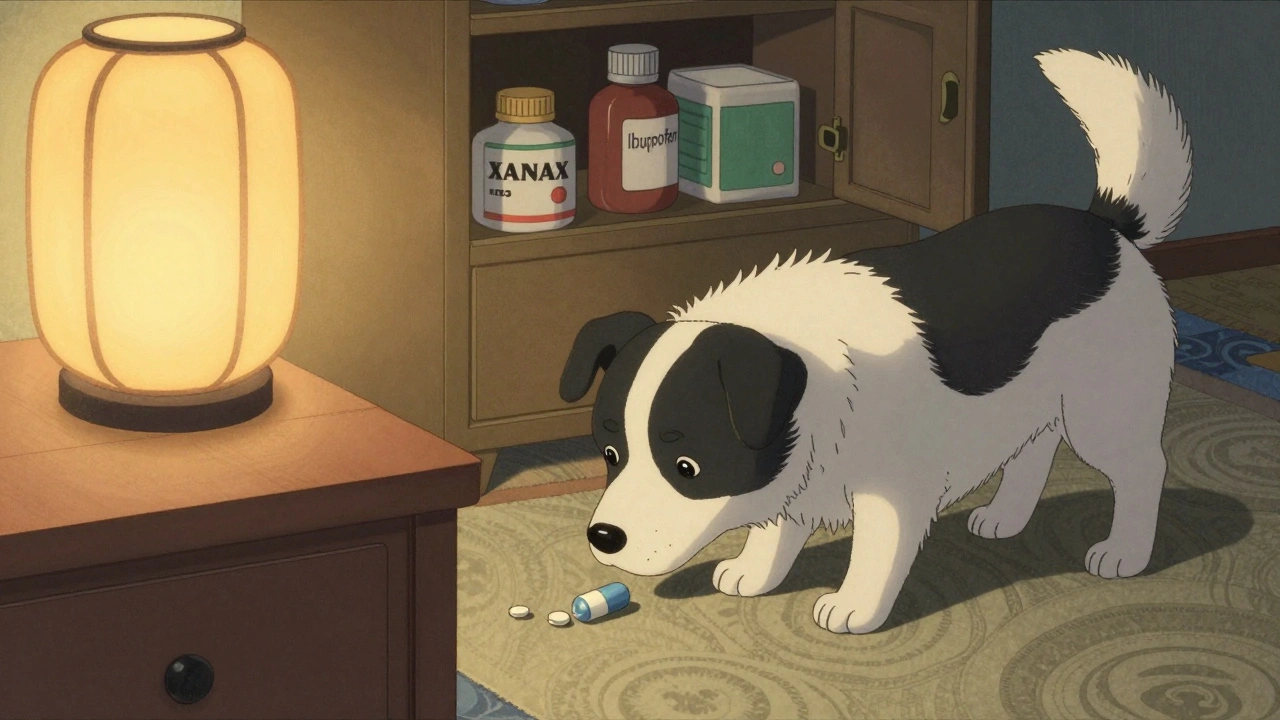
Every year, over 150,000 pets in the U.S. end up in emergency vet clinics because they ate human medication. It’s not rare. It’s not an accident you can ignore. It’s happening in homes where pills are left on nightstands, in purses, on counters, or even in open medicine cabinets. Dogs are the most common victims-85% of cases-but cats are just as vulnerable, often more so, because their bodies can’t process the same drugs the same way. The difference between life and death often comes down to one thing: recognizing the signs early.
What Happens When Pets Ingest Human Medications?
Your dog doesn’t know that your Xanax is for anxiety. Your cat doesn’t care that your ibuprofen is for your back pain. To them, it’s just something tasty, especially if it’s coated or flavored. And once it’s swallowed, their bodies react fast-and sometimes in ways that look nothing like what you’d expect. Different drugs hit pets differently. Some cause immediate hyperactivity. Others slowly destroy organs over hours or days. The key is knowing which symptoms match which drugs, and when to act.Antidepressants: Serotonin Syndrome and Paradoxical Reactions
If your pet ate Prozac, Lexapro, Effexor, or any other antidepressant, watch for these signs within 12 hours:- High fever (103°F to 106°F)
- Shaking, tremors, or muscle rigidity
- Fast heart rate (over 160 bpm in dogs)
- Agitation, pacing, or vocalizing strangely
- Dilated pupils
- Seizures (if untreated)
ADD/ADHD Medications: The Fast-Acting Emergency
Adderall, Concerta, Ritalin-these are stimulants. When a pet swallows them, time is measured in minutes, not hours. Symptoms show up in as little as 15 to 30 minutes:- Heart rate over 220 bpm (normal is 60-140)
- Body temperature above 107°F
- Severe tremors or shaking
- High blood pressure
- Dilated pupils
- Extreme restlessness or collapse
NSAIDs: The Silent Organ Killers
Ibuprofen, naproxen, aspirin-these seem harmless to humans. To pets? They’re slow-motion poison. Symptoms start in 1 to 6 hours:- Vomiting (92% of cases)
- Black, tarry stools (sign of internal bleeding)
- Lethargy, loss of appetite
- Increased thirst and urination
- Pale gums

Acetaminophen: Cats Are Especially at Risk
Tylenol is deadly for cats. Even a single 325mg tablet can be fatal. Cats develop methemoglobinemia within 1 to 4 hours:- Brown or blue-tinged gums and tongue
- Difficulty breathing
- Swelling in the face or paws
- Weakness, collapse
Benzodiazepines: When Calming Drugs Make Things Worse
Xanax, Ambien, Klonopin-these are supposed to calm you down. But in pets? They often do the opposite. In 52% of dogs, these drugs cause agitation instead of sedation:- Hyperactivity
- Loss of coordination
- Unusual vocalization
- Ataxia (walking like they’re drunk)
How to Recognize It Fast: A 5-Minute Checklist
You don’t need to be a vet to spot the warning signs. Use this quick checklist if you suspect your pet ate human meds:- Check for evidence: Are there pill fragments? A broken bottle? Empty packaging?
- Take their temperature: Rectal temperature above 103.5°F? That’s a red flag for stimulants or SSRIs.
- Look at their eyes: Are pupils wide and fixed? That’s common with ADD/ADHD meds.
- Check their gums: Brown or gray? That’s acetaminophen poisoning-especially in cats.
- Time it: When did you last see them? Symptoms appear within minutes for stimulants, hours for NSAIDs, and days for liver damage.
Why Timing Matters More Than Anything
The difference between survival and death often comes down to two hours. Studies show 93% of pets recover when treatment starts within 2 hours of ingestion. After that, organs begin to fail. Activated charcoal can still help if given early. IV fluids, antidotes, and monitoring can save a life-if you act fast. Waiting to see if “they’re just acting weird” is the most common mistake. A dog pacing and shaking isn’t just nervous. A cat bumping into walls isn’t just clumsy. These are medical emergencies.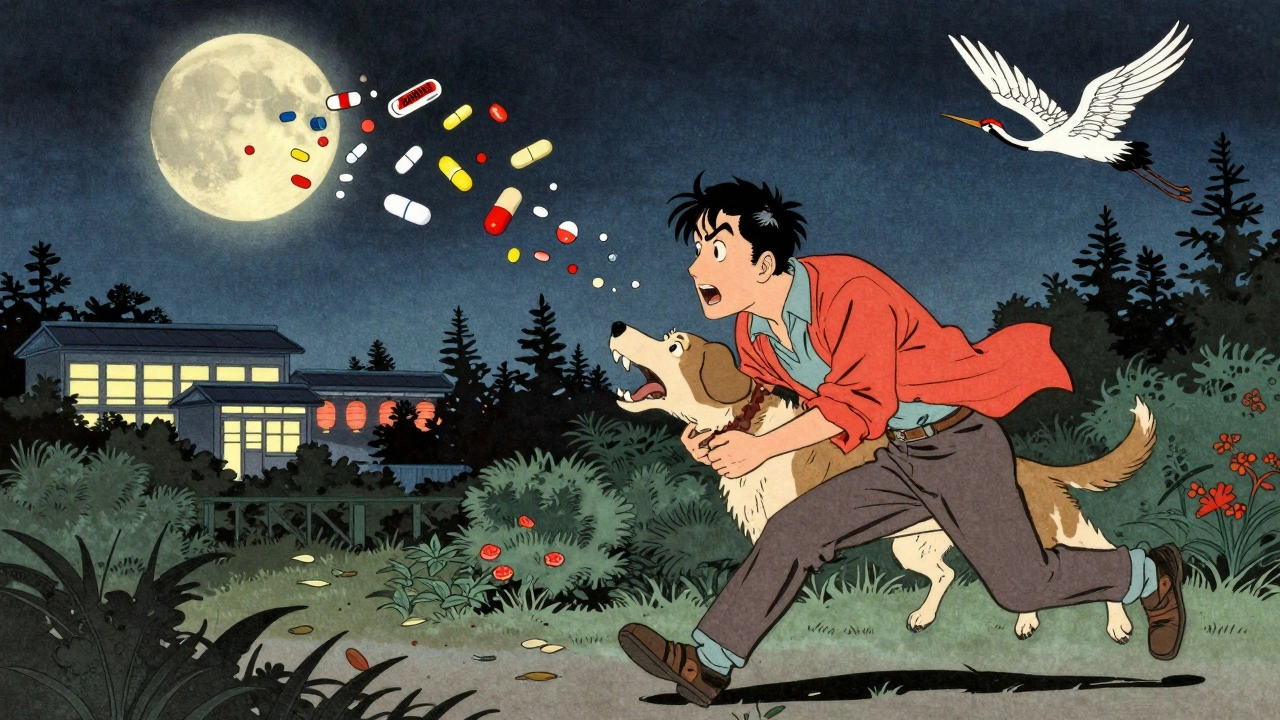
What You Can Do to Prevent It
Prevention isn’t just smart-it’s essential.- Store all meds in closed cabinets, not on counters or nightstands.
- Never give your pet human meds without vet approval-even “safe” ones like aspirin.
- Use child-proof containers. Pets are smarter than you think.
- Keep a list of all medications in your home, including doses and frequencies.
- Download the ASPCA Poison Control app. It has symptom checkers for dogs and cats.
What Veterinarians Want You to Know
Dr. Ahna Brutlag from Pet Poison Helpline says: “Cats lack a key enzyme to break down acetaminophen. Dogs can’t process NSAIDs the way we do. These aren’t just ‘stronger’ versions of human drugs. They’re completely different toxins.” Newer formulations like extended-release pills (Effexor XR, Concerta) are making this worse. They last longer. They leak toxins into the system over 12-24 hours. You might think your pet is fine after 6 hours. They’re not. And here’s the hard truth: 68% of pet owners misinterpret early symptoms. They think tremors are “shivering.” They think agitation is “excitement.” They wait. And by then, it’s too late.Real Cases, Real Consequences
One owner in Oregon thought her cat was just “acting strange” after eating Effexor. Four hours later, the cat was vomiting, disoriented, and had liver enzymes over 1,200. She spent $3,500 on hospitalization. The cat survived, but barely. Another owner in Texas saw her Labrador eat ibuprofen. She noticed vomiting and black stools within 90 minutes. She called the vet, gave activated charcoal, and the dog recovered fully. The difference? One waited. One acted.Final Reminder
Human medications are not pet medications. What helps you can kill your dog or cat. You don’t need to be an expert to save a life. You just need to know the signs-and act before it’s too late. If you think your pet ingested human medication, don’t Google it. Don’t wait. Call your vet or the Pet Poison Helpline now. Every minute counts.Can I give my pet human medication if it’s for the same condition?
No. Human medications are dosed for human metabolism, not pets’. Even common drugs like ibuprofen or acetaminophen can cause severe organ damage or death in dogs and cats. Always consult a veterinarian before giving any medication to your pet.
What should I do if my pet ate a pill but seems fine?
Call the Pet Poison Helpline (1-800-213-6680) or your vet immediately. Many toxins don’t show symptoms right away. NSAIDs and acetaminophen can take 12-72 hours to cause visible damage. Waiting could cost your pet’s life.
Are certain pets more at risk?
Yes. Dogs are more likely to ingest pills due to curiosity, making up 85% of cases. But cats are more vulnerable to toxicity from drugs like acetaminophen and Effexor because their livers can’t process them. Senior pets and those with existing health issues are also at higher risk.
What are the most dangerous human medications for pets?
According to Pet Poison Helpline, the top offenders are NSAIDs (like ibuprofen), antidepressants (like Effexor and Prozac), acetaminophen (Tylenol), and ADD/ADHD medications (like Adderall). These four categories account for over 68% of all medication poisonings in pets.
How can I prevent my pet from accessing medications?
Store all medications in locked cabinets or high shelves, out of reach. Never leave pills on nightstands, countertops, or in open purses. Use child-proof containers. Keep a list of all medications in your home. Consider using a medication organizer with a lock. And always supervise your pet when you’re taking your own pills.
Is there an app to help recognize pet poisoning symptoms?
Yes. The ASPCA Animal Poison Control app includes symptom checkers for dogs and cats, and it can guide you through what to do based on the substance ingested. It’s free and available for iOS and Android. Many veterinarians recommend it as a first-response tool.
Akash Sharma
December 2, 2025 AT 21:19I’ve been a vet tech for 12 years, and I can’t tell you how many times I’ve seen owners come in saying, ‘But my dog just licked it!’ Like that’s somehow okay. The worst was a Labrador who ate a whole bottle of Adderall-20 pills. He was running in circles, panting like he’d run a marathon, and his gums were bright red. We had to cool him down with ice packs and IV fluids for 36 hours. He survived, but his heart still skips a beat sometimes. If you think your pet’s just ‘acting weird,’ it’s probably not just weird-it’s poisoning. And yeah, cats are even scarier. One Tylenol tablet and they’re done. No second chances. Please, just lock your meds up. I’m not even mad anymore. I’m just tired.
Justin Hampton
December 3, 2025 AT 11:52So let me get this straight-you’re telling me I can’t even leave my Advil on the bathroom counter? What’s next? Lock up my coffee? My dog’s not a toddler. He’s a 70-pound mutt who’s never touched anything that wasn’t in his bowl. This article feels like fearmongering dressed up as education. Also, ‘activated charcoal’? That’s not a magic bullet. You think every vet clinic has it on hand? Please.
Pamela Mae Ibabao
December 3, 2025 AT 20:18Oh honey, I love that you’re trying to help-but you missed the biggest point. It’s not just about the pills. It’s about the *culture* of ignoring pet safety. I had a neighbor who gave her cat ibuprofen because ‘it helped her headache.’ She didn’t even know cats can’t metabolize it. And then she got mad when the vet charged her $4,000. People don’t see pets as living beings with biological differences-they see them as furry humans. That’s the real problem. Fix the mindset, not just the pill cabinet.
Gerald Nauschnegg
December 4, 2025 AT 12:13Okay but what about the ones who don’t have locked cabinets? My apartment is tiny. My meds are on the counter because I’m literally three feet from my dog. I can’t afford a lockbox. I can’t afford a vet bill. I work two jobs. So what am I supposed to do? Just stop taking my meds? That’s not a solution. You’re preaching to people who already lock their stuff up. What about the rest of us? The ones who are just trying to survive? I need help, not guilt.
Joanne Rencher
December 5, 2025 AT 02:00Ugh. This is why I hate pet people. You act like your dog is your child, but you still leave your meds out like a moron. If you’re dumb enough to let your pet eat your pills, you deserve whatever happens. Also, ‘Pet Poison Helpline’? That’s not a thing. That’s a scam. My cousin’s dog ate a pill and lived. She just gave it milk. Case closed.
Erik van Hees
December 5, 2025 AT 16:50Actually, you’re all wrong. The real danger isn’t the meds-it’s the misinformation. The ASPCA app? Useless. The Pet Poison Helpline? Overpriced. The real solution is knowing the LD50 values for each drug. For example, ibuprofen’s LD50 in dogs is 175mg/kg. So if your 30kg dog eats a 200mg pill, you’re at 6.7mg/kg-way below lethal. But if it’s 800mg? Now you’ve got a problem. Most people don’t even know what LD50 means. That’s the real epidemic. Not the pills. The ignorance. I’ve got a spreadsheet. I’ll send it to you.
Cristy Magdalena
December 7, 2025 AT 11:56Just… one sentence. I read this entire article. I cried. I called my vet. I locked my meds. I’m so sorry I ever thought my cat could handle a little Tylenol. I thought she was just sleepy. I didn’t know. I’m so, so sorry.
Adrianna Alfano
December 7, 2025 AT 21:23I’m from Puerto Rico and we don’t have easy access to vet care here. My abuela used to give our dog aspirin for his arthritis. She didn’t know it was dangerous. Now I’m trying to teach my family. I showed them this article. My cousin said, ‘But it’s just one pill.’ I told her: ‘One pill killed my uncle’s dog. He didn’t even get to say goodbye.’ I’m not mad. I’m just trying to make sure no one else loses someone because they didn’t know. Please, if you’re reading this and you’re in a place where help is hard to find-call anyway. The helpline is free. They’ll walk you through it. Don’t wait. Please.