How to Shop Pharmacies for the Best Cash Price on Medications
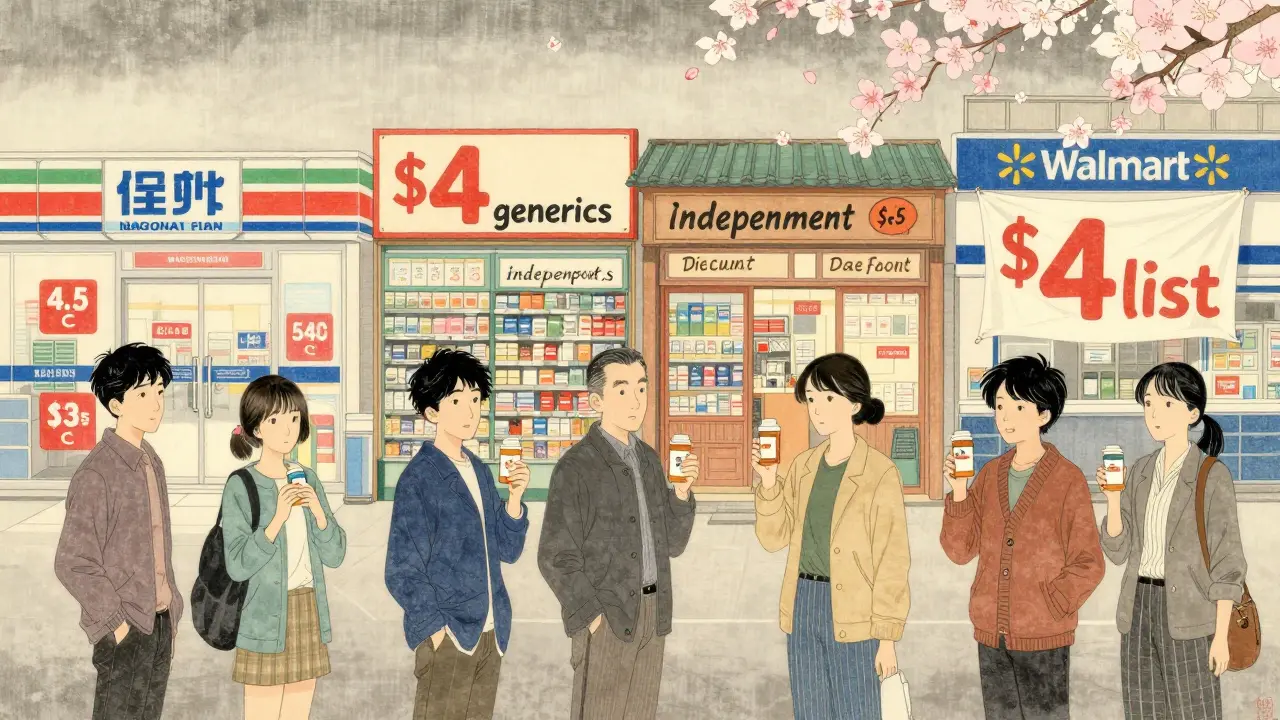
Every year, millions of people in the U.S. pay far more than they should for prescriptions-just because they never checked the price at another pharmacy. It’s not about insurance. It’s not about coupons. It’s about the simple, shocking truth: the same pill can cost $2 at one store and $150 at another, even if you’re paying cash. You don’t need a degree in pharmacology to save money. You just need to know where to look.
Why Cash Prices Vary So Much
Pharmacies don’t set prices based on what’s fair. They set them based on what they think you’ll pay. A national chain like CVS or Walgreens might charge $120 for a 30-day supply of metformin because they know people with insurance assume that’s the standard. But down the street, a local independent pharmacy might sell it for $4. Why? Because they’re competing for customers who shop around. And they know most people don’t. This isn’t a glitch. It’s the system. Drug manufacturers sell the same medication to different buyers at wildly different prices. They give big discounts to Pharmacy Benefit Managers (PBMs) and large chains, but those savings rarely reach you at the counter. Instead, you’re left with the undiscounted cash price-the sticker price that no one actually pays if they know how to shop. A 2020 NIH study found that for generic cardiovascular drugs, prices varied from $4.50 to $140 within the same ZIP code. That’s not a typo. That’s reality. And it happens every day for common medications like atorvastatin, levothyroxine, and lisinopril.How Discount Apps Like GoodRx Work
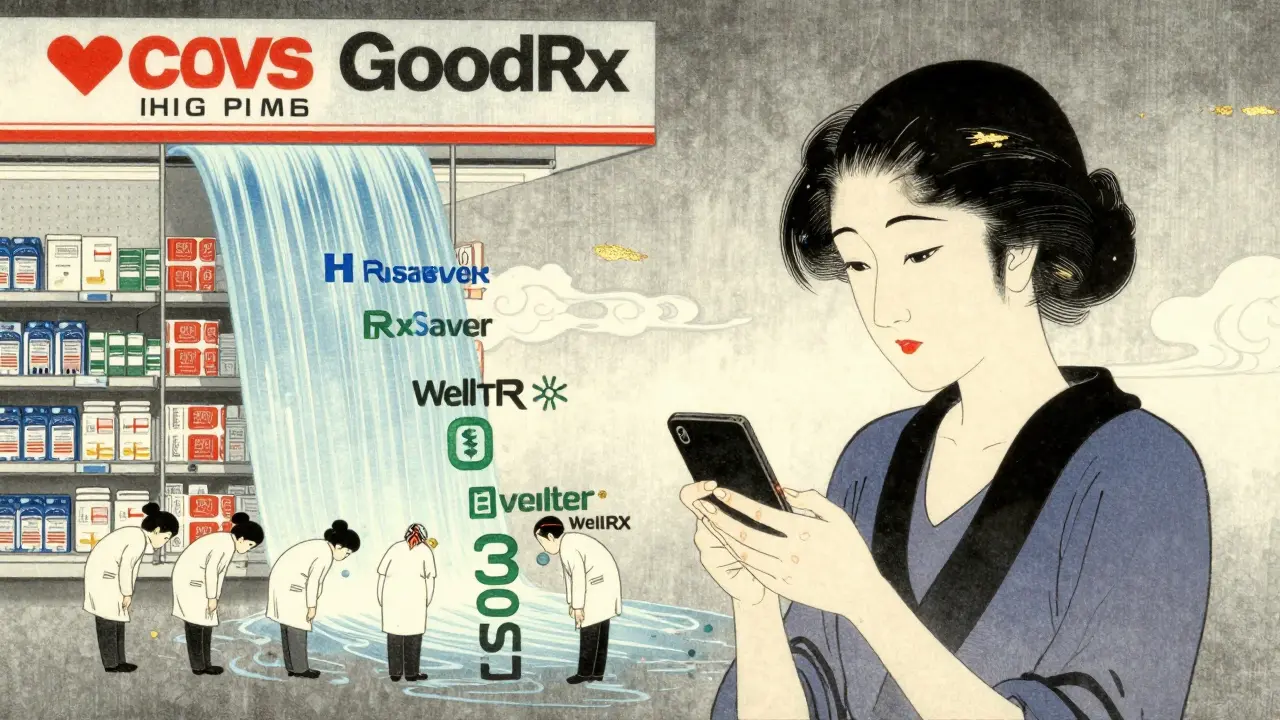
Tools like GoodRx, RxSaver, and WellRX don’t magically lower drug prices. They expose hidden deals. These apps negotiate directly with pharmacies to offer discounted cash prices in exchange for bringing them customers. Think of them as travel booking sites-but for prescriptions. GoodRx, for example, aggregates pricing from over 70,000 U.S. pharmacies. In 2023, they reported users saved an average of 88% on generic drugs and 42% on brand-name drugs compared to the standard cash price. That’s not hype. It’s data. And it’s backed by real receipts. On Reddit, users regularly post screenshots showing $1.89 for metformin at a local pharmacy using a GoodRx coupon-versus $15.99 at a chain without one. But here’s the catch: GoodRx only works for cash payments. If you try to use it with insurance, you’ll usually pay more. Always ask the pharmacist: “What’s the cash price with this coupon?” before swiping your card.Where to Find the Best Deals
Not all pharmacies are created equal. Here’s where you’re most likely to find the lowest cash prices:- Supermarket pharmacies (Kroger, Safeway, Publix): These often have the lowest generic prices, especially with their own discount programs like Kroger’s $4/$9 list. Their margins are thin-they make money on groceries, not prescriptions.
- Mass merchandisers (Costco, Walmart, Target): Costco is famously cheap for generics, even without a membership. Walmart’s $4 list includes over 400 common medications. Target’s pharmacy often matches GoodRx prices.
- Independent pharmacies: These are the dark horse. Many don’t advertise discounts, but will give you 20-50% off if you ask. One study found that 38% of independent pharmacists offer unadvertised savings to regular customers.
- National chains (CVS, Walgreens): Usually the most expensive. Only use them if the discount app shows a better price than elsewhere.
How to Compare Prices Like a Pro
Don’t guess. Compare. Here’s a simple five-step process:- Get the name and dosage of your medication. Write it down exactly as it appears on the prescription.
- Check three apps: Open GoodRx, RxSaver, and WellRX. Enter your drug and ZIP code. Note the lowest price at each.
- Call your local pharmacies. Don’t rely on apps alone. Prices change daily. Ask: “What’s the cash price for [drug name]?” Then say: “I have a GoodRx coupon. Can you match it?”
- Check mail-order options. If you take the same med every month, consider RXOutreach.com. It’s a nonprofit that sells generics at deep discounts to people with incomes under $45,000/year. Even if you have insurance, you might pay less here.
- Ask for a discount. At independent pharmacies, say: “I’m trying to keep costs down. Do you have any cash discounts for regular customers?” Many will say yes.
Medicare and Other Special Cases
If you’re on Medicare, you still need to shop. Even with Part D, you’re not protected from price gaps. In 2025, the out-of-pocket cap is $2,000-but that doesn’t mean you’re paying the lowest possible price. You might be paying $100 for a drug that costs $30 elsewhere. Use Medicare’s Plan Finder tool to see which pharmacies are in your plan’s network. Some plans offer lower copays at specific pharmacies. Also, check if your plan has a mail-order option. It’s often cheaper than picking up at a local store. For people with low income, programs like RXOutreach.com, NeedyMeds, and patient assistance programs from drugmakers (like Pfizer’s Patient Assistance Program) can cut costs to $0. You don’t need to be broke to qualify-many programs accept incomes up to 400% of the federal poverty level.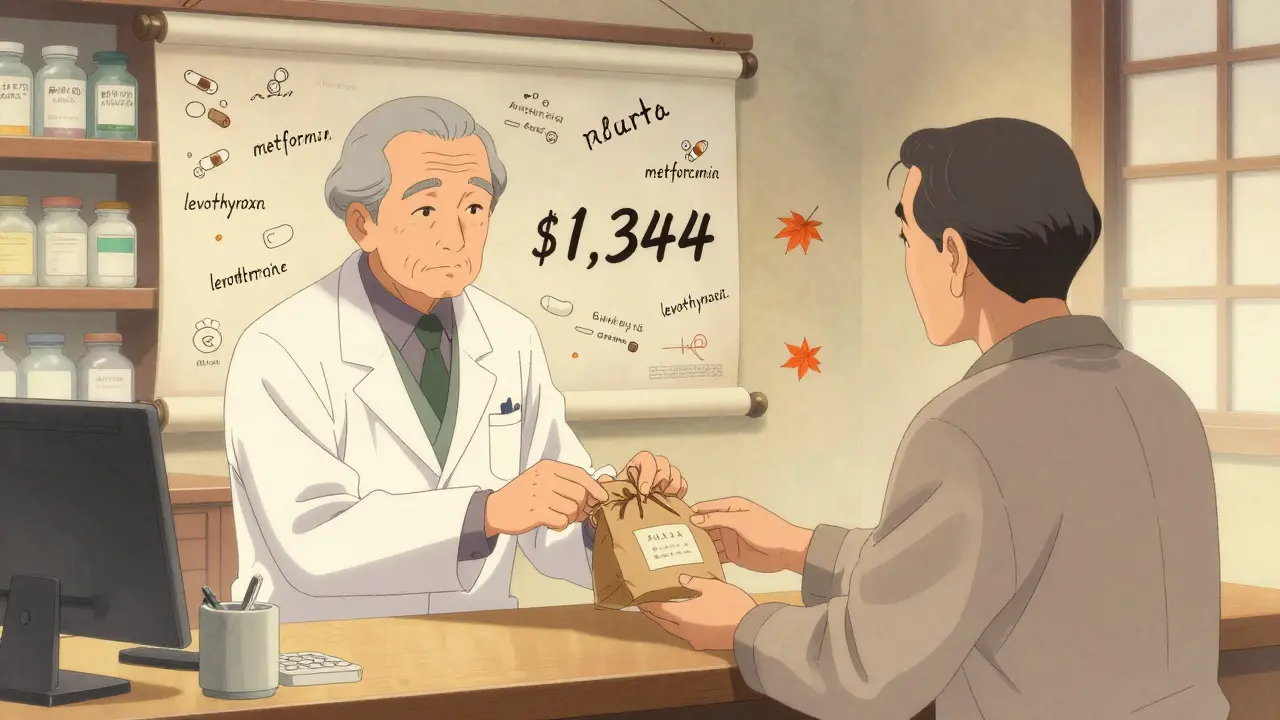
What Doesn’t Work
Don’t waste time on these myths:- “Insurance always saves money.” False. Sometimes your insurance copay is higher than the cash price. Always ask for both.
- “GoodRx works for all drugs.” No. Brand-name biologics like Humira or Enbrel rarely see big discounts. Switch to a generic alternative if possible.
- “Prices are the same everywhere.” That’s what the system wants you to believe. It’s not true.
- “I don’t have time.” You don’t need to do it every month. Once you find the cheapest pharmacy for each med, you can stick with it. Set a reminder every six months to check again.
Real Savings, Real Stories
One user in Chicago found insulin prices ranging from $98 to $345 for the same vial across four pharmacies within two miles. She switched to the cheapest one and saved $247 per month. Another in Texas paid $112 for Synthroid at her local CVS. With GoodRx, she got it for $12 at Walmart. That’s $1,344 saved a year. These aren’t outliers. They’re normal. The system is broken. But you don’t have to be a victim of it.Final Tip: Build a Relationship
Once you find a pharmacy that gives you the best price, get to know the pharmacists. Say hello. Ask questions. Become a regular. Many independent pharmacies will quietly give you a better deal over time. They remember loyal customers. Chains? Not so much. You’re not just buying medicine. You’re managing your health budget. And in a world where drug prices are arbitrary, the only power you have is information. Use it.Is it legal to use GoodRx instead of insurance?
Yes. You have the right to pay cash for your prescription instead of using insurance. In fact, pharmacists are required by law to give you the lower of the two prices-the cash price or your insurance copay. Always ask for both before paying.
Can I use GoodRx with Medicare Part D?
You can use GoodRx with Medicare, but only if you choose to pay cash instead of using your Part D coverage. Medicare doesn’t allow you to combine the two. If the GoodRx price is lower than your Medicare copay, it’s smarter to pay cash. Just make sure the pharmacy knows you’re not using your plan.
Why is my GoodRx price different from the pharmacy’s price?
GoodRx prices are estimates and can change daily. Pharmacies update their pricing in real time, and sometimes the app isn’t synced. Always confirm the final price at the counter before paying. If the price is higher than advertised, ask if they can match the coupon. Most will.
Are generic drugs as effective as brand-name ones?
Yes. The FDA requires generic drugs to have the same active ingredient, strength, dosage form, and route of administration as the brand-name version. They must also be bioequivalent-meaning they work the same way in your body. The only differences are in inactive ingredients (like fillers), which rarely affect how the drug works.
What if my doctor won’t switch me to a generic?
Ask why. If it’s just habit or lack of awareness, you can request a generic substitution. Many doctors are open to it once they know the cost difference. If your condition requires the brand-name drug (rare), ask if there’s a therapeutic alternative that’s cheaper. You can also ask your pharmacist for help-they often know of similar medications.
How often should I check pharmacy prices?
Check at least once every six months. Prices change frequently due to manufacturer rebates, pharmacy contracts, and new discounts. Even if you found the best price last month, it might be cheaper now. Set a calendar reminder to review your top three prescriptions twice a year.
Can I use GoodRx for pet medications?
Yes. GoodRx and other discount apps also cover many veterinary medications. Drugs like gabapentin, metronidazole, and prednisone are often much cheaper with a GoodRx coupon than at a vet’s office. Always confirm the dosage and form with your vet before purchasing.
What if I can’t afford my meds even after shopping around?
Contact NeedyMeds.org or the Partnership for Prescription Assistance. These nonprofits help people find free or low-cost medications through manufacturer programs. You can also ask your pharmacist-they often know about local aid programs or samples. Don’t skip doses. There are options.
Christina Widodo
January 13, 2026 AT 01:39I had no idea metformin could be $2 at some places-my CVS charged me $47 last month. I’m checking GoodRx today.
Katherine Carlock
January 14, 2026 AT 17:00This is life-changing info. I’ve been paying $120 for levothyroxine for years. Just checked GoodRx-$11 at Walmart. I’m crying. Not because I’m sad-because I’m furious I didn’t know sooner.
laura manning
January 15, 2026 AT 15:21The systemic exploitation of pharmaceutical pricing is not merely an economic anomaly-it is, in fact, a structural failure of market regulation, wherein opaque rebate systems and PBM monopolization have rendered the consumer utterly powerless. The data cited from the NIH, while compelling, underrepresent the true magnitude of price distortion across geographic and institutional boundaries. Moreover, the reliance on third-party discount platforms introduces a new layer of intermediary rent-seeking, which, while beneficial in the short term, does not address the root cause: the absence of price transparency mandates under federal statute.
Furthermore, the assertion that independent pharmacies offer unadvertised discounts is empirically unsupported without longitudinal audit data; anecdotal testimony from Reddit users does not constitute a representative sample. One must also consider the legal implications of bypassing insurance-particularly under Medicare Part D-wherein the use of cash discounts may trigger clawbacks or penalties under the Anti-Kickback Statute, depending on the interpretation of CMS guidelines.
Additionally, the recommendation to 'ask for a discount' at independent pharmacies presupposes a level of socioeconomic privilege and assertiveness that is not universally accessible. For elderly, disabled, or non-English-speaking patients, this strategy is not merely impractical-it is exclusionary.
Therefore, while the immediate utility of GoodRx is undeniable, the broader policy imperative remains unaddressed: we require universal price transparency laws, mandatory disclosure of wholesale acquisition costs, and the elimination of PBM rebates that distort incentives. Until then, we are merely rearranging deck chairs on the Titanic.
Sumit Sharma
January 17, 2026 AT 14:12GoodRx is a band-aid on a hemorrhage. The real issue is the FDA's approval of generics without enforcing bioequivalence testing rigorously enough. Many 'generic' drugs have 10-15% variation in bioavailability-especially for narrow-therapeutic-index drugs like warfarin or levothyroxine. You think $2 is good? You're gambling with your health. Stick to brand if you're on chronic meds. I've seen patients crash from 'equivalent' generics. This isn't savings-it's negligence disguised as frugality.
And don't get me started on Costco. They're not giving you a deal-they're using you as bait to sell groceries. Your insulin? They'll give you $20 off. Then charge you $80 for the bread you didn't need. That's predatory retail psychology.
Also, why are we even discussing cash prices? If you're in the U.S., you're either insured or you're a walking liability. The system is broken. Stop optimizing within it. Demand universal healthcare. That's the only real solution.
Alice Elanora Shepherd
January 18, 2026 AT 12:07Thank you for this. I’m from the UK, and I’ve been horrified watching friends struggle with U.S. drug prices. Here, everything is NHS-covered-even insulin is free. I can’t believe people are choosing between meds and rent. I’ve shared this with three American friends already. Please keep sharing these truths.
Prachi Chauhan
January 19, 2026 AT 08:25My grandma used to say: 'If you don't ask, you don't get.' She saved $300 a month just by walking into the pharmacy and saying 'Can you do better?' They always did. People think pharmacists are robots. They’re humans. They want to help. Just talk to them. Don’t be shy. You’re not bothering them. They’re tired of seeing people cry at the counter.
Sona Chandra
January 21, 2026 AT 08:04THIS IS WHY AMERICA IS DYING. PEOPLE ARE STARVING FOR MEDS WHILE PHARMA CEOs BUY PRIVATE ISLANDS. I’M SO ANGRY I COULD SCREAM. WHY DOES NO ONE DO ANYTHING? WE NEED TO BURN THE WHOLE SYSTEM DOWN. #PHARMACRACY
Konika Choudhury
January 22, 2026 AT 18:16GoodRx is just another American scam. In India we pay $0.50 for metformin. Why are you paying $2? You’re being robbed. Your government is corrupt. You need to protest. Not use apps. Protest.
Jay Powers
January 24, 2026 AT 12:33I used to think this was just about money but now I see it’s about dignity. When you’re standing there holding your prescription and the pharmacist says 'That’s $148' and you have $15 in your wallet… that’s not a financial problem. That’s a soul-crushing moment. I’m not proud to say I’ve skipped doses. But I’m proud I found a pharmacy that lets me pay $5. That’s not a discount. That’s mercy.
And yeah, the system’s broken. But the people behind the counter? They’re still human. Say hi. Ask for help. They remember you. And sometimes, that’s enough.
Lawrence Jung
January 24, 2026 AT 16:23You think you're saving money? You're just participating in the illusion of agency. The real power lies with the PBMs and the manufacturers who set the wholesale price. You're a pawn in a game you didn't even know existed. GoodRx doesn't fix the system. It just makes you feel better about being exploited. Wake up. You're not shopping. You're being curated.
And the idea that 'independent pharmacies' are your saviors? They're just smaller players in the same casino. They get their drugs from the same distributors. The only difference is they don't have a logo on the roof. That doesn't make them ethical. It makes them quieter.
True freedom isn't finding the cheapest pill. It's demanding a world where no one has to choose between food and medicine. Until then, you're just rearranging the furniture in your prison.
Darryl Perry
January 25, 2026 AT 09:40Stop wasting time. Just use mail order. It's cheaper. Done.
Windie Wilson
January 27, 2026 AT 05:06So… you’re telling me the secret to saving hundreds of dollars is… asking nicely? And using an app? That’s it? No secret handshake? No underground pharmacy network? No hacker who cracks the PBM database? I feel… underwhelmed. I was expecting a heist movie. Instead I got a TED Talk with coupons.
Also, I just used GoodRx for my cat’s gabapentin. $12. His vet wanted $98. He’s now the most chill cat in Ohio. I think he’s in therapy. I’m proud.