How to Teach Family Members to Recognize Overdose Symptoms: A Practical Guide

Imagine it’s a quiet Tuesday evening. Your loved one is in their room, and you go in to check on them. They’re asleep-or so you think. You shake them gently, but they don’t wake up. Their breathing is shallow, almost silent. In that moment, the difference between panic and action can mean the difference between life and death. For families navigating substance use disorders, knowing how to spot an overdose isn’t just helpful; it’s essential.
The statistics are stark. According to the Centers for Disease Control and Prevention (CDC), over 107,000 drug overdose deaths occurred in the United States in a single twelve-month period ending in April 2022. Even more telling is data from the National Institute on Drug Abuse (NIDA): 78% of these overdoses happen in private homes. That means family members are often the first-and sometimes only-responders. If you have a loved one struggling with addiction, teaching your household how to recognize and respond to an overdose is one of the most powerful steps you can take.
The Core Signs: What an Overdose Actually Looks Like
One of the biggest hurdles families face is distinguishing between someone who is simply "high" or passed out, and someone who is actively overdosing. The confusion can be fatal. To clear this up, health authorities like NIDA and the California Department of Public Health (CDPH) rely on specific physiological markers.
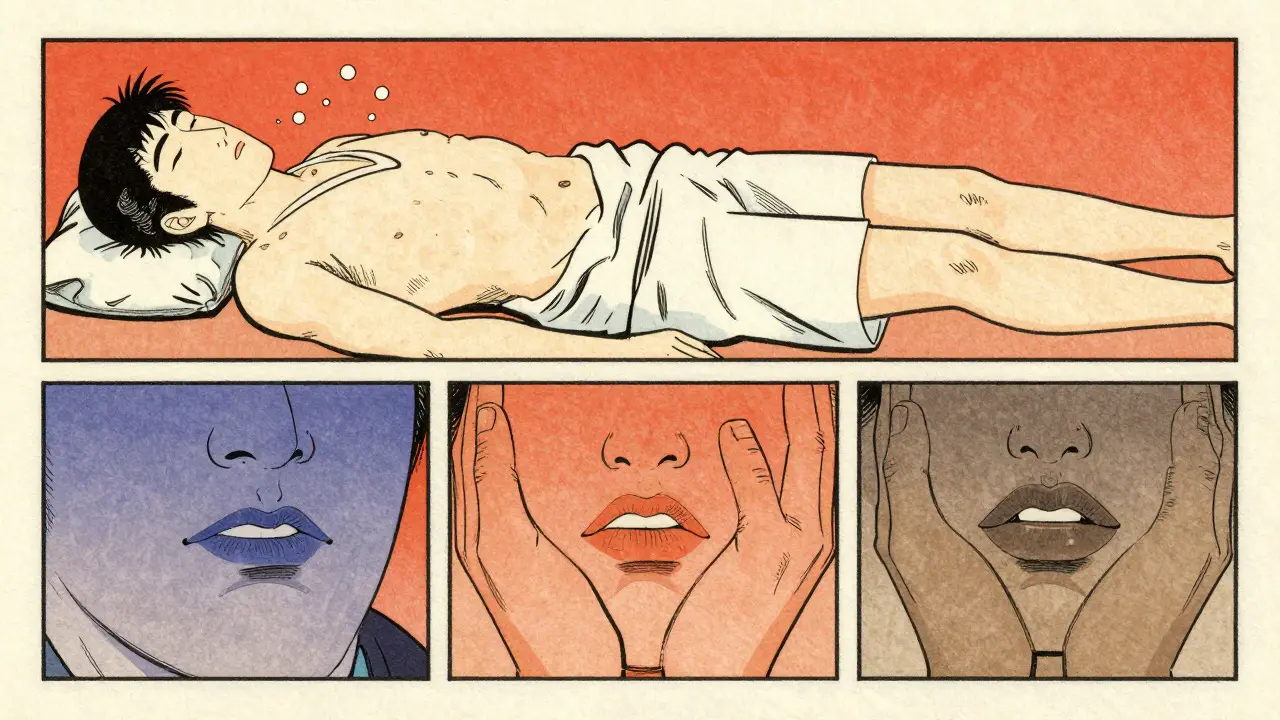
For opioid overdoses-which include heroin, fentanyl, oxycodone, and prescription painkillers-look for the "Opioid Triad." This is a set of three critical symptoms that, when combined, signal a medical emergency:
- Unresponsiveness: The person cannot be woken up, even if you shout their name loudly or rub their sternum (the center of their chest) firmly with your knuckles.
- Respiratory Depression: Breathing slows down significantly. Look for fewer than one breath every five seconds, or no breathing at all.
- Cyanosis: Lips, fingernails, or skin turn blue, purple, or gray. Note that this looks different depending on skin tone-bluish-purple on lighter skin, and grayish-ashen on darker skin.
Beyond the triad, other signs include extreme paleness, clammy skin, a limp body posture, and gurgling sounds (often called the "death rattle"). It is crucial to understand that while someone who is intoxicated might stir slightly when shaken, someone in an opioid overdose typically has zero response to physical stimulation.
If your loved one uses stimulants like methamphetamine or cocaine, the signs look very different. Instead of slowing down, their system speeds up dangerously. Watch for hyperthermia (body temperature over 104°F/40°C), seizures, chest pain, irregular heartbeat, and agitation that escalates into confusion or collapse.
Why Hands-On Training Beats Reading a Pamphlet
You might think watching a video or reading a guide is enough. But research tells a different story. Dr. Nora Volkow, Director of NIDA, noted that families retain 73% more information when taught through scenario-based practice rather than lectures alone. The CDC found that programs using hands-on practice with training devices saw 89% skill retention after three months, compared to just 42% for verbal-only instruction.
So, how do you actually teach this? Start by removing the stigma. Many family members hesitate because they fear "jinxing" their loved one. Acknowledge that fear, then reframe the training as basic safety-like learning CPR or fire drills. It’s not about expecting the worst; it’s about being prepared for anything.
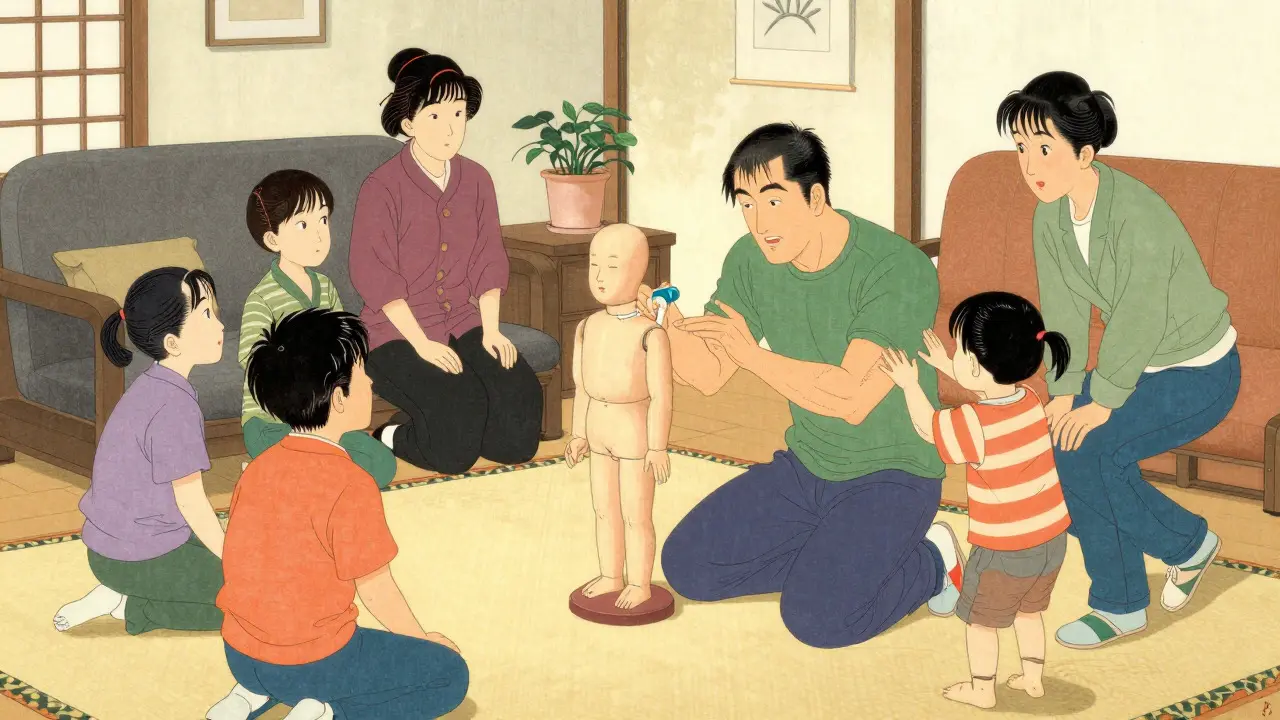
- Gather the Right Tools: You’ll need a training kit. These usually include a dummy naloxone device (which doesn’t contain medicine) and sometimes a small mannequin. Kits cost around $35 and are available through harm reduction organizations.
- Use Scenario Cards: Create realistic situations. "Your brother is on the couch, snoring softly, but his lips look pale. What do you do?" Discuss the steps out loud before acting them out.
- Practice the Physical Actions: Have each family member practice checking for breathing (look, listen, feel for 10 seconds) and performing the sternal rub. Muscle memory matters in high-stress moments.
- Address Skin Tone Variations: Use reference guides to show how cyanosis appears on different skin tones. This simple step reduces misidentification errors by 63%, according to CDPH data.
Naloxone (Narcan): The Lifesaving Antidote
Recognizing an overdose is only half the battle. The other half is reversing it. Naloxone, commonly known by the brand name Narcan, is a medication that rapidly reverses opioid overdoses. It works by blocking opioid receptors in the brain, restoring normal breathing almost immediately.
Data from the Ohio Pharmacy Board shows that 98% of opioid overdoses can be reversed if naloxone is administered within four minutes of respiratory arrest. That window is tight, which is why having it accessible and knowing how to use it is non-negotiable.
| Method | Pros | Cons | Best For |
|---|---|---|---|
| Intranasal Spray (Narcan) | No needles, easy to administer, pre-dosed | Slightly more expensive, requires aiming correctly | Families, laypeople, first responders |
| Intramuscular Injection | Fast absorption, widely available in kits | Requires needle handling, potential for injury | Medical professionals, trained caregivers |
| Intravenous (IV) | Immediate effect | Requires IV access skills, high risk of error | Hospital settings only |
Most states now allow family members to obtain naloxone without a prescription through standing orders. Check your local pharmacy or health department. Keep the kit in a central, easily accessible location-not locked away where stress might make it hard to find.
Overcoming Emotional Barriers and Legal Hurdles
Teaching overdose recognition isn’t just technical; it’s emotional. A 2023 survey by the Addiction Policy Forum found that 34% of family members initially resisted training due to fear or denial. However, 92% said those fears faded after completing the course. Approach the conversation with empathy. Say, "We love you, and we want to be safe together," rather than "You need to learn this because you might die."
Legally, you’re generally protected. Good Samaritan laws in most U.S. states protect bystanders who call 911 during an overdose from minor drug possession charges. Additionally, 31 states permit family members to get naloxone without a prescription. Always verify local laws, but know that saving a life is rarely penalized.
Putting It All Together: A Step-by-Step Response Plan
When the moment comes, panic will try to take over. That’s why you need a rehearsed plan. Here is the standard protocol endorsed by SAMHSA and NIDA:
- Check Responsiveness: Shout their name. Rub their sternum. If no response, proceed.
- Call 911: Put the phone on speaker. Tell the dispatcher, "Possible overdose."
- Administer Naloxone: If opioids are suspected, give the nasal spray or injection immediately.
- Start Rescue Breathing: If they aren’t breathing, tilt their head back, pinch their nose, and breathe into their mouth once every five seconds until help arrives.
- Place in Recovery Position: Once breathing resumes, roll them onto their side to prevent choking if they vomit.
- Stay Until Help Arrives: Naloxone wears off faster than many opioids. They may overdose again. Stay with them until paramedics take over.
Remember, this isn’t a one-time lesson. Skills fade. Revisit the training every six months. Update your naloxone kit if expired. And keep the conversation open with your loved one. Knowledge saves lives-but connection keeps them going.
How long does it take to learn how to recognize an overdose?
A comprehensive session takes 45-60 minutes. This includes 20 minutes on recognizing signs, 25 minutes on response procedures, and 15 minutes of hands-on practice. Shorter refresher courses can be done in 15 minutes.
Can I buy naloxone without a prescription?
Yes, in 31 U.S. states, family members can obtain naloxone without a prescription through standing orders. Check with your local pharmacy or state health department for specific regulations in your area.
What if the person is using stimulants like meth or cocaine?
Naloxone does not reverse stimulant overdoses. Focus on keeping the person cool (for hyperthermia), preventing injury during seizures, and calling 911 immediately. Monitor for chest pain or irregular heartbeat.
Will my family member be arrested if we call 911?
Most states have Good Samaritan laws that protect callers from minor drug possession charges when seeking emergency help for an overdose. Laws vary by state, so check your local regulations, but saving a life is the priority.
How do I explain overdose training to a resistant family member?
Frame it as general safety, similar to learning CPR or fire escapes. Acknowledge their fear of "jinxing" the situation, but emphasize that preparation reduces anxiety. Use phrases like "We want to be ready for any emergency" rather than focusing solely on addiction.