How to Use Price Transparency Tools to Compare Drug Costs
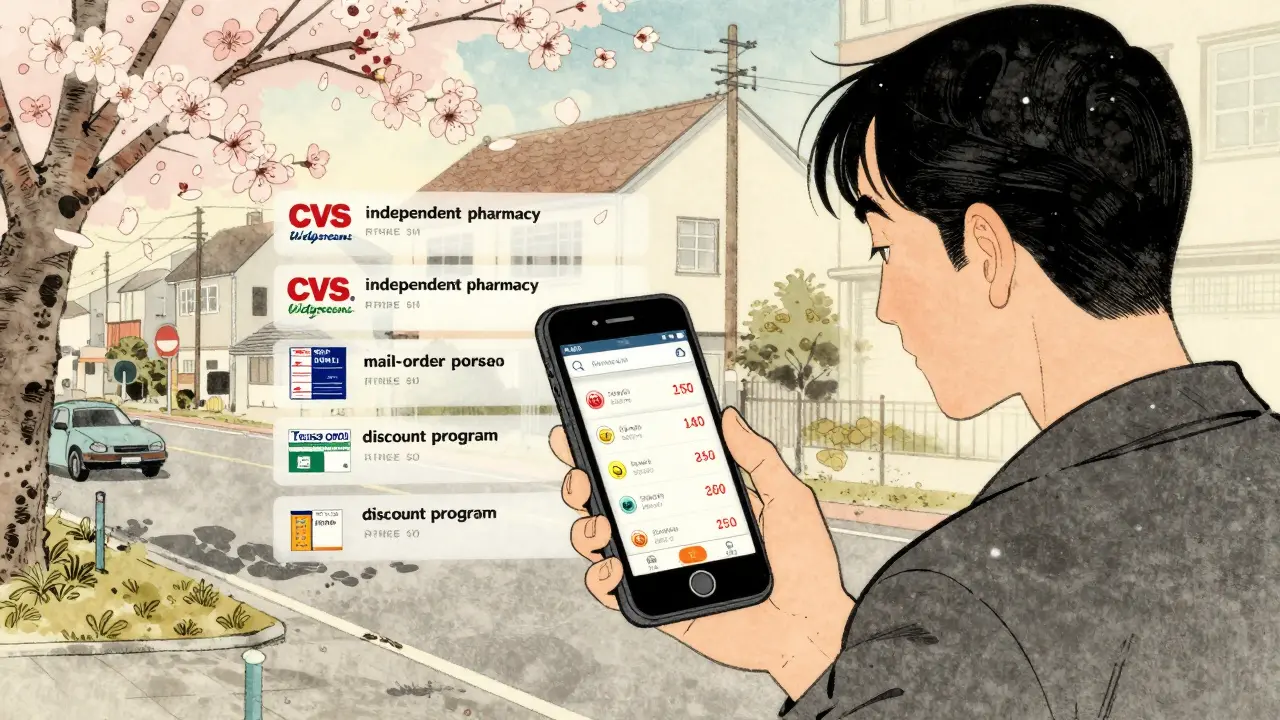
Buying prescription drugs shouldn’t feel like gambling with your wallet. Two pharmacies down the street might charge $120 and $600 for the same 30-day supply of your medication-and you wouldn’t know unless you checked. That’s where price transparency tools come in. These free, online platforms let you see exactly what you’ll pay out of pocket before you even walk into the pharmacy. No more surprises at the counter. No more overpaying because you didn’t know better.
Why Drug Prices Vary So Wildly
The same drug can cost 500% more at one pharmacy than another. Why? It’s not about the pill. It’s about contracts. Insurance companies negotiate secret prices with pharmacies and drug manufacturers. These are called negotiated rates. But your plan doesn’t always show you those rates. Instead, you might see the list price-the sticker price the drugmaker sets-which is often way higher than what you actually pay. Some pharmacies offer discount programs like GoodRx or SingleCare. Others only show you the full price if you’re uninsured. Without a tool that pulls your actual insurance data, you’re flying blind. That’s why 38% of people who try these tools get confused-they see a $400 price but end up paying $80 because their insurance kicked in. The tool didn’t lie. It just didn’t show the right number.What Price Transparency Tools Actually Show
Good tools don’t just give you a list price. They show your out-of-pocket cost based on your specific insurance plan. That means they factor in your deductible, copay, coinsurance, and whether the pharmacy is in-network. Some even tell you if a generic version is available and how much you’d save. Here’s what to look for in a real price transparency tool:- Shows your exact cost after insurance
- Compares prices across multiple nearby pharmacies
- Suggests cheaper alternatives (same effect, lower price)
- Works on mobile or desktop
- Doesn’t force you to log into your insurer’s portal
Top Tools to Compare Drug Prices Right Now
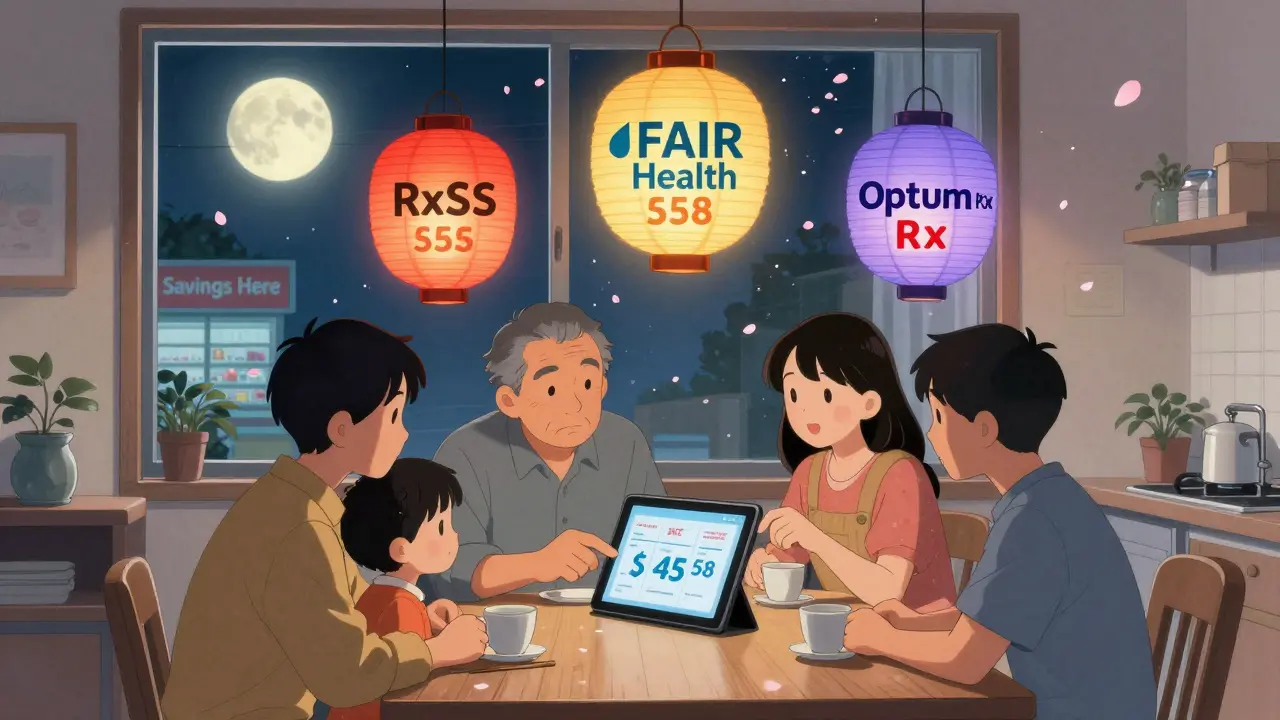
Not all tools are created equal. Here are the most reliable ones in 2025, based on user data and industry reviews.Rx Savings Solutions (RxSS)
This tool is built for pharmacy savings. It scans your prescription and instantly finds lower-cost alternatives-even if they’re not on your formulary. In a 2023 study, it found cost-saving options for 83% of users. One patient saved $287 on apixaban just by switching to a different pharmacy through RxSS. It’s integrated with 18 of the top 25 pharmacy benefit managers, so if your employer offers it, you probably already have access.Optum Rx (via myCompass)
If your insurance is through a large employer, you likely have access to Optum Rx through your myCompass account. It pulls your real plan data and shows you prices at local pharmacies. Users report saving 15-20% on average by using it. You can search by drug name, dosage, and quantity. The interface is clean, and it updates prices daily. Just click “Go to Optum Rx” in your benefits portal.Healthcare Bluebook
Best known for comparing medical procedures, Healthcare Bluebook also covers over 4,000 prescription drugs. It shows a “Fair Price™” benchmark so you know what’s reasonable. One user found an MRI that was priced at $4,200-and discovered the same scan was $450 at a nearby center. For drugs, it’s not as deep as RxSS, but it’s great if you’re also comparing other services.Turquoise Health
Used mostly by hospitals and insurers, Turquoise Health gives you access to real-time pricing data from thousands of providers. It’s not consumer-friendly out of the box, but if your insurer links to it, you’ll get accurate, plan-specific pricing. It processes over 1.2 million queries a month, so the data is fresh.FAIR Health Consumer
This one doesn’t need your insurance login. Go to fairhealthconsumer.org and enter your drug, zip code, and insurance type (e.g., PPO, HMO). It gives you a range of prices based on what others with similar plans paid. It’s not perfect, but it’s free, no login required, and surprisingly accurate.
How to Use These Tools Like a Pro
Using these tools isn’t hard-but most people do it wrong. Here’s the right way:- Check if your insurer offers a tool. 78% of large employers now include one. Log into your benefits portal and look for “Price Estimator,” “Drug Cost Checker,” or “Optum Rx.”
- Enter the exact drug name and dosage. “Metformin 500mg” not just “diabetes pill.” Small differences matter.
- Compare at least 3 pharmacies. Chain stores like CVS and Walgreens aren’t always the cheapest. Independent pharmacies often have lower prices, especially if they’re not tied to big PBMs.
- Ask for alternatives. Tools like RxSS will suggest generics or therapeutically equivalent drugs. A $300 brand-name drug might have a $12 generic version that works just as well.
- Call the pharmacy before you go. Prices can change between the time you check and when you pick up. Confirm the final price with the pharmacist.
What These Tools Don’t Tell You
They’re powerful-but not perfect.- Some tools show list prices only. That’s misleading. Always look for “Your Cost” or “Out-of-Pocket” labels.
- Specialty drugs are often excluded. If you’re on a biologic for rheumatoid arthritis or a rare disease, the tool might not have data. You’ll need to call your pharmacy or insurer directly.
- Discount cards like GoodRx aren’t always included. A 2023 Consumer Reports review found that some tools didn’t show GoodRx prices at all. Always check GoodRx separately if you’re uninsured or have a high deductible.
- Insurance processing delays cause mismatches. Sometimes the tool says $50, but at checkout, it’s $75. That’s because your insurer hasn’t finalized your claim yet. If this happens, ask the pharmacy to re-run the claim.
Real People, Real Savings
One user on Reddit, ‘BudgetPharma,’ tracked their medication costs for a year. Before using Optum Rx, they paid $1,850 for five drugs. After switching pharmacies and using generic alternatives suggested by the tool, they paid $620. That’s $1,230 saved in one year. Another patient in Florida used FAIR Health to compare prices for a blood thinner. The local CVS wanted $420. A nearby independent pharmacy, found through the tool, charged $98. She saved $322-and didn’t even need to change her insurance. These aren’t outliers. A 2023 National Bureau of Economic Research study found that in states with strong transparency laws, outpatient drug costs dropped by 4.7% per year. That’s real money.What’s Coming Next
By 2026, the government expects 90% of prescription purchases to involve price comparison tools. New rules in 2025 will require tools to include quality ratings alongside prices-so you can see not just what it costs, but how well the drug works for others. AI is also being tested to predict your future costs based on your usage patterns. The Alliance for Transparent Drug Pricing, launched in May 2024, includes big names like UnitedHealthcare and Express Scripts. Their goal? Standardize how prices are displayed so you don’t have to learn 10 different interfaces.Start Today-Your Wallet Will Thank You
You don’t need to be a healthcare expert to save hundreds-or even thousands-on prescriptions. The tools are free. The data is there. All you have to do is look. Try one of these tools before your next refill. Spend 5 minutes searching. You might find a cheaper pharmacy, a generic that works just as well, or even a discount you didn’t know existed. The worst that happens? You confirm you’re already paying the best price. The best? You walk away with hundreds in your pocket.Are price transparency tools free to use?
Yes. All major price transparency tools like Rx Savings Solutions, FAIR Health, and Optum Rx are free for patients. They’re required by federal law to be provided at no cost by insurers and pharmacy benefit managers.
Why does the price on the tool differ from what I pay at the pharmacy?
This usually happens because your insurance hasn’t processed your claim yet, or the tool didn’t include your specific plan details. Always confirm the final price with the pharmacist before picking up your prescription. If the price changed, ask them to re-run the claim.
Can I use these tools if I don’t have insurance?
Yes. Tools like FAIR Health and GoodRx let you search without insurance. They show cash prices and discount program rates. Many independent pharmacies also offer low cash prices for uninsured patients-sometimes lower than insured rates.
Do these tools work for specialty drugs like insulin or cancer meds?
Some do, but coverage is limited. Many tools don’t yet include high-cost specialty drugs that require prior authorization. For these, contact your pharmacy or insurer directly. Some manufacturers also offer patient assistance programs that can reduce costs significantly.
How often should I check drug prices?
Check every time you refill. Drug prices change often-sometimes monthly. Even if you paid $50 last month, it could be $30 this month. Set a reminder to check before each refill. Small savings add up.
Yatendra S
December 15, 2025 AT 09:53Bro, I used RxSS last week for my metformin and saved $190. 😱 I thought I was getting ripped off but turns out my local CVS was charging me like I was in a Bond villain lair. Now I check before every refill. Life changed. 🙌
kevin moranga
December 17, 2025 AT 06:25Man, I just want to say how proud I am of you for taking control of your healthcare like this. Seriously, this is the kind of stuff that separates people who just survive from people who thrive. I’ve been telling my mom to use FAIR Health for her blood pressure meds-she’s 72 and thought she had no options. Now she’s saving $80 a month. You’re not just saving money-you’re reclaiming your power. Keep going, friend. The system’s rigged, but you’re outsmarting it. 💪❤️
Webster Bull
December 17, 2025 AT 12:44Tools are great but why do we need 5 diff apps just to check a pill price? 🤦♂️ Someone’s gettin’ paid to make this confusing. Just show me the price. No logins. No BS. I’m not a data scientist.
Tommy Watson
December 18, 2025 AT 12:27Oh great, another ‘free tool’ that’s just a front for PBMs to upsell you on their own pharmacy network. You think you’re saving money? Nah. You’re just being funneled into the same corporate scam, but now with a cute UI. I’ve seen the backend. They track your searches and jack up prices for ‘frequent users.’ 😈
Karen Mccullouch
December 20, 2025 AT 11:51USA still the best for this stuff. In Europe they just make you wait 3 months and pay double. Also, why are we letting Big Pharma get away with this? Time to burn it all down. 🔥🇺🇸
Michael Gardner
December 21, 2025 AT 17:18Actually, the 4.7% drop in drug costs? That’s statistically insignificant. The real savings come from people switching to generics-which has been happening since 2010. These tools just make it easier to do what people were already doing. Also, ‘Fair Price™’ is just a marketing term. No regulation behind it. Just vibes.
Willie Onst
December 21, 2025 AT 23:11Hey, I’m from the Midwest and I used to think this stuff was too complicated for me. But after my buddy showed me how to use Optum Rx on his phone during lunch, I saved $210 on my insulin. Just typed in the name, clicked ‘find cheapest,’ and walked into a little pharmacy that didn’t even have a sign. Best $5 I ever spent on a coffee. 🤝☕
Ronan Lansbury
December 22, 2025 AT 03:42Of course these tools exist. The same people who invented the ‘free’ credit score monitoring also invented these. It’s all about harvesting your health data to sell to insurers. You think you’re saving money? You’re just giving them your prescription history, your zip code, your blood pressure trends. Next thing you know, your premiums go up because ‘you’re a high-risk metformin user.’ Wake up.