Hyperglycemia: Recognizing High Blood Sugar Symptoms and What to Do in an Emergency

When your blood sugar climbs above 180 mg/dL, your body sends signals-often quietly at first. By the time you feel exhausted, thirsty, or need to urinate every hour, it’s already too late for simple fixes. Hyperglycemia isn’t just a number on a glucometer; it’s a warning sign that your body is struggling to manage glucose. Left unchecked, it can spiral into diabetic ketoacidosis (DKA) or hyperosmolar hyperglycemic state (HHS), both life-threatening emergencies. The good news? Most cases are preventable if you know what to look for and how to act fast.
What Exactly Is Hyperglycemia?
Hyperglycemia means your blood glucose is higher than normal. For most people with diabetes, levels above 180 mg/dL are considered high. But it’s not just about the number-it’s about what’s happening inside your body. When you eat, your body breaks down carbs into glucose. Insulin, a hormone made by your pancreas, acts like a key to unlock your cells so glucose can enter and be used for energy. In type 1 diabetes, your body doesn’t make insulin. In type 2, your cells stop responding to it properly. Either way, glucose piles up in your bloodstream instead of fueling your muscles, brain, and organs.
It’s not always diabetes causing it. Stress, illness, certain medications like steroids, or even skipping insulin doses can trigger spikes. The American Diabetes Association reports that over 37 million Americans live with diabetes, and nearly half of them experience frequent high blood sugar episodes. What makes this dangerous isn’t the occasional spike-it’s the repeated, untreated highs that damage nerves, blood vessels, kidneys, and eyes over time.
Early Warning Signs You Can’t Ignore
The earliest symptoms of high blood sugar are easy to dismiss. You might think you’re just tired from work, dehydrated from the weather, or coming down with a cold. But if you notice these signs consistently, don’t brush them off:
- Polyuria: Urinating more than 2.5 liters a day-sometimes every hour. Your kidneys are trying to flush out excess glucose through urine.
- Polydipsia: Drinking more than 4 liters of fluids daily and still feeling parched. Your body is trying to replace lost fluids.
- Blurred vision: High glucose swells the lens of your eye, distorting focus. This often clears once blood sugar normalizes.
- Fatigue: Even after sleeping, you feel drained. Without glucose entering your cells, your body runs out of fuel.
According to ADA surveys, 68% of people with diabetes report blurred vision during hyperglycemic episodes, and 79% say fatigue is their most common early symptom. These aren’t vague complaints-they’re biological alarms. If you’re experiencing two or more of these, check your blood sugar immediately.
When It Gets Serious: Intermediate and Severe Symptoms
If your blood sugar climbs past 250 mg/dL, symptoms get sharper and more dangerous:
- Headaches: Occur in over half of patients with moderate hyperglycemia. Often mistaken for tension or migraines.
- Difficulty concentrating: Your brain relies on steady glucose. Too much disrupts cognitive function.
- Unexplained weight loss: Losing more than 5% of your body weight in three months without trying? Your body starts breaking down fat and muscle for energy because it can’t use glucose.
At this stage, you’re at risk of developing DKA or HHS. These aren’t just complications-they’re medical emergencies. DKA happens mostly in type 1 diabetes and develops quickly, often within 24 to 48 hours. HHS is more common in type 2, especially in older adults, and creeps up over days or weeks.
Diabetic Ketoacidosis (DKA) vs. Hyperosmolar Hyperglycemic State (HHS)
These two conditions look similar but have key differences:
| Feature | DKA | HHS |
|---|---|---|
| Typical patient | Type 1 diabetes, often younger | Type 2 diabetes, usually over 65 |
| Onset | Fast (24-48 hours) | Slow (days to weeks) |
| Blood glucose | Usually >250 mg/dL | Often >600 mg/dL |
| Ketones | High (≥3 mmol/L) | Low or absent |
| Dehydration | Moderate | Severe (fluid loss of 8-12 liters) |
| Neurological symptoms | Mild confusion possible | Severe lethargy, seizures, coma |
| Respiratory pattern | Kussmaul breathing (deep, rapid) | Normal or shallow |
| Breath odor | Fruity or acetone-like | None |
| Mortality rate | 1-5% | 15-20% |
DKA often comes with abdominal pain, nausea, and vomiting-symptoms that mimic the flu. HHS, on the other hand, doesn’t usually cause vomiting. Instead, it quietly drains your body of fluids and pushes your brain into confusion. One study found that 100% of HHS patients had altered mental status by the time they reached the hospital. That’s why it’s so deadly: people don’t realize how sick they are until it’s too late.
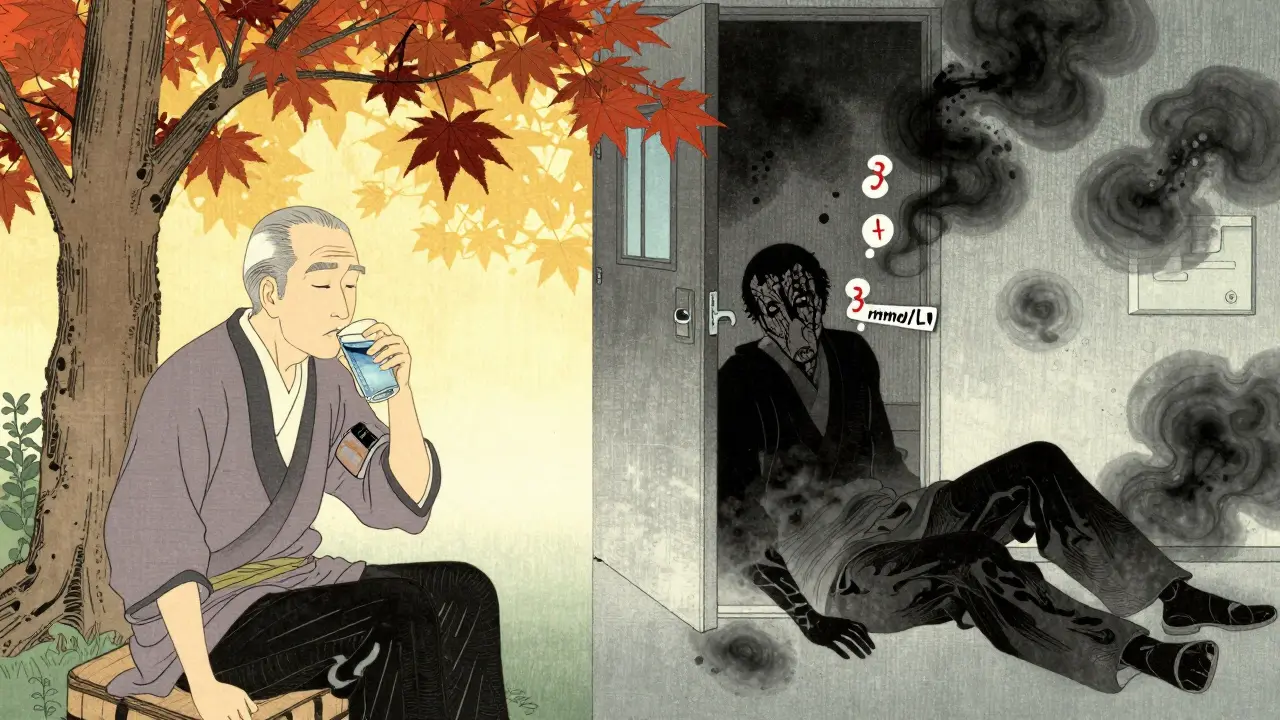
What to Do If You Suspect an Emergency
If your blood sugar is over 240 mg/dL and you have symptoms like nausea, confusion, or trouble breathing, don’t wait. Follow this immediate action plan:
- Test for ketones. Use urine strips or a blood ketone meter. Ketones above 3 mmol/L mean DKA is likely.
- Take your rapid-acting insulin. If you’re on insulin, give your correction dose. Don’t skip it because you’re scared of low blood sugar-high blood sugar kills faster.
- Drink water. Aim for 8-16 ounces every hour. Avoid sugary drinks, even if you’re thirsty. Sugar-free fluids are your best friend.
- Call your doctor or go to the ER. If you’ve taken insulin and your blood sugar hasn’t dropped after 2-3 hours, or if you’re vomiting, confused, or breathing hard, get help now.
Never try to “wait it out.” DKA and HHS don’t resolve on their own. The CDC reports that 42% fewer emergency visits happen in people who complete diabetes self-management education. That’s not just advice-it’s life-saving training.
Common Triggers and How to Avoid Them
Most hyperglycemic emergencies aren’t random. They’re triggered by specific events:
- Illness (42% of cases): Infections like colds, flu, or UTIs raise stress hormones that spike blood sugar.
- Carb-counting errors (29%): Underestimating carbs in meals or snacks is the #1 mistake.
- Insulin pump failure (18%): Clogged tubing, dislodged infusion sets, or battery issues can stop insulin delivery.
- Emotional stress (11%): Anxiety, grief, or even arguments can trigger cortisol surges.
One Reddit user shared how they ignored a blood sugar of 520 mg/dL because they thought they were just “stressed out.” By morning, they were in the hospital with HHS. That’s not rare. On DiabetesDaily.com, 67% of people didn’t realize their symptoms were hyperglycemia until their levels were above 300 mg/dL.
Use a continuous glucose monitor (CGM). Studies show CGM users reduce hyperglycemia episodes by 57%. Real-time alerts let you act before symptoms appear. The FDA approved Dexcom G7’s “Glucose Guardian” in early 2024-a feature that predicts high blood sugar 30 minutes in advance. That’s a game-changer.
Why People Delay Treatment (And How to Break the Cycle)
Many people don’t act fast because they feel guilty, overwhelmed, or afraid. They think, “I should’ve known better,” or “I’ll fix it tomorrow.” That’s diabetes distress-a real psychological burden. A 2023 study found 63% of people with recurrent hyperglycemia delayed insulin because of emotional burnout.
Here’s the truth: you’re not failing. Your body is responding to a complex, often unfair system. Insulin is expensive. Access is uneven. Black patients are 2.3 times more likely to have hyperglycemia emergencies than white patients-not because of behavior, but because of barriers to care.
What helps? Support. The American Diabetes Association’s 24/7 hotline handles 12,000 calls a month. Talking to someone who’s been there changes everything. Join a community. Use your CGM app to share trends with your care team. Small steps matter.

Long-Term Prevention: Beyond the Emergency
Emergency care saves lives-but prevention saves your future. The NIH’s Hyperglycemia Prevention Initiative, launched in 2023, is investing $150 million in AI-powered wearables that detect patterns before highs happen. By 2030, digital health tools could cut hyperglycemia incidence by 60%.
For now, focus on what you can control:
- Test your blood sugar regularly-every 4 hours during illness or stress.
- Know your insulin-to-carb ratio and correction factor. Work with your provider to fine-tune them.
- Check your insulin pump or injection site daily. A blocked cannula can cause a spike overnight.
- Manage the “dawn phenomenon”-a natural 30-50 mg/dL rise in blood sugar between 4-8 AM. Many need a small basal insulin adjustment.
- Get tested for gastroparesis if you have frequent unexplained highs. Delayed stomach emptying can cause insulin to arrive too late.
And don’t overcorrect. Dr. Anne Peters warns that 23% of type 1 patients end up with dangerous lows because they take too much insulin trying to fix a high. Balance is key.
What’s Changing in 2025 and Beyond
Guidelines are evolving. The American Association of Clinical Endocrinologists will update targets in 2025, relaxing fasting blood sugar goals for adults over 65 to under 180 mg/dL. Why? Because older adults are more vulnerable to hypoglycemia, and slightly higher targets can reduce falls and hospitalizations.
Medicare now covers CGMs for most people with diabetes, cutting out-of-pocket costs from $1,200/year to under $100 for many. That’s huge. And hospitals are now required to follow standardized hyperglycemia protocols-thanks to CMS tying reimbursement to glucose control.
But technology alone won’t fix this. We need better access, better education, and less stigma. If you’re reading this, you’re already ahead. You’re learning. You’re paying attention. That’s the first step to staying safe.
What blood sugar level is considered dangerous?
A blood sugar level above 240 mg/dL is a red flag, especially if you have symptoms like nausea, confusion, or rapid breathing. Levels over 300 mg/dL require immediate action. If your reading exceeds 600 mg/dL, this is a medical emergency and you should go to the ER right away.
Can you have high blood sugar without having diabetes?
Yes. Stress, infections, certain medications (like steroids), pancreatitis, or Cushing’s syndrome can cause temporary hyperglycemia. However, repeated high readings-even without a diabetes diagnosis-should be evaluated by a doctor. It could be prediabetes or another underlying condition.
How long does it take to bring down high blood sugar?
With rapid-acting insulin, blood sugar can drop by 50-100 mg/dL within 1-2 hours. But if ketones are present or you’re dehydrated, it may take longer. Always recheck every 1-2 hours. Don’t rush with more insulin unless advised by your provider-overcorrection can cause dangerous lows.
Is it safe to exercise when your blood sugar is high?
If your blood sugar is above 250 mg/dL and you have ketones, avoid exercise-it can make things worse by raising glucose further. If your blood sugar is high but ketones are negative, light activity like walking can help lower it. Always test for ketones before exercising when your sugar is elevated.
What should I keep in my emergency kit for hyperglycemia?
Your emergency kit should include: a blood glucose meter and test strips, ketone test strips or meter, rapid-acting insulin (with syringes or pen), extra insulin reservoirs or infusion sets if you use a pump, sugar-free fluids (water, electrolyte drinks), a medical ID bracelet, and a written action plan from your doctor. Keep it in your bag, car, and workplace.
Can I prevent hyperglycemia completely?
You can’t eliminate every spike, but you can drastically reduce them. Use a continuous glucose monitor, track patterns, adjust insulin based on food and activity, and get regular checkups. People who attend diabetes education programs cut emergency visits by 42%. Prevention isn’t about perfection-it’s about awareness and action.
Final Thoughts: You’re Not Alone
High blood sugar doesn’t mean you’ve failed. It means your system needs adjusting. Whether it’s a missed insulin dose, a sick child keeping you up at night, or a new medication throwing off your balance-these are real, manageable challenges. The goal isn’t zero highs. It’s recognizing them early, responding quickly, and learning from each one.
Technology is helping. Support networks exist. Guidelines are improving. And you’re reading this because you care. That’s the most important step.
Alexandra Enns
January 25, 2026 AT 16:25Okay but let’s be real - if you’re relying on a CGM to tell you your blood sugar is high, you’ve already lost the game. I’ve been managing type 1 since I was 7 and I don’t need fancy tech to know when I’m crashing or spiking. These gadgets make people lazy. And don’t get me started on ‘Glucose Guardian’ - it’s not a guardian, it’s a babysitter. Real diabetes warriors test by hand, drink water, and inject. No apps required. 🇨🇦
Marie-Pier D.
January 26, 2026 AT 01:59Thank you for writing this with so much heart 💛 I’ve been through DKA three times and no one talks about how scary it is to feel your brain fogging out while your body screams for help. I keep my emergency kit in my purse, my car, and my daughter’s backpack. If you’re reading this and you’re scared - you’re not alone. I’m here. We’re here. And yes, the tech helps, but what helps more is knowing someone gets it. ❤️
Viola Li
January 27, 2026 AT 18:08Everyone’s acting like hyperglycemia is this mysterious villain when it’s literally just poor discipline. If you can’t count carbs or take insulin on time, stop pretending you’re a victim. I’ve seen people blame ‘stress’ and ‘access’ while they eat 3 donuts and skip doses. This isn’t systemic oppression - it’s personal negligence. The CDC stats don’t lie. Stop making excuses.
Dolores Rider
January 28, 2026 AT 06:00THEY KNOW. THEY KNOW ABOUT THE GLUCOSE GUARDIAN AND THEY’RE STILL LETTING US DIE. WHY IS THE FDA ALLOWING THIS? WHY IS MEDICARE ONLY COVERING IT NOW? THIS IS A BIG PHARMA COVERUP - THEY MAKE MORE MONEY OFF EMERGENCIES THAN PREVENTION. I SAW A DOC IN 2022 WHO SAID ‘JUST REDUCE CARBS’ - BUT I’M ON INSULIN BECAUSE I CAN’T PROCESS THEM. THEY WANT US SICK. THEY WANT OUR DATA. THEY WANT OUR MONEY. 🕵️♀️
Jenna Allison
January 29, 2026 AT 04:03For anyone new to this - if your BG is over 240 and you have ketones, don’t wait. Inject your correction dose even if you’re scared of lows. A low is fixable with juice. A DKA hospitalization? Not so much. And yes, water is your best friend - electrolytes matter too. I use sugar-free Pedialyte. Also, check your pump site every morning. A clog overnight can spike you to 500 by breakfast. You’re not broken. You’re just learning.
Vatsal Patel
January 29, 2026 AT 18:13Ah yes, the modern human - addicted to numbers, terrified of silence. We measure glucose like it’s the meaning of life, yet we’ve forgotten how to listen to our bodies. The insulin is not the answer. The fear is the answer. The panic, the guilt, the shame - these are the real diseases. The glucose is just a symptom of a soul that has forgotten how to rest. You think you’re fighting diabetes? No. You’re fighting your own need to be perfect.
Himanshu Singh
January 30, 2026 AT 18:43Hey, I’ve been where you are. Late night spikes, missed doses, crying in the bathroom because you feel like a failure. But here’s the truth - every high is a lesson, not a verdict. I started journaling my meals, moods, and sleep. Found out my 4am spikes were from anxiety, not carbs. Adjusted my basal. Now I sleep better. You’re not behind. You’re becoming. One test at a time. 🙏
Jamie Hooper
January 31, 2026 AT 09:27so like… i was at a party last week and my bg was 480 and i just… kept dancing? like, why panic? everyone else was drunk, i was just… sugary? anyway, my pump died, i think? or maybe i just forgot to change the site? idk. but i’m fine now. kinda. lol. 🤷♂️
Husain Atther
February 2, 2026 AT 08:39This is a well-researched and compassionate overview of a complex condition. The emphasis on early recognition and systemic barriers to care is particularly valuable. While technology offers powerful tools, the human element - emotional support, education, and access - remains foundational. I encourage all readers to approach their health not with guilt, but with curiosity and consistency. Progress, not perfection, is the goal.
Izzy Hadala
February 2, 2026 AT 18:50It is imperative to note that the American Diabetes Association’s clinical practice recommendations, as codified in the 2024 Standards of Medical Care in Diabetes, explicitly delineate that blood glucose thresholds for intervention must be individualized based on age, comorbidities, and hypoglycemia risk profile. The generalized application of 240 mg/dL as a universal emergency threshold may lead to iatrogenic harm in elderly or frail populations. A nuanced, patient-centered approach is not merely preferable - it is ethically obligatory.
Marlon Mentolaroc
February 2, 2026 AT 20:37Okay but let’s be honest - 67% of people didn’t realize their symptoms were hyperglycemia until 300? That’s not ignorance, that’s a failure of the entire medical system. You’re telling me we’ve had 37 million diabetics for decades and we still haven’t figured out how to teach people what ‘thirsty and tired’ means? We need to fire every endo who says ‘just eat less sugar’ and hire people who’ve actually lived this. Also - why is no one talking about how the cost of insulin is literally killing people? 🤔
Gina Beard
February 3, 2026 AT 14:54High blood sugar isn’t a moral failure. It’s a biological signal. Listen. Act. Adjust. Repeat.
Don Foster
February 5, 2026 AT 08:35Everyone’s obsessed with CGMs and apps and ‘Glucose Guardian’ like it’s some kind of magic wand. Newsflash - insulin is still the only thing that works. And if you’re too lazy to count carbs or check your pump every day then stop pretending you’re an expert. I’ve been doing this since 1998 and I don’t need a phone to tell me when I’m high. You want to survive? Learn your numbers. Inject. Hydrate. Stop scrolling.