Keeping Doctors Current on Generics: A Provider's Guide to CME
Generic drugs make up more than 90% of prescriptions in the United States, yet they account for less than a quarter of total drug spending. This massive cost difference is why Continuing Medical Education (CME) focused on generics matters so much. For providers, staying current isn't just about checking a box for license renewal; it’s about understanding the science behind therapeutic equivalence and knowing how to communicate value to patients who are often skeptical of switching from brand-name medications.
If you are a physician navigating the shifting landscape of pharmacology education, you know the rules change fast. From new federal mandates like the MATE Act to state-specific hour requirements, keeping your knowledge sharp while meeting compliance deadlines can feel overwhelming. This guide breaks down exactly what you need to know about generics-focused CME, where the requirements stand in 2026, and how to choose courses that actually improve your practice.
Why Generics Education Is No Longer Optional
The conversation around generic prescribing has shifted from 'cost-saving measure' to 'clinical standard.' The American College of Physicians (ACP) released a position statement in May 2023 urging all clinicians to prescribe generic medications whenever possible. They cited data showing that increased generic prescribing could save the U.S. healthcare system $156 billion annually without compromising outcomes.
But the numbers only tell half the story. Dr. Susan R. Berry, a pharmacology professor at Johns Hopkins, noted in a 2023 editorial that medication adherence jumps by nearly 24% when patients are prescribed generics instead of brand-name equivalents. Why? Because lower out-of-pocket costs remove a major barrier to treatment. However, this benefit only works if doctors understand the underlying science well enough to explain it to patients.
You might be wondering if all generics are truly the same. The short answer is mostly yes, but with important caveats. The Food and Drug Administration (FDA) requires generic manufacturers to prove bioequivalence, meaning the drug performs the same in the body as the brand-name counterpart. Yet, as Dr. Alan K. Cohen of Harvard Medical School pointed out, not all generics are therapeutically equivalent in every scenario, especially for narrow therapeutic index drugs. This nuance is exactly what modern CME programs aim to teach.
Navigating State-Specific CME Requirements
One size does not fit all when it comes to CME. Requirements vary wildly depending on where you hold your license. According to the Federation of State Medical Boards, 40 states require between 20 and 50 hours of CME every two years, while ten states have no mandatory requirements at all. But the devil is in the details regarding pharmacology content.
| State | Total Hours Required | Specific Pharmacology/Generic Focus | Controlled Substance/Opioid Requirement |
|---|---|---|---|
| California | 50 hours biennially | No standalone generic requirement; pharmacology often integrated. Added 2 hours on biosimilars effective Jan 2024. | None specified beyond general Category 1 standards. |
| Florida | Varies by specialty | Integrated into broader categories. | 2 hours biennially in controlled substance prescribing. |
| Maryland | Varies | Integrated. | 3 hours biennially for opioid prescribers, including 0.5 hours on Prescription Drug Monitoring Programs. |
| Georgia | 40 hours biennially | 25% must be Category 1. | 3 hours on responsible opioid prescribing for DEA-registered physicians. |
| Massachusetts | 80 hours biennially | Integrated. | 2 hours on opioid prescription practices every 2 years. |
Notice the trend? While few states mandate a course titled "Generics 101," many require pharmacology or controlled substance education that inherently covers generic alternatives. For example, the Medication Access and Training Expansion (MATE) Act, fully enforceable by June 2025, requires all DEA-registered practitioners to complete eight hours of training on substance use disorders. This training explicitly includes education on generic alternatives to controlled substances. If you prescribe opioids, benzodiazepines, or stimulants, this is non-negotiable.
The Science of Bioequivalence: What You Need to Know
To prescribe generics confidently, you need to understand the metrics that define them. The core concept is pharmaceutical equivalence and bioequivalence. Pharmaceutical equivalence means the generic contains the same active ingredient, strength, dosage form, and route of administration as the reference listed drug (the brand name). Bioequivalence goes further, ensuring that the rate and extent of absorption do not show a significant difference from the brand name.
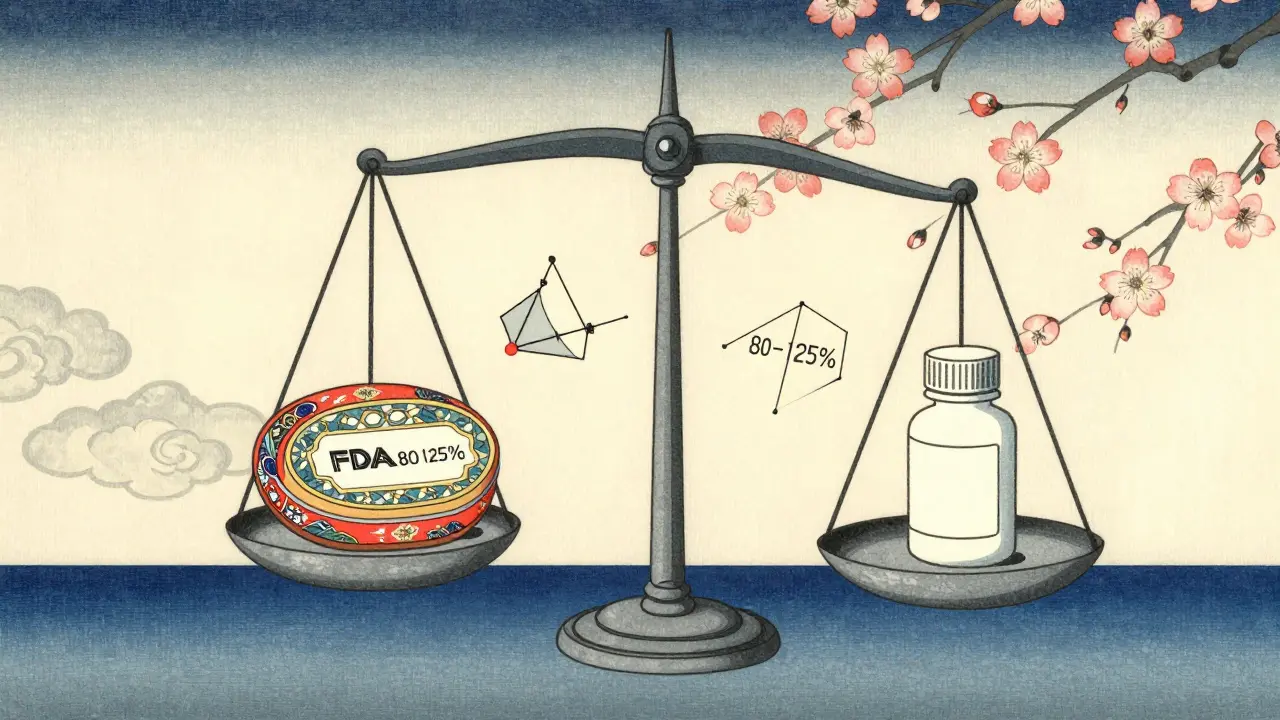
The FDA uses a confidence interval approach for bioequivalence. Generally, the 90% confidence interval for the ratio of geometric means of pharmacokinetic parameters (like AUC and Cmax) must fall within 80% to 125%. In plain English, this means the generic drug’s performance in the body is statistically indistinguishable from the brand name for most patients.
However, there are exceptions. Narrow therapeutic index (NTI) drugs-such as warfarin, levothyroxine, and certain anti-seizure medications-have a small window between effectiveness and toxicity. Switching between different generic manufacturers of NTI drugs can sometimes lead to clinical variability. This is why the National Board of Medical Examiners found that physicians who completed specific pharmacology CME showed a 17.3% improvement in appropriate substitution decisions. Knowing which drugs are safe to switch and which require careful monitoring is a critical skill.
Choosing the Right CME Platform
With over 1,800 accredited providers listed by the Accreditation Council for Continuing Medical Education (ACCME), finding quality content can be tricky. You want courses that are relevant, engaging, and recognized by your state board.
Here are three top-tier options currently dominating the market:
- UpToDate: Known for its clinical decision support, UpToDate integrates CME directly into patient care workflows. Reviewing drug monographs can earn you credits, making learning passive and practical. They were quick to update their library to include MATE Act compliance features.
- Medscape: A popular free option for many physicians, Medscape offers extensive pharmacology modules. Their interface is user-friendly, and they frequently update content based on new FDA approvals.
- RenewNowCE: Specializes in targeted, high-yield courses. Their "Pharmacology 10 hours" module explicitly covers distinguishing generic names from brand names and identifying drug interactions, which is perfect for primary care providers needing bulk credits.
A 2022 study in Academic Medicine found that physicians completed only 68.4% of required pharmacology CME modules compared to 87.2% for clinical topics. Engagement is a real issue. To combat this, look for platforms that offer mobile-responsive design and interactive case studies rather than static text dumps. Digital adoption is skyrocketing, with 83% of physicians now using digital platforms for CME completion.
Overcoming Patient Skepticism
Even with perfect knowledge, you face the human element: patients who refuse generics. Common concerns include fears about lower quality, hidden ingredients, or side effects. Your CME should equip you with communication strategies, not just chemical facts.
Dr. Emily Rodriguez, a family physician in California, shared that after taking a specific pharmacology course, she learned to frame generics as "therapeutically equivalent" rather than "cheaper." She reported a 40% reduction in patient pushback by focusing on the rigorous FDA testing process. When you explain that the FDA tests generics just as strictly as brand names-and often more frequently because they are widely used-you build trust.
Use analogies. Explain that a generic is like a store-brand cereal that tastes and looks identical to the name brand because the recipe is the same. The packaging changes, not the contents. This simple shift in language can make a huge difference in adherence.
Future Trends: AI and Competency-Based Learning
The landscape of CME is evolving rapidly. By 2027, McKinsey & Company predicts that 95% of pharmacology-related CME will incorporate artificial intelligence-driven personalized learning. Imagine a platform that analyzes your prescribing patterns and suggests micro-learning modules on the specific generic alternatives you rarely use. This moves us away from "seat time" toward true competency.
The National Academy of Medicine has recommended shifting from hour-based requirements to competency-based assessments. Pilot programs are already launching in 12 states. Instead of proving you watched a 2-hour video, you might demonstrate your ability to correctly identify bioequivalent substitutions in simulated patient cases. This approach ensures that the education translates directly to better patient care.
Additionally, the rise of biosimilars-generic-like versions of complex biologic drugs-is creating a new frontier for education. California recently added a requirement for 2 hours of instruction on biosimilars. As these products become more common in oncology and autoimmune treatments, understanding their unique regulatory pathways will be essential for specialists alike.
Do I need specific CME credits for generic prescribing?
Most states do not have a standalone "generics" CME requirement. Instead, generic education is typically embedded within broader pharmacology, therapeutic equivalence, or controlled substance courses. Check your specific state medical board’s website for detailed category requirements. For example, California requires 50 hours of Category 1 CME, which often includes pharmacology content, but does not specify a separate generic hour count.
What is the MATE Act and how does it affect my CME?
The Medication Access and Training Expansion (MATE) Act requires all DEA-registered practitioners to complete eight hours of training on substance use disorders. This training must include education on generic alternatives to controlled substances. Full compliance is required by June 27, 2025. If you prescribe any controlled substances, you must complete this training to maintain your DEA registration.
Are all generic drugs interchangeable with brand names?
For most drugs, yes. The FDA ensures bioequivalence, meaning they perform the same in the body. However, for Narrow Therapeutic Index (NTI) drugs like warfarin or levothyroxine, switching between different generic manufacturers can sometimes cause clinical variability. It is generally recommended to keep patients on the same manufacturer for NTI drugs unless medically necessary to change.
How many CME hours do I need for license renewal?
This varies by state. Forty states require between 20 and 50 hours every two years. Ten states have no mandatory CME requirements. Always verify with your specific state medical board, as requirements can change. For instance, California requires 50 hours, while Delaware requires 40 hours.
Can I get CME credits for reading articles online?
Yes, many platforms offer self-study CME. Websites like UpToDate, Medscape, and the American Family Physician journal provide accredited activities. Some even integrate with EHR systems to award credits for reviewing drug monographs during patient care. Ensure the provider is accredited by the ACCME to guarantee the credits count toward your state requirements.
What is the difference between a generic drug and a biosimilar?
Generic drugs are copies of small-molecule chemical drugs (like aspirin or metformin). Biosimilars are highly similar versions of large, complex biologic drugs (like insulin or monoclonal antibodies). Because biologics are made in living cells, they cannot be exact copies, hence the term "similar." Both undergo rigorous FDA review for safety and efficacy, but the approval pathways differ slightly.