Licorice and Medications: Unexpected Interactions with a Common Candy
Licorice Glycyrrhizin Intake Calculator
Your Intake
Results
Calculate your intake to see results
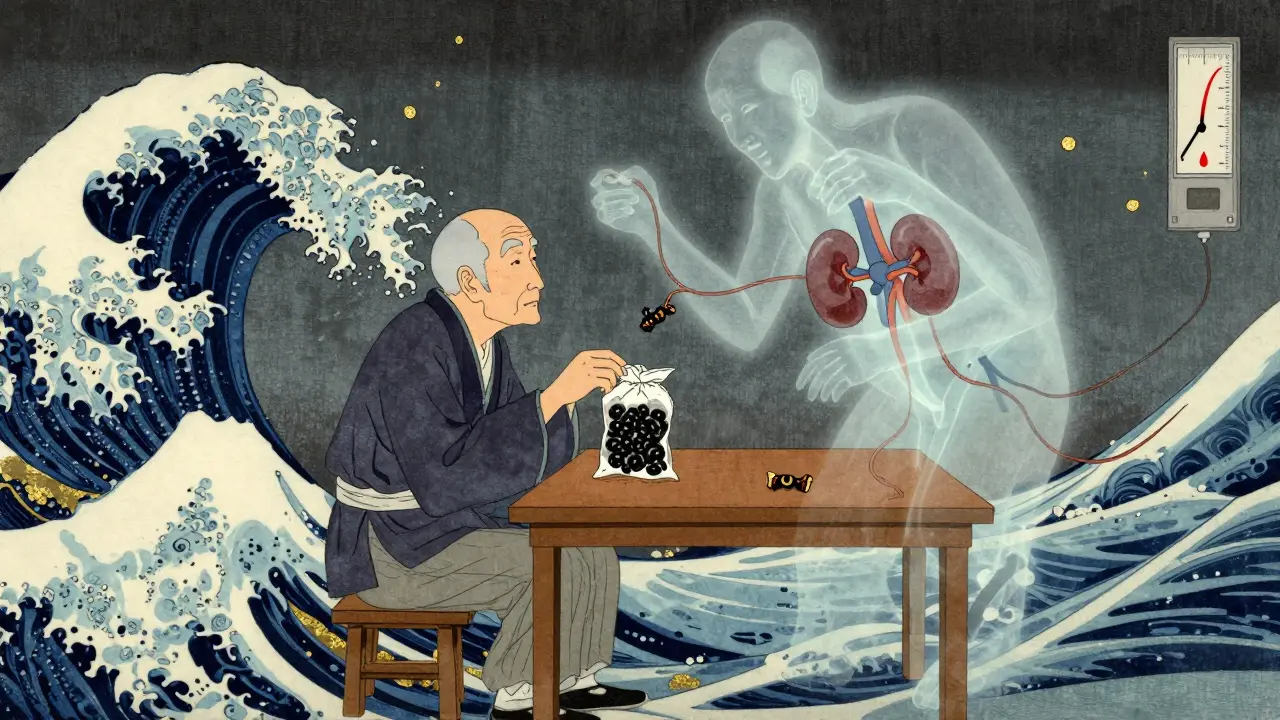
Most people think of licorice as just a sweet, chewy candy-something you grab at the checkout line or share with kids during the holidays. But if you’re taking any kind of medication, that piece of licorice might be doing more than satisfying a craving. It could be quietly messing with your blood pressure, your potassium levels, or even how your drugs work in your body. And you probably have no idea.
What’s Really in Licorice?
Not all licorice is the same. The kind that causes problems contains glycyrrhizin, a compound pulled from the root of the licorice plant. This isn’t just flavoring-it’s a powerful substance that mimics the effects of aldosterone, a hormone your body uses to control salt and water balance. When glycyrrhizin sticks around too long, it tricks your kidneys into holding onto sodium and flushing out potassium. That’s fine in small doses. But if you eat a lot of it over weeks, things go sideways.
Traditional black licorice candy usually has between 0.5% and 2% glycyrrhizin. That means a 50-gram serving could pack 100 to 200 milligrams of the stuff. The European Food Safety Authority says healthy adults should stay under 100 mg per day. One bag of candy might already put you over that limit. And if you’re snacking on herbal supplements or medicinal extracts? Those can hit 4% to 30% glycyrrhizin. One capsule might equal a whole bag of candy.
Here’s the catch: most packages don’t tell you how much glycyrrhizin is in them. A 2023 Consumer Reports survey found that 78% of black licorice products didn’t list the glycyrrhizin content. And 92% didn’t warn about drug interactions. You’re guessing-and that’s dangerous.
How Licorice Breaks Your Medications
Licorice doesn’t just cause side effects. It interferes with how your body handles other drugs. There are two main ways this happens.
The first is direct. Glycyrrhizin’s mineralocorticoid effect can turn your blood pressure into a ticking bomb. If you’re on blood pressure meds like lisinopril, hydrochlorothiazide, or even fludrocortisone, licorice fights against them. Instead of lowering your pressure, it pushes it higher. In one documented case, a man on fludrocortisone for years had his blood pressure spike to 205/110 after eating licorice. He’d never had issues before-until he added candy to his routine.
The second way is through potassium. Licorice makes you lose potassium. When your levels drop below 3.0 mmol/L, you get muscle weakness, cramps, irregular heartbeat, and sometimes even paralysis. In extreme cases, people have needed emergency treatment. One woman developed a blood clot in her arm after eating licorice daily for weeks. Her potassium had crashed to 2.4 mmol/L. That’s not a coincidence-it’s a known risk.
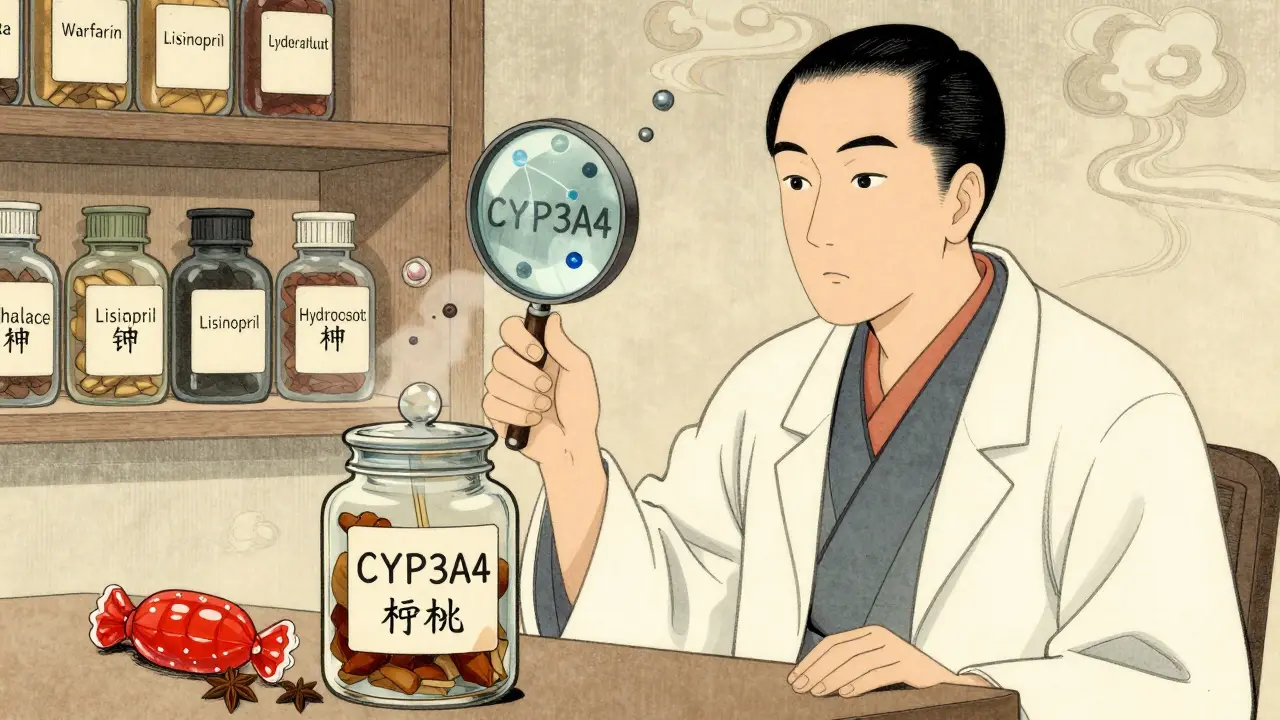
And then there’s the hidden layer: drug metabolism. Licorice can mess with liver enzymes like CYP3A4 and CYP2D6. These enzymes break down about half the drugs you take-statins, antidepressants, blood thinners, even some cancer meds. Some licorice compounds boost these enzymes, making your drugs less effective. Others block them, making your drugs too strong. This isn’t theoretical. A 2021 case report showed a 92-year-old woman’s INR (a measure of blood thinning) suddenly dropped after she started eating licorice while on phenprocoumon. Her doctor had no idea why her blood wasn’t thinning anymore.
Who’s at the Highest Risk?
You don’t have to be a licorice addict to be in danger. Even moderate use can trigger problems if you’re on certain meds.
- People on blood pressure meds: ACE inhibitors, diuretics, beta-blockers-licorice cancels their effect.
- People on potassium-depleting drugs: Thiazide diuretics, laxatives, corticosteroids. Add licorice? Your potassium drops faster.
- People on blood thinners: Warfarin, phenprocoumon. Licorice can make them weaker-or stronger, depending on your metabolism.
- People with heart or kidney disease: Your body already struggles with fluid and salt balance. Licorice makes it worse.
- Older adults: Your kidneys don’t clear glycyrrhizin as well. Even small amounts can build up.
And here’s something most people don’t realize: it’s not just candy. Licorice is in teas, herbal supplements, throat lozenges, and even some chewing gums. If it says “licorice root extract” on the label, you’re getting glycyrrhizin. If it says “anise flavor,” you’re probably safe-but you can’t assume.
What About DGL Licorice?
If you’re using licorice for stomach issues-like heartburn or ulcers-you might have heard of DGL. That stands for deglycyrrhizinated licorice. It’s been stripped of glycyrrhizin. That means it won’t raise your blood pressure or wreck your potassium. DGL is fine if you’re on meds. But you need to check the label. Not all “DGL” products are created equal. Some still sneak in trace amounts. Look for products that say “less than 1% glycyrrhizin.”
How Much Is Too Much?
There’s no universal answer. Some people get sick after eating a few pieces a week. Others tolerate more. But science gives us a rough guide:
- Under 100 mg glycyrrhizin per day: Generally safe for healthy adults, short-term.
- 100-200 mg per day for more than 2 weeks: High risk of low potassium, high blood pressure.
- Over 200 mg per day: Dangerous. Can cause heart rhythm issues, muscle damage, even kidney failure.
That’s why the UK requires warning labels on products with more than 100 mg per serving. Japan limits supplements to 100 mg per day. The U.S. FDA doesn’t require any labeling. That’s a gap-and it’s putting people at risk.

What Should You Do?
If you take any regular medication, here’s what to do:
- Check your candy. If it’s black licorice, assume it contains glycyrrhizin unless labeled otherwise.
- Read supplement labels. Look for “glycyrrhizin” or “licorice root extract.” If it’s not listed, don’t take it.
- Ask your pharmacist. Only 37% of community pharmacists can list all the major licorice-drug interactions. Don’t assume they know. Bring the product with you.
- Monitor your body. If you’ve been eating licorice and suddenly feel weak, bloated, or get headaches, stop immediately. Check your blood pressure. Get a potassium test.
- Choose alternatives. If you like the flavor, go for anise, fennel, or star anise. They taste similar but won’t mess with your meds.
And if you’re taking warfarin, digoxin, or diuretics? Just avoid it. No gray area. No “maybe.” The risk isn’t worth it.
Why Isn’t This Common Knowledge?
It’s not that doctors are ignoring it. It’s that the evidence is messy. Some studies say licorice doesn’t affect liver enzymes. Others show it does. Some say it’s safe in small doses. Others show harm after just two weeks. The FDA calls it a “high-priority” interaction, yet you won’t find warnings on candy bags.
Part of the problem is that licorice is treated like food, not medicine. But it acts like both. And until labels change, consumers are left in the dark. A 2022 ConsumerLab survey found 68% of licorice supplement users didn’t know about drug interactions. That’s not ignorance-it’s lack of information.
There’s progress. The American Herbal Pharmacopoeia is pushing for mandatory glycyrrhizin labeling by 2026. The European Commission is considering reclassifying high-glycyrrhizin products as medicines. That’s a step in the right direction. But right now, you’re the only one who can protect yourself.
Final Reality Check
Licorice isn’t evil. It’s been used for thousands of years. But it’s not harmless, either. When you combine it with modern medications, you’re playing with chemistry your body didn’t evolve to handle. That piece of candy? It’s not just sugar. It’s a biochemical wildcard.
If you’re on medication, skip the black licorice. If you’re not sure, ask. If you’ve been eating it and feel off, stop and get checked. Your blood pressure, your potassium, and your meds deserve better than guesswork.
Can licorice raise my blood pressure even if I’m not on any medication?
Yes. Even if you’re not taking medication, eating more than 100 mg of glycyrrhizin daily for two or more weeks can cause high blood pressure and low potassium. This is called pseudoaldosteronism. Symptoms include headaches, swelling, fatigue, and muscle cramps. Healthy people can develop these issues too-it’s not just about drug interactions.
Is red licorice safe?
Usually, yes. Most red licorice doesn’t contain licorice root at all-it’s flavored with anise or artificial flavors. Anise doesn’t have glycyrrhizin, so it won’t affect your blood pressure or potassium. But always check the ingredients. Some brands do add real licorice extract, even to red candy.
How long does it take for licorice to affect my meds?
It varies. Blood pressure and potassium changes can show up in as little as a few days with high intake. For enzyme interactions, it may take a week or more to build up. But if you’ve been eating licorice daily for two weeks and you’re on blood pressure or heart meds, assume it’s having an effect.
Can I have licorice tea?
It depends. Licorice tea made from whole root can contain high levels of glycyrrhizin-sometimes more than candy. A single cup might have 50-100 mg. If you drink it daily, you’re at risk. If you only have it occasionally, it’s lower risk-but still not zero. Look for DGL tea if you want to avoid glycyrrhizin.
What should I do if I’ve been eating licorice and I’m on medication?
Stop eating it immediately. Then call your doctor or pharmacist. Ask for a blood test to check your potassium and blood pressure. If you’re on warfarin, ask for an INR check. Don’t wait for symptoms. The damage can happen silently. Even if you feel fine, it’s better to be safe.
Lori Anne Franklin
December 27, 2025 AT 07:34omg i had no idea licorice could do this. i eat that stuff like candy every day and im on blood pressure meds 😳 i just stopped cold turkey. thanks for the wake-up call!
Bryan Woods
December 28, 2025 AT 06:07This is an exceptionally well-researched piece. The distinction between glycyrrhizin-containing products and DGL is critical, and the lack of labeling is a public health oversight. Regulatory bodies must act.
Ryan Cheng
December 28, 2025 AT 13:48Hey everyone - if you're on meds and love the flavor, try anise or fennel seeds instead. They taste similar, no risk. I switched after my pharmacist flagged my licorice habit. My BP dropped 10 points in a week. Small change, big difference.
wendy parrales fong
December 29, 2025 AT 20:53It’s wild how something so simple - a candy, a tea, a supplement - can quietly mess with your body like that. We treat food like it’s harmless, but chemistry doesn’t care what you call it. Be kind to your insides.
Sarah Holmes
December 31, 2025 AT 20:19How is this not a class-action lawsuit waiting to happen? Companies knowingly sell products with dangerous ingredients and refuse to label them. This isn't negligence - it's corporate malice. People are dying because of candy wrappers.
Jay Ara
January 2, 2026 AT 01:45bro i used to drink licorice tea every morning for digestion... now i know why i kept feeling dizzy. stopped it last week. my legs stopped cramping. thanks for the post
Michael Bond
January 2, 2026 AT 02:48Red licorice is fine. Just check the label.
Kuldipsinh Rathod
January 2, 2026 AT 03:49i live in india and we use licorice root in ayurveda all the time. but we also know to avoid it if you have high bp. this is why traditional knowledge matters - but modern labeling needs to catch up.
SHAKTI BHARDWAJ
January 3, 2026 AT 14:09LOL so now im the villain for eating my favorite candy? what next, are you gonna tell me water is dangerous if you have kidney disease? this is fearmongering. i feel fine.
Matthew Ingersoll
January 4, 2026 AT 05:58In Japan, they regulate this tightly. In the EU, warning labels are mandatory. In the U.S., we treat food like it’s not medicine - even when it behaves like both. We need policy, not just awareness.
carissa projo
January 4, 2026 AT 06:14Imagine if your doctor handed you a candy bar and said, ‘Take this with your heart pill.’ You’d freak out. But we do this every day without thinking. Licorice isn’t the enemy - our disconnect from what we put in our bodies is.
josue robert figueroa salazar
January 5, 2026 AT 07:15So what? People die from sugar. This is just another thing to stress about. Chill.
david jackson
January 7, 2026 AT 00:57Let me tell you about my aunt. She was 89. Took warfarin. Ate a bag of black licorice every day for three weeks. Didn’t feel a thing. Then one morning she collapsed. INR dropped to 1.1. They thought it was a stroke. Turned out her blood wasn’t thinning anymore. The ER doc asked if she’d eaten anything weird. She said, ‘Oh, just my daily licorice.’ That’s when I realized - this isn’t theoretical. It’s in our kitchens. And no one’s telling us.
christian ebongue
January 7, 2026 AT 18:42So the FDA lets candy companies hide dangerous ingredients? Wow. And we wonder why people don’t trust medicine. Meanwhile, I’m still eating it. But now I know to check the label. Thanks for the heads-up… I guess.