Liquid Biopsy: How Circulating Tumor DNA (ctDNA) Changes Cancer Monitoring

For decades, getting a clear picture of your cancer meant enduring invasive procedures. Traditional tissue biopsies involve needles, scalpels, and often significant recovery time. They also provide only a snapshot of the disease at one specific moment in one specific location. Liquid biopsy is a minimally invasive diagnostic approach that analyzes circulating tumor DNA (ctDNA) from bodily fluids to detect, monitor, and guide cancer treatment. This technology is changing how we track the disease, offering a dynamic view of what’s happening inside your body with just a simple blood draw.
What Is Liquid Biopsy and Why It Matters
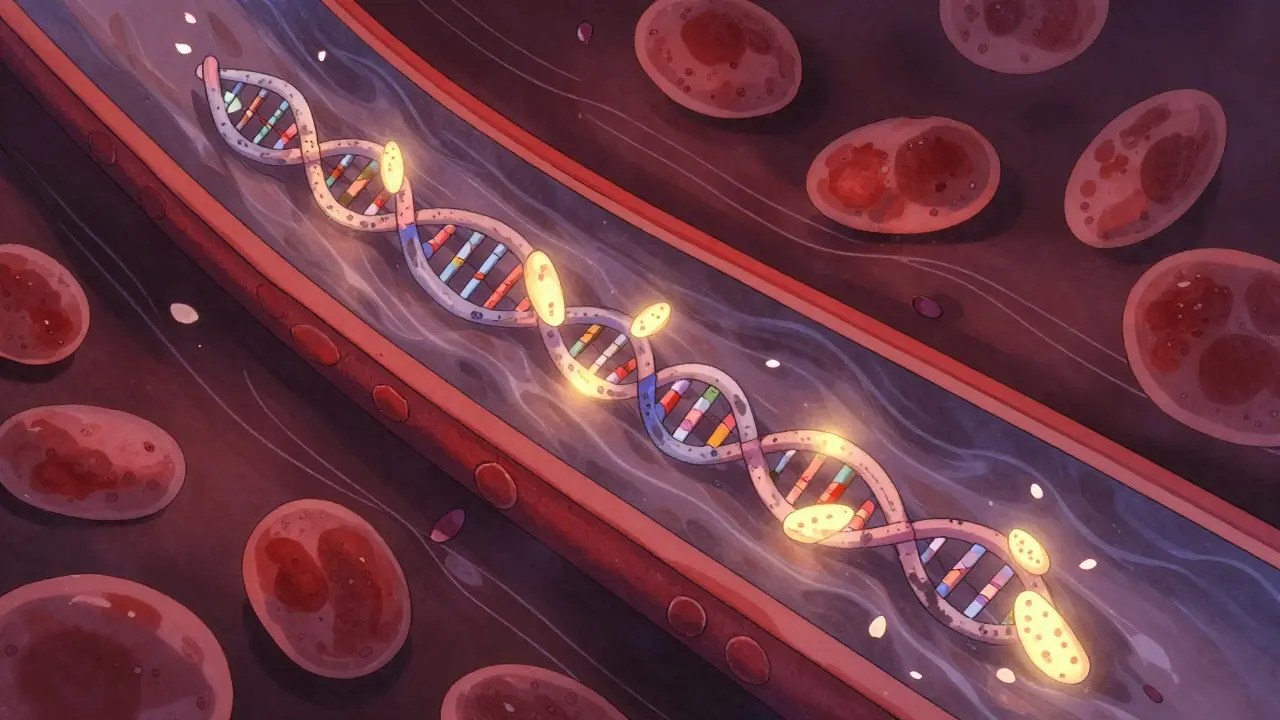
Imagine being able to check the status of your cancer without another surgery or painful needle stick. That is the core promise of liquid biopsy. Instead of removing a piece of the tumor, doctors analyze biological markers floating in your blood. The most critical marker for this process is circulating tumor DNA, often abbreviated as ctDNA. When tumors grow, they shed tiny fragments of their genetic material into the bloodstream. These fragments carry the exact mutations driving your specific cancer.
The concept gained formal traction around 2019, though research began earlier focusing on whole cells. Today, it has evolved into a sophisticated tool used across multiple tumor systems. Unlike traditional methods that struggle with tumor heterogeneity-where different parts of a tumor have different genetic profiles-liquid biopsy captures a more comprehensive picture. A single tissue biopsy might miss up to 30% of molecular alterations because it only samples one spot. Blood analysis, however, reflects contributions from all active tumor sites, giving oncologists a fuller map of the disease.
How ctDNA Detection Works
Finding these tiny DNA fragments is like finding a needle in a haystack, but modern technology makes it possible. Laboratories use several advanced methods to isolate and analyze ctDNA. One common technique is digital droplet PCR (ddPCR), which can detect one mutant molecule among 10,000 wild-type molecules. For broader screening, next-generation sequencing (NGS) allows doctors to look at hundreds of genes simultaneously.
The process usually follows a two-step approach known as tumor-informed testing. First, doctors characterize the primary tumor tissue to identify specific alterations. Then, they target those exact changes in subsequent blood tests. This method achieves high sensitivity and specificity. Researchers are also exploring methylation profiling, which looks at chemical tags on DNA. Methylation patterns often differ by tissue origin, helping doctors not just detect cancer, but pinpoint where it started. Combining ctDNA analysis with methylation data can improve detection sensitivity by 20-30% compared to looking at sequence mutations alone.
Clinical Applications: Beyond Initial Diagnosis
While early detection is a holy grail, liquid biopsy currently shines brightest in monitoring and treatment guidance. Here is where it adds real value in clinical practice:
- Monitoring Therapeutic Response: Doctors can see if a treatment is working weeks before imaging shows shrinkage. If ctDNA levels drop, the therapy is likely effective. If they rise, resistance may be developing.
- Detecting Minimal Residual Disease (MRD): After surgery or chemotherapy, scans might look clean, but microscopic cancer cells could remain. Liquid biopsy can detect MRD with 85-90% sensitivity, predicting recurrence 6-11 months earlier than standard imaging.
- Identifying Resistance Mutations: Cancers evolve. A drug that worked initially might stop working due to new mutations. Liquid biopsy can identify these resistance mechanisms up to 3-6 months before radiographic progression appears.
- Guiding Personalized Treatment: In cases where tissue is insufficient or hard to reach, liquid biopsy provides the genetic roadmap needed to select targeted therapies.
This capability is particularly vital in metastatic solid tumors. At major centers like MD Anderson, approximately 35-40% of phase I clinical trials now incorporate ctDNA analysis. Oncologists report that this reduces the need for repeat tissue biopsies by 25-30% in metastatic cases, significantly improving patient comfort.
Advantages Over Traditional Tissue Biopsy
The shift to liquid biopsy isn't just about convenience; it addresses fundamental limitations of tissue sampling. Invasive procedures carry risks, including complications affecting 1-5% of patients depending on tumor location. Liquid biopsy eliminates these procedural risks entirely. Furthermore, it enables repeated assessments throughout the disease course. You cannot safely perform a lung biopsy every month, but you can easily draw blood.
Consider a patient with non-small cell lung cancer. Tissue might be scarce after the initial diagnosis. As the disease progresses, obtaining new tissue becomes increasingly difficult. Liquid biopsy ensures continuous access to the tumor's genetic profile. Additionally, it helps distinguish between true progression and pseudo-progression-a phenomenon seen in 5-10% of immunotherapy cases where tumors appear to grow on scans due to immune cell infiltration, even though they are actually responding to treatment. ctDNA trends can clarify this ambiguity when imaging is misleading.
| Feature | Liquid Biopsy (ctDNA) | Traditional Tissue Biopsy |
|---|---|---|
| Invasiveness | Minimally invasive (blood draw) | Invasive (surgical or needle procedure) |
| Tumor Heterogeneity | Captures global tumor profile | Limited to sampled site |
| Frequency of Testing | High (every 4-8 weeks during treatment) | Low (limited by risk and recovery) |
| Early Stage Sensitivity | Moderate (50-70% for Stage I) | High (if tumor is accessible) |
| Patient Risk | Negligible | 1-5% complication rate |
Challenges and Limitations
Despite its promise, liquid biopsy is not a magic bullet. The biggest hurdle remains sensitivity in early-stage cancers. Detection rates hover around 50-70% for Stage I diseases, compared to 80-90% for Stage IV. This is because early tumors shed less DNA into the bloodstream. Certain cancer types, such as prostate cancer or indolent hematologic malignancies, naturally produce lower levels of ctDNA, leading to detection rates below 40% in some cases.
Technical limitations also exist. Detecting mutations present in less than 0.1% of circulating DNA requires highly specialized equipment and expertise. Standardization is another major challenge. Inter-laboratory variability affects up to 25% of test results in multicenter studies. Differences in blood collection tubes, processing times, and sequencing platforms can skew results. Finally, interpreting variants of unknown significance occurs in 15-20% of reports, requiring careful clinical correlation to avoid unnecessary anxiety or treatment changes.
Current Market Adoption and Regulatory Status
The landscape for liquid biopsy is maturing rapidly. The global market was valued at $4.4 billion in 2022 and is projected to reach $19.5 billion by 2030. Regulatory bodies are catching up. The FDA has granted over 12 liquid biopsy-related approvals between 2020 and 2023, including companion diagnostics like Guardant360 CDx and FoundationOne Liquid CDx. These approvals validate the technology for specific clinical uses, particularly in non-small cell lung cancer and colorectal cancer.
Clinical guidelines reflect this shift. The American Society of Clinical Oncology (ASCO) updated its 2023 guidelines to include liquid biopsy as an option for initial biomarker testing in advanced non-small cell lung cancer when tissue is insufficient. Academic medical centers report that 60-70% of their oncology divisions now offer these tests. Community practices are adopting more slowly, at a rate of 25-30%, largely due to cost and interpretation complexities. Insurance coverage is expanding but varies widely, making it essential for patients to discuss financial implications with their care teams.
Future Directions: AI and Multi-Analyte Approaches
The future of liquid biopsy lies in integration and intelligence. Researchers are moving beyond single-marker tests to multi-analyte approaches. By combining ctDNA with methylation profiles, fragmentomics (analyzing the size and structure of DNA fragments), and other biomarkers like circulating tumor cells, sensitivity for early-stage detection could exceed 95%. Artificial intelligence plays a crucial role here. AI algorithms can recognize complex patterns in ctDNA fragmentation profiles that humans might miss, potentially increasing diagnostic accuracy by 15-20%.
Standardization efforts are intensifying. The industry is working toward universal protocols for pre-analytical variables, aiming to reduce inter-lab variability. Long-term, experts believe liquid biopsy will become the standard of care for cancer monitoring within 5-7 years. This shift could reduce unnecessary imaging by 20-25% and enable truly adaptive treatment plans based on real-time molecular changes rather than static anatomical snapshots.
Is liquid biopsy covered by insurance?
Coverage varies significantly by insurer, plan type, and the specific cancer being treated. While many major insurers cover liquid biopsy for established indications like EGFR mutation testing in lung cancer or MRD assessment in colorectal cancer, coverage for experimental uses or early screening is less consistent. Always verify benefits with your provider before testing.
Can liquid biopsy replace tissue biopsy completely?
Not yet. Tissue biopsy remains the gold standard for initial diagnosis because it provides histological context-showing how the tumor looks under a microscope-which blood tests cannot do. However, liquid biopsy is increasingly replacing *repeat* tissue biopsies for monitoring and identifying resistance mutations.
How long does it take to get liquid biopsy results?
Turnaround times typically range from 7 to 14 days, depending on the complexity of the test and the laboratory. Next-generation sequencing panels may take longer than targeted digital PCR assays. Your oncologist can provide a specific timeline based on the test ordered.
What is minimal residual disease (MRD)?
MRD refers to small numbers of cancer cells that remain in the body after treatment, undetectable by conventional imaging. Liquid biopsy can detect these cells via ctDNA, allowing doctors to intervene with additional therapy before the cancer visibly recurs.
Are there side effects to liquid biopsy?
Since liquid biopsy involves a standard blood draw, side effects are minimal and similar to any routine blood test. You might experience slight bruising, bleeding, or dizziness at the puncture site. There are no systemic side effects associated with the diagnostic procedure itself.
Kevin S
May 9, 2026 AT 22:51Finally, some good news for cancer patients! 🩸✨ No more painful needles every time we need to check if the treatment is working. This tech is literally a game changer for everyone dealing with this stuff. Keep fighting! 💪
Jake Williams
May 10, 2026 AT 15:29Oh great, another medical bill disguised as 'progress'. I bet insurance companies are already drafting the fine print to deny coverage for this 'experimental' blood test. Typical American healthcare circus. You pay for the privilege of having your DNA analyzed by some algorithm that probably has more bugs than features. And don't get me started on the 'standardization' issues mentioned in the article. If labs can't even agree on how to process the blood, what makes you think the results are worth a damn? Just another way to squeeze money out of desperate people while they wait for real cures.
Frances Kendall
May 12, 2026 AT 13:33Jake, while your cynicism is noted, it ignores the massive strides in sensitivity and specificity that have been documented in peer-reviewed studies over the last decade. The standardization issue is real, but initiatives like those from ASCO and FDA approvals for specific assays (Guardant360, FoundationOne) are actively addressing these discrepancies.
The data shows a 25-30% reduction in repeat tissue biopsies at major centers alone. That isn't just about cost; it's about patient safety and reducing procedural risks, which can be significant depending on tumor location. We are moving toward a model where ctDNA becomes the standard for monitoring, not replacing initial diagnosis, but complementing it dynamically. It allows for adaptive treatment plans based on real-time molecular changes rather than waiting for anatomical progression on scans, which often lags behind biological reality by months. This is precision medicine evolving, not just a billing trick.
Nilesh Mandani
May 13, 2026 AT 07:29It is fascinating how technology shifts our perspective on disease. We used to view cancer as a static entity, something you cut out or poison. Now, we see it as a dynamic ecosystem shedding its secrets into the bloodstream. The concept of Minimal Residual Disease (MRD) detection is particularly profound. Knowing that microscopic cells remain when scans look clean changes everything. It moves us from reactive care to proactive management. However, we must remain grounded. The sensitivity for early-stage cancers is still only 50-70%. It is not a magic bullet yet. But the trajectory is clear. We are learning to listen to the body's whispers before it starts screaming.
Sarah Grenberg
May 13, 2026 AT 17:25I cannot stress enough how much anxiety this reduces for patients who have endured multiple invasive procedures. Imagine being able to monitor your progress with a simple finger prick or arm draw instead of lying under a CT scanner or scheduling surgery. It empowers patients to feel more in control of their journey. The ability to detect resistance mutations up to six months before radiographic progression is truly life-saving information. It gives oncologists a head start to switch therapies before the disease takes hold again. Let’s keep supporting research that prioritizes patient comfort and dignity!
Brian Lee
May 14, 2026 AT 05:28This is really cool stuff. I had a friend who got lung cancer and he hated the biopsies so much. He said they hurt a lot and he was scared every time. If this blood test can help doctors see if the drugs are working faster, that would be great for him. I hope it gets cheaper soon because i heard tests like this can be expensive. My mom says insurance is tricky. But overall it sounds like a very positive step forward for medicine. Good job to the scientists making this happen.
Brian LeClercq
May 15, 2026 AT 05:20You all sound like lapdogs for Big Pharma. Let me break down the reality for you simpletons. Tissue biopsy remains the gold standard for a reason: histology provides context that a blob of DNA fragments never will. You cannot determine tumor grade, architecture, or stromal interaction from ctDNA. Liquid biopsy is merely a supplementary tool, heavily marketed to justify exorbitant costs. The 'heterogeneity' argument is flawed because circulating DNA often comes from necrotic tumor cores, not necessarily the active, viable edges driving progression. Furthermore, the 15-20% rate of variants of unknown significance creates clinical noise that leads to overtreatment. This is not a revolution; it is an incremental refinement wrapped in hype to secure venture capital. Wake up.
Sarah Kwiatkowski
May 16, 2026 AT 17:50Brian, you're missing the point entirely. Nobody is saying tissue biopsy should disappear overnight. The article explicitly states it remains crucial for initial diagnosis. The value proposition here is longitudinal monitoring. You cannot safely perform a lung biopsy monthly to check for resistance mutations. But you can draw blood. The ability to track evolutionary trajectories of the tumor in real-time is unprecedented. Yes, VUS exists, but that is a bioinformatics challenge, not a failure of the modality. As algorithms improve and databases grow, interpretability will increase. Dismissing this technology because it doesn't replace histology is like dismissing GPS because it doesn't replace the car. They serve different purposes. One maps the terrain; the other tracks the movement. Both are essential.
Madison Jones
May 17, 2026 AT 21:14I am so excited about the future of AI integration with liquid biopsy!! The potential to analyze fragmentomics and methylation patterns simultaneously is mind-blowing!!! It could push early detection sensitivity above 95%! That means catching cancer before symptoms even appear!!! We need to support these innovations now!!! Insurance coverage is expanding, but we must advocate for broader access!!! Don't let fear stop progress!!! Embrace the science!!!
Guy Birtwhistle
May 18, 2026 AT 23:07Look, I'm not a doctor, but I read the table. Blood draw vs. Scalpel. Take your pick. The sarcasm isn't necessary, but the math is clear. Less pain, less risk, more frequent testing. If you're still clinging to the idea that suffering equals better care, you might want to reconsider your priorities. The tech works. Use it.