Liver Transplantation: Eligibility, Surgery, and Immunosuppression Explained

When your liver fails, there’s no backup system. No reset button. No pill that can replace what it does-filtering toxins, making proteins, storing energy, regulating blood sugar. For people with end-stage liver disease, a transplant isn’t just an option-it’s the only chance to live. But getting one isn’t simple. It’s a long, strict, and deeply personal journey that starts long before the operating room.
Who Gets a Liver Transplant?
Not everyone with liver disease qualifies. The system is built to give the organ to those who need it most and have the best shot at surviving. The Model for End-Stage Liver Disease (MELD) score is the main tool used to rank patients on the waiting list. It’s calculated using three blood tests: bilirubin, creatinine, and INR. Higher scores mean sicker patients. A MELD score of 6 is mild; 40 is critical. People with scores above 25 are often prioritized because they’re likely to die within three months without a transplant. But MELD isn’t the whole story. If you have liver cancer, especially hepatocellular carcinoma (HCC), you must meet the Milan criteria: one tumor under 5 cm, or up to three tumors all under 3 cm, with no spread to blood vessels. If your alpha-fetoprotein (AFP) blood marker is above 1,000 and doesn’t drop after treatment, you won’t qualify under standard rules. Some centers will review these cases individually, but it’s rare. Then there’s the psychosocial side. You need stable housing, a support system, and proof you can follow complex medical instructions. If you’ve struggled with alcohol or drugs, most centers require at least six months of sobriety. But this rule isn’t uniform. Some centers, like those in British Columbia as of late 2025, now accept three months if paired with strong social support and counseling. Others still stick to six. This inconsistency frustrates many patients-some get approved, others don’t, even with identical medical conditions. You also can’t have other life-threatening illnesses. Active cancer elsewhere in your body, untreated heart or lung disease, or uncontrolled infections will disqualify you. Even obesity can be a barrier. Most centers require a BMI under 30 for donors and recipients. But new data from Columbia University shows that carefully selected donors with BMI up to 35 can still have excellent outcomes. That’s starting to change guidelines.The Surgery: What Happens on the Table
A liver transplant surgery lasts between six and twelve hours. The surgeon removes your damaged liver, then places the donor liver in its place. Most transplants use the “piggyback” technique-keeping your inferior vena cava (a major vein) intact. This reduces blood loss and speeds recovery. About 85% of adult transplants use this method. There are two types of donors: deceased and living. Deceased donor transplants are more common, but the wait can be long-up to 18 months in some areas like California. Living donor transplants cut that time dramatically. A healthy person donates part of their liver-usually the right lobe (55-70%) for adults. The liver regrows in both donor and recipient within weeks. For living donors, safety is critical. The remaining liver must be at least 35% of the original volume. The graft-to-recipient weight ratio must be at least 0.8%. If not, the recipient’s new liver might not work well enough. Donors typically stay in the hospital for 5-7 days and take 6-8 weeks to fully recover. The risk of death for donors is low-about 0.2%-but complications like bile leaks or infections happen in 20-30% of cases. New technologies are improving outcomes. Machine perfusion, which keeps donor livers alive with oxygenated fluid outside the body, is now used for livers from donation after circulatory death (DCD). These livers used to have higher complication rates, but with perfusion, biliary issues dropped from 25% to 18%. The FDA approved the first portable perfusion device in June 2023, extending preservation time from 12 to 24 hours. That means more organs can be safely transported across states.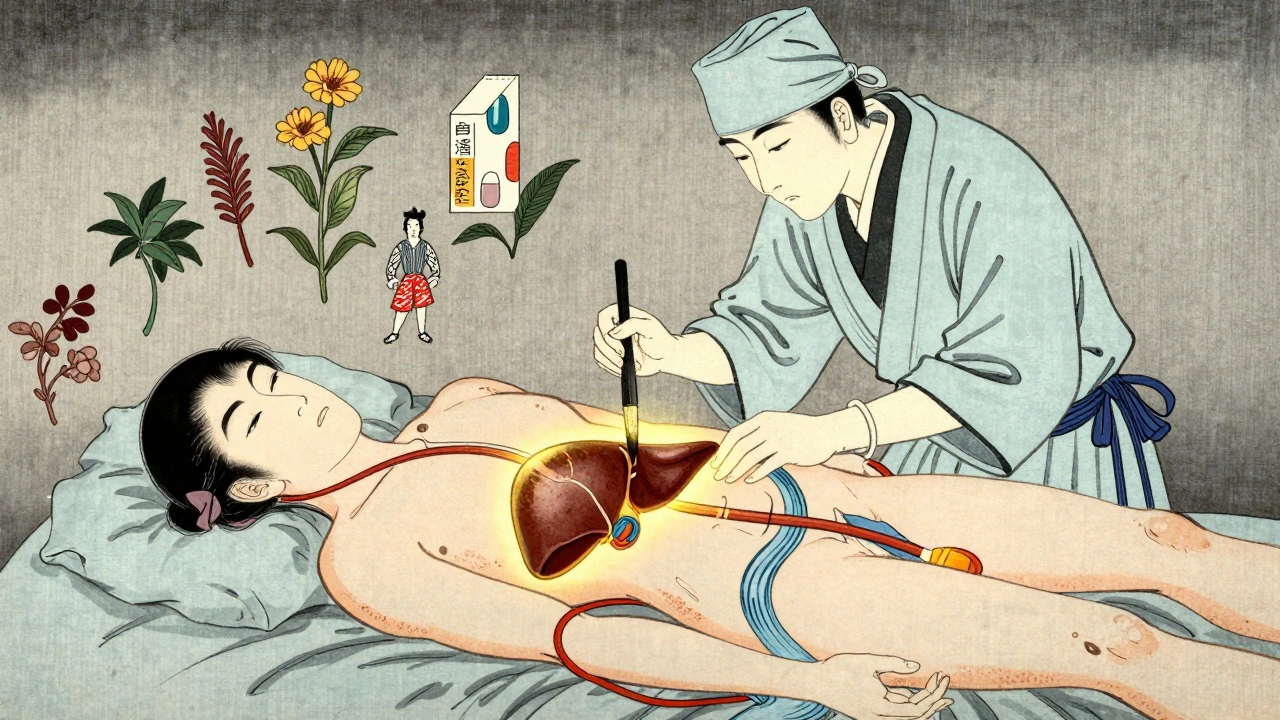
Life After Transplant: Immunosuppression
Your body doesn’t know your new liver isn’t yours. It will try to attack it. That’s why you need immunosuppressants-for the rest of your life. Most patients start with a three-drug combo: tacrolimus, mycophenolate, and prednisone. Tacrolimus is the backbone. Doctors aim for blood levels of 5-10 ng/mL in the first year, then lower to 4-8 ng/mL. Too low, and your body rejects the liver. Too high, and you risk kidney damage, tremors, or diabetes. Mycophenolate stops immune cells from multiplying. It’s great for preventing rejection, but it can cause nausea, diarrhea, or low white blood cell counts. Prednisone, a steroid, helps calm the immune system early on. But it’s a double-edged sword. It causes weight gain, bone thinning, high blood sugar, and mood swings. That’s why 45% of U.S. transplant centers now use steroid-sparing protocols. They drop prednisone after 30 days. Studies show this cuts diabetes risk from 28% to 17%. About 15% of patients have an acute rejection episode in the first year. It’s often caught early through routine blood tests. Treatment usually means raising tacrolimus levels or adding sirolimus. Long-term, 35% of patients develop kidney problems from tacrolimus. One in four get diabetes. One in five have nerve issues like shaking or trouble sleeping. Medication adherence is everything. Miss a dose, and rejection can start within days. Studies show you need at least 95% compliance to keep your transplant working. That means taking pills every day, at the same time, without fail. Many patients use pill organizers, phone alarms, or apps. Some centers assign dedicated transplant coordinators who call weekly. Patients with this support have 87% one-year survival-5% higher than those without.Costs, Recovery, and Long-Term Reality
The surgery itself might be covered by insurance, but the lifelong care isn’t cheap. Annual medication costs average $25,000-$30,000. That’s before lab tests, doctor visits, or complications. One in five patients need another hospital stay in the first year for infection, rejection, or bile duct problems. Recovery takes time. You’ll be in the hospital for 14-21 days. After that, you’ll need weekly blood tests for three months, then biweekly, then monthly. You’ll see your hepatologist every few months. You’ll also need regular ultrasounds and sometimes liver biopsies to check for hidden damage. You’ll learn to watch for signs of rejection: fever over 100.4°F, yellowing skin, dark urine, extreme fatigue, or abdominal pain. Infection risk stays high for the first six months. You’ll avoid crowds, raw foods, and gardening. You’ll get flu shots, pneumonia shots, and avoid live vaccines. Despite all this, survival rates are strong. Eighty-five percent of patients live at least one year. Seventy percent make it five years. Many live 20 or more. The first long-term survivor, transplanted in 1967, lived for over 25 years.
What’s Changing Now?
The liver transplant landscape is shifting. Non-alcoholic steatohepatitis (NASH), linked to obesity and diabetes, now causes 18% of transplants-up from just 3% in 2010. That number will keep rising. New research is testing if some patients can stop immunosuppression entirely. At the University of Chicago, 25% of pediatric recipients were successfully weaned off drugs by age five using regulatory T-cell therapy. If this works in adults, it could change everything. Geographic disparities remain a problem. In the Midwest, patients wait an average of 8 months for a liver with a MELD score of 25-30. In California, it’s 18 months. Some patients travel across states to get on shorter lists. That’s legal-but expensive and logistically hard. And the future? Artificial liver devices can buy time, but none have kept patients alive more than 30 days without a transplant. For now, the only cure is still a healthy liver from someone else.Can I be a living liver donor if I’m over 55?
Standard age limits are 18-55, but exceptions exist. In March 2023, a 58-year-old donor successfully gave part of their liver after rigorous testing showed exceptional liver quality and anatomy. Centers are starting to consider older donors on a case-by-case basis, especially if they’re in excellent health with no risk factors.
How long do I have to be sober before I can get a liver transplant?
Most U.S. centers require six months of alcohol abstinence. But some, like those in British Columbia as of late 2025, now accept three months if paired with counseling and strong social support. The rule isn’t universal, and it’s being debated. Some experts argue that three months of verified sobriety shows the same long-term success as six.
What happens if my liver transplant fails?
If the new liver stops working, you may be re-listed for another transplant. This is rare-only about 10% of transplants fail within five years. But if rejection, infection, or bile duct problems can’t be controlled, a second transplant is possible. Your chances depend on your overall health and how long you’ve been on immunosuppressants.
Can I have children after a liver transplant?
Yes. Many women have healthy pregnancies after transplant, usually after waiting at least one year. Men can father children too. But pregnancy is high-risk and requires close monitoring by a transplant team and high-risk OB-GYN. Medications like mycophenolate must be switched before conception because they can cause birth defects.
Are there alternatives to liver transplant?
For early liver disease, lifestyle changes and medications can help. But once the liver is in end-stage failure, there are no proven alternatives. Artificial liver devices can support patients temporarily-sometimes for weeks-but none have replaced the need for a transplant. Research into lab-grown livers is ongoing, but it’s still years away from clinical use.
Robert Altmannshofer
December 5, 2025 AT 00:59Man, I read this whole thing and just sat there in awe. The liver is this silent, overworked hero-doesn’t get a thank you, doesn’t get a break, and when it finally quits, you’re screwed. And yet, we treat transplants like some kind of lottery when it’s really a brutal, beautifully human system of triage. I’ve known people who waited years. One guy I knew got his at 47 after six months of sobriety, but his friend with the same MELD score got denied because he lived in a studio apartment. It’s not just medical-it’s social. And the living donor thing? Mind-blowing. Someone gives you half their liver and walks away like it’s no big deal. That’s love in its purest form.
vanessa parapar
December 6, 2025 AT 06:54Okay but let’s be real-anyone who still drinks after liver disease shouldn’t even be on the list. Six months? Please. I’ve seen people relapse within weeks of transplant. You don’t get to cheat death and then go right back to the same behavior. It’s not just unfair to the organ, it’s unfair to everyone else waiting. If you can’t commit to sobriety, don’t take someone else’s chance.
Ben Wood
December 7, 2025 AT 13:01Actually, the piggyback technique isn’t even the gold standard anymore-some centers are moving toward cavo-caval anastomosis with venovenous bypass, which reduces ischemic time by 22%, but no one talks about it because it’s too technical… and frankly, most people here can’t spell ‘hepatocyte’ correctly. Also, the MELD score doesn’t account for sarcopenia-which is a huge predictor of post-op mortality. But sure, keep relying on bilirubin and INR like it’s 2005.
Melania Dellavega
December 8, 2025 AT 18:03I think about how much we take our bodies for granted until they break. The liver doesn’t scream. It doesn’t cry out. It just… stops. And then suddenly, you’re facing a choice: die, or let someone else’s sacrifice become your second chance. I’ve been on the donor registry for years. Not because I think I’m special. But because I’ve lost people who didn’t get the time they deserved. And if my liver could give someone else 15 more years? I’d give it without hesitation. We’re not just organs. We’re connections. And sometimes, the most beautiful thing we can do is give away a part of ourselves so someone else can keep breathing.
Shannon Wright
December 9, 2025 AT 19:19What struck me most is how inconsistent the rules are. One center says three months sobriety is enough if you have a strong support system. Another says six. One says BMI 35 is acceptable with monitoring. Another says no. It’s not medicine-it’s a patchwork of institutional biases wrapped in clinical language. And the worst part? The people who suffer most are those without resources. Someone with a good insurance plan and a therapist can ‘qualify.’ Someone without? They’re told to come back when they’re ‘ready.’ But readiness isn’t a lab test. It’s a privilege. We need standardized, evidence-based, compassionate criteria-not a game of medical roulette.
And don’t get me started on the cost. $30,000 a year in meds? For life? That’s not healthcare. That’s a financial death sentence for millions. We spend billions on military tech but can’t figure out how to make life-saving drugs affordable? That’s not a medical failure. That’s a moral one.
I work with transplant patients. I’ve seen them cry because they missed a dose and panicked. I’ve seen them skip meals to afford their tacrolimus. And I’ve seen them smile because they got to watch their kid graduate. That’s the real story. Not the stats. Not the MELD scores. The humanity.
Sakthi s
December 9, 2025 AT 22:29Amazing post. Thank you for sharing this. Hope more people understand how complex and beautiful this process is.
Rachel Nimmons
December 11, 2025 AT 06:11Did you know that the FDA approved that portable perfusion device in June 2023? But the same week, the CDC quietly changed the guidelines for organ donation from DCD donors without public notice. And the pharmaceutical companies? They’ve been lobbying to extend patent life on tacrolimus since 2020. This isn’t about saving lives. It’s about control. They want you dependent. They want you paying. The ‘success rates’ they publish? They exclude patients who die within 90 days. That’s not transparency. That’s manipulation.
Robert Asel
December 11, 2025 AT 07:26While your article presents a compelling narrative, it lacks critical nuance regarding the ethical implications of prioritizing MELD scores over psychosocial stability. The assumption that higher MELD equates to greater moral claim to an organ is fundamentally flawed. Moreover, the normalization of living donation as a ‘selfless act’ ignores the psychological trauma often experienced by donors who later report regret, isolation, or financial ruin. The literature on long-term donor outcomes is severely underreported. You present this as a triumph of modern medicine-but it is, in fact, a systemic failure of societal responsibility.