Medical Tourism and Medication Safety: What You Must Know Before You Travel

More than 14 million people travel abroad each year for medical care. They go for cheaper surgeries, faster appointments, or treatments not available at home. But behind the savings and convenience lies a quiet danger: medication safety. You might get a knee replacement in Thailand, a cancer drug in South Korea, or a dental implant in Mexico - but what happens when you land back home and your prescriptions don’t match up?
Why Medical Tourism Is Booming
Medical tourism isn’t just for the rich anymore. A heart bypass that costs $120,000 in the U.S. might run $25,000 in India. A cosmetic procedure in Turkey can be 60% cheaper than in Canada. South Korea now offers AI-guided cancer treatments using genetic profiling - something many patients can’t access at home. Thailand alone welcomed over 2.5 million medical tourists last year, thanks to more than 100 JCI-accredited hospitals. Mexico, India, and Malaysia are also top destinations, drawing patients with lower prices and high-quality facilities. But here’s the catch: none of these countries follow the same drug rules as your home country. What’s legal and safe in one place might be banned, unregulated, or even fake in another.The Hidden Risk: Medication Discontinuity
You’re discharged from a hospital in Delhi with a prescription for three new medications. One is an antibiotic, another a painkiller, and the third is a special anti-rejection drug. You fly home. Two weeks later, you call your family doctor to refill the prescriptions. They don’t recognize any of the names. The pharmacy says they can’t fill them. Your doctor doesn’t know what they’re for. You’re stuck. This isn’t rare. One in four medical tourists reports follow-up care problems - and most of them involve medications. Why? Because drug names, dosages, and formulations vary wildly across borders. A pill labeled “Metoprolol 50 mg” in Germany might contain a different active ingredient in Indonesia. Some countries allow medications that the FDA, Health Canada, or the EMA have banned due to safety risks. Others don’t require the same purity standards. The World Health Organization estimates that 1 in 10 medical products in low-income countries are substandard or counterfeit. Even in places with stronger regulations, like Turkey or Thailand, the drugs you receive may not be the same ones sold locally. Hospitals often source from global distributors to cut costs - and that means quality control becomes a gamble.What You Might Be Taking - And Not Knowing
Some of the most dangerous cases involve medications that seem harmless but aren’t. Patients get herbal supplements, traditional remedies, or over-the-counter pain relievers abroad that interact badly with their regular prescriptions. A patient from Canada takes turmeric capsules in Mexico for inflammation, then returns home and starts bleeding because it clashes with their blood thinner. Another takes a common anti-inflammatory in India that’s linked to liver damage - a risk never mentioned by the clinic. Even prescription drugs can be tricky. A cancer drug approved in South Korea might not be available in the U.S. because the FDA hasn’t reviewed it yet. Your oncologist back home won’t know how to monitor side effects. You’re left guessing: Do you stop? Do you switch? Do you risk restarting the treatment without proper guidance? And then there’s the issue of expiration dates. Some clinics reuse packaging or stock older batches to save money. You might get a perfectly good drug - or one that’s been sitting in a warehouse for two years in a humid climate.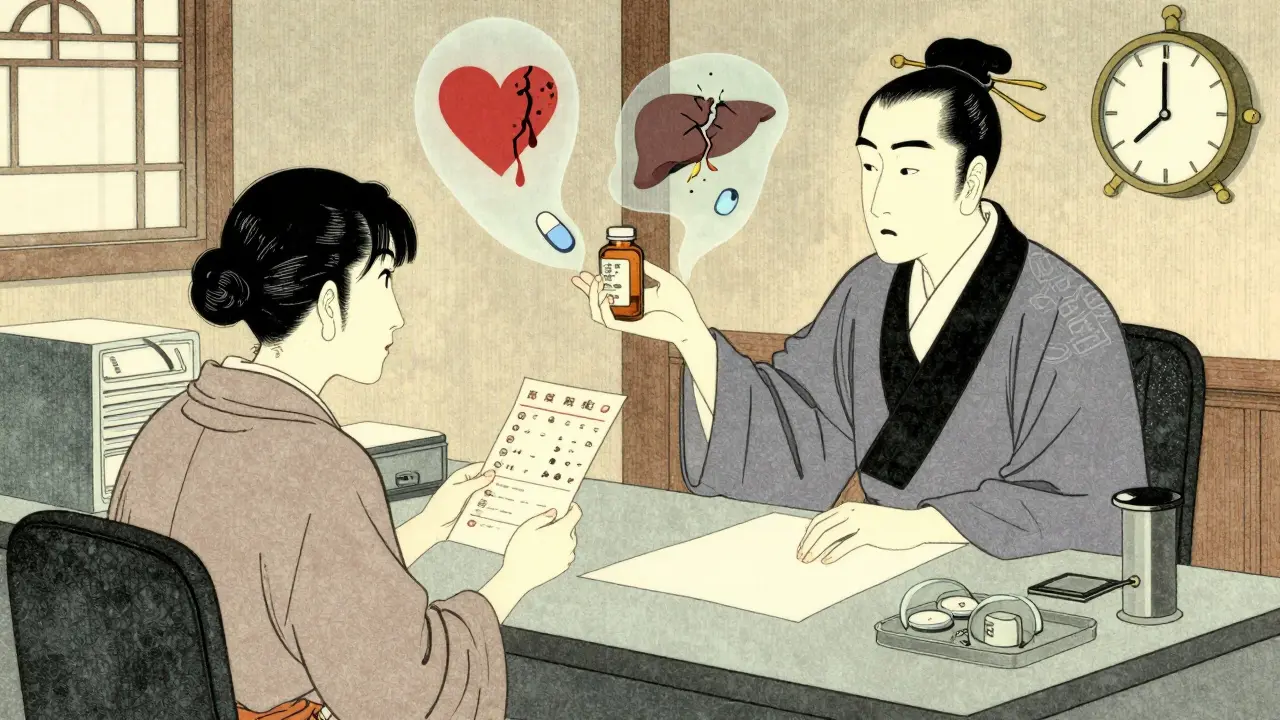
How to Protect Yourself Before You Go
Don’t wait until you’re in a foreign hospital to think about meds. Start planning weeks ahead.- Talk to your home doctor before you leave. Bring your full medication list - including supplements and OTC drugs. Ask: What if I get new prescriptions abroad? How do I get them refilled? Can you help me identify equivalents?
- Get copies of all prescriptions and treatment records. Ask for the generic name, dosage, manufacturer, and batch number. If they give you a brochure or a sticker on the bottle, take a photo. Don’t rely on memory.
- Check drug approval status. Use your country’s health agency website (like Health Canada or the FDA) to search for the exact drug name. If it’s not approved, find out why. Is it unsafe? Unstudied? Just not marketed here?
- Verify the facility’s standards. Look for JCI accreditation - it doesn’t guarantee perfect medication safety, but it means the hospital follows international standards for drug storage, labeling, and record-keeping.
- Don’t trust local pharmacies. Even if they’re attached to the hospital, they may not be regulated like home-country pharmacies. Stick to the hospital’s dispensary if possible.
What to Do When You Come Home
You’re back. You have a bag full of pills. What now?- Don’t start taking anything until you’ve seen your doctor. Even if you feel fine, your body might be reacting in ways you can’t see.
- Bring all packaging and prescriptions. If you have the original bottles, bring them. If not, bring photos, receipts, or printed labels.
- Ask for a medication reconciliation. This is a formal process where your doctor compares all your meds - old and new - to catch interactions, duplicates, or gaps. Insist on it.
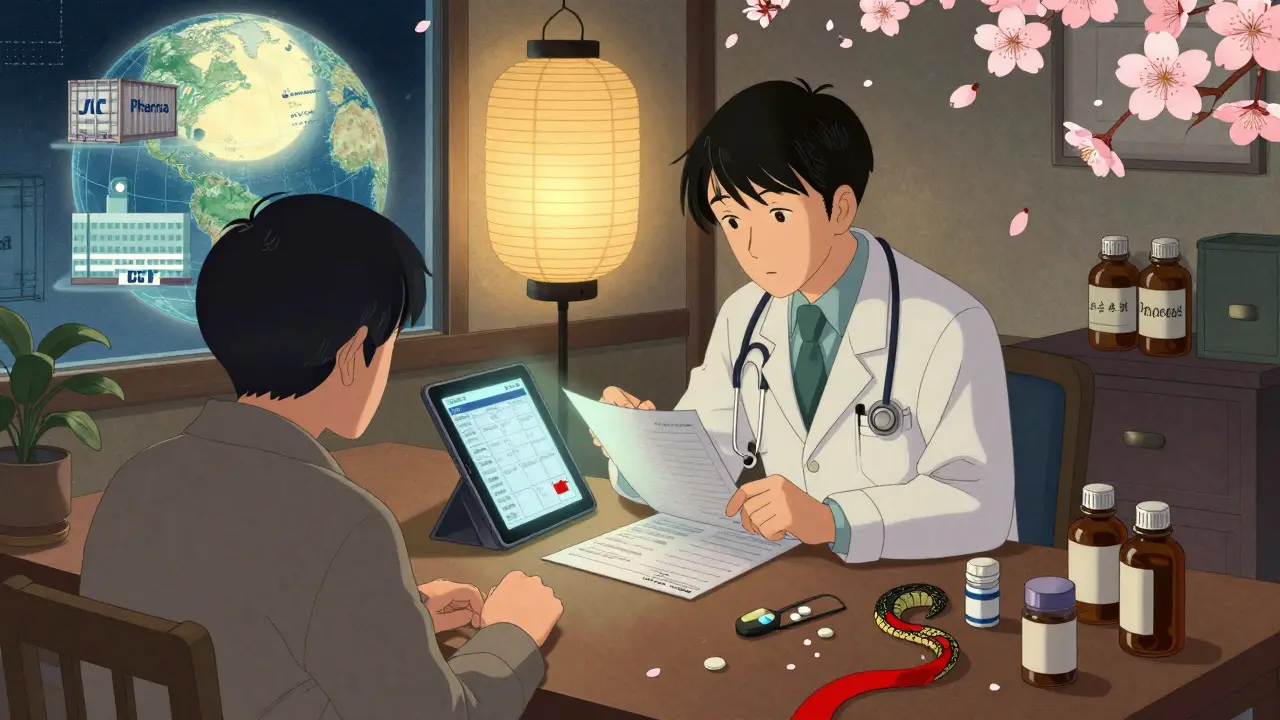
- Use a telehealth consult. Many clinics now offer post-treatment video check-ins with the overseas provider. Use it. Ask them to email your doctor directly with dosage details.
- Track side effects. Keep a simple log: what you took, when, and how you felt. Even minor symptoms like dizziness or nausea could signal a bad interaction.
The Industry Is Starting to Wake Up
Some forward-thinking clinics are finally addressing this gap. South Korea’s Severance Hospital now uses digital health records that patients can access in English and share with their home doctors. Some providers in Thailand and India offer telemedicine follow-ups for up to six months after surgery. A few even coordinate directly with pharmacies in North America to ship approved equivalents. But these are exceptions - not the rule. The medical tourism industry is growing faster than its safety systems. There are no global standards for medication transfer. No mandatory reporting of adverse drug events. No requirement for clinics to explain how their drugs compare to those in your home country. That means the burden falls on you.It’s Not Just About Cost - It’s About Control
You travel for medical care because you want control: control over your body, your timeline, your budget. But if you don’t control your medications, you’re handing over your safety to someone else’s rules. A $10,000 savings means nothing if you end up in the ER because a pill you took abroad caused a liver injury. A faster surgery doesn’t matter if you’re left without a way to refill your drugs. Medical tourism can be safe - but only if you treat medication safety like part of the procedure itself. Not an afterthought. Not something to worry about later. Something you plan for before you book your flight.Frequently Asked Questions
Can I bring medications I bought abroad back to my home country?
It depends. Many countries allow you to bring in a personal supply of medication for up to 90 days - but only if it’s prescribed to you and in its original packaging. Some drugs, especially controlled substances or unapproved treatments, are illegal to import. Always check with your country’s customs and health agency before bringing anything home. Never ship medications through the mail - they’ll likely be seized.
Are JCI-accredited hospitals safer for medication safety?
JCI accreditation means the hospital meets international standards for patient safety, including how drugs are stored, labeled, and dispensed. While it doesn’t guarantee that all medications are approved in your home country, it does reduce the risk of errors like wrong dosages or mix-ups. Choose JCI-accredited facilities when possible - but still verify the drugs yourself.
What if my home doctor refuses to refill my foreign prescription?
Your doctor isn’t obligated to refill prescriptions from overseas, especially if the drug isn’t approved in your country. In this case, ask for the generic name and manufacturer. Your doctor can often prescribe an equivalent drug that’s approved locally. If they’re unsure, request a consultation with a pharmacist who specializes in international medications.
Are online pharmacies in medical tourism destinations trustworthy?
Most aren’t. Many clinics partner with local pharmacies that aren’t regulated like those in the U.S., Canada, or EU. Avoid buying medications from websites or kiosks outside the hospital. Even if they look official, they may sell expired, diluted, or fake drugs. Stick to the hospital’s pharmacy or bring your own supply.
Can I get help from my embassy if I have a medication problem abroad?
Embassies can help you find a doctor or translate documents, but they can’t override local laws or force a hospital to give you certain drugs. They won’t provide medication or pay for treatment. Your best protection is planning ahead - not relying on emergency help.
Lydia H.
January 20, 2026 AT 03:57Been there, done that. Got a hip replacement in Thailand-saved $80k, came home with a bag of pills I couldn’t identify. Took me three weeks and three doctors to sort it out. Don’t just trust the hospital sticker. Take photos of every bottle, every label. Write down the generic names. It’s annoying, but it’s your life.
Jacob Hill
January 21, 2026 AT 02:46I’m not saying this is the end of medical tourism-but, if you’re going to do it, please, for the love of all that’s holy, get your home doctor involved before you even pack your suitcase. I had a cousin who took ‘pain relief’ from a clinic in Mexico-turned out it was a steroid cocktail. She ended up in the ER with a collapsed adrenal gland. Don’t be that person.
Valerie DeLoach
January 22, 2026 AT 12:34There’s a deeper issue here that no one talks about: medical tourism isn’t just about cost-it’s about access. People go because their own systems failed them. A single mother in Ohio can’t get a MRI for six months. A veteran in Texas can’t get pain meds that don’t make him suicidal. So they go abroad-not because they’re reckless, but because they’re desperate. We need systemic reform, not just individual cautionary tales. The real danger isn’t the pills-it’s the system that pushes people into this corner.
Christi Steinbeck
January 23, 2026 AT 09:11STOP WAITING UNTIL YOU’RE BACK HOME TO FIGURE THIS OUT. If you’re going overseas for care, schedule a telehealth consult with your doctor BEFORE you leave. Bring your meds list. Ask them to write a letter to the foreign clinic. Get the hospital to email your doctor directly. It’s not hard. It’s just not prioritized. YOU have to be the one to push for it. Your life isn’t a gamble.
Lewis Yeaple
January 24, 2026 AT 16:07It is imperative to underscore that the regulatory frameworks governing pharmaceuticals in jurisdictions such as India, Thailand, and Mexico differ substantially from those of the United States Food and Drug Administration. The absence of harmonized pharmacovigilance protocols renders the post-discharge management of pharmaceutical regimens exceedingly precarious. One must, therefore, exercise extreme diligence in verifying the International Nonproprietary Name (INN) of each prescribed agent, cross-referencing against the National Drug Code (NDC) database, and securing documentation of batch numbers and expiration dates. Failure to do so constitutes a significant risk to patient safety.
Jackson Doughart
January 25, 2026 AT 16:23I’ve seen this play out too many times. A friend flew to India for a bypass, came home with a bottle labeled ‘Atorvastatin 20mg’-but the pill was a different color, smaller, no imprint. Turned out it was a generic from a distributor that didn’t meet USP standards. His cholesterol spiked. He didn’t know until his bloodwork came back. The hospital didn’t warn him. No one did. It’s not just about the drugs-it’s about the silence around them. Nobody talks about this. But it’s happening.
Malikah Rajap
January 27, 2026 AT 02:19Okay, but… have you ever thought about how weird it is that we trust a stranger in a white coat in Bangkok more than our own doctor? Like, we’ll fly 8,000 miles to get a tooth pulled, but we won’t call our dentist back home to ask, ‘Hey, what’s the deal with this pill?’ It’s not about money-it’s about surrender. We give up control because we’re tired, scared, or broke. And then we wonder why we feel lost when we get home.
sujit paul
January 27, 2026 AT 17:50Let me tell you something, my friend. This is not coincidence. This is orchestrated. The pharmaceutical giants, they control the FDA, the EMA, the WHO-they want you to go abroad so they can sell you their drugs at triple the price when you return. The ‘unapproved’ drugs you get overseas? They are the same pills, just without the branding. They are testing you. They are testing your body. They are waiting for you to get sick so they can sell you the ‘real’ medicine. Don’t be fooled. The system is rigged.
Tracy Howard
January 28, 2026 AT 23:12Canada has the best healthcare system in the world. We don’t need to fly to India for a knee replacement. If you can’t afford care here, you’re not trying hard enough. Or you’re just lazy. There are programs. There are subsidies. There are waiting lists, sure-but at least we know what’s in the pills. No one’s slipping you fake metformin from a warehouse in Punjab. If you want to gamble with your life, fine. But don’t act like you’re brave. You’re just irresponsible.
Aman Kumar
January 29, 2026 AT 20:42The entire medical tourism industry is a predatory ecosystem built on the exploitation of systemic failures in Western healthcare. Clinics operate as profit-driven shell corporations, sourcing unregulated generics from grey-market suppliers, often with traceable contamination from unlicensed manufacturers in China. The patient, desperate and uninformed, becomes the vector for pharmaceutical entropy. The absence of standardized pharmacokinetic data, coupled with the non-disclosure of excipients, renders any post-travel medical reconciliation a statistical farce. This is not healthcare. This is biohazard tourism.
Jake Rudin
January 31, 2026 AT 05:43It’s funny-people talk about the ‘risk’ of foreign meds, but they never ask why those meds are even available abroad in the first place. If they’re dangerous, why are they being sold? If they’re safe, why are they banned at home? The real question isn’t ‘Is this pill safe?’ It’s ‘Why does my country think it’s not?’ Maybe we’re the ones behind. Maybe our system is too scared to innovate. Maybe we’re not protecting people-we’re just controlling them.
Astha Jain
January 31, 2026 AT 16:14lol i went to bangkok for a nose job and got a bottle of pills called ‘happybreeze’-turns out it was just paracetamol with extra sugar. my doc laughed and said ‘that’s what we use here too.’ so… what’s the problem again?
Phil Hillson
February 1, 2026 AT 03:37So let me get this straight-people are flying to Thailand to get cheaper surgery but then they can’t even read the labels on their own meds? I mean, come on. If you can’t figure out how to take a pill, maybe you shouldn’t be traveling halfway across the world for a procedure. This isn’t a medical issue-it’s a literacy issue. Or maybe just a laziness issue. Either way, it’s not the system’s fault. It’s yours.
Josh Kenna
February 1, 2026 AT 07:47Okay I just got back from Mexico with 4 new meds and I’m terrified. I took one last night and felt weird. I don’t know if it’s the meds or just jet lag. I took a pic of the bottle but the label is in Spanish. I don’t even know if I spelled the drug name right. I’m so mad I didn’t ask more questions. I just trusted them. I feel stupid. I’m gonna call my doctor first thing tomorrow. Please tell me I’m not the only one who did this.