Medication Safety for Non-English Speakers: How to Get Clear Prescription Instructions
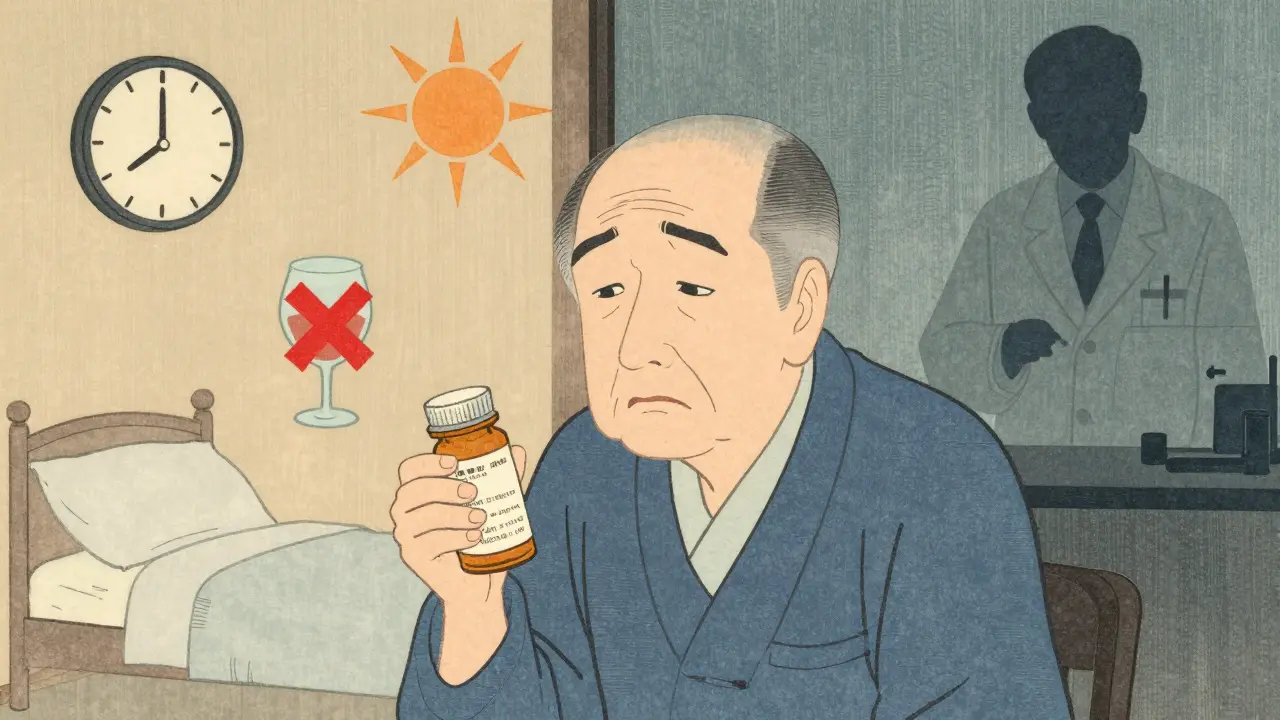
Imagine you just got a new prescription. The bottle has tiny print in English. You don’t understand most of it. The pharmacist says, "Take one daily," but you’re not sure if that means once a day, or every day of the week. You’re scared to ask for help. So you guess. That’s how dangerous mistakes start.
For millions of people in the U.S. who don’t speak English well, this isn’t a hypothetical. It’s everyday reality. About 25 million people have limited English proficiency - and many of them are taking medications that could harm them if misunderstood. A 2006 Institute of Medicine report found these patients are 1.5 to 3 times more likely to have a serious drug error. That’s not just inconvenient. It’s life-threatening.
Why Standard Prescription Labels Fail Non-English Speakers
Most prescription labels use medical jargon and abbreviations that even native English speakers struggle with. "SIG: Take one tablet by mouth twice daily" means nothing to someone unfamiliar with Latin terms like "sig" or the phrase "by mouth." Even simple words like "daily" can be misread. One Korean patient took a blood thinner twice a day because they thought "daily" meant "every day," not "once per day." That kind of error led to internal bleeding.
Traditional translations - like those done by untrained staff or free online tools - make things worse. A 2020 FDA review found automated translations had a 38% error rate. That’s nearly 4 in 10 prescriptions with wrong instructions. Family members helping translate? Even riskier. A 2022 report from the Institute for Safe Medication Practices showed using relatives increases medication errors by 65%.
What Actually Works: Clear, Validated Instructions
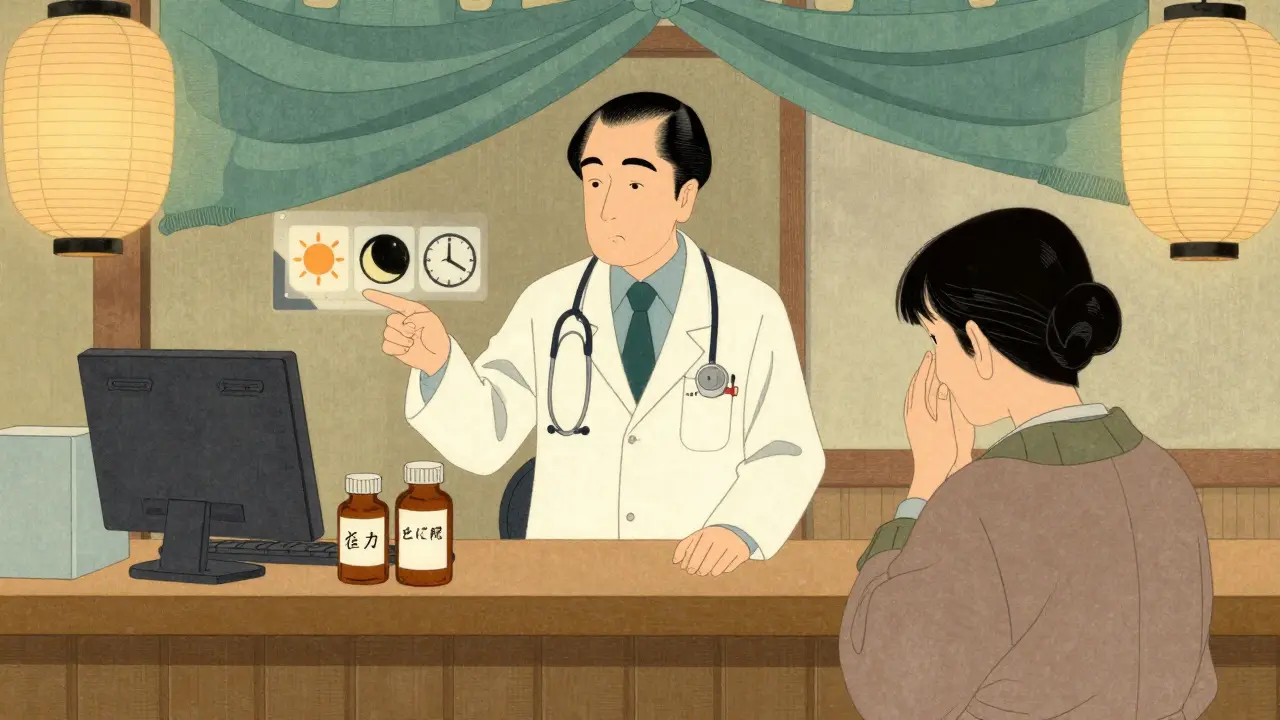
There’s a better way. The key isn’t just translating words - it’s making sure the meaning is clear. Projects like ConcordantRx tested simplified instructions in Chinese, Korean, and Russian. Instead of "Take one tablet by mouth twice daily," they wrote: "Take one pill, two times each day, with water." The result? 100% of patients understood it. That’s compared to just 45% with standard translations.
Effective labels follow three rules:
- Plain language - no medical terms, no abbreviations. Reading level should be 6th grade or lower.
- Universal symbols - icons like a clock for "take at bedtime," a sun for "take in morning," or a red X over alcohol to warn against drinking.
- Verified translations - done by trained medical translators, not Google Translate.
These aren’t just nice ideas. A 2019 University of Michigan study showed that when pharmacies used this system, medication errors dropped by 58%. Adherence - meaning patients actually took their medicine correctly - went up by 37%.
How Pharmacies Are (or Aren’t) Meeting the Need
Legally, pharmacies must provide language access under Title VI of the Civil Rights Act. But in practice, only 57% of community pharmacies offer translated labels, according to a 2021 survey by the American Pharmacists Association. That means most non-English speakers are getting instructions they can’t read.
Some pharmacies try to use bilingual staff. But a 2017 study found that even when staff spoke the patient’s language, comprehension was only 42%. Why? Many weren’t trained in medical terminology. One pharmacist might say "hypertension," but the patient only knows the word for "high blood pressure." Without matching terms, confusion stays.
Big hospital systems do better - 78% offer translation services. But independent pharmacies, where most people get their prescriptions, lag behind at just 32%. That creates a huge gap in care. A patient might get good help at the clinic but get lost at the corner pharmacy.
Real Stories: What Happens When Instructions Are Misunderstood
Reddit’s r/pharmacy community had a thread in March 2023 asking how pharmacists handle non-English speakers. Out of 147 comments, 89% said they didn’t have enough translation tools. One pharmacist shared: "A Vietnamese woman thought her insulin was for headaches because the label said ‘for pain.’ She took it three times a day. Her blood sugar dropped so low she ended up in the ER."
On Healthgrades, 63% of non-English speaking patients reported confusion about their meds. Common complaints? "Staff didn’t check if I understood" (42%) and "No instructions in my language" (58%).
One case documented by WebM&M involved a patient who drank an albuterol nebulizer solution - thinking it was a syrup - because the bottle looked like a medicine dropper. The label was in English. The patient didn’t know the word "nebulizer." That’s not a rare mistake. It’s predictable.
The Right Tools: What Pharmacies Should Use
There are companies that specialize in safe, accurate medication translations. RxTran, TransPerfect Healthcare, and LanguageLine Solutions offer translations in 25+ languages, including Amharic, Bengali, Hmong, and Somali - languages often ignored by generic services.
These services don’t just translate. They validate. Each label is checked by a medical translator and then tested with native speakers to make sure it’s understood. They also work with pharmacy software like Rx30 and PioneerRx so the translated label prints automatically with the prescription.
Cost? About $2.50 to $5 per prescription. That sounds high - until you compare it to the cost of an ER visit from a medication error, which averages $2,000 to $5,000. A 2023 University of Florida study found pharmacies using full language services saved 15% on error-related costs.

What You Can Do as a Patient or Caregiver
If you or someone you care for doesn’t speak English well, here’s what to ask for:
- "Can you give me the prescription label in my language?" - Name your language. Don’t say "I don’t speak English." Say: "I need this in Spanish," or "I need it in Tagalog."
- "Can I speak with a professional interpreter?" - Don’t rely on family, friends, or kids. Ask for a trained medical interpreter.
- "Can you show me the pictures on the label?" - Ask them to point to the icons. A clock means bedtime. A sun means morning. A crossed-out glass means no alcohol.
- "Can you repeat the instructions in my language?" - Even if you get a translated label, ask them to explain it out loud. Say: "Tell me again how to take this."
Some states have stronger rules. California requires pharmacies to offer translations for the top five non-English languages in their area. New York City requires the top 10. Ask your pharmacy if they follow these rules. If they don’t, file a complaint with your state board of pharmacy.
The Future Is Getting Better - But Slowly
Change is coming. In January 2024, California started requiring pharmacies to certify their language access systems. The FDA released new draft guidelines in 2023 for how translations should be tested and approved. By 2026, experts predict 85% of pharmacies will have some form of language support.
But progress isn’t automatic. AI translation tools are popping up - but the FDA warned in 2023 that unvalidated AI tools made errors in 43% of medication instructions. That’s worse than human translators without training.
The real solution is simple: use trained people, not machines, to translate life-saving instructions. Combine clear labels with verbal explanation. Make sure patients can repeat the instructions back. That’s how you prevent mistakes.
Medication safety isn’t about fancy tech. It’s about respect. It’s about making sure everyone - no matter what language they speak - can understand how to take their medicine safely.
What should I do if my pharmacy won’t give me a translated prescription label?
Ask again, clearly and calmly. Say: "I need my prescription label in [your language]. It’s required by law under Title VI of the Civil Rights Act." If they still refuse, ask to speak with the pharmacist-in-charge. If that doesn’t work, file a complaint with your state’s Board of Pharmacy. In California and New York City, this is a legal requirement - they can be fined for not complying.
Are pictograms on medicine labels reliable?
Yes - but only if they follow FDA and ISO standards. Look for symbols like a sun for morning, a moon for night, a crossed-out alcohol glass, or a clock for bedtime. These are tested across cultures and languages. Avoid custom icons made by individual pharmacies. Stick to labels with standard symbols that are used nationwide.
Can I use my phone to translate the label?
Don’t rely on it. Google Translate or other apps often mistranslate medical terms. Words like "bid" (twice a day) or "q.d." (once daily) become nonsense. Even if the translation looks right, it might be dangerously wrong. Always ask the pharmacy for a professionally translated label instead.
Why can’t pharmacies just hire more bilingual staff?
Many pharmacies do - but not enough. The problem isn’t just language - it’s medical knowledge. A person who speaks Spanish may not know the difference between "hypertension" and "diabetes" in that language. Professional medical translators are trained to understand both the language and the medicine. That’s why relying only on bilingual staff leads to 42% comprehension - not enough for safety.
What languages are most commonly missing from prescription labels?
Spanish is the most commonly translated language - but even then, only 57% of pharmacies do it. For less common languages like Hmong, Somali, or Navajo, translations are rare. Only 12 certified medical translators exist nationwide for Hmong. Pharmacies often skip these languages because they don’t have enough patients - but for the people who need them, it’s life or death.
Lance Nickie
January 14, 2026 AT 00:33Gregory Parschauer
January 15, 2026 AT 17:58Diana Campos Ortiz
January 16, 2026 AT 17:04Jesse Ibarra
January 18, 2026 AT 10:32Acacia Hendrix
January 19, 2026 AT 04:38mike swinchoski
January 20, 2026 AT 16:18Damario Brown
January 20, 2026 AT 17:34sam abas
January 21, 2026 AT 18:45John Pope
January 22, 2026 AT 06:37jefferson fernandes
January 23, 2026 AT 11:51