Oral Food Challenges: Safety and Diagnostic Value
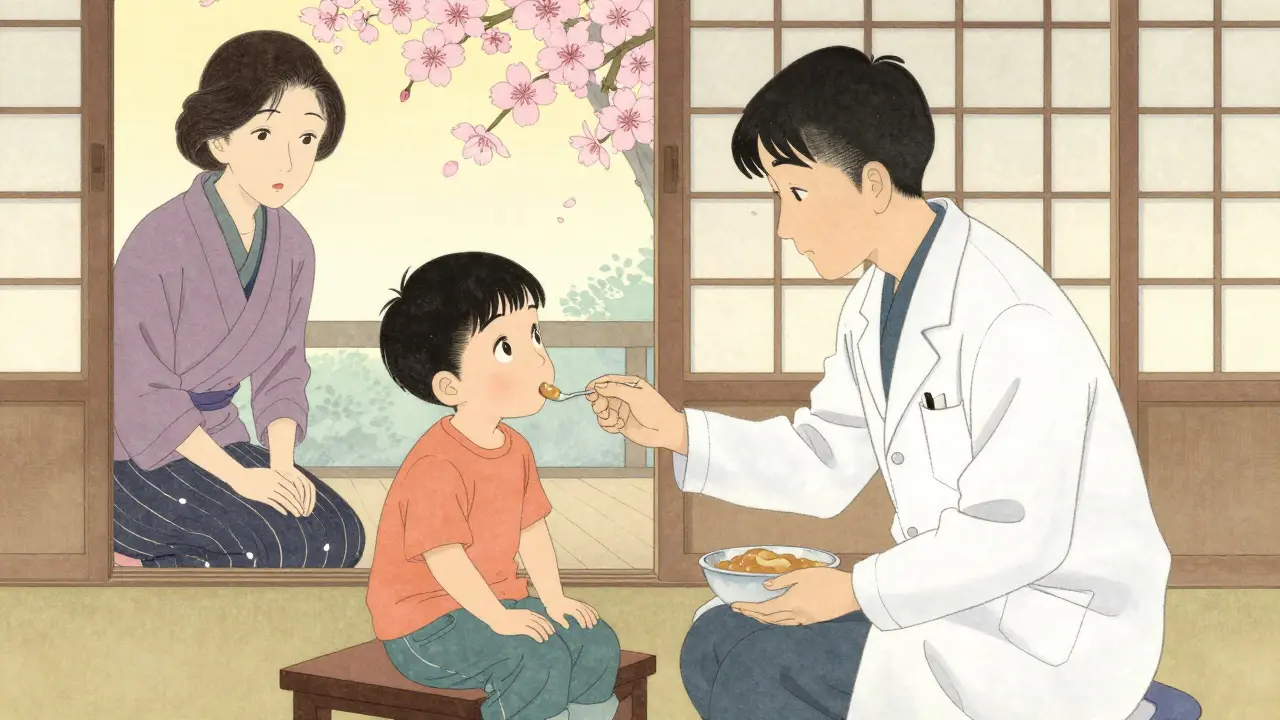
When a child breaks out in hives after eating peanut butter, or an adult gets stomach cramps after drinking milk, the question isn’t just "What happened?" - it’s "Is this a real allergy?" Many people assume skin tests or blood work give clear answers. But the truth is, those tests often point in the wrong direction. That’s where the oral food challenge comes in - the only test that can say for sure whether a food is truly dangerous or not.
Why Other Tests Fall Short
Skin prick tests and blood tests for IgE antibodies are common first steps. But they’re not perfect. A positive result doesn’t mean you’ll react when you eat the food. In fact, studies show these tests have a false positive rate of up to 60% for common allergens like egg and peanut. That means hundreds of thousands of people avoid foods they could safely eat - all because of a test that can’t tell the difference between sensitivity and true allergy. The same goes for component-resolved diagnostics, which look at specific proteins in foods. They’re more precise than traditional blood tests, but even they only get it right about 85% of the time. That’s still 1 in 7 cases where someone gets a misleading result. The only way to know for sure how your body reacts to a food is to eat it - under careful supervision.What Happens During an Oral Food Challenge
An oral food challenge isn’t just eating a bite of peanut butter and waiting to see what happens. It’s a controlled medical procedure that follows strict, step-by-step rules. You start with a tiny amount - often just 1 to 2 milligrams, which is less than one-thousandth of a peanut. That’s barely enough to taste. If no reaction occurs after 15 to 30 minutes, the dose is slowly increased. This continues until either you’ve eaten a full serving or a reaction appears. The whole process takes 3 to 6 hours. That’s because reactions don’t always happen right away. Some take time to build. That’s why you stay in the clinic for hours after the last bite. During this time, your heart rate, blood pressure, breathing, and skin are watched closely. Two trained medical staff are always present - one doctor and one nurse - with emergency supplies like epinephrine, antihistamines, and oxygen ready to go. Most challenges are done in an open format - meaning you and the doctor both know what you’re eating. Sometimes, especially with kids who are anxious or when psychological factors might affect results, the food is disguised - baked into a cookie, mixed into applesauce, or even encapsulated in a pill. Blinded challenges, where neither patient nor doctor knows if it’s the real food or a placebo, are rare and mostly used in research.How Safe Is It?
The fear of having a reaction during a challenge is real. But the risk is low when done right. About 40 to 60% of challenges result in mild symptoms - mostly hives, flushing, or a scratchy throat. These are easy to treat with antihistamines right there in the office. Severe reactions that require epinephrine happen in only 1 to 2% of cases. That’s lower than the risk of a car ride to the clinic. The key is having the right setup. The American Academy of Allergy, Asthma & Immunology says OFCs should only be done by experienced providers in facilities equipped to handle anaphylaxis. That means not just any doctor’s office. You need a space with clear emergency protocols, trained staff, and immediate access to life-saving drugs. When done under these conditions, the procedure is remarkably safe.
When It’s Most Useful
Oral food challenges aren’t for everyone. If you’ve had a life-threatening reaction to a food in the past - like anaphylaxis with breathing trouble - you shouldn’t do one without a very strong reason and expert oversight. But they’re incredibly valuable in three situations:- When skin or blood tests are unclear - you need a definitive answer.
- When you or your child might have outgrown an allergy - especially common with milk, egg, soy, and wheat. About 65% of kids outgrow milk or egg allergy by age 5.
- When you’ve been avoiding a food for years and want to know if it’s safe to reintroduce.
What Patients and Parents Say
On parenting forums and support groups, the stories are powerful. One mom on Reddit shared that her son cried through the entire peanut challenge, terrified. But when it ended without a reaction, they learned he’d outgrown his allergy. "It was the most terrifying two hours of my life," she wrote, "but also the most freeing." Surveys show that 78% of parents feel high anxiety before the test. But after, 89% say they’re satisfied - even if their child had a reaction. Why? Because they finally have answers. No more guessing. No more "maybe" foods in the pantry. No more wondering if a rash was from the new cereal or just a coincidence. Advice from families who’ve been through it? Bring a favorite toy or tablet to distract your child. Dress in loose, comfortable clothes. Don’t do the challenge if your child is sick or has a cold - respiratory infections can make reactions worse. And don’t take antihistamines for 5 to 7 days before - they can hide early warning signs.
What You Need to Prepare For
Preparing for an oral food challenge isn’t just about skipping your allergy meds. It’s mental prep too. If you’re a parent, talk to your child honestly but calmly. Don’t make it sound like a game or a punishment. Say something like, "We’re going to the doctor to find out if your body still thinks peanut is dangerous. If it isn’t, you can eat it again." For adults, it helps to know what to expect. The doses are small at first. You might eat a few crumbs. Then a teaspoon. Then a tablespoon. It’s slow. It’s boring. That’s by design. The goal isn’t to scare you - it’s to find your exact threshold. Some people can eat a full serving with no problem. Others react to just a speck. Knowing that number matters - it tells you how careful you need to be in restaurants or when reading labels.The Bigger Picture
Food allergies affect about 32 million Americans. And every year, more children are diagnosed. The number of oral food challenges performed is rising - around 1.6 to 3.2 million a year in the U.S. alone. That’s because doctors are learning that avoiding foods unnecessarily can hurt more than help. It can lead to poor nutrition, social isolation, and anxiety disorders. New guidelines from the American Academy of Allergy, Asthma & Immunology now even allow home-based challenges for low-risk cases - like children who’ve outgrown an allergy and just need a final check. This could make the test more accessible, especially in rural areas where allergists are scarce. Still, experts agree: no blood test, no skin test, no fancy new biomarker will ever replace the oral food challenge. It’s the only test that lets your body speak for itself. As Dr. Kari Nadeau from Stanford says, "OFC will remain the gold standard for the foreseeable future."What Comes After
If the challenge shows you’re allergic, you’ll get a clear plan: strict avoidance, an epinephrine auto-injector, and a written emergency action plan. If it shows you’re not allergic - and you’ve been avoiding the food for years - you’ll likely be told to start eating it regularly, at least a few times a week, to keep your body used to it. Stopping after the challenge isn’t safe. Your body can forget it’s okay. And if you’ve outgrown an allergy? Celebrate. But don’t stop there. Keep including the food in your diet. Don’t let fear take it away again. That’s the real victory - not just passing the test, but living freely after it.Are oral food challenges painful?
No, oral food challenges are not painful. The food is eaten normally, like a meal. Some people may feel mild discomfort if they have a reaction - like itching, stomach cramps, or swelling - but these are not caused by the procedure itself. The test is designed to be as comfortable as possible, with small, manageable doses and plenty of breaks between them.
Can adults have oral food challenges too?
Yes, adults can and do have oral food challenges. While they’re more common in children - especially for allergies that often outgrow, like milk or egg - adults undergo them too. Many adults suspect they’ve outgrown an allergy or were misdiagnosed as a child. OFCs help confirm whether it’s safe to reintroduce foods like shellfish, tree nuts, or wheat.
How long does it take to get results from an oral food challenge?
You get results during the challenge itself. If you have a reaction, it’s usually clear within minutes to an hour after eating the food. If you complete the full dose without symptoms, you’re considered tolerant. The entire process takes 3 to 6 hours, but the answer - whether you’re allergic or not - is known by the end.
What if I have a reaction during the challenge?
If a reaction occurs, the challenge stops immediately. Medical staff treat it right away with antihistamines, steroids, or epinephrine, depending on severity. Most reactions are mild and resolve quickly. Even if a reaction happens, the challenge is still valuable - it confirms the allergy and helps determine how sensitive you are. This helps guide your long-term management plan.
Can I do an oral food challenge at home?
Home-based oral food challenges are now allowed under specific conditions by the American Academy of Allergy, Asthma & Immunology, but only for low-risk cases - such as children who’ve outgrown an allergy and have a history of only mild reactions. These must be approved and monitored by an allergist, with clear instructions and emergency plans in place. They’re not recommended for anyone with a past severe reaction or uncertain diagnosis.
Do I need to stop my allergy medications before the challenge?
Yes. Antihistamines can mask early signs of a reaction, so you must stop them 5 to 7 days before the challenge. Other medications like asthma inhalers or acid reflux drugs may be allowed, but always check with your allergist. Never stop any medication without their approval.
Is an oral food challenge covered by insurance?
Yes, most insurance plans in the U.S. cover oral food challenges when ordered by a board-certified allergist and performed in a certified medical facility. Pre-authorization is often required. Check with your provider, but the procedure is considered medically necessary and is widely reimbursed.
What foods are commonly tested in oral food challenges?
The most common foods tested are peanut, tree nuts, egg, milk, wheat, soy, fish, shellfish, and sesame. These are the top allergens responsible for 90% of food allergy reactions. The test can be done for any food, but these are the most frequent due to prevalence and risk.
lisa Bajram
January 9, 2026 AT 08:14OMG I did this with my son last year-terrifying but SO worth it. He cried the whole time, clutching his stuffed dinosaur, and I was sobbing in the corner. Then-he ate a whole peanut butter sandwich. No hives. No wheezing. Just pure joy. We’ve been eating peanut butter for breakfast ever since. Life changed. 💪
Jaqueline santos bau
January 10, 2026 AT 22:43Wait, so you’re telling me my kid’s been avoiding milk for four years because of a positive blood test… but he’s actually fine? That’s insane. My pediatrician never mentioned this. Are you telling me I’ve been traumatizing him for nothing? I feel like I’ve been gaslit by modern medicine.
Kunal Majumder
January 11, 2026 AT 20:48Bro, this is gold. In India, we don’t even have access to these tests in small towns. My cousin’s daughter was labeled allergic to eggs at age 2-now she’s 10 and still can’t have any. If only someone told us about OFCs earlier. This should be public health info, not just for rich clinics.
Aurora Memo
January 12, 2026 AT 13:31I appreciate how thorough this is. I’ve been an allergist’s patient for over a decade and never knew the false positive rates were this high. It’s scary how many people are unnecessarily restricted. Thank you for highlighting the emotional weight too-it’s not just a medical procedure, it’s a psychological release.
chandra tan
January 13, 2026 AT 00:22Same story here in Bangalore. My sister’s son was told he was allergic to peanuts. We avoided everything. Then we found a doctor who did the challenge. Turns out-he could eat peanuts. Now he’s the kid at school who brings peanut butter sandwiches. No one believed us at first. But now? He’s thriving.
Dwayne Dickson
January 14, 2026 AT 16:42It is, without a doubt, the gold standard. The epistemological superiority of the oral food challenge (OFC) over serological or cutaneous diagnostics is not merely empirical-it is ontological. One cannot infer physiological response through biomarkers alone; one must observe the organism in situ, under controlled, graded exposure. The reductionist reliance on IgE titers is a scientific fallacy of the highest order.
Ted Conerly
January 15, 2026 AT 23:10My daughter passed her challenge at age 4. We were so scared we brought her favorite blanket and a movie. She didn’t even cry. She just ate the cookie and said, "That’s it?" I cried. We’ve been eating eggs every Sunday since. If you’re on the fence-do it. You won’t regret it.
Faith Edwards
January 17, 2026 AT 11:06How utterly irresponsible of the medical establishment to allow home-based challenges. This is not a DIY experiment. It is a clinical intervention requiring institutional oversight, board-certified allergists, and a fully stocked anaphylaxis kit. To suggest otherwise is not just negligent-it is a betrayal of the trust patients place in medicine.
Jay Amparo
January 19, 2026 AT 05:18I’m so glad someone finally said this. My brother was told he was allergic to shellfish at 12. He never ate it again. At 30, he did the challenge. Turned out-he could eat shrimp. Now he’s a seafood chef. He says the challenge didn’t just change his diet… it changed his whole life. I cried watching him eat his first crab cake.
Lisa Cozad
January 21, 2026 AT 03:22My kid had a mild reaction during the challenge-just a little rash. We were so scared, but the staff handled it perfectly. They gave him Benadryl, waited, and he was fine in 20 minutes. They said it was good we found out now. I’m so glad we didn’t just assume he’d outgrow it. This test saved us years of stress.
Saumya Roy Chaudhuri
January 22, 2026 AT 11:13Actually, most of these challenges are useless. I’ve read the papers. The real issue is the placebo effect in blinded trials. Most reactions are psychosomatic. People think they’re allergic because they were told they are. The body doesn’t care. It’s all in the mind. You should just eat the food and stop overreacting.
Ian Cheung
January 22, 2026 AT 11:22I did this with my wife. She thought she was allergic to wheat. Turned out she just had acid reflux. Now she eats sourdough every day. No more bloating. No more panic. We went from zero to hero. Don’t let fear run your life. Get tested. Eat the bread.
anthony martinez
January 23, 2026 AT 10:32So let me get this straight. We’re spending thousands of dollars and hours in a clinic to confirm what we already know from a blood test? And the real benefit is… we can eat peanut butter again? I’m not convinced this isn’t just a revenue generator for allergists.
Mario Bros
January 25, 2026 AT 03:01Just did this with my 5-year-old. He was terrified. We brought his favorite toy, played cartoons, and gave him tiny bites every 20 minutes. He didn’t react. We cried. We high-fived. Now he eats peanut butter on toast every morning. Life-changing. Seriously. 🙌