Out-of-Pocket Maximums: Do Generic Copays Count Toward Your Deductible?
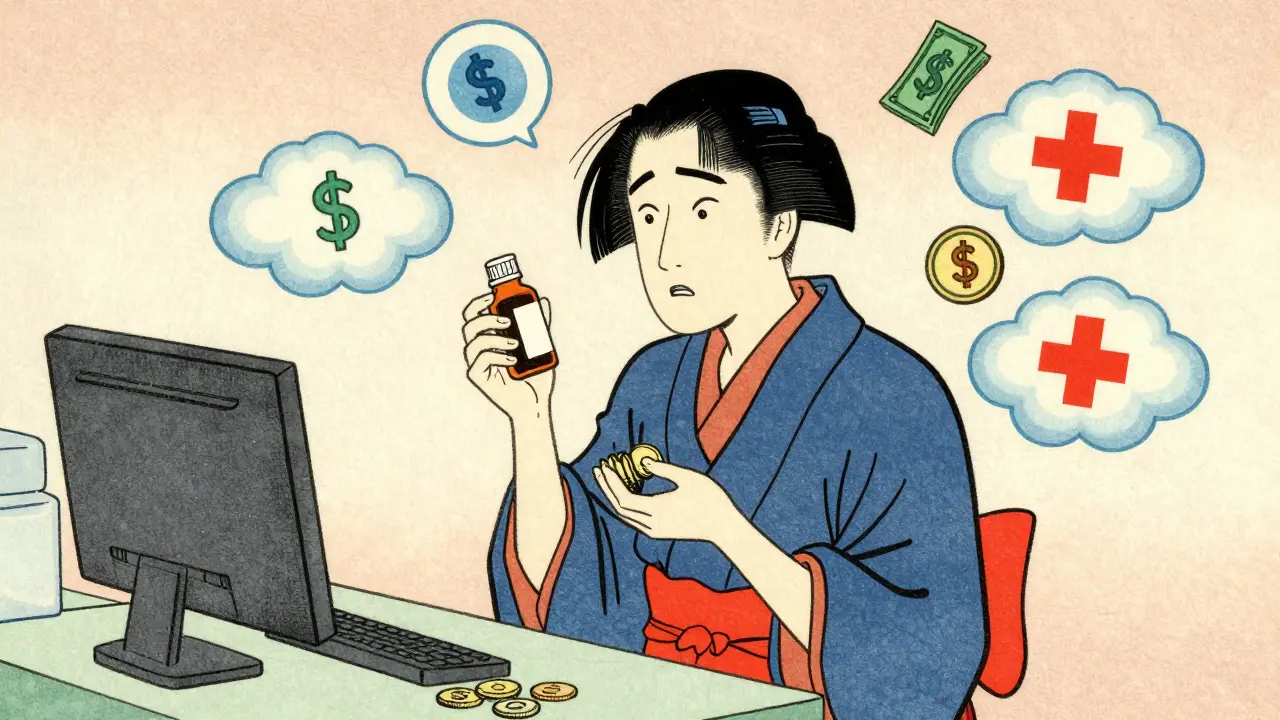
You've spent months paying $10 or $20 every time you pick up your generic medication, assuming that these payments are chipping away at your annual deductible. Then, you go for a procedure or a specialist visit and find out you still owe thousands of dollars before your insurance kicks in. It feels like a glitch in the system, but it's actually a standard feature of how most health plans are built. The confusion stems from a critical gap between two different financial ceilings: the deductible and the out-of-pocket maximum.
To put it simply, most plans treat copays and deductibles as two different tracks. While your generic copays are helping you reach that final safety net-the out-of-pocket maximum-they usually aren't helping you clear the initial hurdle of the deductible. If you don't understand this distinction, you might end up with a surprise bill that disrupts your entire monthly budget.
The Big Difference Between Deductibles and Out-of-Pocket Maximums
Before we look at copays, we need to clear up what these two terms actually mean. Think of the deductible as the "entry fee" you pay before your insurance starts sharing the cost of your care. If you have a $3,000 deductible, you're on the hook for the first $3,000 of covered medical services. Once you hit that number, your insurance begins to pay a percentage of the costs (this is called coinsurance).
The out-of-pocket maximum is different. It's the absolute ceiling. It's the most you will ever have to pay in a plan year for covered, in-network services. For 2026, the limits for Marketplace plans have risen to $10,600 for individuals and $21,200 for families. Once you hit this limit, the insurance company pays 100% of everything else for the rest of the year.
Here is the part that trips everyone up: the out-of-pocket maximum includes almost everything-your deductible, your coinsurance, and your copays. However, the deductible usually only includes the full cost of services you pay for before the insurance starts splitting the bill. Because a copayment is a fixed fee that you pay *instead* of the full cost, many insurance companies don't count it toward the deductible.
How Generic Copays Actually Fit Into the Equation
When you pick up a generic drug and pay a small, flat fee, you are paying a copay. In the vast majority of modern plans, these generic copays function as a "shortcut" to the out-of-pocket maximum, but a "dead end" for the deductible.
Imagine you have a plan with a $2,000 deductible and a $6,000 out-of-pocket maximum. You spend the whole year paying $15 copays for a generic blood pressure medication. By December, you've spent $180 on these meds. When you go for an MRI, your insurance will tell you that you've only met a tiny fraction of your deductible-even though you've been paying for meds all year. Why? Because those $15 payments went straight toward your $6,000 ceiling, bypassing the $2,000 deductible entirely.
This structure was largely shaped by the Affordable Care Act (ACA). Before 2014, many people with chronic illnesses were in a nightmare scenario where copays didn't count toward *anything*. The ACA fixed this by requiring that all cost-sharing, including copays, must count toward the out-of-pocket maximum. This ensures that if you have a catastrophic health year, there is a definitive point where you stop paying.

Three Common Plan Structures and How They Handle Prescriptions
Not every plan handles drugs the same way. Depending on how your employer or the Marketplace set up your policy, you likely fall into one of these three categories:
| Plan Model | Do you pay a copay immediately? | Does it count toward the medical deductible? | Does it count toward the out-of-pocket max? |
|---|---|---|---|
| Copay-Only Structure | Yes | No | Yes |
| Separate Drug Deductible | No (pay full price first) | No (counts toward drug deductible) | Yes |
| Single Combined Deductible | No (pay full price first) | Yes | Yes |
- Copay-Only: This is the most common. You pay a flat $10 for a generic drug from day one. It doesn't help you reach your medical deductible, but it does count toward your total yearly limit.
- Separate Deductibles: You have one deductible for doctor visits and a separate, smaller one for pharmacy costs. You pay the full price of the drug until that pharmacy deductible is hit. After that, you move to copays.
- Single Combined: The simplest model. Every dollar you spend on a generic drug counts directly toward your one main deductible. Once that's hit, your overall costs drop.
The "Valley of Confusion" and Why It Matters
Experts often call this the "valley of confusion." It's the gap where a patient thinks they are making progress toward their insurance coverage, but they are actually just paying for a service that doesn't trigger the deductible. According to a survey by America's Health Insurance Plans, nearly 68% of people wrongly believe their copays count toward their deductible.
This isn't just a technicality; it has real-world consequences. When people misunderstand these rules, they often avoid necessary medications because they think they can't afford the "full price" once the deductible is met, not realizing they've already been contributing to their out-of-pocket maximum all along. In fact, some estimates suggest that confusion over cost-sharing leads to billions of dollars in medication underutilization every year.

How to Verify Your Plan's Specific Rules
Since every insurance company-from UnitedHealthcare to Blue Cross Blue Shield-designs their plans differently, you can't guess. You need to look at two specific documents:
- Summary of Benefits and Coverage (SBC): This is a standardized form. Look for the section on "Prescription Drugs." There is usually a column that explicitly asks, "Does this payment count toward my deductible?"
- Explanation of Coverage: This is the long, boring manual. Search for terms like "integrated deductible" or "separate pharmacy deductible."
If you're currently in open enrollment, spend at least 45 minutes reviewing these documents. A plan with a lower monthly premium might actually be more expensive in the long run if it has separate deductibles and high generic copays that don't count toward your medical spending.
Do generic drug copays count toward the out-of-pocket maximum?
Yes. Under the Affordable Care Act, all in-network cost-sharing, including copays for generic prescriptions, must count toward your annual out-of-pocket maximum.
Why don't my pharmacy copays lower my medical deductible?
Most plans use a two-tiered system. A copay is a fixed fee you pay for a service, whereas a deductible is the amount you pay for the full cost of a service. In many plan designs, fixed copays are excluded from the deductible calculation, though they still count toward the total out-of-pocket ceiling.
What happens after I reach my out-of-pocket maximum?
Once you hit the out-of-pocket maximum, your insurance company pays 100% of all covered, in-network healthcare services and prescriptions for the remainder of the plan year. You will no longer owe copays or coinsurance.
Are there any prescriptions that don't count toward the maximum?
Yes. Any medication that is "non-covered" or provided by an out-of-network pharmacy typically does not count toward your out-of-pocket maximum. Always check your insurance formulary to ensure the drug is covered.
Do monthly premiums count toward the deductible or maximum?
No. Monthly premiums are the cost of owning the policy; they are not considered "cost-sharing" for a specific service and therefore never count toward your deductible or out-of-pocket maximum.
Next Steps for Managing Your Costs
If you have a chronic condition requiring long-term generic medication, your goal should be to determine if you're on a "combined deductible" plan. If you aren't, you might consider a Health Savings Account (HSA) if your plan is a High Deductible Health Plan (HDHP), which allows you to pay for those copays with pre-tax dollars.
If you find that you are consistently hitting your out-of-pocket maximum every year, it may be worth switching to a plan with a higher premium but a lower maximum. While the monthly cost is higher, the total yearly spend is often lower for people with high medication needs.
Don Drapper
April 20, 2026 AT 20:20The absolute audacity of the American healthcare system to mask these predatory structures behind the guise of 'cost-sharing' is nothing short of a financial tragedy! One is forced to navigate a labyrinth of jargon just to ensure they aren't bankrupt by a single MRI. It is an utterly dystopian nightmare that prioritizes corporate profit over human survival, leaving the average citizen to perish in the 'valley of confusion' while insurance executives feast upon the remains of our savings accounts! Truly an abhorrent state of affairs.
Valorie Darling
April 21, 2026 AT 05:42lol imagine actually reading the 50 page manual before getting a bill... i just hope for the best and then complain when it's expensive
Tokunbo Elegbe
April 23, 2026 AT 04:18It is so critical to check the Summary of Benefits and Coverage... honestly... every single year!!! Many people overlook the fine print, but that is where the real truth lies!!!
Grace Grace
April 23, 2026 AT 16:14I am absolutley devastated that so many peopel are underutilzing their medicatons becuase of this confussion. It is simply heartbraking to think about the sufferring caused by a mere technicality in insurance policy lagnuage!
aman motamedi
April 23, 2026 AT 19:00The provided information regarding the distinction between deductibles and out-of-pocket maximums is most illuminating. I appreciate the clarity of the table provided.
Bob Collins
April 25, 2026 AT 14:17Just keep your head up and keep track of your receipts. It's a grind but you'll get through it.
Lucy Kuo
April 27, 2026 AT 11:07It is truly a profound tragedy that such systemic complexities exist, creating an insurmountable barrier for those who are already fragile in health! We must strive for a global standard of care where the financial architecture does not eclipse the fundamental right to healing. The disparity between these plan models is an affront to the very notion of inclusive medicine, and it is my utmost hope that we shall one day witness a transformation of these archaic structures into something genuinely compassionate and transparent for all of humanity!