Patient Vigilance: How You Can Spot Fake Medicines and Protect Yourself
Every year, millions of people around the world take medicine they think is real-only to find out too late that it’s fake. These aren’t just poor-quality copies. They’re dangerous. Some contain no active ingredient at all. Others have the wrong dose, toxic chemicals, or even rat poison. And the worst part? Many look exactly like the real thing.
Why Your Eyes Are the Last Line of Defense
You might think pharmacies, regulators, and tech systems handle all the safety checks. But here’s the truth: no system is perfect. Even in countries with strong rules, counterfeit drugs slip through. The World Health Organization says 10% to 30% of medicines sold in low-income countries are fake. In some places, it’s even higher. And while developed nations have better controls, fake drugs still show up-especially online.The real difference between getting hurt and staying safe often comes down to one thing: you. Before you swallow a pill, before you inject a shot, before you take anything-take a second to look. Your eyes, your hands, your questions can stop a counterfeit from reaching your body.
What Makes a Medicine Fake?
Fake medicines aren’t just about bad ingredients. They’re about deception. A counterfeit drug can be:- A pill with no active drug (like insulin with sugar inside)
- A real drug with too little or too much of the ingredient
- A box with the right label but wrong pills inside
- A fake online pharmacy selling real drugs that were stolen or tampered with
Counterfeiters don’t just copy the pill. They copy the packaging-the colors, the fonts, the seals. Some even replicate QR codes and serialization numbers. But there are always tiny mistakes. And if you know what to look for, you’ll spot them.
The BE AWARE Checklist: What to Check Every Time
The World Health Professions Alliance created a simple tool called BE AWARE. It’s not complicated. You don’t need a degree. Just five minutes with every new prescription or over-the-counter medicine.- B-Box integrity: Is the seal broken? Is the box crushed, taped, or resealed? Real medicine comes in factory-sealed boxes. No exceptions.
- E-Expiration date: Is it clearly printed? Is it faded, smudged, or handwritten? Fake ones often have blurry or mismatched dates.
- A-Appearance: Does the pill look like the last one you took? Same color? Same shape? Same markings? If the tablet is a different shade or has a different logo, stop.
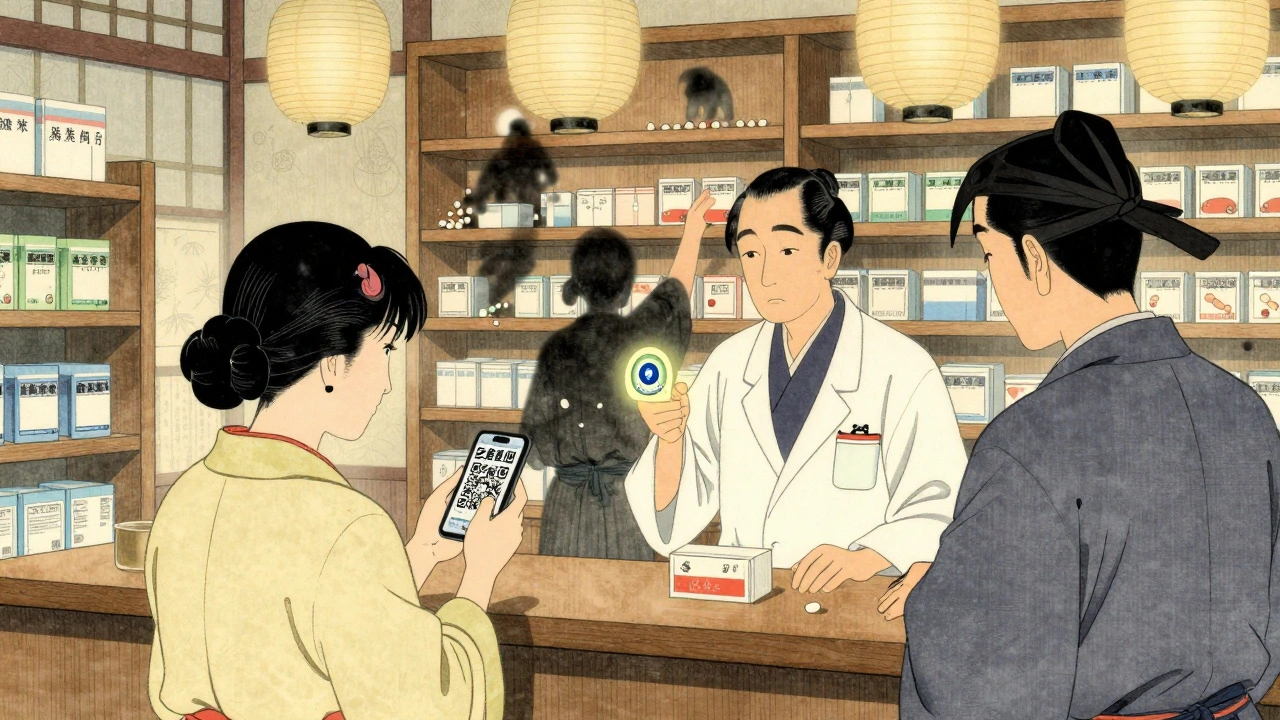
- A-Authenticity features: Does it have a unique code? A QR code? A serial number? In the EU and some other regions, every prescription box has a 2D barcode you can scan. If you’re unsure how to check it, ask your pharmacist.
- R-Reputable source: Did you buy it from a licensed pharmacy? If you ordered it online, does the site have the .pharmacy seal? If not, it’s not safe.
- E-English or local language leaflet: Does the package include a printed leaflet with clear instructions? Fake medicines often skip this or have poorly translated text.
One woman in Brazil noticed her diabetes pills looked different-slightly lighter and with a faint crack in the marking. She called her pharmacist. They confirmed it was fake. She saved her family from a dangerous overdose.
Where Fake Medicines Come From (And How to Avoid Them)
The biggest source of counterfeit drugs? The internet. Pfizer reports that 89% of fake medicines reach patients through unverified online pharmacies. These sites look professional. They have fake licenses, real-looking logos, and prices that seem too good to be true.Here’s what you need to know:
- Real U.S. online pharmacies must display the .pharmacy seal. Click it. It should link to the National Association of Boards of Pharmacy (NABP) verification page.
- If a site offers pills without a prescription, it’s illegal and unsafe.
- Don’t trust social media ads for medicine. Instagram, Facebook, and TikTok are flooded with fake pharmacy ads.
- Even if a site looks like a big brand, check the URL. Fake sites often use .net, .info, or misspell the real name.
Real pharmacies-brick-and-mortar or online-will let you verify the medicine. Ask them to show you the serial number on the box. If they hesitate, walk out.
Technology Helps-But Only If You Use It
New tools are being rolled out to help you. France started using QR codes on medicine boxes in early 2024. Scan it, and you’ll see the digital leaflet and verify the product’s origin. Brazil launched a similar system in June 2024. India is testing blockchain tracking so you can see a drug’s entire journey-from factory to shelf.But here’s the catch: these tools only work if you use them. A 2024 Reddit survey found that only 28% of people check tamper seals. 63% didn’t know how to verify serialization codes-even though they’ve been required in Europe since 2019.
Download a free app like MedCheck (used by over 1.2 million people) or use WHO’s Medicines Safety app. They help you decode QR codes, report suspicious products, and find verified pharmacies near you.
What Happens When You Report a Fake
You might think, “What’s the point? I’m just one person.” But your report matters.In 2023, Pfizer received over 14,000 reports from patients like you. Those reports led to 217 counterfeit operations shut down across 116 countries. That prevented 3.2 million dangerous doses from being taken.
When you report a fake:
- You protect others in your community
- You help law enforcement track down criminal networks
- You push regulators to act faster
In the U.S., call the FDA’s hotline. In the EU, report to your national health authority. In Brazil, use ANVISA’s system. You don’t need proof. Just describe what you saw. Photos help, but even a written description can trigger an investigation.
The Limits of Patient Vigilance
Let’s be honest: vigilance isn’t a magic shield. Some counterfeits are so good, even experts struggle to tell them apart. If a fake has the right chemical but the wrong dose, you won’t know by looking. That’s why regulation and testing still matter.And here’s the hard truth: in places where real medicine is expensive or hard to find, people take risks. A 2023 study in The Lancet pointed out that asking a poor family in rural Africa to check every pill’s seal is unfair if they have no access to real medicine at all. Vigilance works best when it’s supported by access, education, and strong systems.
But that doesn’t mean you shouldn’t check. It means you should also push for change. Support policies that make real medicine affordable. Demand better labeling in local languages. Encourage your pharmacy to offer free verification sessions.
What You Can Do Today
You don’t need to be a scientist to fight fake medicines. Here’s your action plan:- Buy only from licensed pharmacies-physical or verified online (.pharmacy).
- Always check the packaging using the BE AWARE checklist.
- Use a verification app if available.
- Never buy from social media, street vendors, or websites without clear contact info.
- Report anything suspicious-no matter how small it seems.
- Talk to friends and family. Share what you’ve learned.
It takes just three to five purchases to turn vigilance into habit. After that, checking a pill becomes as natural as checking the expiration date on milk.
Final Thought: Your Life Is Worth the Extra Minute
Medicine is supposed to heal. Fake medicine kills. And while governments and companies have a responsibility to protect you, they can’t be everywhere. They can’t check every box. They can’t be in your hands when you open that pill bottle.But you can.
Take that extra minute. Look closer. Ask questions. Report what you see. You’re not just protecting yourself-you’re helping shut down a global criminal network that preys on the sick and the desperate.
The next time you pick up a new prescription, pause. Look. Ask. Act. That one moment could save your life-or someone else’s.
How can I tell if my medicine is fake just by looking at it?
Check the packaging for broken seals, blurry text, or mismatched colors. Compare the pill’s shape, color, and markings to a previous legitimate batch. Fake medicines often have slight differences-like a different logo, uneven edges, or odd smells. If something feels off, it probably is.
Can I trust online pharmacies that offer cheap medicine?
No. If the price seems too good to be true, it is. Legitimate online pharmacies don’t sell prescription drugs at 80% off. Only buy from sites with the .pharmacy seal. Click the seal to verify it links to the National Association of Boards of Pharmacy. If it doesn’t, walk away.
What should I do if I think I took a fake pill?
Stop taking the medicine immediately. Contact your doctor or pharmacist. Report it to your country’s health authority-like the FDA in the U.S. or ANVISA in Brazil. Keep the packaging and any remaining pills. Even if you feel fine, fake drugs can cause delayed harm. Reporting helps prevent others from being hurt.
Are QR codes on medicine boxes reliable?
Yes-if they’re from a real manufacturer and you use the official app to scan them. Countries like France and Brazil now require QR codes that link to verified digital leaflets. But counterfeiters are starting to copy these too. Always use trusted apps like WHO’s Medicines Safety app or MedCheck. Don’t just scan and assume-it’s a tool, not a guarantee.
Why are fake medicines more common in some countries?
In low-income countries, weak regulation, lack of enforcement, and limited access to real medicine create perfect conditions for counterfeits. Up to 30% of medicines in parts of Sub-Saharan Africa and Southeast Asia are fake. Even in rich countries, online sales bypass local controls. The problem isn’t just poverty-it’s global supply chain gaps and unregulated internet sales.
Can I report a fake medicine anonymously?
Yes. Most national health agencies allow anonymous reports. You don’t need to give your name. Just describe what you saw: where you bought it, what it looked like, and any batch or serial numbers. Your report helps authorities track patterns and shut down operations-even if you never hear back.
Is it safe to buy medicine from a foreign country?
It’s risky. Medicines made abroad may not meet your country’s safety standards. Even if they’re real, storage conditions during shipping can damage them. Some countries allow unapproved drugs to be sold legally. Always check if the medicine is approved in your own country before taking it. If you need it for a chronic condition, talk to your doctor about legal alternatives.
Kurt Russell
December 8, 2025 AT 03:23Just last month I caught a fake Oxycontin bottle because the pills were slightly smaller and the imprint was off by a pixel. I called the pharmacy-they confirmed it was counterfeit. I didn’t just save myself-I saved my neighbor who was about to pick it up. This isn’t paranoia. It’s basic survival.
Oliver Damon
December 9, 2025 AT 08:08The BE AWARE framework is solid, but it assumes a baseline of health literacy and access that doesn’t exist for millions. QR codes mean nothing if you can’t afford a smartphone or don’t speak English. Systemic failure isn’t fixed by individual vigilance-it’s fixed by policy, pricing reform, and supply chain transparency. We’re putting the burden on the sick while the real culprits profit.
Stacy here
December 9, 2025 AT 21:42EVERY SINGLE ONE OF THESE FAKE PILLS IS LINKED TO CHINA AND THE CCP. THEY’RE NOT JUST SELLING COUNTERFEITS-THEY’RE WEAPONIZING MEDICINE. THE FDA IS ASLEEP. THE PHARMA COMPANIES ARE IN ON IT. YOU THINK THEY WANT YOU TO BE HEALTHY? THEY WANT YOU DEPENDENT. SCANNING QR CODES WON’T STOP THIS. YOU NEED TO BURN THE SYSTEM DOWN.
Kyle Flores
December 11, 2025 AT 21:01My grandma took a fake blood thinner last year. She didn’t know until she started bleeding internally. She didn’t have a phone. Didn’t know what a QR code was. We found out because the bottle smelled like plastic and the cap was loose. If you’re reading this and you’re young-check your parents’ meds. Don’t assume they know. It’s not complicated. Just look. Just care.
Ryan Sullivan
December 12, 2025 AT 07:56It’s laughable to suggest that patients are the ‘last line of defense.’ That’s not vigilance-that’s institutional failure dressed up as empowerment. If your regulatory bodies can’t ensure drug integrity, you don’t get to offload the burden onto elderly diabetics and single moms working two jobs. This is performative safety. The real solution? Nationalize pharmaceutical distribution. Or at least enforce the damn 2D barcodes.
Wesley Phillips
December 12, 2025 AT 18:25Bro. I scanned my insulin box with MedCheck and it said ‘valid.’ But then I noticed the font on the batch number was slightly thinner. So I Googled the batch and found a Reddit thread from 2022 where 12 people had the same exact fake. Turns out the counterfeiter reused the same code across 3 continents. Apps are cool. But your eyes? Still the real MVP.
Desmond Khoo
December 14, 2025 AT 10:31Just checked my blood pressure med today-same pill, same box, but the seal was a little sticky? Like someone resealed it. Called my pharmacist. They said ‘good catch’ and swapped it out free. 😊 You think it’s a hassle? Imagine if you didn’t. One second. One look. Could save your life. Seriously. Do it.
Kyle Oksten
December 14, 2025 AT 18:14There’s a fundamental flaw in the narrative here: vigilance implies agency. But most people don’t have the luxury of choice. If your only option is a $2 pill from a street vendor because your insurance won’t cover the $200 real one, you’re not choosing negligence-you’re choosing survival. This post ignores structural violence. It’s not about your eyes. It’s about who gets to have safe medicine at all.
Sam Mathew Cheriyan
December 15, 2025 AT 19:04fake meds are a scam but u know what’s worse? the fact that most real meds are made in china too. so if u r scared of fake ones, why not scared of all of em? the whole system is rigged. even the qr codes can be faked. they use the same printers. same ink. same everything. its all controlled by big pharma and the gov. u think u r safe? u r just another sheep.
Ted Rosenwasser
December 16, 2025 AT 15:50Using the BE AWARE checklist is the bare minimum. If you’re not cross-referencing batch numbers with the manufacturer’s public database via their API, you’re not being vigilant-you’re being negligent. And if you’re relying on WHO’s app? Please. Their database hasn’t been updated since 2021. Real professionals use blockchain validators and cryptographic hash verification. If you don’t know what that means, you shouldn’t be taking medicine at all.
Helen Maples
December 17, 2025 AT 21:07Stop glorifying ‘patient vigilance’ as if it’s a virtue. It’s a bandage on a hemorrhage. The fact that you have to check every pill means the system has already failed. And if you’re telling people to report suspicious meds but not telling them how to get legal, affordable alternatives-you’re not helping. You’re gaslighting. Go fix the system. Don’t just hand out checklists.
David Brooks
December 19, 2025 AT 01:28Just want to say-this post saved my life. I used to buy meds online because I didn’t have insurance. I started checking every box after reading this. Found a fake anticoagulant. Reported it. Got a free replacement from my clinic. Now I tell everyone I know. It’s not just about pills-it’s about taking back power. You got this. 💪