Perioral Dermatitis Guide: Triggers and Gentle Skin Care Tips

Imagine waking up to find tiny red bumps clustered around your mouth, and the more you try to "fix" it with your usual creams, the worse it gets. It's frustrating, it burns, and it can make you feel like you want to hide from the world. If this sounds familiar, you're likely dealing with Perioral Dermatitis is an inflammatory skin condition characterized by small red papules and pustules that typically form around the mouth, often sparing the immediate lip line.
The real kicker? This isn't like a standard breakout. In fact, treating it like acne-using harsh scrubs or strong steroids-often fuels the fire. While it's not contagious, it's chronic, and for many, it becomes a cycle of flare-ups and temporary relief. The goal here isn't just to clear the skin for a week, but to identify the hidden triggers and switch to a stripped-back, gentle routine that lets your skin barrier actually heal.
Quick Summary of Management
- Stop all steroids: Even "mild" facial hydrocortisone can cause a rebound flare.
- Simplify your routine: Use a non-foaming, pH-balanced cleanser and a lightweight, ceramide-based moisturizer.
- Check your toothpaste: Switch to a non-fluoridated version to see if symptoms improve.
- Avoid occlusives: Skip heavy waxes and petroleum-based products that "trap" the skin.
- Be patient: Expect a "worst phase" during the first two weeks of steroid withdrawal.
The Hidden Triggers: Why is This Happening?
Identifying what sparks your flare is the only way to stop the cycle. The most dangerous culprit is Topical Corticosteroids, which are strong anti-inflammatory medications often found in over-the-counter hydrocortisone creams. About 85% of cases are linked to these. They feel like a miracle for three days, but once you stop, the skin reacts with a massive rebound inflammation. If you've used a steroid cream on your face for more than two weeks, you might be caught in this loop.
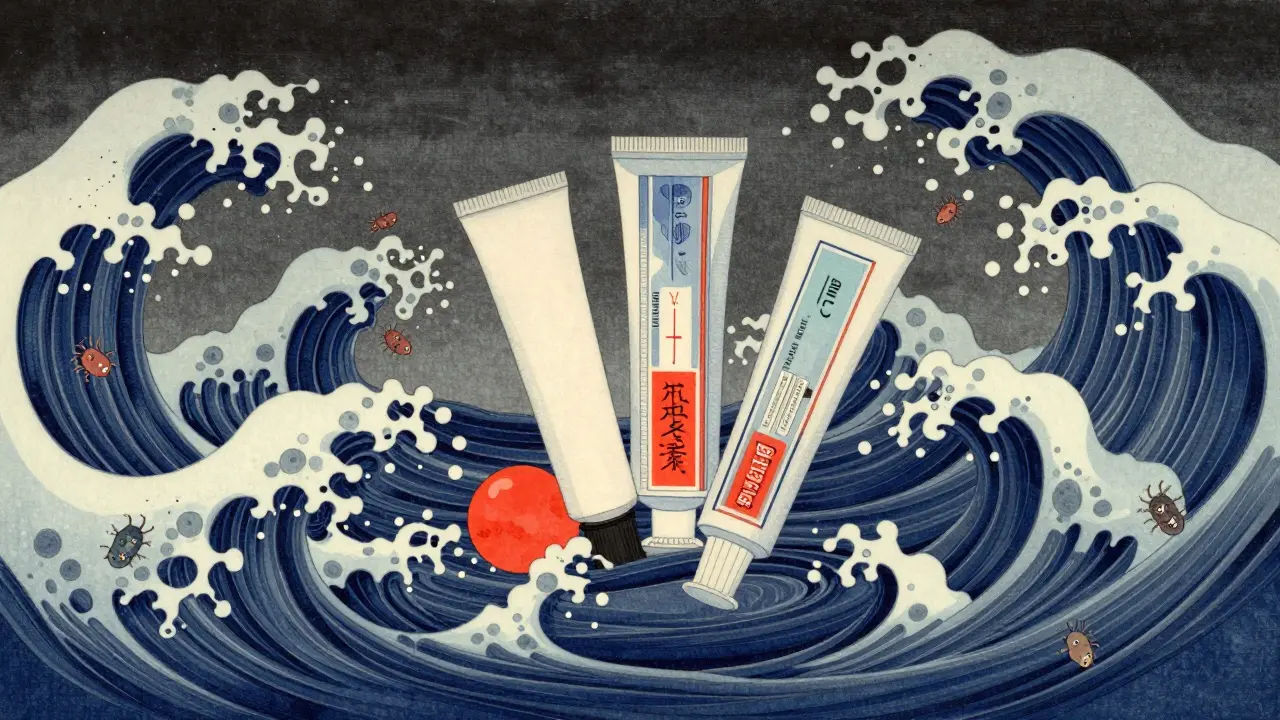
Beyond steroids, your daily grooming products could be the problem. Heavy foundations and occlusive moisturizers-things containing high levels of dimethicone or beeswax-can clog the skin and trigger 45% of cases. Even your morning ritual might be an issue; fluoridated toothpaste, specifically those with sodium fluoride between 1,000 and 1,500 ppm, is a known trigger for nearly 40% of patients.
Environmental and biological factors play a role too. UV exposure and harsh wind can worsen symptoms for over half of the people affected. Some people also find a link to hormonal shifts, with many women noticing their skin flares up right before their period. Interestingly, some research suggests a link to Demodex, which are microscopic skin mites that live in hair follicles. While they are present in the majority of cases, it's still debated whether the mites cause the rash or just move in because the skin is already irritated.
Gentle Skin Care: The "Less is More" Protocol
When your skin is this reactive, the best thing you can do is almost nothing. The "gentle" approach means eliminating everything that could possibly irritate the skin barrier. This includes all acids, retinoids, and foaming agents.
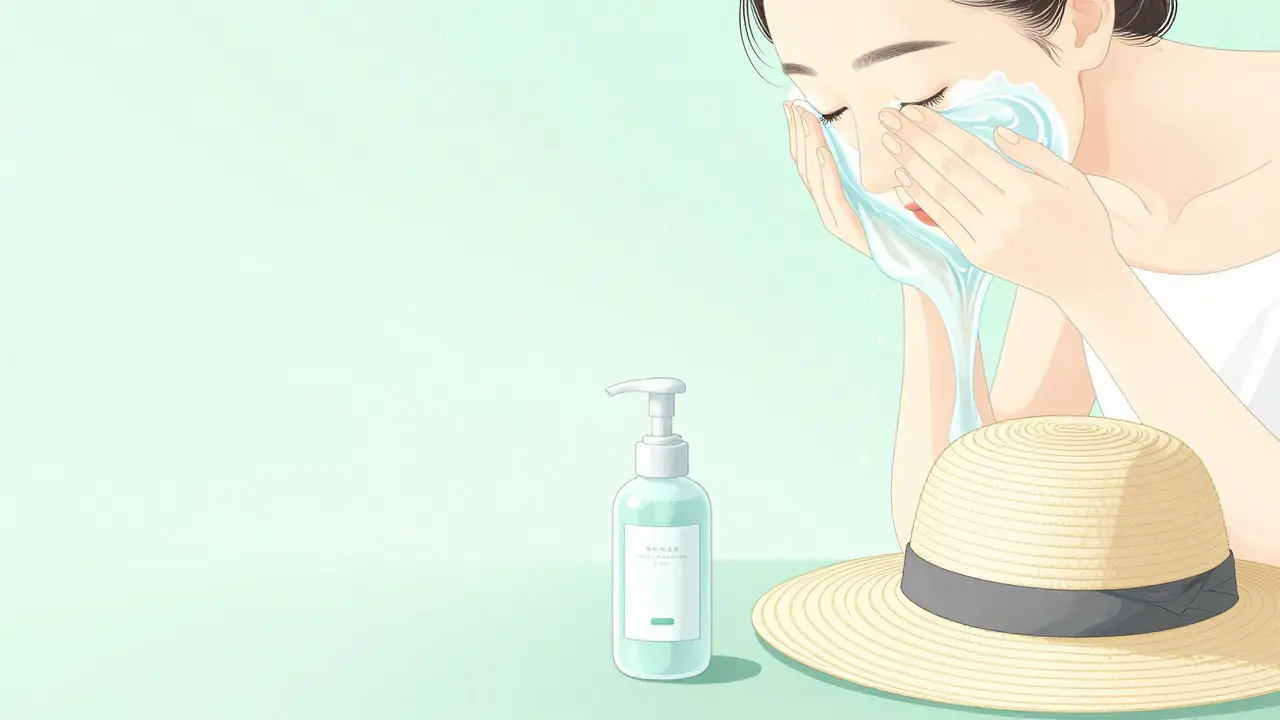
Start with your cleanser. Stop using anything that foams or scrubs. Look for a non-foaming, pH-balanced cleanser (ideally pH 5.5 to 6.5). Instead of washing your face twice a day, try doing it just once. Over-washing strips the natural oils and actually makes the inflammation worse for nearly 90% of people.
For hydration, avoid the "thick" creams. You want a lightweight formulation. Look for a moisturizer with Ceramides (between 0.5% and 2%) and a very low concentration of hyaluronic acid. The goal is to support the skin barrier without creating an occlusive seal that traps heat and bacteria.
| Product Type | What to AVOID | What to LOOK FOR |
|---|---|---|
| Cleanser | Foaming agents, sulfates, glycolic acid | Non-foaming, pH 5.5-6.5, fragrance-free |
| Moisturizer | Petroleum jelly, beeswax, heavy oils | Lightweight, Ceramides (0.5-2%), low Hyaluronic Acid |
| Sunscreen | Thick creams, high zinc concentrations | Liquid, gel, or milk formulations |
| Toothpaste | Sodium fluoride, high SLS | Non-fluoridated, SLS < 0.1% |
Navigating Medical Treatments
Sometimes, a change in skincare isn't enough to break the cycle, and you'll need a professional to step in. Depending on the severity, a doctor might prescribe Metronidazole, a topical antibiotic gel often used at 0.75% concentration to reduce inflammation and clear papules. It has a high clearance rate, though it takes about eight weeks of consistent use to see full results.
If topical options fail, oral antibiotics are the next step. Doxycycline is the gold standard here, especially the 40mg modified-release version. This lower dose is often preferred because it achieves an 85% clearance rate while causing far fewer stomach issues than the traditional 100mg dose.
Another option is Pimecrolimus, a calcineurin inhibitor cream. It's a great alternative for those who can't tolerate antibiotics, providing significant improvement without the risk of antibiotic resistance.
Dealing with the "Steroid Withdrawal" Phase
If you've been using steroid creams, stopping them is the most important-and hardest-part of the process. This is often called the "worst phase." When you stop the steroid, your skin may experience a rebound effect where the redness and bumps actually get worse for 7 to 14 days. It can feel like the treatment is failing, but it's actually a sign that your skin is resetting.
During this time, keep your routine minimal. Use a gentle cleanser like Cetaphil or Vanicream, avoid all makeup, and use a wide-brimmed hat instead of heavy sunscreen if you're going outside. This phase is temporary, and pushing through it is the only way to reach long-term remission.
Long-Term Maintenance and Prevention
Once your skin clears, don't rush back to your 10-step skincare routine. Recurrence rates are high (around 40-60%) if you go back to your old triggers. Keep your products fragrance-free and non-comedogenic. If you must use makeup, choose formulas where titanium dioxide is below 3% and avoid isopropyl myristate.
Pay attention to your diet and lifestyle. While not everyone is affected, some people find that a gluten-free diet helps resolve their symptoms. Keep an eye on your stress levels and menstrual cycle, as these are common times for a flare-up to return. The key is to remain vigilant about what touches your skin.
Is perioral dermatitis the same as acne?
No. While they both look like small red bumps, perioral dermatitis lacks comedones (blackheads and whiteheads) and typically spares the very edge of the lips. Most importantly, acne treatments like salicylic acid or benzoyl peroxide often irritate perioral dermatitis and make it worse.
How long does it take for the skin to clear?
Typically, it takes 6 to 12 weeks of a consistent gentle routine and medical treatment to see full resolution. If you are recovering from steroid use, expect a worsening period of about two weeks before you see improvement.
Can I use any moisturizer at all?
Yes, but it must be lightweight. Avoid heavy creams, petroleum jelly, or waxes. Look for products with ceramides and a simple ingredient list. If a moisturizer feels "heavy" or "greasy," it's likely too occlusive and could trigger a flare.
Why does my toothpaste matter?
Fluoride and Sodium Lauryl Sulfate (SLS) in many toothpastes can be irritating to the skin around the mouth. Switching to a fluoride-free, low-SLS toothpaste has helped about 62% of people with toothpaste-related triggers.
What should I do if the rash spreads to my eyes?
In about 30% of severe cases, the dermatitis can spread to the periocular (eye) area. This is a sign that the inflammation is more systemic or severe. You should consult a dermatologist immediately, as you may need oral antibiotics like doxycycline to manage the spread.
Next Steps for Recovery
If you are just starting your journey, your first step is a "product audit." Read the labels on everything you use on your face. If you see "hydrocortisone" or "betamethasone," stop using them immediately. If you see thick waxes or high concentrations of fluoride in your toothpaste, swap them out.
For those in the middle of a flare, schedule an appointment with a dermatologist to discuss whether Metronidazole or Doxycycline is right for you. Remember, the path to clear skin isn't through more products, but through fewer, safer ones. Be patient with your skin-it's trying to heal.
Jaclyn Vo
April 25, 2026 AT 01:28Ugh, I literally tried the fluoride-free thing and it didn't work for me at all! 🙄 Like, why is everyone acting like it's a magic fix?? My skin is still a disaster and I'm basically losing my mind over here! 😭💔
William Zhigaylo
April 25, 2026 AT 05:22The sheer incompetence of the medical establishment in promoting steroid creams for facial rashes is utterly appalling. It is an absolute travesty that patients are led into this cycle of dependency and rebound inflammation through negligence. I find it personally offensive that such basic warnings are not prominently displayed on every single tube of hydrocortisone sold in this country.
Daniel Runion
April 25, 2026 AT 11:59Pfft... a "product audit"... how quaint!!! I bet most of these "guides" are just written by people who want you to buy specific brands of "gentle" soap... totally ridiculous!!!! 🙄🙄🙄
James Harrison
April 27, 2026 AT 03:25It's interesting how we try to control our biology with more chemistry. Maybe the skin is just asking us to slow down and accept the imperfection for a while. There is a certain peace in the "less is more" approach that extends beyond just skincare.
Brittney Prince
April 28, 2026 AT 05:47You guys really think it's just "toothpaste"? Please. Big Pharma just wants us on a cycle of antibiotics like Doxycycline so they can make more money off the side effects. They're probably putting these triggers in the water supply anyway to keep us buying their "ceramide" creams.
Nikita Shabanov
April 30, 2026 AT 01:20Metronidazole is quite effective, but the consistency is key. I've seen many cases where people stop after two weeks because they don't see a miracle, but as mentioned, the eight-week mark is where the real stability happens.
Nila Sawyer
April 30, 2026 AT 02:30Omg this is such a helpful guide! 🌸 I know it feels so scary when the redness gets worse during that steroid withdrawal phase, but please stay strong everyone! ✨ You are all so brave for dealing with this and I just know your skin is going to glow again very soon! Keep going, you've got this! 💖🌈☀️
Elle Torres Sanz
May 1, 2026 AT 14:07It's so important to remember that everyone's skin reacts differently, so while the fluoride-free tip works for some, others might find their trigger is something completely different. Let's just support each other through the trial and error process because it can be really isolating. We're all in this together!
Michael Deane
May 2, 2026 AT 02:19I can't believe we're living in a time where people have to read online guides just to figure out that the creams they're buying from these corporate pharmacies are basically poison, and honestly, it just goes to show that we need to get back to the old-school American way of just using common sense and not trusting every single piece of chemical garbage they try to sell us in these fancy stores that probably import half their ingredients from God-knows-where while our own local industries are just getting pushed aside by this globalist nonsense that tells us to use a pH-balanced cleanser instead of just some real soap!