Personal Health Records: How to Manage Medications Across Pharmacies Safely
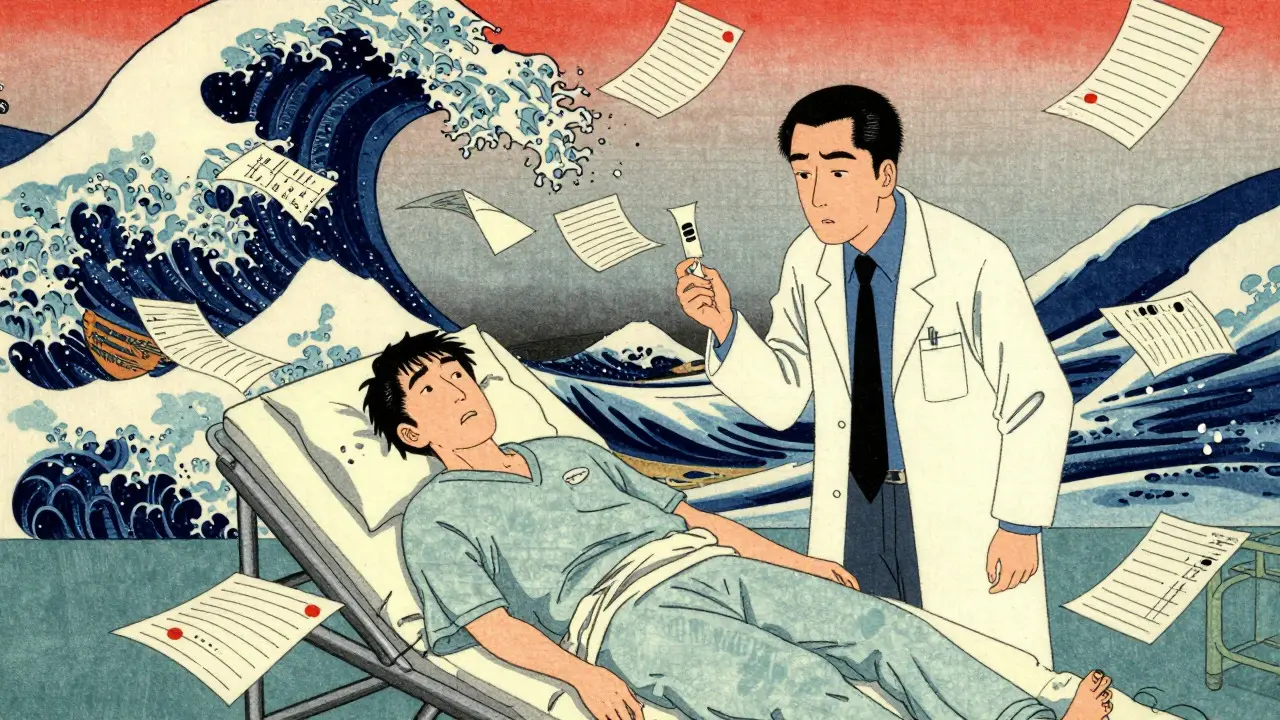
The Hidden Danger of Splitting Your Prescriptions
Picture this: You fill your blood pressure meds at the big chain near work, your allergy pills at the independent shop in your neighborhood, and your vitamins online. It’s convenient. But when you end up in the ER after a sudden drop in blood pressure, the doctor sees only one-third of what you’re taking. This isn’t just an inconvenience; it’s a life-threatening gap in care.
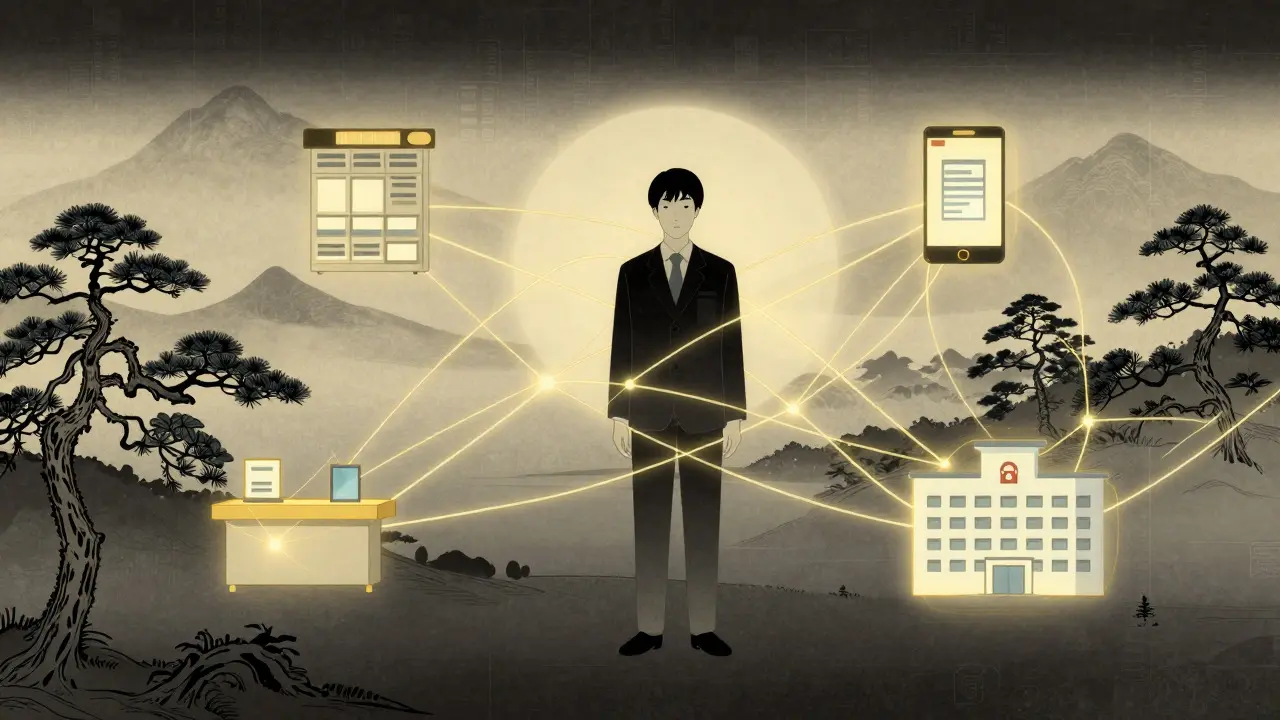
This is why personal health records (PHRs) have moved from a nice-to-have tech feature to a critical safety tool. A PHR is a patient-controlled digital system that consolidates prescription histories from multiple dispensing sources into a single, unified view. Unlike the electronic health records (EHRs) controlled by hospitals, a PHR belongs to you. It pulls data from EHRs, personal devices, and even manual entries to create a complete picture of your health.
The stakes are high. The Agency for Healthcare Research and Quality reports that 50% of medication errors occur during transitions of care-like moving from home to hospital or switching doctors. These errors cost the U.S. healthcare system approximately $528 per patient annually. By creating a comprehensive list that includes prescriptions, over-the-counter products, and supplements, PHRs aim to close these dangerous blind spots.
How Personal Health Records Actually Work
You might wonder how a simple app on your phone can talk to complex pharmacy systems. The magic lies in backend interoperability standards, specifically FHIR (Fast Healthcare Interoperability Resources). As of 2023, 86% of major U.S. health systems had implemented FHIR APIs, allowing different software platforms to share data securely.
When you link your accounts, your PHR doesn't just guess what you're taking. It connects to three primary data sources:
- Pharmacy Benefit Manager (PBM) claims: This covers about 92% of prescription fills paid by insurance.
- Direct pharmacy feeds: Data sent directly from community pharmacies, including cash purchases.
- Patient-entered information: Supplements, OTC drugs, and doses manually added by you.
For example, the Surescripts network handles 22 billion annual transactions. It uses a Master Patient Index that matches patients with 99.2% accuracy across disparate systems using 12 data points, such as name, date of birth, and address. In Australia, the My Health Record system achieved 93% population enrollment by late 2022, storing medication histories with an 18-month retention period for dispensed items.
However, technology has limits. Only 37% of PHRs effectively capture over-the-counter medications because there is no standardized coding for non-prescription products. Furthermore, refill patterns show when a drug was dispensed, not necessarily when you swallowed it. This creates a gap between "what the system thinks you took" and "what you actually took."
Consumer Apps vs. Professional Pharmacy Networks
Not all medication trackers are created equal. If you rely solely on a consumer-friendly app, you might be missing critical data. Let’s look at the differences between popular options.
| System Type | Data Completeness | Real-Time Updates | Best For |
|---|---|---|---|
| Apple Health Records | 68% | Limited (Delayed) | General awareness & easy access |
| Surescripts Network | 92% | Near Real-Time | Clinical accuracy & reconciliation |
| Manual Entry PHRs | Variable (High Error Rate) | Instant (if updated) | OTC & supplement tracking |
Apple Health Records, available to over 200 million iPhone users, excels at accessibility. However, a 2022 benchmark study found it captures only 68% of medication history compared to Surescripts' 92%. Why? Because consumer apps often lack direct integration with every local pharmacy's dispensing software.
Professional tools like the HCS prescription fill history tool produce medication lists within seconds for 98.7% of patients with 12-month histories. This outperforms manual reconciliation, which takes pharmacists an average of 12.4 minutes per patient. But here is the catch: only 41% of current systems reflect same-day pharmacy transactions. If you fill a script at noon and go to the ER at 2 PM, the record might still be empty.
The Human Element: Garbage In, Garbage Out
Technology solves half the problem. The other half is human behavior. Dr. Richard Wang of Duke University warned that PHR medication data suffers from the "garbage-in-garbage-out" problem. His audit of 12,000 records revealed that 61% of patient-entered medications contained dosage errors.
Why does this happen? Patients often don't know their exact milligram strength, frequency, or brand versus generic status. They type "Metformin" instead of "Metformin 500mg twice daily." To a computer, these are different entities. To a pharmacist, this ambiguity can lead to under-dosing or dangerous interactions.
Pharmacists feel this pain point acutely. A 2022 survey by Pharmacy Times found that while 68% of pharmacists valued PHR medication histories, 79% reported spending additional time verifying patient-entered data. Community pharmacists averaged 8.3 minutes per patient correcting inaccuracies. That’s nearly nine minutes of clinical time lost to data cleanup instead of patient counseling.
Yet, when done correctly, the benefits are clear. The Australian Digital Health Agency found that their national system reduced duplicate prescribing by 28%. Duplicate prescribing happens when two doctors, unaware of each other’s orders, prescribe the same drug. A unified PHR prevents this entirely.
Security and Privacy: Who Sees Your Data?
Consolidating sensitive health data raises valid privacy concerns. Rest assured, certified PHRs employ robust security protocols. Most use AES-256 encryption, the same standard used by banks and governments. According to the Office of the National Coordinator’s 2022 audit, 98% of certified PHRs meet NIST Cybersecurity Framework standards.
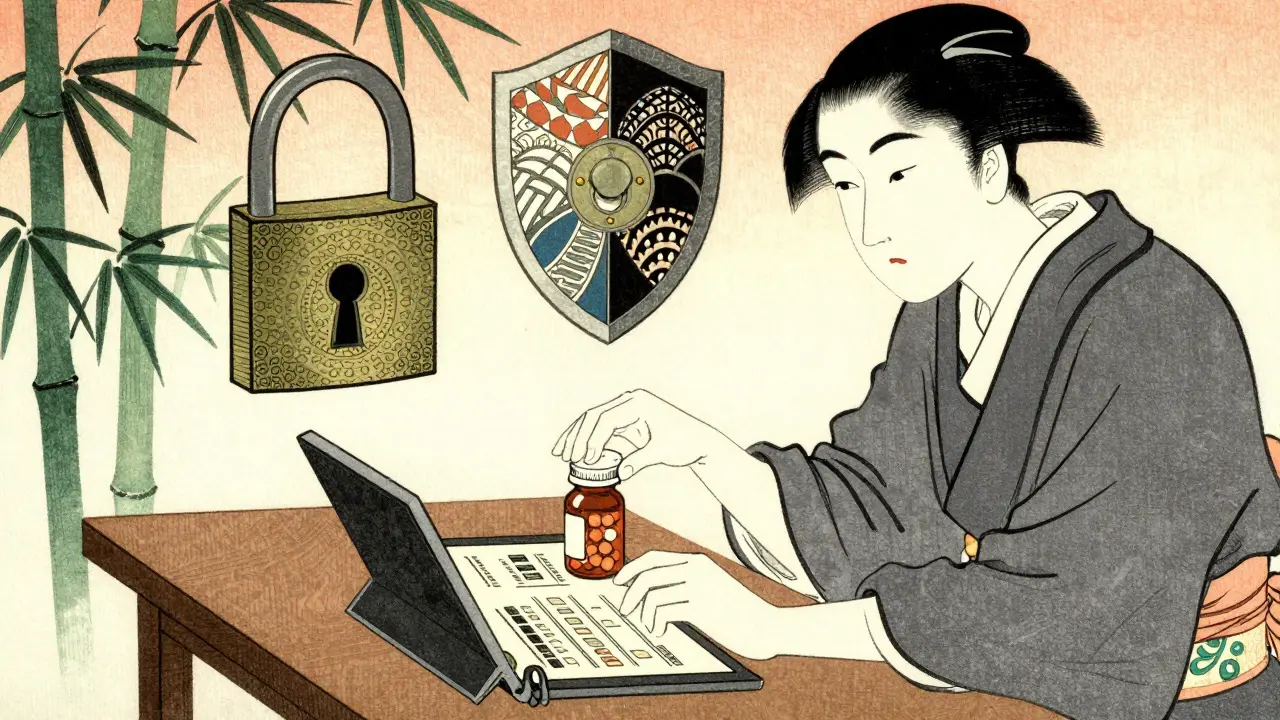
Crucially, you hold the keys. HIPAA-compliant data storage ensures that providers cannot access your record without permission. Patient-controlled access permissions allow you to grant or revoke access for specific doctors or clinics. However, 37% of patients restrict access to certain providers due to privacy fears, which can inadvertently fragment their own care. The key is understanding that restricting access doesn't hide data from insurers or employers-it just hides it from the specific clinician trying to treat you.
Practical Steps to Build Your Medication Profile
So, how do you get started? You don’t need to be a tech expert. Follow this simplified workflow to ensure your PHR is accurate and useful.
- Choose a Hub: Select a platform that integrates with your primary pharmacy. If you use Apple, start with Apple Health Records. If you prefer a dedicated health app, look for ones that support FHIR standards.
- Link Insurance Accounts: Connect your PBM account. This automatically imports 92% of your prescription history, saving hours of manual entry.
- Audit Manually: Once a month, sit down with your actual pill bottles. Check if the dosage and frequency match what’s in the app. Correct any errors immediately.
- Add Non-Prescription Items: Manually enter supplements and frequent OTC drugs. Use specific names (e.g., "Ibuprofen 200mg") rather than vague terms ("painkiller").
- Share Strategically: Before appointments, generate a PDF summary or grant temporary access to your provider. Ask them to review it together.
Don’t forget to update your profile after any new prescription. The system won’t know you filled a script at a new pharmacy until you link that account or wait for the next sync cycle. Pro tip: Take a photo of your prescription label and save it in your phone’s notes linked to the PHR entry. This serves as a backup verification method.
The Future of Medication Management
We are moving toward a more connected future. The CMS Interoperability and Patient Access Rule, effective July 2024, requires PBMs to share 45-day medication histories with patient consent. This regulatory push is projected to increase PHR medication completeness by 27%.
Innovations are also emerging. Google Health’s 2023 prototype used machine learning to predict medication discrepancies with 92% accuracy. While widespread AI implementation is still 3-5 years away, early adopters like Kroger Health have seen a 33% reduction in medication-related phone tag incidents by using direct messaging services integrated into their PHR workflows.
Ultimately, a personal health record is not a set-it-and-forget-it tool. It is an active partnership between you, your pharmacist, and your technology. By taking ownership of your data, you transform from a passive recipient of care into an informed partner in your own health safety.
Is my personal health record secure from hackers?
Yes, highly secure. Certified PHRs use AES-256 encryption and comply with HIPAA regulations. According to a 2022 ONC audit, 98% of certified systems meet strict NIST cybersecurity standards. You control who accesses your data through granular permission settings.
Does my PHR show over-the-counter medications automatically?
Rarely. Only about 37% of PHRs capture OTC medications because they are often bought with cash and lack standardized coding. You must manually enter supplements and OTC drugs to ensure a complete picture for your doctors.
How often does my medication history update?
It varies by system. Only 41% of current PHR systems reflect same-day pharmacy transactions. Most professional networks like Surescripts update within hours, but consumer apps may take days. Always verify recent changes manually before medical appointments.
Can I use my PHR to switch pharmacies easily?
Yes. A consolidated PHR provides a complete history that you can share with a new pharmacy. This helps the new pharmacist understand your past dosages and avoids starting you on conflicting medications. Just ensure you grant them access to the relevant records.
Are personal health records free to use?
Most basic PHR services, especially those integrated into smartphone operating systems like Apple Health or provided by large health systems, are free. Specialized standalone apps may charge subscription fees for advanced features like AI-driven interaction checks or family account management.