Pharmacist Counseling Scripts: Training Materials for Generic Patient Talks
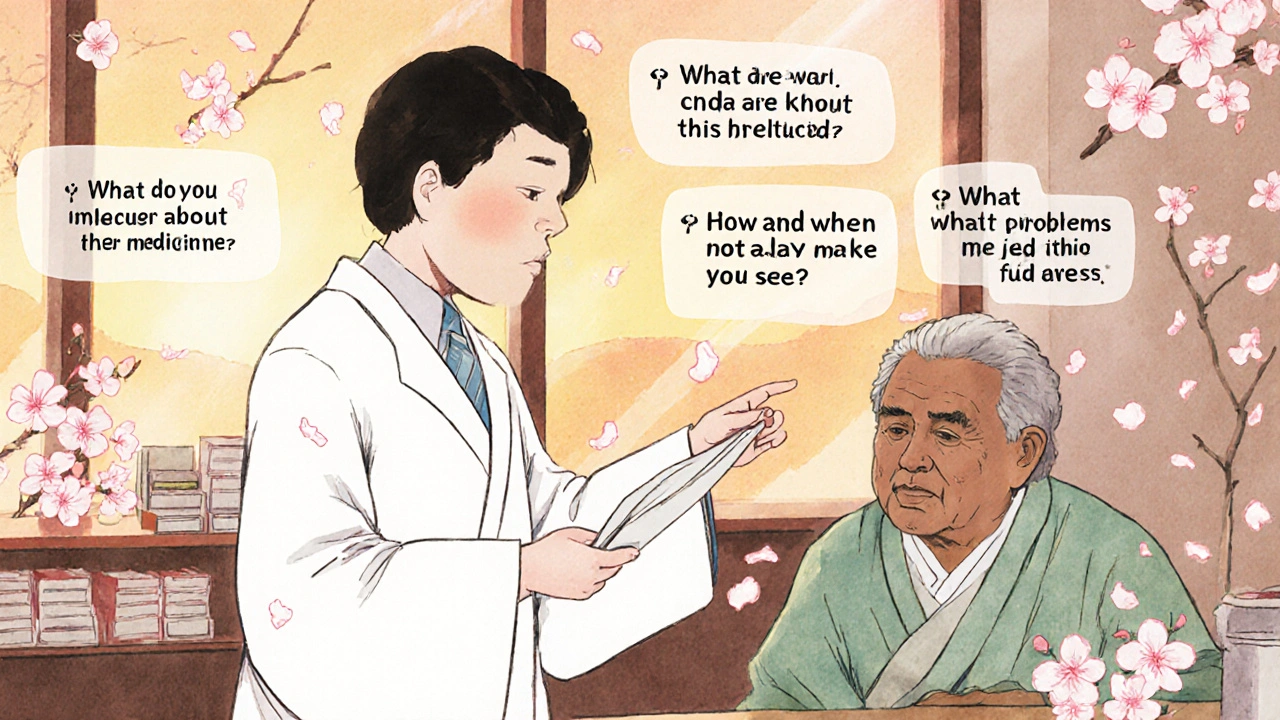
Pharmacists don’t just hand out pills. They’re the last line of defense against medication errors, misunderstandings, and dangerous side effects. But in a busy pharmacy, time is tight. That’s where pharmacist counseling scripts come in - simple, structured guides that help pharmacists deliver essential information consistently, even during a rush.
Why Scripts Are Required, Not Optional
Back in 1990, the U.S. government passed OBRA '90, a law that made patient counseling a condition for Medicaid reimbursement. It wasn’t just a suggestion. If a pharmacist didn’t offer counseling, the pharmacy wouldn’t get paid. That changed everything. Suddenly, every community pharmacy had to have a system - and scripts became the go-to solution. It wasn’t about checking a box. The goal was to make sure patients understood what they were taking. How much? When? What to watch out for? What to do if something goes wrong? Without clear communication, patients skip doses, mix medications, or stop taking them altogether. And that costs the system $312 billion a year in avoidable hospital visits and complications. The American Society of Health-System Pharmacists (ASHP) laid out the foundation in 1997, saying simply offering to counsel isn’t enough. Pharmacists have a professional duty to make sure patients actually understand. That’s where scripts step in - not as rigid scripts to read word-for-word, but as safety nets to ensure nothing critical gets missed.The Core Three: What Every Script Must Cover
You don’t need a 20-page document. The most effective scripts, especially for new pharmacists, boil down to three essential questions:- What do you know about why you’re taking this medicine?
- How and when should you take it?
- What problems might you see, and what should you do if they happen?
When Scripts Go Wrong
Scripts aren’t magic. They fail when pharmacists treat them like teleprompters. Reading a script word-for-word sounds robotic. Patients tune out. They feel like a number, not a person. Dr. Daniel Holdford, a leading researcher in pharmacy communication, put it plainly: “Scripts help inexperienced students learn the structure. As they gain confidence, they adapt the script to their own style.” That’s the key. The script is the skeleton. Your voice, your tone, your questions - those are the flesh. One pharmacist on Pharmacy Times shared that her corporate mandated script required her to say, “This medication may cause dizziness.” But when she asked a patient, “Have you felt lightheaded since starting this?” - the patient admitted to nearly falling twice. That’s not in the script. That’s real care. The worst scripts are the ones that ignore literacy levels, cultural context, or emotional state. A script that works for a 65-year-old retired teacher won’t work for a 22-year-old single parent juggling three jobs and no transportation. The best scripts are flexible enough to adjust to the person in front of you.
Special Cases: Opioids, Anticoagulants, and More
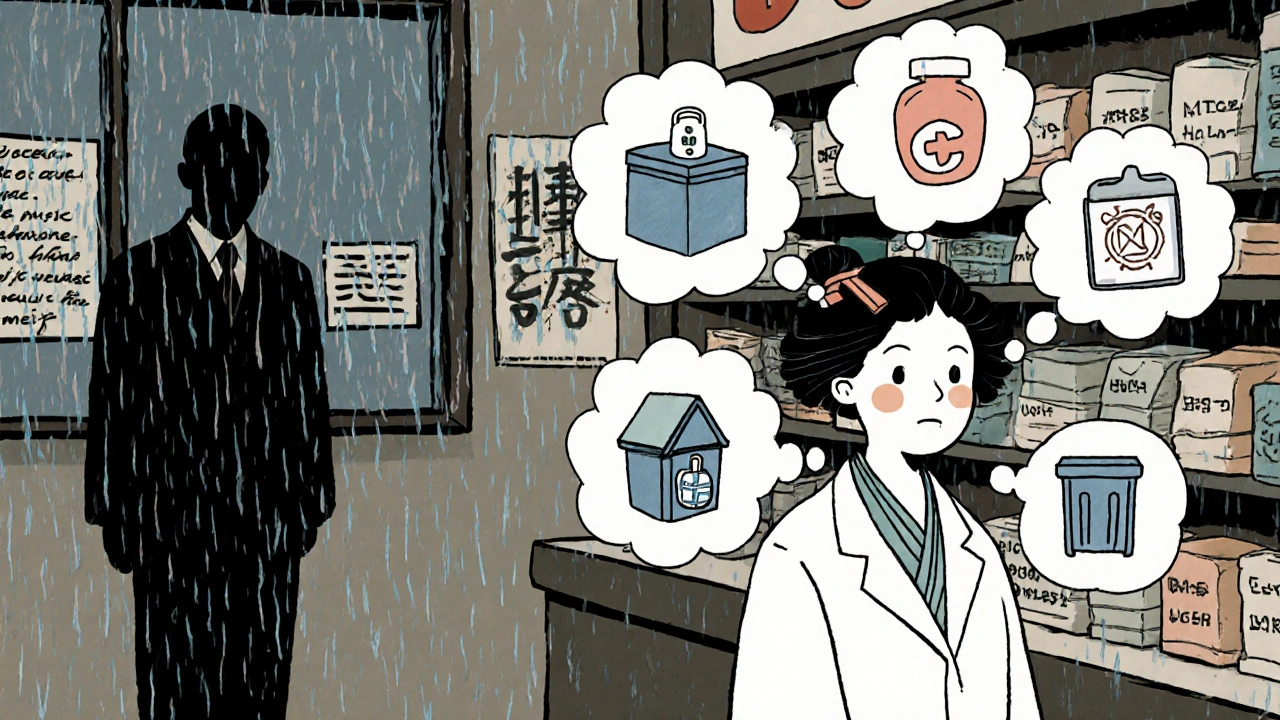
Not all medications are created equal. For opioids, the script must include:- Proper storage (away from kids, in a locked box)
- How to dispose of unused pills (take-back programs, flushing instructions)
- Availability of naloxone - and how to use it
- Dietary restrictions (vitamin K-rich foods)
- Signs of bleeding (bruising, blood in urine, headaches)
- When to get an INR test
- Interactions with common OTC meds like ibuprofen
Documentation: It’s Not Just Paperwork
You can’t counsel without documenting. But it’s not about filling out forms for the government. It’s about proving you did your job - and protecting the patient. ASHP guidelines say you must record:- That counseling was offered
- That it was accepted (or refused)
- Your assessment of the patient’s understanding
How to Learn This Right
You don’t master counseling in a day. Pharmacy schools train students using role-playing, simulated patients, and feedback loops. Real-world mastery takes 8 to 12 weeks of supervised practice. Start with the basics:- Know the drug - its purpose, side effects, interactions.
- Know the law - what your state requires.
- Know the patient - their age, literacy, language, concerns.
- Use the script as a checklist, not a script.
- Always use teach-back.
- Document what you did - clearly and honestly.
What’s Next for Counseling Scripts
The future isn’t more rigid scripts. It’s smarter ones. Pilot programs at CVS and Walgreens are testing AI-assisted dynamic scripts. These tools listen to patient responses and adjust the next question in real time. If a patient says, “I don’t like taking pills,” the system might suggest: “Would you be open to a liquid form?” or “Let’s talk about pill organizers.” In 2023, those pilots showed a 23% improvement in patient comprehension scores compared to static scripts. CMS is also pushing for 2025 changes: all Medicare Part D plans must now document that patients actually understood the counseling - not just that it happened. That means teach-back won’t be optional anymore. It’ll be required. Meanwhile, 43 states introduced bills in 2023-2024 to expand pharmacists’ authority to counsel - and even prescribe in some cases. The message is clear: pharmacists are no longer just dispensers. We’re frontline health educators.Final Thought: It’s Not About the Script. It’s About the Person.
A script can’t replace empathy. But it can protect you from forgetting what matters. When you’re tired, rushed, or overwhelmed, the script reminds you: Did I make sure they knew how to take it? Did I check if they understood? Did I give them a way out if something went wrong? The best pharmacists don’t memorize scripts. They internalize the mission. And then they use the script to make sure no patient slips through the cracks.Are pharmacist counseling scripts mandatory by law?
Yes, under OBRA '90, pharmacists must offer counseling for Medicaid patients, and 18 states require actual counseling - not just an offer. Most states also require documentation that counseling was provided or refused. Failure to comply can result in lost reimbursement or regulatory penalties.
Can I use the same script for every patient?
No. Scripts are templates, not scripts to read verbatim. A 70-year-old with diabetes needs different information than a 25-year-old on birth control. Adapt the language, examples, and depth based on the patient’s age, literacy, culture, and concerns. The goal is understanding, not repetition.
What’s the teach-back method, and why is it important?
Teach-back means asking the patient to explain, in their own words, what they need to do. For example: “Can you tell me how you’ll take this pill?” If they can’t, you haven’t finished counseling. It’s the most reliable way to confirm understanding - better than asking, “Do you understand?” Most patients say yes, even if they don’t.
How long should a counseling session take?
The average is 2.1 minutes per patient in high-volume pharmacies, but quality matters more than speed. Using a focused 3-question script, many pharmacists achieve effective counseling in under 3 minutes. Complex cases like anticoagulants or mental health meds may take 5-7 minutes. Never rush if the patient is confused.
What if the patient doesn’t speak English?
Never rely on family members to interpret. Use professional telephonic or in-person interpreters. Many pharmacies use services like Language Access Network, which provides translated materials in over 150 languages. Always document the interpreter used and confirm understanding with teach-back.
Do I need special training to use these scripts?
Yes. Most pharmacy schools include counseling training in their curriculum. Continuing education is required - at least 15 hours per year - to maintain competency. Many employers offer in-house training using role-play and feedback. Don’t assume you know how to counsel just because you’ve been doing it for years.
What’s the difference between ASHP and CMS counseling guidelines?
ASHP focuses on best practices for pharmaceutical care - comprehensive, patient-centered, and evidence-based. CMS guidelines focus on regulatory compliance with OBRA '90 - what you must do to get paid. ASHP is the gold standard for quality; CMS is the minimum legal bar. Smart pharmacists use ASHP to exceed CMS requirements.
Can I use a script for phone counseling?
Yes. The same core elements apply: name, purpose, dosage, side effects, and teach-back. But phone counseling requires extra clarity - no visual cues, no body language. Speak slowly, confirm understanding often, and always send written instructions via mail or secure portal. Document the call, who you spoke to, and what was covered.
What are the most common mistakes pharmacists make during counseling?
The top three: 1) Reading scripts without adapting to the patient, 2) Skipping teach-back and assuming understanding, 3) Not documenting what was actually said. Other mistakes include ignoring language barriers, rushing through high-risk meds, and failing to ask open-ended questions like, “What concerns do you have about this drug?”
How do I know if my counseling is working?
Track outcomes. Are patients refilling on time? Are there fewer calls to the pharmacy about side effects? Are ER visits for medication errors dropping? The Pharmacist Counseling Outcomes Registry, launched in 2024, helps pharmacies measure adherence and clinical results linked to their counseling methods. Start simple: if patients stop asking the same questions, you’re doing it right.
Kaylee Crosby
November 26, 2025 AT 13:22Love this breakdown. I’ve been using the 3-question script for a year now and my patients actually remember what I tell them. No more ‘I thought this was for my headache’ moments. Teach-back is the real MVP. I even started writing down their responses in the notes - it’s wild how often they mix up the timing or dosage. Seriously, if you’re not using teach-back, you’re just talking at people.
Karen Ryan
November 27, 2025 AT 00:52Yessss this is why I love my pharmacist 💗 I used to hate going in but now my guy asks me how I’m feeling before he even grabs the script. It’s not about reading - it’s about listening. And yeah, the script helps him not forget the big stuff like bleeding risks or naloxone. He’s basically my personal health coach now 😊
Adesokan Ayodeji
November 27, 2025 AT 23:57Man, I’ve seen this play out in Nigeria too - pharmacists there don’t always have time or training, but when they do use structured prompts, lives change. I had a cousin on warfarin who was mixing it with bitter leaf juice because ‘it’s natural’ - no one asked her what she was eating. A simple script asking about diet would’ve caught it. These aren’t just American rules - they’re global lifesavers. And honestly? The AI dynamic scripts you mentioned? That’s the future. Imagine a script that adjusts based on your tone, your accent, your stress level. We’re not far off. Pharmacists need tech to help them be human, not replace them.
Lawrence Zawahri
November 29, 2025 AT 11:15OBRA '90? That’s just the government’s way of making pharmacists into unpaid social workers. You know who pays for all this ‘counseling’? The patient. They charge extra, they make you wait 20 minutes, and then they read you a script like you’re a robot. And don’t get me started on ‘teach-back’ - it’s just a fancy way of saying ‘prove you listened’ so they don’t get sued. This whole system is a money grab wrapped in virtue signaling. Real care? Nah. Compliance is the only thing they care about.
Terry Bell
November 30, 2025 AT 22:16Man I used to think scripts were robotic too… until I was the one on the other side. My mom had a stroke and the pharmacist took 3 minutes to walk her through her new meds - no rush, no jargon, just ‘what do you know about this pill?’ and then she repeated it back. That moment? That’s why I became a pharmacy tech. The script isn’t the enemy - it’s the safety net when you’re tired, or overwhelmed, or just human. It’s not about perfection. It’s about not missing the one thing that could kill someone. And yeah, sometimes you gotta ditch the script and just say ‘hey, you good?’
Benjamin Gundermann
December 2, 2025 AT 20:33Look, I get it. Pharmacists are overworked. But let’s be real - this whole ‘counseling’ thing is just another way for the medical-industrial complex to squeeze more out of the system. You think these scripts are for patients? Nah. They’re for lawyers. Every checkbox, every documented ‘understanding’ - it’s all just liability armor. And don’t even get me started on the ‘AI dynamic scripts.’ Next thing you know, a chatbot’s gonna ask if you’ve felt lightheaded. We’re turning healthcare into a customer service call. And the worst part? It’s working. People think they’re getting care when they’re just getting compliance.
Rachelle Baxter
December 3, 2025 AT 16:18Let me be very clear: if you are not using teach-back, you are not counseling. You are merely speaking. There is a difference. And if you are relying on family members to interpret, you are endangering lives. And if you are skipping documentation because it’s ‘too much paperwork,’ you are not a pharmacist - you are a liability. This is not optional. This is not ‘nice to have.’ This is the ethical and legal baseline. And anyone who treats it as a burden doesn’t belong in this profession. End of story.
Dirk Bradley
December 4, 2025 AT 09:47One must acknowledge the profound epistemological shift that has occurred within the pharmaceutical discipline since the enactment of OBRA '90. The transition from dispensing agent to clinical educator represents not merely a procedural adjustment, but a fundamental redefinition of professional identity. The script, as a heuristic instrument, functions as a cognitive scaffold - enabling the practitioner to navigate the epistemic complexity of polypharmacy while maintaining fidelity to the Hippocratic imperative. To reduce this to mere ‘checklists’ is to commit a category error of the highest order.
Emma Hanna
December 5, 2025 AT 12:17Wait. Wait. Wait. You said ‘most states allow a simple checkbox’?! That’s a disaster. A DISASTER. You can’t just click ‘counseling completed’ and call it a day. That’s not documentation - that’s negligence. If you’re not recording exactly what was said - word for word - then you’re not protecting anyone. You’re just covering your own butt. And I’ve seen it happen. I’ve seen patients die because someone checked a box and moved on. No. No. No. This isn’t a suggestion. It’s a sacred duty. And if you’re cutting corners - you’re not a pharmacist. You’re a hazard.
Mariam Kamish
December 6, 2025 AT 14:23Ugh. I hate when pharmacies make you wait 15 minutes for a 2-minute script. And then they read it like a robot. I just want my pills. Why do I need to explain my life to a stranger? And why does every single one say ‘do you have any questions?’ like I’m supposed to magically know what to ask? This whole system is exhausting. And now they want AI to ‘adjust’ the script? Great. Now my meds are being decided by a bot that doesn’t even know I’m crying.
Manish Pandya
December 8, 2025 AT 08:06I’ve trained pharmacy students in Delhi using this exact 3-question model. One kid asked a patient, ‘What do you know about this medicine?’ and the patient said, ‘It’s for my wife’s pain.’ Turned out the patient was taking it for himself - and had been for three years. That’s the power of this. Not the script. The question. It opens the door. And in places with low literacy, it’s the only thing that works. No fancy tech needed. Just ask. Listen. Repeat. That’s it.
Patrick Goodall
December 9, 2025 AT 03:25Did you know the government is using these scripts to track who’s taking what? I’m not joking. That ‘documentation’ you’re so proud of? It’s going into a federal database. And the AI scripts? They’re learning your speech patterns. Next thing you know, they’ll flag you for ‘high-risk behavior’ because you said ‘I’m tired’ and the algorithm thinks you’re depressed. This isn’t healthcare. It’s surveillance. And they’re calling it ‘counseling.’ Wake up. They’re not helping you - they’re profiling you.