Shared Decision-Making Scripts for Side Effect Trade-Offs: How to Talk About Medication Risks with Your Doctor
Medication Side Effect Trade-Off Calculator
How This Tool Works
This calculator helps you understand how different side effects impact your medication decision based on what matters most to you. Enter the side effect risks and prioritize what's important in your life.
Input Your Side Effect Risks
Enter the probability of each side effect and your personal value rating (1-5)
Your Personal Impact Analysis
This shows how your priorities affect your decision
How this helps you:
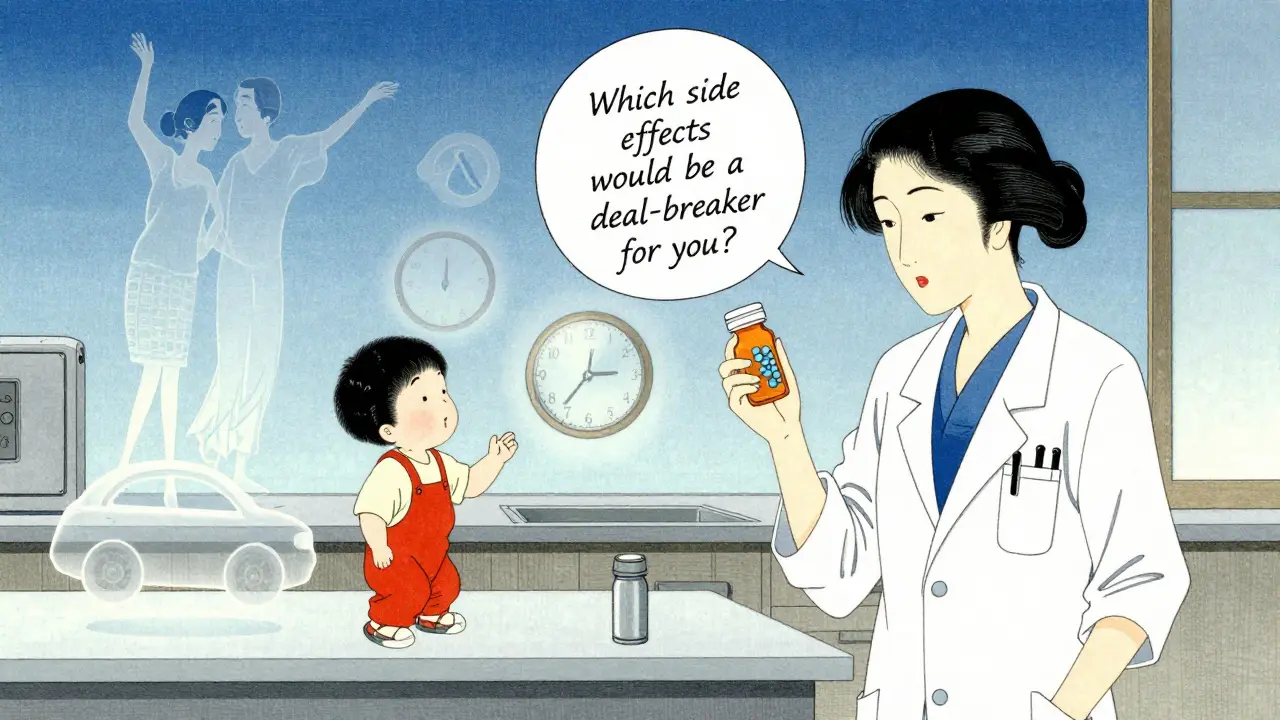
When you understand the actual probabilities and what matters most to you, you can have a more informed conversation with your doctor. This tool helps you prepare questions like: "Which side effects would be a deal-breaker for me?" or "How would this affect my daily routine?"
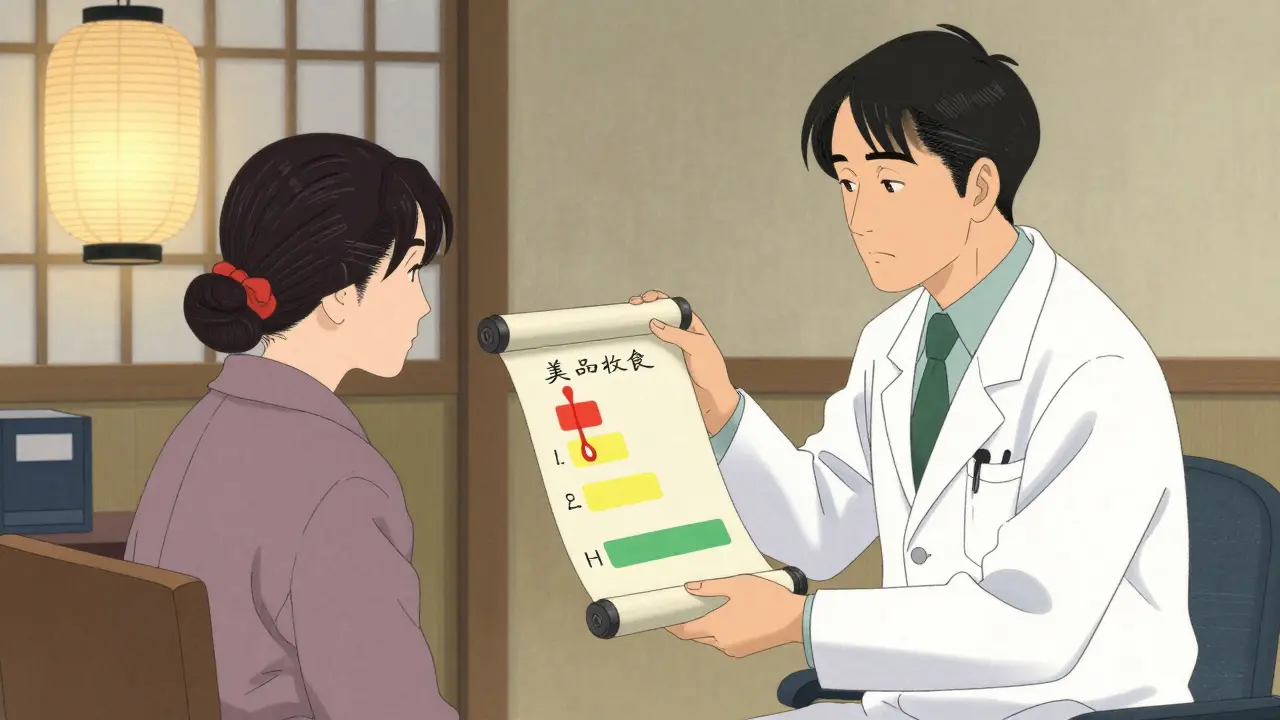
When your doctor suggests a new medication, you might hear something like: "This will help with your blood pressure, but some people get dizzy." That’s it. No numbers. No real talk about what it means for your life. And yet, that one side effect-dizziness-could mean you can’t drive, fall at home, or quit the medicine altogether. This isn’t just bad communication. It’s a missed chance to make a decision that actually fits you.
Why Side Effect Trade-Offs Matter More Than You Think
Most people don’t realize that side effects aren’t just random bad luck. They’re part of a trade-off. Every medication has a balance: benefits on one side, risks on the other. For some, a 15% chance of nausea is worth it to avoid a stroke. For others, even a 5% chance of fatigue is a deal-breaker because they care for grandchildren or work night shifts. The problem? Most doctors don’t have time-or training-to walk through these trade-offs in a way that makes sense. That’s where shared decision-making (SDM) scripts come in. These aren’t robotic lines to read. They’re structured ways to turn a rushed conversation into a real partnership. A 2021 study in the Journal of General Internal Medicine found that when patients used structured SDM tools for medications with serious side effects, their decisional conflict dropped by 23%. That means less second-guessing, fewer regrets, and more confidence in sticking with the treatment.The SHARE Approach: A Simple Framework for Hard Conversations
The Agency for Healthcare Research and Quality (AHRQ) created the SHARE Approach-a five-step method proven to work in real clinics. It’s not magic. It’s just clear, repeatable language.- Seek opportunities to include you in the decision. Your doctor might say: "There are a few ways we can manage your cholesterol. I’d like to walk through the pros and cons so we can pick what works best for your life."
- Help you explore options. Instead of saying "Statins can cause muscle pain," they say: "About 1 in 10 people on statins notice muscle aches. That means 9 out of 10 don’t. But if you’re someone who hikes every weekend, even mild pain might make you stop taking it."
- Assess your values. This is where most conversations fail. Good scripts ask: "What side effects would make you say no to this medicine?" Or: "Would you rather risk a little nausea or a small chance of bleeding?"
- Reach a decision together. Not "I’m prescribing this," but "Based on what you’ve said, does this plan make sense?"
- Evaluate your decision. A follow-up isn’t just about labs. It’s: "How’s the dizziness been? Has it changed how you feel about this choice?"
Why Numbers Beat Words Like "Rare" or "Common"
Doctors often say things like: "This side effect is rare." But what does that mean? 1 in 100? 1 in 1,000? You have no idea. Research from the Annals of Internal Medicine shows that when patients hear absolute risks-"There’s a 15% chance you’ll feel nauseous"-they understand it 37% better than when they hear relative risks like "This reduces nausea by 50%." That’s because "50% reduction" sounds huge, even if it’s going from 20% to 10%. Here’s what good communication looks like:- Bad: "Some people get headaches."
- Good: "About 1 in 5 people on this medicine get mild headaches in the first week. They usually go away. Only 1 in 50 get headaches that are bad enough to stop the medicine."
What Side Effects Really Cost Beyond the Body
It’s not just about nausea or dizziness. It’s about your life. The Massachusetts General Hospital Health Decision Sciences Center calls this "treatment burden"-how much a medication disrupts your daily routine. And it’s a bigger reason people quit meds than side effects themselves. Think about it:- Do you need to take this pill three times a day with food? That’s hard if you work two jobs.
- Do you need weekly blood tests? That’s a half-day off work.
- Can you drink alcohol? Can you drive? Can you travel?
When SDM Falls Short (And How to Fix It)
SDM isn’t perfect. And it’s not a script you just read from a card. A 2022 study in the Journal of Patient Experience found that when doctors used SDM scripts like robots-reading lines without listening-patient satisfaction dropped by 19%. People don’t want a checklist. They want to feel heard. Here’s what goes wrong:- The doctor rushes because the clock is ticking.
- The patient nods along to be polite.
- The real concern-"I’m scared I’ll become dependent on this"-never gets said.
- What you’re most worried about
- What you can’t live without (sleep, energy, mobility)
- What you’ve tried before and why you stopped
Real Stories: What Patients Actually Say
On Reddit’s r/medicine, a patient wrote: "My doctor didn’t just tell me statins cause muscle pain. He asked: ‘Would you rather have a little ache or risk a heart attack?’ That made me pause. I realized I’d rather be sore than scared." A 2022 survey by the Informed Medical Decisions Foundation found 84% of patients felt more confident in their choice when their doctor used structured tools. The most praised line? "Which side effects would be a deal-breaker for you?" One woman with atrial fibrillation told her cardiologist: "I don’t care if I bleed a little. I care if I can’t dance with my husband at our 50th anniversary." That conversation led to a different anticoagulant-lower bleeding risk, higher cost, but worth it to her.
How Clinics Are Making This Easier
It’s not just on you to bring up SDM. Systems are changing. - Electronic health records like Epic now include built-in SDM prompts for common conditions like high cholesterol, diabetes, and depression. - Pre-visit videos explain side effect risks before you even see the doctor. Kaiser Permanente used this to cut statin discontinuation by 33%. - CPT codes 96170-96171 now pay doctors $45-$65 for documented SDM visits. That means more time is being built into appointments. - Medicare Advantage plans are required to document SDM for high-risk meds starting in 2023. This isn’t a trend. It’s becoming standard.What You Can Do Today
You don’t need to be an expert. Just start asking:- "What’s the chance this side effect will happen to me?"
- "What’s the worst thing that could happen?"
- "What would you do if this were your mom or dad?"
- "Which side effects would make you say no?"
- "How will this affect my daily life?"
It’s Not About Perfect Decisions. It’s About Right Ones.
There’s no perfect medication. Only the right one for you. Shared decision-making doesn’t guarantee you’ll pick the "best" option. But it guarantees you’ll pick one you can live with. And that’s what matters more than any study, any guideline, or any drug label.What exactly is shared decision-making in healthcare?
Shared decision-making is when you and your doctor work together to choose a treatment based on both medical facts and your personal values. It’s not the doctor deciding for you, and it’s not you deciding alone. It’s a conversation where you both share information-what the science says, and what matters to your life.
Why do doctors sometimes avoid talking about side effects in detail?
Many doctors want to avoid scaring patients or overwhelming them with too much information. Time is also a big factor-a typical visit is 15 minutes. But when side effects aren’t discussed clearly, patients often stop taking their meds later because they weren’t prepared. The best doctors use simple, clear numbers and ask what matters most to you.
Are side effect risks always the same for everyone?
No. Risk depends on your age, other health conditions, lifestyle, and even genetics. For example, someone with kidney disease has a higher risk of bleeding on blood thinners. A person who drives long distances might be more affected by drowsiness than someone who works from home. That’s why personalized conversations matter more than generic stats.
Can I ask for a decision aid before my appointment?
Yes. Many clinics offer printable or video decision aids online. You can ask your doctor’s office for them ahead of time. Sites like Healthwise or the Informed Medical Decisions Foundation have free tools for common conditions like high cholesterol, diabetes, and depression. Watching one before your visit can make your conversation much more focused.
What if I still feel unsure after the conversation?
It’s okay to say, "I need time to think." You don’t have to decide right then. Ask if you can schedule a follow-up, or if there’s a written summary you can take home. Many doctors will even let you bring a family member to the next visit. Making a decision under pressure often leads to regret. Taking a little time is smart, not weak.
jenny guachamboza
December 22, 2025 AT 22:17Kiranjit Kaur
December 22, 2025 AT 23:25Sai Keerthan Reddy Proddatoori
December 23, 2025 AT 15:17Cara Hritz
December 25, 2025 AT 05:19Jeremy Hendriks
December 26, 2025 AT 08:17Candy Cotton
December 27, 2025 AT 20:27Julie Chavassieux
December 28, 2025 AT 03:54Ajay Brahmandam
December 28, 2025 AT 05:42Tarun Sharma
December 28, 2025 AT 16:05Aliyu Sani
December 28, 2025 AT 18:45Gabriella da Silva Mendes
December 30, 2025 AT 04:32Jim Brown
December 30, 2025 AT 13:25Herman Rousseau
December 31, 2025 AT 15:20Sam Black
January 1, 2026 AT 03:45Jamison Kissh
January 2, 2026 AT 03:02