Skin Rashes and Medication-Induced Dermatitis: What Patients Should Know
Drug Rash Risk Assessment Tool
Assess Your Skin Reaction
This tool helps determine if your rash could be a sign of a severe drug reaction. Based on medical guidelines, select the characteristics of your rash and symptoms.
Risk Assessment Result
This tool is for informational purposes only and does not replace professional medical advice. Always consult your healthcare provider.
Getting a rash after starting a new medication isn’t rare - it’s more common than most people realize. About 2-5% of all adverse drug reactions show up on the skin. That means if you’re taking even one prescription or over-the-counter drug, there’s a real chance you could develop a rash. Most of the time, it’s harmless and goes away on its own. But sometimes, it’s a warning sign of something serious - even life-threatening.
What Does a Drug Rash Look Like?
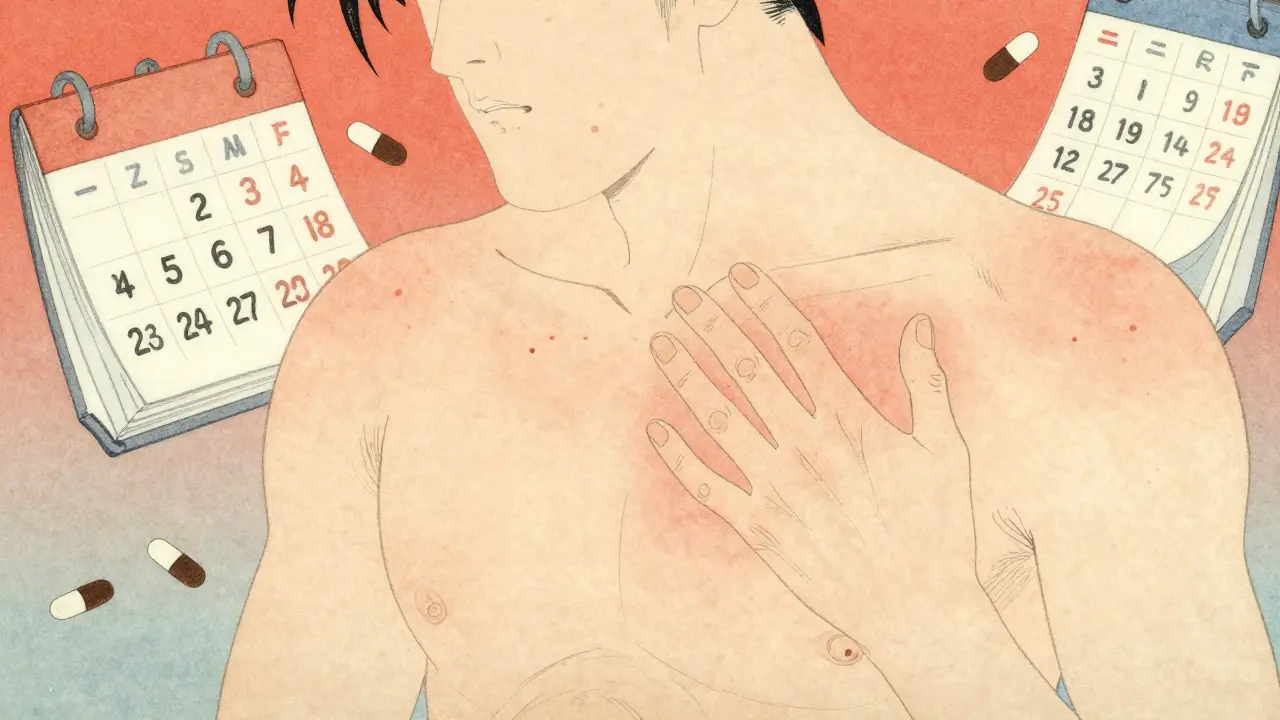
Not all drug rashes are the same. They come in many forms, and how they look can tell you what’s going on inside your body. The most common type is a morbilliform rash - that’s just a fancy way of saying it looks like measles. These are small, red, flat or slightly raised spots that show up mostly on your chest, back, and arms. They usually appear 4 to 14 days after you start the medication, but sometimes they show up even after you’ve stopped taking it.Another common type is urticaria, or hives. These are raised, itchy, red welts that can appear suddenly and move around your body. They often go away within 24 to 48 hours after stopping the drug. If you get hives after taking ibuprofen, naproxen, or an antibiotic, that’s a classic sign.
Then there’s nummular dermatitis. These are coin-shaped, red, scaly patches that can be dry or weepy. They’re often mistaken for eczema, but if they show up shortly after starting a new medication - especially antibiotics or blood pressure drugs - they’re likely drug-induced. Unlike regular eczema, these usually clear up in 4 to 8 weeks after you stop the medicine.
When It’s Not Just a Rash - The Dangerous Ones
Most drug rashes are mild. But a small number can turn dangerous fast. These are called severe cutaneous adverse reactions, or SCARs. They’re rare - less than 2% of all drug rashes - but they cause 90% of drug-related skin deaths.Stevens-Johnson Syndrome (SJS) and Toxic Epidermal Necrolysis (TEN) are the most feared. They start like a bad flu - fever, sore throat, burning eyes - then the skin begins to blister and peel. Think sunburn, but worse. It can cover large parts of your body, including your mouth, eyes, and genitals. SJS has a 5-15% death rate. TEN is even deadlier, with mortality hitting 25-35%. If you develop blisters, peeling skin, or mouth sores after starting a new drug, go to the ER immediately.
DRESS syndrome (Drug Reaction with Eosinophilia and Systemic Symptoms) is another hidden danger. It doesn’t just hit the skin. It can wreck your liver, kidneys, or lungs. You’ll get a widespread rash, swollen lymph nodes, fever, and abnormal blood counts. It usually shows up 2 to 6 weeks after starting the drug. Common culprits? Carbamazepine (for seizures), allopurinol (for gout), sulfonamides, and some antibiotics. People with certain genes - like HLA-B*5801 in Han Chinese populations - are at much higher risk.
Acute Generalized Exanthematous Pustulosis (AGEP) looks like a rash covered in tiny, non-infectious pustules. It comes on fast, often within 2 days of taking a drug like antibiotics or antifungals. It’s scary-looking, but usually clears up in 1-2 weeks after stopping the medication.
What Drugs Cause These Reactions?
Some medications are far more likely to trigger rashes than others. The biggest offenders:- Antibiotics - especially penicillins (like amoxicillin) and sulfonamides (like Bactrim). Penicillin alone causes 80% of severe allergic drug reactions.
- Antiseizure drugs - carbamazepine, phenytoin, lamotrigine. These are linked to DRESS and SJS, especially in people with specific genetic markers.
- NSAIDs - ibuprofen, naproxen. These cause non-allergic reactions in up to 25% of cases - meaning your immune system isn’t involved, but your skin still reacts.
- Allopurinol - used for gout. High risk for DRESS and SJS, especially in Asian populations.
- Chemotherapy drugs - many cause rashes as a direct toxic effect, not an allergy.
- Diuretics - hydrochlorothiazide is a top cause of photosensitivity rashes.
- Tetracyclines and fluoroquinolones - doxycycline and ciprofloxacin can make your skin burn in the sun, even with minimal exposure.
Here’s the twist: you don’t need to be allergic to get a rash. Many reactions are non-allergic. That means your immune system isn’t involved. Aspirin, radiocontrast dye, and opioids can cause rashes just by irritating your skin or triggering inflammation. That’s why some people react to a drug the first time they take it - it’s not an allergy, it’s a direct reaction.

Why Some People Are at Higher Risk
It’s not just about the drug - it’s about you. Certain factors make reactions more likely:- Polypharmacy - taking 5 or more medications at once? Your risk of a drug rash jumps to 35%. One or two meds? Only 5% risk.
- Viruses - if you have Epstein-Barr (mono), HIV, or another viral infection and take an antibiotic like amoxicillin, your chance of a rash goes up 5 to 10 times.
- Immune system problems - cancer patients or those on immunosuppressants have 3-5 times higher risk.
- Genetics - HLA-B*1502 increases carbamazepine-induced SJS risk by 1,000-fold in Southeast Asians. HLA-B*5801 increases allopurinol risk by 580-fold in Han Chinese. Testing for these genes is now standard before prescribing these drugs in high-risk populations.
- Age - older adults are more likely to be on multiple drugs and have slower drug clearance, making reactions more common.
What to Do If You Get a Rash
Don’t panic. But don’t ignore it either.Step 1: Don’t stop your meds on your own. If you’re on something critical - like an antiseizure drug, blood thinner, or heart medication - stopping suddenly can be dangerous. Call your doctor.
Step 2: Take a photo. Skin rashes change fast. A photo helps your doctor track progress and identify patterns.
Step 3: Note the timing. When did you start the drug? When did the rash appear? Did it get worse after a dose? This helps pinpoint the cause.
Step 4: Look for red flags. Go to the ER if you have:
- Widespread blistering or peeling skin
- Sores in your mouth, eyes, or genitals
- Difficulty breathing or swallowing
- High fever with rash
- Swelling of the face or throat
For mild rashes - no blisters, no fever, just itching and redness - your doctor might suggest:
- Lukewarm baths with gentle, soap-free cleansers
- Applying fragrance-free moisturizer within 3 minutes of bathing
- Over-the-counter hydrocortisone 1% cream twice a day
- Oral antihistamines like cetirizine or diphenhydramine for itching
For more severe cases, you might need prescription steroid creams like clobetasol or even oral prednisone. DRESS syndrome often requires weeks of steroids and hospital monitoring.
Can You Be Tested for Drug Allergies?
Yes - and it’s better than ever. Skin testing for penicillin allergy is now 95% accurate. Many people think they’re allergic to penicillin because they had a rash as a kid - but 15% of them can actually take it safely. Getting tested can open up better antibiotic options and avoid unnecessary side effects from stronger drugs.For other drugs, testing is trickier. There’s no reliable skin test for allopurinol or carbamazepine. But genetic screening for HLA variants is becoming routine in high-risk groups. If you’re of Southeast Asian descent and your doctor is about to prescribe carbamazepine, they should check your HLA-B*1502 status first.
How to Prevent Future Reactions
Once you’ve had a drug rash, you’re at higher risk for another. Here’s how to protect yourself:- Keep a drug reaction log. Write down the drug name, when you took it, what the rash looked like, and how long it lasted.
- Tell every doctor and pharmacist. Don’t assume they’ll know from your chart. Say it clearly: “I had a severe rash from [drug].”
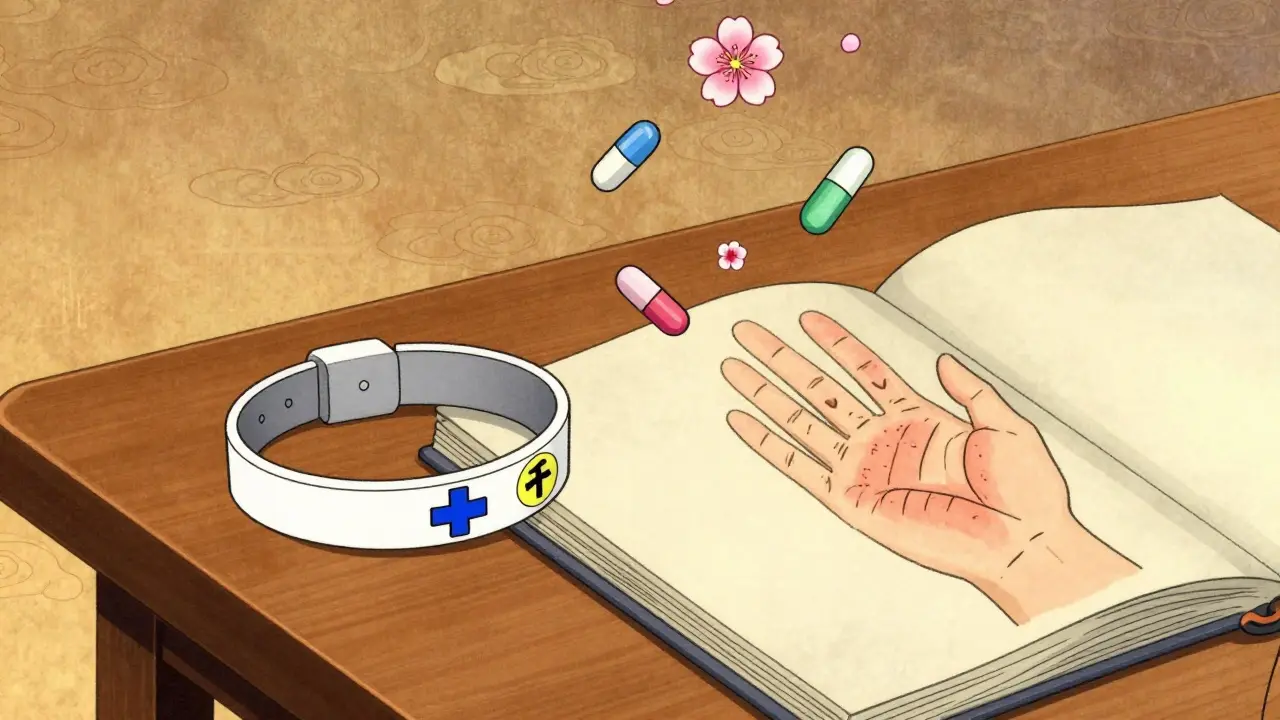
- Wear a medical alert bracelet. Especially if you’ve had SJS, DRESS, or a severe penicillin reaction.
- Ask about alternatives. If you’re prescribed a high-risk drug, ask: “Is there a safer option?”
- Be cautious with OTC drugs. Many people don’t realize that ibuprofen, aspirin, or herbal supplements can cause rashes too.
And remember - you might have been exposed to a drug before without knowing. Trace amounts in food, like sulfites in wine or penicillin in dairy from treated cows, can sensitize your immune system. That’s why some people react the first time they take a drug - their body already knew what it was.
The Bottom Line
Most drug rashes are annoying, not dangerous. They clear up in 1-2 weeks after stopping the drug. But if you’re unsure, assume it’s serious until proven otherwise. The key is early recognition. Know the signs. Know your meds. Know your risks.Don’t wait for a rash to get worse. Talk to your doctor. Get tested if needed. And never ignore a new rash after starting a new pill - it could be your body’s way of telling you something’s wrong.
Diana Dougan
February 1, 2026 AT 00:01So let me get this straight - if I take ibuprofen and get a rash, it’s NOT an allergy? Cool, so my 3rd grade teacher who said ‘allergies are forever’ was just lying to me? Thanks for the update, I guess. Also, why is every single drug on this list a ‘high-risk offender’? Sounds like someone got paid by the word.
Holly Robin
February 1, 2026 AT 21:39THEY’RE HIDING THE TRUTH. EVERY SINGLE DRUG RASH IS A COVER-UP FOR BIG PHARMA’S SECRET MICROCHIP PROJECT. YOU THINK YOUR SKIN IS REACTING TO AMOXICILLIN? NO. IT’S THE 5G TATTOOS THEY INJECT WITH YOUR PRESCRIPTIONS. I GOT A RASH AFTER TAKING FLUORIDE TOOTHPASTE - THAT’S NOT DERMATITIS, THAT’S A SIGNAL. THEY’RE TRACKING US. I’M WEARING A TIN FOIL BATHROBE NOW. SEND HELP. OR AT LEAST A VACCINE THAT DOESN’T HAVE ‘HLA-B’ IN THE INGREDIENTS.
Shubham Dixit
February 2, 2026 AT 11:49In India, we don’t have the luxury of testing for HLA-B*5801 before prescribing allopurinol. We have one doctor for every 15,000 people, and most patients take whatever the chemist hands them with a glass of water and a prayer. My uncle got DRESS syndrome from allopurinol - lost his liver, spent six months in ICU. The hospital didn’t even have a dermatologist on staff. So yes, this article is informative, but what good is knowledge if you can’t afford the test? We need cheap screening, not fancy genetics. Our people are dying because they can’t afford to be cautious.
KATHRYN JOHNSON
February 2, 2026 AT 20:24While the article presents clinically accurate information regarding cutaneous adverse drug reactions, it is regrettable that the tone remains overly conversational and lacks standardized medical nomenclature appropriate for public dissemination. The use of phrases such as 'go to the ER immediately' may induce unnecessary panic in non-medical audiences. A more measured approach, emphasizing consultation with primary care providers prior to discontinuation of essential medications, would be preferable.
Gaurav Meena
February 4, 2026 AT 17:09Hey everyone - I’m a pharmacist in Mumbai and I see this ALL THE TIME. People think ‘it’s just a rash’ and keep taking the pill. I had a lady come in with pustules all over her back after taking a cough syrup with sulfonamide - she didn’t even know it had antibiotics in it. 🙏 Please, if you’re unsure, STOP and call someone. Don’t Google it. Don’t ask your cousin who ‘knows a guy.’ Talk to a real professional. And yes - take photos. I’ve saved lives with a good Instagram-worthy rash pic 😅
Katie and Nathan Milburn
February 4, 2026 AT 21:43The prevalence of non-allergic drug reactions is underappreciated in clinical literature. The physiological mechanisms underlying direct mast cell degranulation induced by NSAIDs and opioids warrant further investigation, particularly in the context of pharmacogenomic variability across ethnic populations. This article, while accessible, lacks sufficient citation of peer-reviewed studies to substantiate the statistical claims regarding incidence rates.
Claire Wiltshire
February 6, 2026 AT 13:26This is such a helpful breakdown - thank you for writing it. I’m a nurse and I’ve seen so many patients panic over a mild morbilliform rash, then later realize they’d been on the drug for 3 weeks and never connected it. The tip about taking a photo? Gold. I always tell my patients: ‘If your skin looks like it’s trying to escape your body, don’t wait.’ Also - yes, OTC drugs can do this too. I had a patient get hives from a ‘natural’ turmeric supplement. Turns out it had hidden aspirin. 😳
Darren Gormley
February 8, 2026 AT 05:00Interesting… but have you considered that maybe the real culprit is the plastic packaging? Or the preservatives in the pills? Or the fact that modern medicine is just… toxic? 🤔 I’ve been saying this for years - your body isn’t ‘reacting’ to the drug, it’s reacting to the corporate greed behind it. Also, why is no one talking about the glyphosate in your antibiotics? Just saying. 🌱🩸
Sheila Garfield
February 9, 2026 AT 09:08I had a drug rash from amoxicillin when I was 12 - thought I was allergic. Took 20 years to find out I wasn’t. Got skin tested last year and now I can take penicillin again. Best decision ever. Also, if you’ve ever been told you’re allergic to penicillin - please, get tested. You’re probably not. And you’re probably taking something way worse because of it.
Shawn Peck
February 11, 2026 AT 00:14My cousin got SJS from a Z-Pack. Skin fell off. Went to the ER. Doctors said ‘it’s just a rash’ - then he started bleeding from his mouth. He’s in a wheelchair now. Don’t mess with rashes. If it looks bad, it IS bad. Stop the pill. Go to the hospital. No excuses. I’m not joking.