Thyroid Medication Misuse: How Levothyroxine Abuse Causes Hyperthyroidism and Hypothyroidism
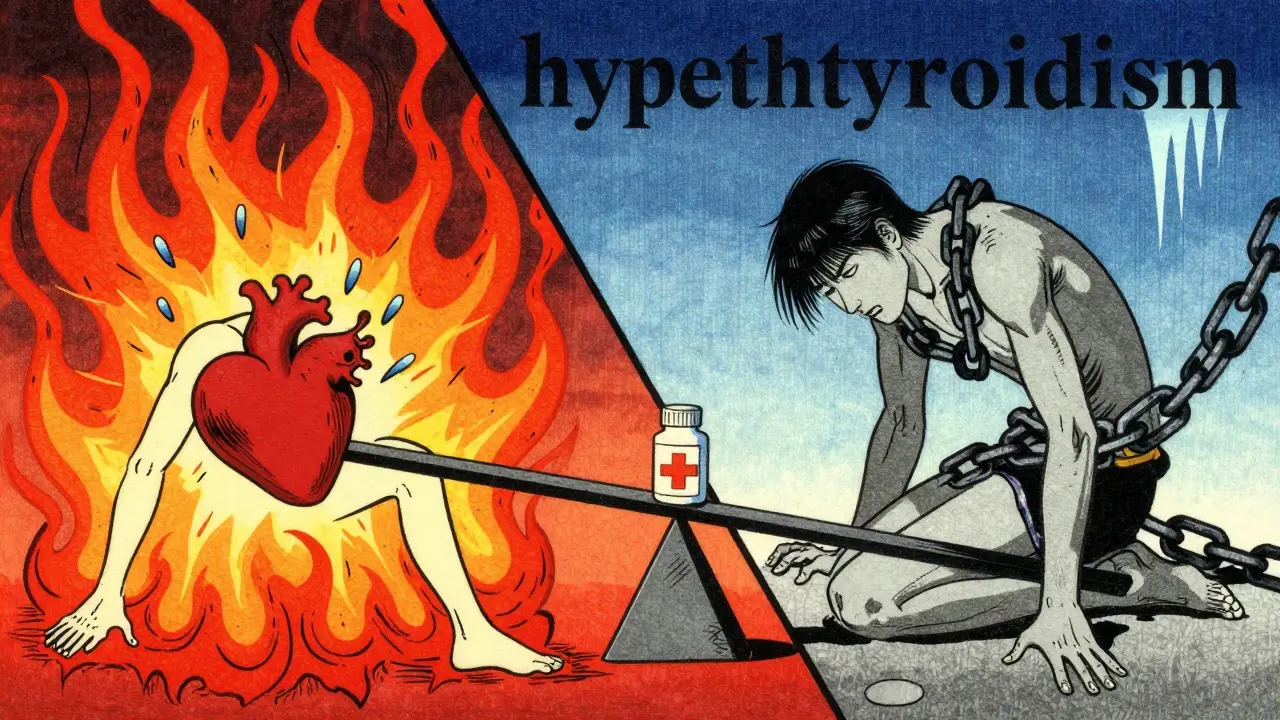
Imagine feeling wired, anxious, and unable to sleep, only to find out your heart is racing not because of stress, but because you took too much of a common pill. Or picture yourself exhausted, gaining weight rapidly, and battling depression, simply because a medication for an unrelated condition quietly shut down your thyroid. These aren’t just random health glitches; they are the direct results of thyroid medication misuse, which leads to dangerous states of excess or deficiency in thyroid hormones caused by incorrect dosing, intentional abuse, or unintended drug interactions.
The thyroid gland is your body’s metabolic engine. When it runs too fast (hyperthyroidism) or too slow (hypothyroidism), every system in your body suffers. While autoimmune diseases like Graves’ disease or Hashimoto’s thyroiditis are common causes, a significant portion of these disorders stems from how we handle medications. Whether it’s an athlete popping extra levothyroxine to burn fat, a patient skipping doses erratically, or someone taking amiodarone for heart rhythm issues, the consequences can be life-threatening.
The Hidden Danger of Levothyroxine Abuse
Levothyroxine is a synthetic form of thyroxine (T4), the primary hormone produced by the thyroid gland, approved by the FDA in 1955 as the standard treatment for hypothyroidism. It is one of the most prescribed drugs in the United States, with roughly 120 million prescriptions written annually. For millions, it is a life-saving medication that restores normal energy levels and metabolism. However, a dangerous trend has emerged: people using this drug for weight loss or performance enhancement without medical supervision.
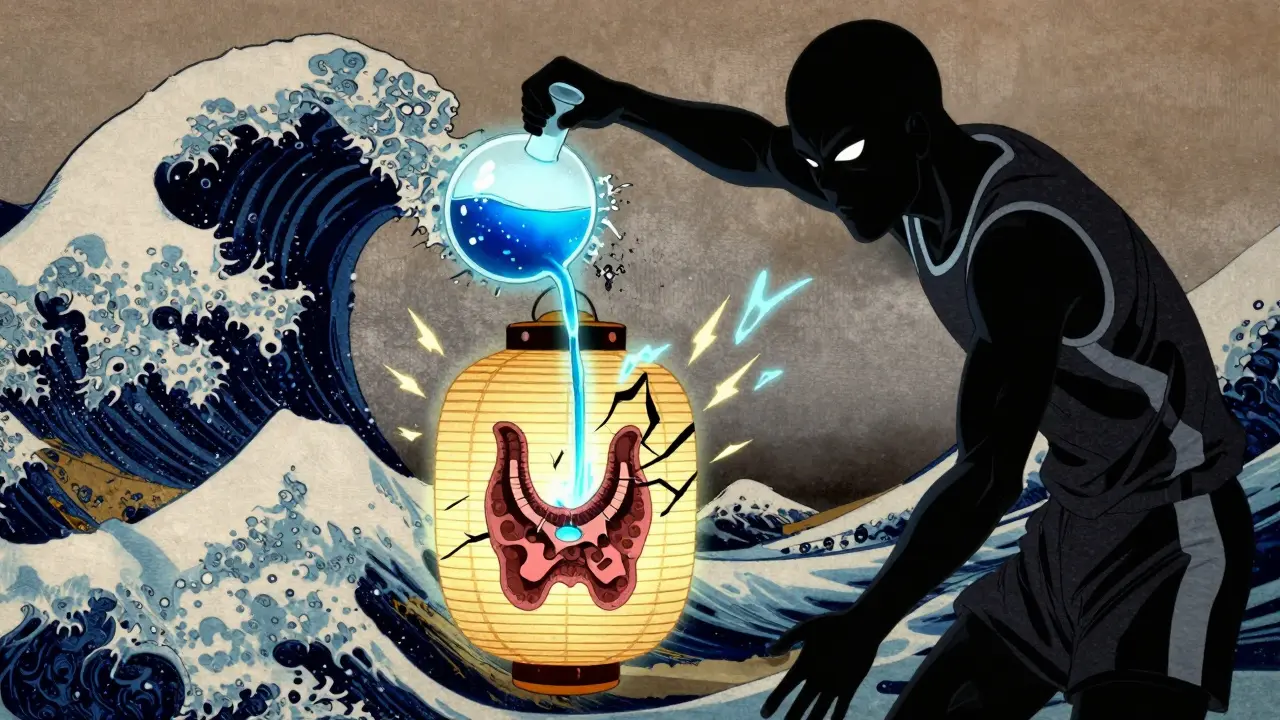
This practice, known as factitious hyperthyroidism, is a condition where patients intentionally ingest excessive thyroid hormone medication, leading to artificially high hormone levels and suppressed natural thyroid function. accounts for 5-10% of all hyperthyroidism cases. The logic behind the abuse is simple but flawed: more thyroid hormone equals faster metabolism equals weight loss. But the body doesn’t work like a car engine where you can just pour in more fuel to go faster. It works on a delicate feedback loop.
When you flood your system with external T4, your brain senses the excess and stops sending signals (TSH) to your thyroid gland to produce its own hormone. Over time, your natural production shuts down completely. You become dependent on the pills, and if you stop abruptly, you crash into severe hypothyroidism. Worse, the excess hormone puts immense strain on your heart. Symptoms include tremors, nausea, diarrhea, and insomnia. In severe cases, users experience chest pain, irregular pulses, and even hyperthermia with body temperatures exceeding 104°F (40°C).
| Symptom | Prevalence in Abuse Cases | Onset Speed |
|---|---|---|
| Weight Loss | 92% | Rapid (within days) |
| Physical Tremors | 78% | Within 30 days |
| Nausea/Vomiting | 65% | Early stage |
| Diarrhea | 58% | Common |
| Chest Pain | 15% | Severe overdose |
| Irritability/Nervousness | 45-49% | Psychological impact |
Unintended Culprits: Drugs That Suppress Thyroid Function
Not all thyroid issues come from trying to boost your metabolism. Sometimes, the medication you take for another condition accidentally sabotages your thyroid. This is called drug-induced hypothyroidism, which is a condition where certain non-thyroid medications interfere with thyroid hormone production or action, mimicking primary hypothyroidism.
One major offender is Amiodarone, which is an antiarrhythmic medication used to treat irregular heartbeats, containing 37.3% iodine by weight, which can trigger both hyperthyroidism and hypothyroidism depending on the patient's underlying thyroid status. Because it is so rich in iodine, it can cause two distinct types of thyroid dysfunction. Type 1 involves increased hormone synthesis in people already predisposed to overactive thyroids. Type 2 results from destructive thyroiditis, where the gland is damaged by the drug. Another surprising culprit is lithium, often prescribed for bipolar disorder. Long-term use causes hypothyroidism in 15-20% of users by blocking the release of thyroid hormones.
Even cancer treatments are changing the landscape. Immune checkpoint inhibitors, specifically combinations of PD-1 and anti-CTLA-4 therapies, have a thyrotoxicosis incidence as high as 8%. These drugs rev up the immune system to fight cancer, but sometimes the immune system attacks the thyroid instead. Dr. Angela Leung of UCLA Medical Center notes that this dysfunction often presents subtly but can progress rapidly, requiring frequent monitoring.
The symptoms of drug-induced hypothyroidism are identical to those caused by autoimmune conditions like Hashimoto’s. According to a 2022 meta-analysis in Endocrine Reviews, patients report fatigue (89%), cold intolerance (76%), weight gain (68%), depression (55%), and dry skin (47%). The tricky part is distinguishing whether the drug should be stopped or if the patient needs thyroid hormone replacement while continuing the necessary treatment.
How Doctors Spot Medication Misuse
If you suspect you or someone else is misusing thyroid medication, blood tests tell a specific story. In factitious hyperthyroidism, labs will show high levels of T3 and T4 but very low TSH. However, the key differentiator is the radioactive iodine uptake scan and thyroglobulin levels. In natural hyperthyroidism (like Graves’ disease), the thyroid gland is working overtime, so iodine uptake is high. In medication-induced cases, the gland is inactive, so uptake is low, and thyroglobulin (a protein made by the thyroid) remains low.
There is also a phenomenon known as the "lag effect." If a patient misses their levothyroxine doses for weeks and then takes a massive dose right before a clinic visit, their free T4 levels will spike temporarily. However, TSH levels take about 6 weeks to fully reflect a change in dosage. This discrepancy can lead to misdiagnosis in 15-20% of noncompliant patients, causing doctors to adjust doses incorrectly based on skewed data.
Real Stories from the Frontlines
Behind the statistics are real people facing serious health crises. On Reddit’s r/Thyroid community, user 'FitLifeJunkie' shared a harrowing experience after taking 200mcg of levothyroxine daily for three months to lose weight. The result wasn’t just weight loss; it was an emergency room visit with a heart rate of 142 bpm and severe chest pain. "Doctors said I was lucky to be alive," they wrote.
Another common pattern is therapeutic noncompliance-starting and stopping medication without guidance. User 'SarahM' on HealthUnlocked described how her doctor kept increasing her dose because she kept losing weight, unaware she was secretly taking extra pills. It took six months of stabilization after she confessed to get her levels back to normal. These stories highlight a critical gap: many patients do not recognize the cardiac risks until it is too late.
Safe Management and Prevention Strategies
Managing medication-induced thyroid disorders requires strict protocols and open communication with healthcare providers. Here is how to stay safe:
- Regular Monitoring: The American Thyroid Association recommends thyroid function tests (TSH, free T4) every 6-8 weeks when initiating or adjusting medication. Ninety-five percent of patients require dose adjustments within the first six months.
- Avoid Self-Dosing: Never take leftover thyroid medication from family members or buy unregulated supplements online. The FDA has documented hundreds of websites selling thyroid hormone products without prescriptions, leading to inconsistent dosing and iatrogenic hyperthyroidism.
- Watch for Interactions: Calcium supplements, iron, and certain antacids can reduce levothyroxine absorption by 35-50% if taken simultaneously. Always separate these by at least four hours.
- Recognize Red Flags: If you experience rapid heartbeat, unexplained anxiety, heat sensitivity, or sudden weight changes, seek medical attention immediately. Do not assume it is just stress or aging.
- Washout Periods: For suspected mild abuse, the Endocrine Society advises a washout period of 2-3 weeks with close cardiac monitoring. In 87% of mild cases, symptoms resolve spontaneously once the excess hormone clears the system.
Patient education is critical. Studies show that patients who receive comprehensive medication counseling have a 63% lower risk of noncompliance. Understanding that thyroid medication is not a weight-loss shortcut and that consistency is key to stability can prevent many of these complications.
The Future of Thyroid Care
Technology is beginning to help solve the problem of misuse. In June 2023, the FDA approved the first digital pill version of levothyroxine, which contains an ingestible sensor to improve adherence monitoring. Initial studies showed a 52% reduction in dosing errors. Additionally, new genetic markers identified in 2023 may allow doctors to predict individual susceptibility to amiodarone-induced thyroid dysfunction, enabling personalized risk assessments before starting treatment.
Telemedicine programs are also expanding, with projections suggesting they could reduce medication misuse by 28% by 2026 through improved remote monitoring. However, the challenge remains: as long as obesity rates rise and the desire for quick fixes persists, the temptation to misuse thyroid medication will likely continue. The goal is to shift the culture from viewing thyroid hormones as performance enhancers to understanding them as vital, regulated biological signals that demand respect and precision.
Can taking too much levothyroxine cause permanent damage?
Yes, chronic misuse can lead to permanent issues such as osteoporosis, with bone mineral density decreasing by 2-4% annually in untreated cases. It can also cause long-term cardiac arrhythmias and suppress natural thyroid function, making you dependent on medication indefinitely.
What is the difference between factitious hyperthyroidism and Graves' disease?
Factitious hyperthyroidism is caused by ingesting excess thyroid hormone medication, resulting in low radioactive iodine uptake and low thyroglobulin levels. Graves' disease is an autoimmune disorder where the thyroid produces too much hormone naturally, showing high iodine uptake and elevated thyroglobulin.
Which medications commonly cause hypothyroidism?
Common medications include Amiodarone (due to high iodine content), Lithium (blocks hormone release), Immune Checkpoint Inhibitors (used in cancer therapy), and Iodinated Contrast Agents (can trigger the Jod-Basedow effect). Statins and beta-blockers can also mask symptoms or affect metabolism.
How long does it take for thyroid levels to stabilize after stopping misuse?
For mild cases of levothyroxine abuse, a washout period of 2-3 weeks is often sufficient for symptoms to resolve. However, full normalization of TSH levels can take up to 6-8 weeks because of the lag effect in the pituitary-thyroid axis. Drug-induced hypothyroidism from lithium may resolve within 3-6 months of discontinuation.
Is it safe to use thyroid medication for weight loss?
No, it is extremely dangerous. Using thyroid medication for weight loss without a diagnosed deficiency leads to toxic hormone levels, increasing the risk of heart attacks, strokes, and bone loss. The temporary weight loss is offset by severe metabolic disruption and potential life-threatening cardiac events.