Tricyclic Antidepressant Side Effects: Amitriptyline, Nortriptyline, and More

TCA Side Effect Risk & Comparison Tool
Patient Profile
Risk Assessment & Comparison
Select your profile details and click "Analyze Risks" to see the estimated side effect probabilities and safety warnings.
Imagine taking a medication that could lift the fog of depression or silence chronic nerve pain, but comes with a price tag of dizziness, dry mouth, and potential heart risks. That is the reality for many patients prescribed Tricyclic Antidepressants (TCAs) like a class of older antidepressants developed in the 1950s that block serotonin and norepinephrine reuptake. While newer drugs have largely taken over as first-line treatments, TCAs remain powerful tools for specific conditions. However, their side effect profile is complex and often severe. Understanding these effects is not just about managing discomfort; it is about safety.
Key Takeaways
- Amitriptyline causes more sedation and anticholinergic side effects (dry mouth, constipation) than Nortriptyline due to higher receptor affinity.
- TCAs carry significant cardiovascular risks, including QTc prolongation and orthostatic hypotension, requiring ECG monitoring in high-risk patients.
- Overdose is life-threatening due to narrow therapeutic index; symptoms include QRS widening, seizures, and cardiac collapse.
- Elderly patients face heightened risks of cognitive decline, falls, and urinary retention, making TCAs generally unsuitable for this group per Beers Criteria.
- Start low and go slow: Begin at 10-25 mg at bedtime to minimize daytime sedation and allow gradual tolerance buildup.
Why Do Tricyclic Antidepressants Cause So Many Side Effects?
To understand the side effects, you need to look at how Amitriptyline is a tertiary amine tricyclic antidepressant known for high anticholinergic activity and sedation. These drugs are not selective. They don’t just target serotonin and norepinephrine receptors to improve mood. They also bind strongly to other receptors throughout your body.
Amitriptyline has a high affinity for muscarinic acetylcholine receptors (Ki = 1.8 nM), histamine H1 receptors (Ki = 0.6 nM), and alpha-1 adrenergic receptors (Ki = 1.7 nM). This "dirty" pharmacological profile means it blocks signals meant for digestion, bladder control, heart rate regulation, and alertness. In contrast, Nortriptyline is a secondary amine TCA metabolite of amitriptyline with fewer anticholinergic and sedating side effects. It binds less tightly to these non-target receptors (muscarinic Ki = 22.4 nM), which is why many patients find it easier to tolerate. The difference in chemical structure directly translates to the difference in your daily experience.
Common Physical Side Effects: What to Expect
Most users will encounter some physical changes. These are not necessarily signs that the drug isn’t working, but they require management.
- Dry Mouth (Xerostomia): Reported in up to 30% of amitriptyline users. This isn’t just uncomfortable; it increases the risk of tooth decay and oral infections because saliva protects your teeth. You might find yourself drinking water constantly or using sugar-free gum.
- Constipation: Affects 20-25% of patients. The drug slows down intestinal transit. Severe cases can lead to impaction, so increasing fiber and fluid intake is crucial from day one.
- Sedation: Amitriptyline causes drowsiness in up to 40% of users. This is why doctors prescribe it at night. Nortriptyline is less sedating, affecting about 25% of patients, but still warrants caution when driving or operating machinery initially.
- Blurred Vision: Occurs in 15-20% of users. It usually fades as your body adapts, but if it persists, it can make tasks like reading or driving dangerous.
- Urinary Retention: Happens in 10-15% of patients, particularly men with enlarged prostates. If you struggle to urinate, seek medical attention immediately to prevent bladder damage.
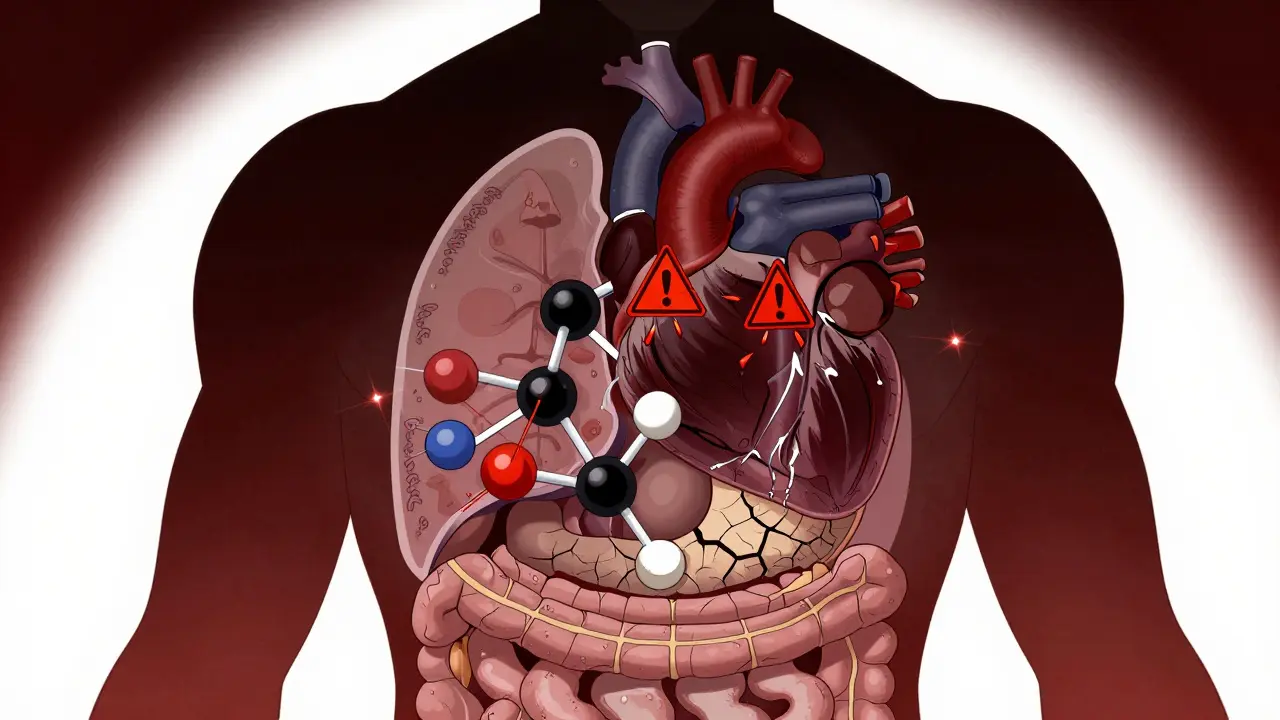
Cardiovascular Risks: The Hidden Dangers
The most serious concerns with TCAs involve the heart. A study in The Lancet (2019) found a 35% increased risk of cardiovascular events compared to SSRIs. Here is what you need to watch for:
- Orthostatic Hypotension: Your blood pressure drops when you stand up, causing dizziness or fainting. This affects 15-20% of users. Always rise slowly from sitting or lying positions.
- Tachycardia: Resting heart rate may increase by 10-20 beats per minute. This is common but should be monitored if you have preexisting heart conditions.
- QTc Prolongation: Amitriptyline can lengthen the electrical cycle of the heart by 20-40 milliseconds. This can lead to ventricular fibrillation, a life-threatening arrhythmia. Patients with existing heart disease require regular ECG monitoring, especially at doses above 100 mg daily.
If you feel palpitations, chest pain, or severe lightheadedness, contact your doctor immediately. These are not minor annoyances; they are warning signs.
Cognitive Effects and Elderly Risks
For older adults, TCAs pose unique challenges. Confusion occurs in approximately 25% of patients over age 65, with disorientation reported in 15% of cases. The anticholinergic burden contributes to cognitive impairment, which the FDA warns can accelerate dementia-like symptoms.
The Beers Criteria is a clinical guideline listing medications potentially inappropriate for use in older adults. It specifically recommends avoiding amitriptyline in the elderly due to a 50% increased risk of cognitive decline and a 70% increased risk of falls. If you are caring for an aging parent on TCAs, monitor them closely for balance issues and memory lapses. Consider discussing alternatives like nortriptyline or non-drug therapies.
Comparing Amitriptyline and Nortriptyline
| Attribute | Amitriptyline | Nortriptyline |
|---|---|---|
| Chemical Class | Tertiary Amine | Secondary Amine |
| Sedation Risk | High (up to 40%) | Moderate (~25%) |
| Dry Mouth Incidence | Up to 30% | Lower (varies) |
| Cardiovascular Risk | Higher QTc prolongation | Lower relative risk |
| Typical Starting Dose | 25-50 mg daily | 25 mg daily |
| Best For | Severe neuropathic pain, insomnia | Patients sensitive to sedation, elderly (with caution) |
Nortriptyline is often preferred for patients who cannot tolerate the heavy sedation of amitriptyline. However, both drugs require careful titration. Start low (10-25 mg) and increase gradually over 4-6 weeks to allow your body to adjust.
Overdose Risks: Why TCAs Are Dangerous
TCAs have a narrow therapeutic index, meaning the difference between a helpful dose and a toxic one is small. Overdose is a medical emergency. Symptoms include:
- QRS Widening: On an ECG, a QRS complex greater than 100 milliseconds indicates toxicity.
- Severe Hypotension: Systolic blood pressure dropping below 90 mmHg.
- Seizures: Occurring in 15-20% of overdose cases.
- Respiratory Depression: Slowed breathing that can lead to coma.
Fatalities typically result from arrhythmias or cardiac collapse. Never take more than prescribed, and keep these medications out of reach of children. If you suspect an overdose, call emergency services immediately.
Managing Side Effects: Practical Tips
You don’t have to suffer through side effects without help. Here are evidence-based strategies:
- Combat Dry Mouth: Use sugar-free gum, sip water frequently, and maintain rigorous dental hygiene. Products like Biotene can help, but see your dentist regularly to check for cavities.
- Prevent Constipation: Eat high-fiber foods, drink plenty of water, and consider a mild stool softener if needed. Don’t wait until you’re backed up.
- Minimize Dizziness: Stand up slowly. Sit on the edge of the bed for a minute before standing. Avoid alcohol, which worsens orthostatic hypotension.
- Monitor Weight: Weight gain (10-15 pounds in the first 6 months) is common. Track your diet and exercise to mitigate this.
- Never Stop Abruptly: Withdrawal symptoms, including "electric shock" sensations, affect 22% of discontinuing patients. Taper off over 4-6 weeks under medical supervision.
When Are TCAs Still the Right Choice?
Despite their drawbacks, TCAs are not obsolete. They excel in specific scenarios where newer drugs fail:
- Treatment-Resistant Depression: Response rates are 65-70% for TCAs compared to 50-55% for SSRIs in patients who haven’t responded to previous trials.
- Neuropathic Pain: Amitriptyline provides significant pain relief in 35-40% of patients with diabetic neuropathy, outperforming many SNRIs.
- Migraine Prevention: Low-dose amitriptyline reduces migraine frequency effectively, as noted by patient reports showing attacks dropping from 15 to 3 per month.
If you’ve tried multiple SSRIs and SNRIs without success, a TCA might be the breakthrough you need. But it requires a partnership with your doctor to manage the risks.
How long does it take for amitriptyline side effects to go away?
Most side effects like drowsiness and dry mouth peak in the first 1-2 weeks and gradually improve as your body adjusts. Full therapeutic benefits for depression take 2-4 weeks. If side effects persist beyond 4 weeks or are severe, consult your doctor about adjusting the dose or switching medications.
Can tricyclic antidepressants cause weight gain?
Yes, weight gain is a common side effect, with users reporting an average increase of 10-15 pounds in the first 6 months. This is partly due to increased appetite and metabolic changes. Monitoring your diet and staying active can help mitigate this effect.
Is nortriptyline safer than amitriptyline for elderly patients?
Nortriptyline is generally better tolerated than amitriptyline due to lower anticholinergic activity. However, the Beers Criteria still advises caution with all TCAs in the elderly due to risks of falls, confusion, and urinary retention. It should only be used if benefits clearly outweigh risks and no safer alternatives exist.
What should I do if I miss a dose of my TCA?
Take the missed dose as soon as you remember, unless it is almost time for your next dose. Do not double up to make up for a missed dose, as this increases the risk of toxicity and side effects. Consistency is key to maintaining stable blood levels.
Do tricyclic antidepressants interact with other medications?
Yes, significantly. TCAs interact with MAOIs (causing hypertensive crisis), other serotonergic drugs (risk of serotonin syndrome), and CYP2D6 inhibitors (increasing TCA levels). Always provide your doctor with a complete list of all medications and supplements you are taking.