Understanding State Laws on Generic Drug Substitution: A Guide to US Regulations
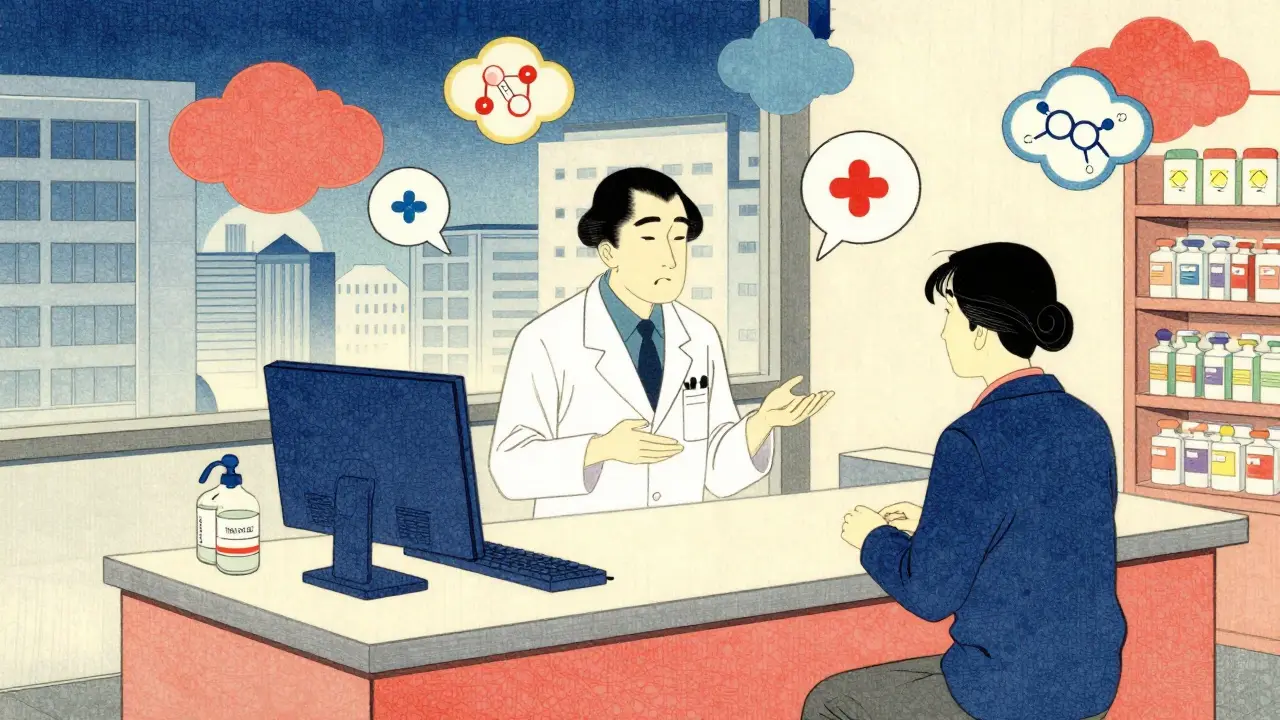
Ever wonder why your pharmacist in one state automatically gives you a generic drug, while in another, they have to ask your permission first? It isn't just store policy-it's the law. In the U.S., we have a fragmented system where 50 different states and D.C. decide how generic substitution is the process where a pharmacist replaces a brand-name prescription drug with a therapeutically equivalent generic version . This legal patchwork affects about 6 billion prescriptions every year, balancing the need for lower healthcare costs with the necessity of patient safety.
The Foundation: How Generics are Approved
To understand state laws, you first have to understand the federal baseline. Most state regulations lean on the Hatch-Waxman Act is the 1984 federal law that created the modern pathway for generic drug approval, allowing manufacturers to rely on the original drug's safety data . This act led to the creation of the FDA Orange Book is the official FDA publication that lists all approved drug products and identifies which generics are therapeutically equivalent to brand-name drugs . When a pharmacist looks at the Orange Book, they are looking for a "therapeutic equivalence" rating. An "A" rating means the generic is chemically identical and bioequivalent, while a "B" rating suggests some minor differences in inactive ingredients, though it's still considered therapeutically equivalent.
Four Ways States Handle Your Prescriptions
While the FDA decides if a drug *can* be substituted, the state decides *how* it happens. These laws generally fall into four categories that change your experience at the pharmacy counter.
- Pharmacist Duty: In 22 states, substitution is mandatory. The pharmacist must give you the generic unless the doctor specifically wrote "Dispense as Written." In 28 other states, it's permissive, meaning the pharmacist *can* substitute but isn't required to.
- Patient Consent: This is where it gets tricky. 32 states use "presumed consent," where the pharmacy assumes you want the cheaper option unless you say no. In 18 states, you must give explicit consent-basically a "yes"-before they switch the drug.
- Notification: About 41 states require the pharmacist to tell you after the substitution has occurred, ensuring you know exactly what you're taking home.
- Liability Protection: To prevent pharmacists from being sued every time a generic is used, 37 states provide immunity from civil or criminal liability, provided the pharmacist followed the legal substitution protocols correctly.
| Law Type | Pharmacist Action | Patient Role | General Impact |
|---|---|---|---|
| Mandatory | Must substitute automatically | Opt-out if desired | Higher generic fill rates (approx. 94.1%) |
| Permissive | May substitute if appropriate | Usually asked for consent | Lower generic fill rates (approx. 88.3%) |
| Strict/Restrictive | Cannot substitute without auth | Must explicitly approve | Higher brand-name usage, higher cost |
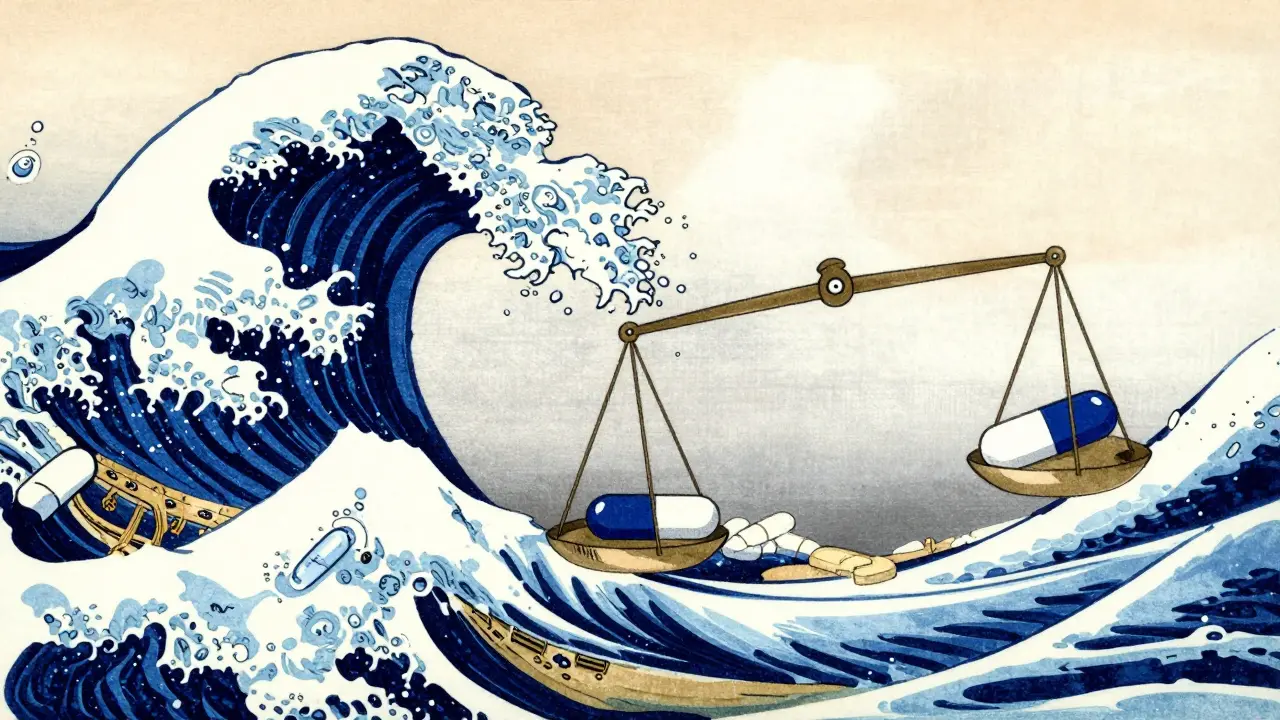
The Danger Zone: Narrow Therapeutic Index Drugs
Substitution isn't always a win-win. Some medications are Narrow Therapeutic Index (NTI) drugs are medications where a small difference in dose or blood concentration can lead to a significant change in the drug's effect or cause toxicity . For these drugs, even a tiny variation between a brand and a generic can be dangerous. Think of drugs like warfarin (a blood thinner) or levothyroxine (for thyroid issues).
Because of this risk, 15 states maintain their own lists of NTI drugs that cannot be substituted without extra precautions. For instance, Kentucky limits substitutions for antiepileptic drugs and digitalis glycosides. Even when the FDA says a drug is equivalent, some patients report "therapeutic failure" after a switch. Data from the FDA's MedWatch system showed over 200 reports between 2020 and 2022 where patients felt the generic didn't work the same as the brand, with levothyroxine being a frequent culprit.
The New Frontier: Biosimilars and Biologics
While small-molecule generics are straightforward, Biosimilars are highly similar versions of complex biological medicines, such as insulin or monoclonal antibodies, which are grown in living cells rather than synthesized chemically . Because biologics are so complex, they can't be identical copies. This has led to a new wave of state laws. As of 2023, 49 states and D.C. have rules for biosimilar substitution.
The rules here are even more varied. Florida requires pharmacies to create their own formularies to ensure biosimilar switches don't threaten patient safety. Meanwhile, the FDA has introduced an "interchangeable" designation-a higher standard than just being a biosimilar-which 12 states have already integrated into their laws to make substitutions safer and easier.

The Economic and Practical Reality
Why bother with this complicated system? Money. Between 2009 and 2019, generic substitution saved an estimated $1.7 trillion. For state governments, this is a massive win; mandatory substitution laws can save Medicaid programs around $1.2 billion annually. However, this efficiency comes at a cost to the professionals. Pharmacists spend an average of 12.7 minutes per prescription just verifying if a substitution is legal in their specific jurisdiction.
This complexity becomes a real problem for people living near state borders. A pharmacist in New York might have to ask for permission, while their counterpart across the bridge in New Jersey just does it automatically. This often confuses patients and leads to a higher rate of "prescription abandonment," where patients leave their meds at the pharmacy because the price is higher than expected or they are confused by the drug version they received.
What is the difference between a generic and a biosimilar?
A generic drug is a chemical copy of a brand-name drug and is identical in every way that matters. A biosimilar is a version of a biological drug (made from living cells). Because biological molecules are massive and complex, a biosimilar is "highly similar" but not an exact copy. This is why biosimilar substitution laws are often stricter than generic laws.
Can my doctor prevent a pharmacy from substituting a generic?
Yes. Doctors can write "Dispense as Written" (DAW) on a prescription. This tells the pharmacist that the brand-name drug is medically necessary and no substitution should be made. This is common for NTI drugs where the patient has already stabilized on a specific brand.
How do I know if my drug is therapeutically equivalent?
The most reliable source is the FDA Orange Book. If a drug has an "A-rated" equivalent, it means the FDA has determined the generic is the same in terms of active ingredient, strength, dosage form, and route of administration, and that it performs the same way in the body.
What should I do if I feel a generic medication isn't working?
Contact your healthcare provider immediately. While most generics are equivalent, some people experience different reactions due to inactive ingredients or the narrow therapeutic index of certain drugs. Your doctor may need to switch you back to a brand or a different generic manufacturer.
Do all states have the same laws for antiepileptic drugs?
No. Antiepileptic drugs are often treated as NTI drugs. Hawaii, for example, is one of the most restrictive states, requiring both the practitioner's and the patient's consent before a substitution can be made, unlike states with mandatory substitution laws.
Next Steps for Patients and Providers
If you are a patient, the best way to avoid surprises is to ask your pharmacist specifically if your medication is a brand or a generic and if it is an "A-rated" equivalent from the Orange Book. If you are taking a high-risk medication like warfarin or a thyroid hormone, discuss with your doctor whether a "Dispense as Written" order is necessary for your stability.
For pharmacy staff, leveraging automated state law verification tools is the most effective way to reduce errors. Since 83% of management systems now include these tools, they can cut substitution mistakes by over 60%, which is vital when dealing with prescriptions that cross state lines.
Mary Johnson
April 11, 2026 AT 18:22Absolute joke that they just swap our meds without telling us in some states. It is just a way for big pharma and the government to experiment on us with cheaper fillers while the actual medicine is just a placeholder. They probably use the same generic for five different diseases just to see what happens. Total scam to keep us sick but dependent on the system
mimi clouet
April 12, 2026 AT 10:04Actually, the FDA Orange Book is a total lifesaver! 📚 It's basically the gold standard for making sure the generic actually does its job. Most people don't realize that the active ingredient has to be exactly the same for an A-rating! It's super cool how the system works to keep costs down while keeping us safe 😊✨
john chiong
April 14, 2026 AT 02:07The sheer audacity of this fragmented system is mind-boggling. It is a moral failure that a person's healthcare quality depends on which side of a state line they happen to wake up on. Utterly disgraceful that we let this bureaucratic nightmare dictate our well-being just to save a few bucks for the state coffers
Catherine Mailum
April 14, 2026 AT 15:39oh sure because the government is just so amazing at protecting us right. i love how we just trust a list and hope the generic thyroid pill actually works while we all just slowly drift into a coma lol
Haley Moore
April 14, 2026 AT 19:06Imagine being surprised by these laws in 2024... like seriously? 🙄 It's basically common knowledge for anyone who actually pays attention to their health. The whole thing is just such a mess and honestly kind of embarrassing that we still deal with this 💅
Shaylia Helland
April 16, 2026 AT 16:01it's really a shame how this affects people who have to travel for work or live in those border towns because you just never know what you're getting until you hit the pharmacy counter and the price is suddenly double or the pill looks completely different than the one you've taken for years and it just adds this layer of anxiety to something that should be simple
Jasmin Stowers
April 17, 2026 AT 02:34makes sense
melissa mac
April 17, 2026 AT 19:41I think it's helpful to remember that while the system is complex, the goal is to make medicine accessible for everyone. We can all work together with our doctors to make sure we're getting the right version for our specific needs, especially for those NTI drugs mentioned
Tabatha Pugh
April 19, 2026 AT 12:50The biosimilar part is where most people get confused because they think it's just another generic. It's not. The molecular structure is completely different. Most people don't even understand what a monoclonal antibody is, let alone how it's substituted in a pharmacy setting
Clare Elizabeth
April 20, 2026 AT 14:42This is such a great guide! It's so empowering to know we can just ask our pharmacist about the A-rating! Let's all be proactive about our health and get the best care possible!! 🌟
Anurag Moitra
April 22, 2026 AT 01:09It is quite fascinating to observe the disparity in regulatory frameworks across different jurisdictions. The economic impact of 1.7 trillion dollars is substantial, yet the clinical risk associated with narrow therapeutic index drugs necessitates a more cautious approach than a purely fiscal one would dictate
Rim Linda
April 23, 2026 AT 07:48OMG the part about the blood thinners actually terrified me!!! 😱 Like what if they just switch it and suddenly everything goes wrong?? I can't even deal with this stress right now!! 😭