What Does a Medication Expiration Date Really Mean for Your Safety
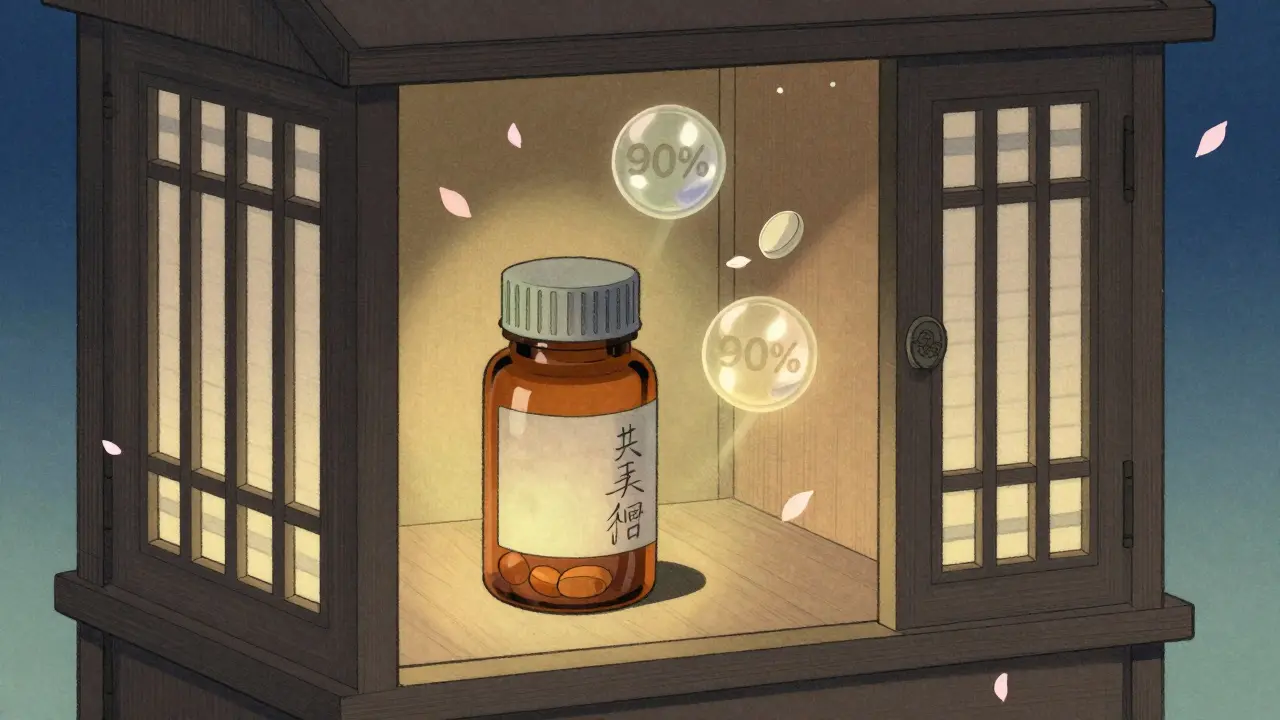
When you find an old pill bottle in the back of your medicine cabinet, the expiration date staring back at you isn't just a suggestion-it's a legal and scientific boundary. But what does that date actually mean for your safety? Many people assume expired meds are dangerous, while others think they're still fine. The truth? It's more complicated than either side lets on.
What the Expiration Date Actually Guarantees
The expiration date on your medication is the last day the manufacturer guarantees the drug will work as intended and remain safe to use. This isn't a guess. It's based on real, rigorous testing. Under FDA rules, drugmakers must prove their products maintain at least 90% of their labeled potency under specific storage conditions-usually 25°C (77°F) and 60% humidity-over time. Most expiration dates are set between 12 and 60 months from manufacturing, depending on how stable the drug is.
That doesn’t mean the drug suddenly turns toxic after that date. It means the manufacturer can no longer promise it will work as well as it should. The 90% potency threshold is the minimum standard for therapeutic effectiveness. If a pill drops below that, it might not treat your condition properly, even if it still looks fine.
What Happens to Medications After They Expire?
Most solid medications-like tablets and capsules-don’t break down quickly. In fact, the U.S. military’s Shelf Life Extension Program (SLEP), which tested over 3,000 lots of 122 different drugs, found that 88% of them were still effective 15 years past their expiration date when stored properly. Some, like ciprofloxacin and amoxicillin, retained over 90% potency even after a decade.
But not all drugs behave the same. Certain medications degrade fast, and that’s where danger kicks in. Nitroglycerin, used for heart attacks, can lose half its potency within months after opening-even before the expiration date. Insulin loses 1.5% to 2.5% of its strength every month if stored above 8°C. Liquid antibiotics like amoxicillin-clavulanate suspension become useless after just 14 days, regardless of the printed date. These aren’t theoretical risks. People have died from untreated infections because they used expired liquid antibiotics that no longer worked.
When Expired Medications Are Risky
Not all expired drugs are equal. The Institute for Safe Medication Practices breaks them into three risk categories:
- High risk: Nitroglycerin, insulin, epinephrine (EpiPens), and liquid antibiotics. These can fail catastrophically. An expired EpiPen might not stop a fatal allergic reaction. A weakened insulin dose could lead to dangerous high blood sugar.
- Moderate risk: Antibiotics, anticoagulants like warfarin, and seizure meds. If these lose potency, they might not fully treat the condition, leading to drug resistance, uncontrolled seizures, or dangerous clots.
- Low risk: Most pills like statins, antidepressants, and blood pressure meds. These degrade slowly. Even if they’re 10% weaker, they might still help-especially in emergencies.
Dr. Joel Davis from Johns Hopkins says it’s reasonable to use an expired statin for a few extra days during a pharmacy shortage, if it was stored correctly. But never use an expired EpiPen or insulin. The difference isn’t about convenience-it’s about life-or-death outcomes.
Storage Matters More Than You Think
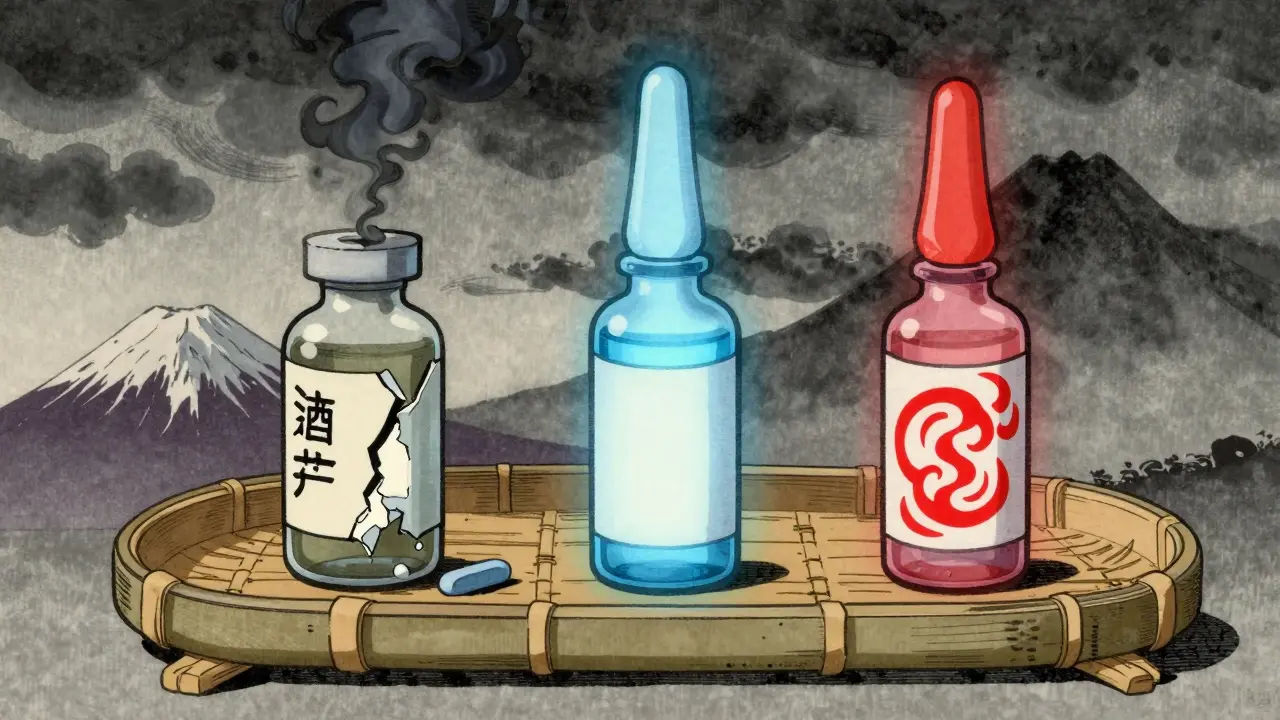
Your medicine’s real shelf life depends almost entirely on how you store it. The expiration date assumes ideal conditions: cool, dry, dark. But most people store meds in the bathroom, where humidity from showers can reach 85%. That’s bad news. Heat and moisture speed up chemical breakdown. A drug stored at 30°C (86°F) can degrade 40-60% faster than one kept at 25°C.
Keep pills in their original bottles with child-resistant caps. Avoid transferring them to pill organizers for long-term storage. Those containers don’t protect against light or moisture. And never leave them in a hot car or near a window. If your aspirin smells like vinegar, or your tablets are crumbling or discolored, toss them. That’s not just a sign of age-it’s a sign of chemical change.
What the FDA Says vs. What the Data Shows
The FDA tells you: Don’t use expired drugs. Their official stance is clear: expiration dates are absolute. They cite cases where people got sick from degraded meds.
But the data tells a different story. The SLEP program saved the Department of Defense $1.2 billion a year by extending expiration dates on stockpiled drugs. Researchers at the University of Utah are now using machine learning to predict how long a drug will last based on its storage history. In trials, their algorithm predicted potency with 89.7% accuracy.
So why the disconnect? Because the FDA’s job is to protect the public from worst-case scenarios. They can’t guarantee safety for every possible storage condition. A drug that lasts 10 years in a cool basement might fail in a humid apartment. The manufacturer’s date is the safest, most conservative number.
When to Throw It Out-and How
Here’s your simple rule: If it’s one of the high-risk meds (insulin, EpiPen, nitroglycerin, liquid antibiotics), throw it out on the dot. No exceptions.
For everything else, check for physical changes: color shifts, odd smells, crumbling, or crystals. If it looks or smells wrong, don’t risk it.
For disposal, don’t flush everything. Only flush meds on the FDA’s Flush List-like fentanyl patches and certain opioids. For most others, use a drug take-back program. In 2023, over 5,800 sites across the U.S. collected nearly a million pounds of expired or unused medications. Many pharmacies now offer drop-off bins. If that’s not available, mix pills with coffee grounds or cat litter in a sealed bag before tossing them in the trash. This makes them unappealing to kids or pets.
What’s Changing in the Future
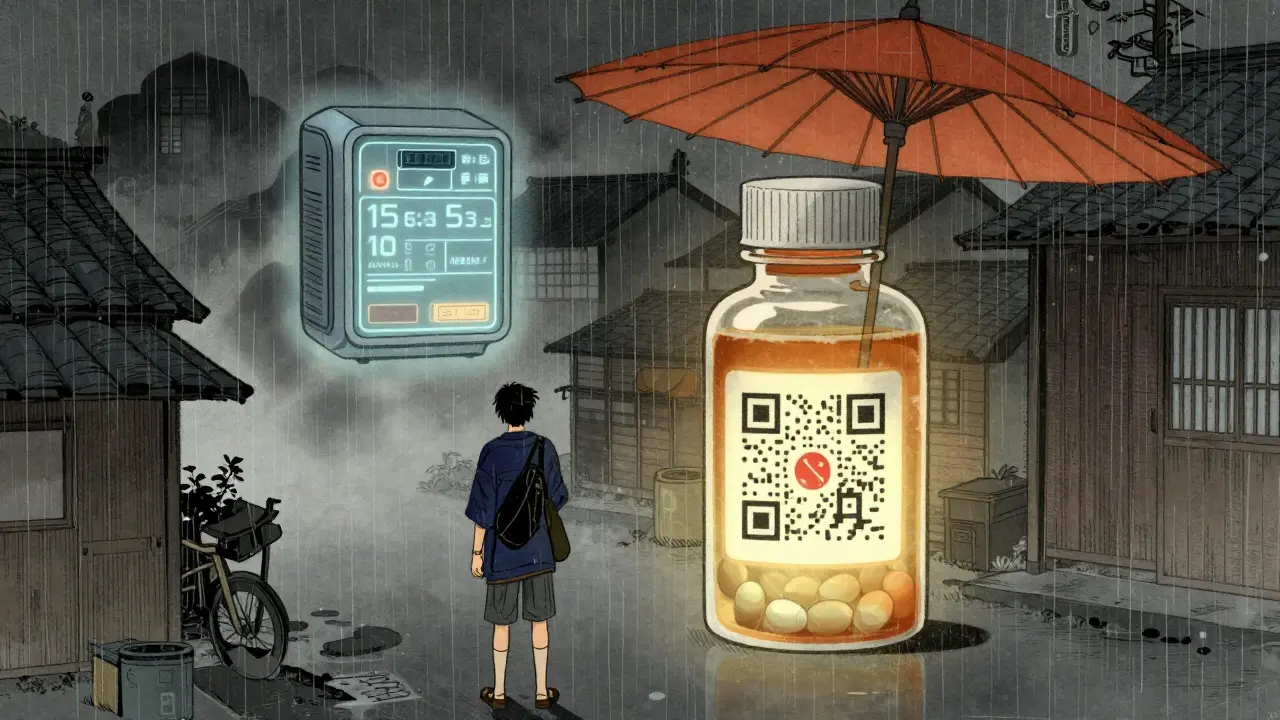
The system is starting to evolve. The FDA is testing smart packaging with Bluetooth sensors that track temperature and update expiration dates in real time. Early results show a 22% drop in unnecessary discards for insulin. Companies are also adding time-temperature indicators-tiny stickers that change color if a drug got too hot.
By 2030, better testing could extend average drug shelf lives by nearly half. That could save billions globally. But until then, the rule stays simple: when in doubt, don’t use it. Especially if your life depends on it.
What to Do If You Have No Other Option
If you’re in a remote area, during a disaster, or facing a shortage, and you have no choice but to use an expired medication, here’s how to reduce risk:
- Only use solid pills (tablets, capsules)-not liquids or injectables.
- Check for discoloration, odor, or texture changes. If anything’s off, don’t use it.
- Use it only for non-life-threatening conditions. Never for infections, heart issues, seizures, or allergies.
- Get new medication as soon as possible. This is a last-resort stopgap.
It’s not ideal. But in emergencies, better to use a slightly weaker pill than nothing at all. Just don’t make it a habit.