Who Actually Makes Authorized Generics? The Real Manufacturers Behind the Labels
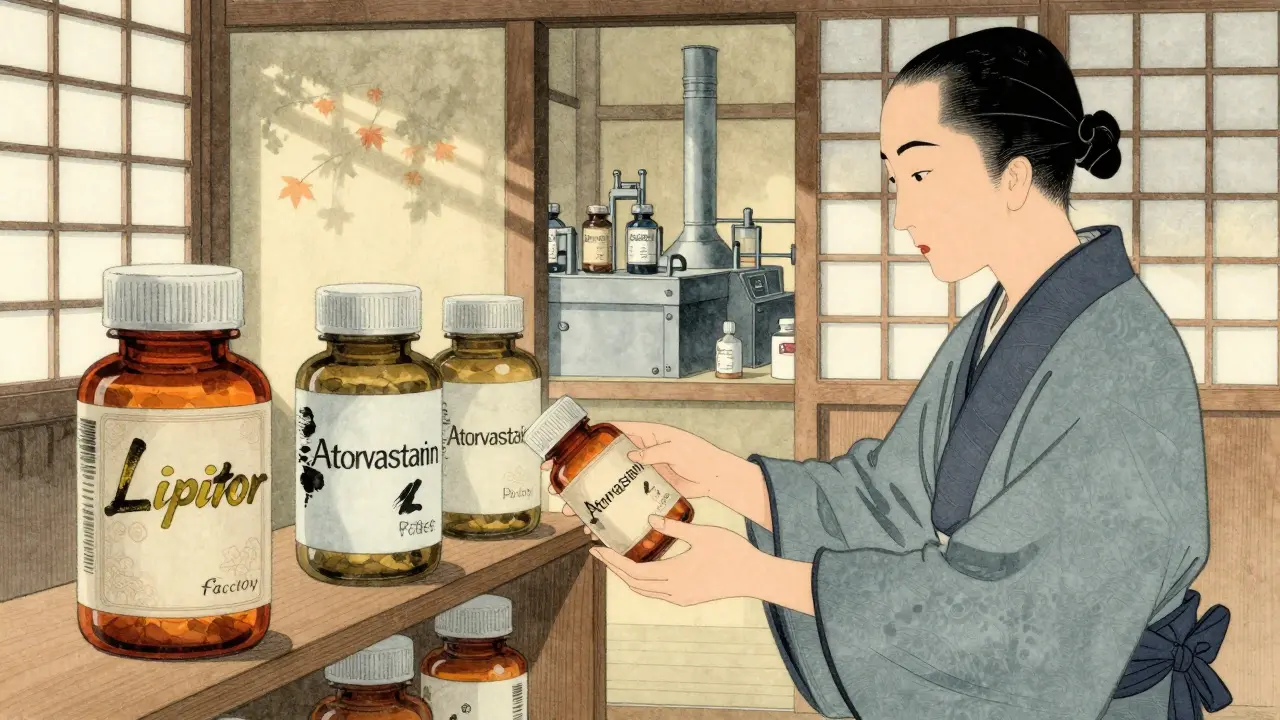
When you see a pill with a plain label and a low price, you assume it’s made by a generic drug company. But what if that same pill was made in the exact same factory as the brand-name version? That’s the reality of authorized generics. They look like generics, cost like generics, but they’re not made by generic companies at all. They’re made by the original brand-name drug makers themselves.
They’re Not Really Generics - They’re the Same Drug, Just a Different Label
Authorized generics aren’t copies. They’re the exact same drug, made with the same ingredients, in the same factory, using the same machines, and tested the same way as the brand-name version. The only difference? The label. Instead of saying "Lipitor," it says "Atorvastatin" with a private label. The FDA calls this a "listed drug" marketed under the original New Drug Application (NDA). That means no new bioequivalence studies are needed. It’s the same product, just sold under a different name.This isn’t a loophole. It’s a legal pathway created by the Hatch-Waxman Act of 1984. The idea was to let brand companies respond to generic competition without losing control over quality. If a generic version is about to hit the market, the brand company can launch its own cheaper version - an authorized generic - and keep customers from switching to a competitor’s product.
Who Makes Them? Three Main Ways
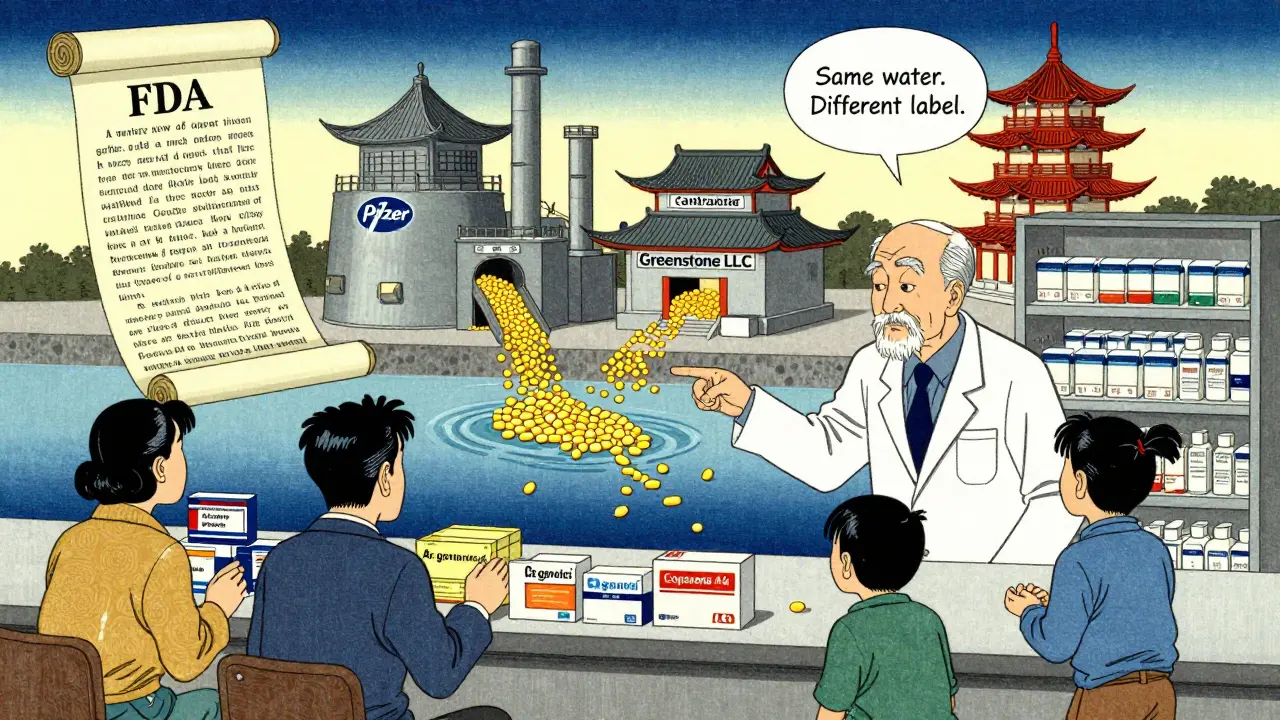
There are three ways authorized generics get made, and it’s not always who you think.- 52% are made by the brand company itself. The same plant, same workers, same quality checks. They just switch the label. For example, when Pfizer made an authorized generic of its cholesterol drug Lipitor, it came off the same production line as the branded version.
- 31% are made by wholly-owned subsidiaries. These are companies set up by the brand to handle the authorized generic side of things. Greenstone LLC, owned by Pfizer since 1998, makes over 70 authorized generics. You won’t see the Pfizer name on the bottle, but Greenstone’s operations are fully controlled by Pfizer.
- 17% are made by third-party contract manufacturers. This happens when the brand company doesn’t want to use its own facility - maybe due to capacity, or to avoid confusing its brand image. But here’s the catch: the brand still owns the NDA. That means they’re legally responsible for every pill made, even if another company produced it. The contract manufacturer must follow the exact same formula, process, and testing standards as the brand. If the brand’s version uses a specific type of glass vial or a particular drying method, the authorized generic must use the same.
That’s why the FDA says authorized generics are therapeutically equivalent to the brand - because they are. They don’t just claim to be. They are.
Why Does This Matter? Quality and Control
Traditional generics are made in separate facilities, often overseas, using different equipment and sometimes different suppliers. The FDA’s 2022 inspection data showed that facilities making authorized generics had a 98.7% compliance rate with good manufacturing practices (cGMP). That’s higher than the 96.2% rate for traditional generic manufacturers.Take the case of Novartis and Comtan. When they launched an authorized generic, they didn’t change a single step in the manufacturing process. Same active ingredient source. Same tablet compression pressure. Same packaging line - just a new label. The same thing happened with Teva’s Copaxone. To make the authorized version, they had to keep the exact same lyophilization (freeze-drying) process and glass vial specs. Even small changes could affect how the drug behaves in the body. That’s why the brand companies don’t take risks.
Who Benefits? And Who Doesn’t?
On the surface, authorized generics seem like a win for patients: lower prices, same quality. But the story gets complicated.Brand companies use them to keep market share. When a patent expires, they can flood the market with their own cheaper version before other generics even get approved. This delays real competition. Dr. Aaron Kesselheim from Harvard pointed out in a 2021 JAMA study that this tactic can keep overall drug prices higher than they’d be if true generic competition kicked in immediately.
But for patients, especially those on Medicare or with high co-pays, an authorized generic can mean saving hundreds of dollars a year. The authorized generic version of AstraZeneca’s Nexium, sold under the name Az generici, brought in $1.2 billion in sales in 2022 - because people chose it over the brand and even over other generics.
Insurers and pharmacy benefit managers (PBMs) also favor authorized generics because they’re predictable. No surprises in performance. No complaints from doctors. No need to re-educate patients.
The Big Shift Coming in 2024 and Beyond
Starting January 1, 2024, the FDA requires brand companies to disclose whether their authorized generics are made in the same facility as the brand-name drug. This is a direct response to the Government Accountability Office’s 2022 report, which found that consumers had no way of knowing if the "generic" they were getting was truly separate or just the brand in disguise.This transparency move will change how companies operate. Some may stop using third-party manufacturers and bring production back in-house. Others may rebrand their subsidiaries more clearly. Analysts at Clarivate predict a 15-20% increase in authorized generics made by wholly-owned subsidiaries by 2025, especially as big drugs like Humira come off patent.
AbbVie, the maker of Humira, already set up a subsidiary called Soliris Generics to handle the authorized version. When Humira’s patent expires, that version will be the first on the market - and it will be made in the same place as the original. No waiting. No uncertainty.
Therapeutic Areas Where Authorized Generics Dominate
Not all drugs have authorized generics. They’re most common where the brand has strong market control and high sales volume. The top three areas, according to the FDA’s Q3 2023 report:- Cardiovascular (28%) - Drugs like Lipitor, Plavix, and Coreg
- Central Nervous System (22%) - Lyrica, Abilify, and Copaxone
- Metabolic Agents (18%) - Nexium, Januvia, and Glucophage
These are all high-cost, long-term medications. That’s why the brand companies fight hard to keep control. But it’s also why patients benefit when those same companies offer a cheaper version.
How to Spot an Authorized Generic
There’s no official badge or symbol. But here’s how you can figure it out:- Check the label. If it says "Manufactured for [Brand Name]" or "Distributed by [Brand Name]," it’s likely an authorized generic.
- Look up the drug in the FDA’s Orange Book. If the NDA holder is the same as the brand-name maker, and there’s no ANDA listed, it’s probably an authorized generic.
- Ask your pharmacist. They can tell you if the generic you’re getting is made by the original manufacturer.
Some pharmacies even list it in their system as "AG" - short for authorized generic.
What This Means for You
If you’re taking a brand-name drug that’s been on the market for several years, there’s a good chance an authorized generic exists. And it’s likely just as safe and effective - maybe even more consistent - than the traditional generic.You don’t have to choose between brand and generic anymore. You can get the brand’s quality at a generic’s price. The question isn’t whether it’s a real generic. It’s whether you’re getting the best version of the drug you need.
Next time you pick up a prescription, ask: Is this made by the brand? You might be surprised.
Are authorized generics the same as regular generics?
No. Regular generics are made by other companies using their own facilities and processes, even if they’re bioequivalent. Authorized generics are made by the original brand company - same factory, same formula, same quality control. The only difference is the label.
Why do brand companies make authorized generics?
They do it to keep market share when their patent is about to expire. By launching their own cheaper version, they prevent other generic companies from taking over the market. It’s a business strategy, not just a cost-saving move.
Are authorized generics cheaper than brand-name drugs?
Yes. Authorized generics are priced like traditional generics - often 20% to 80% lower than the brand-name version. Some, like the authorized version of Nexium, cost less than $10 a month.
Can I trust an authorized generic as much as the brand?
Absolutely. The FDA requires authorized generics to meet the same quality standards as the brand. They use the same active ingredients, same manufacturing process, and same testing. In fact, facilities making authorized generics have a higher compliance rate than those making traditional generics.
How do I know if my prescription is an authorized generic?
Check the label for phrases like "Manufactured for [Brand Name]" or look up the NDA holder in the FDA’s Orange Book. If it matches the brand’s company, it’s an authorized generic. You can also ask your pharmacist - they track this information.
Neil Ellis
January 22, 2026 AT 06:38Man, I never realized my cholesterol med was basically Lipitor in a t-shirt. I thought generics were some third-world lab’s best guess. Turns out I’ve been getting the real deal for $12 a month. Feels like I hacked the system. 🙌
Pharmacists should hand out pamphlets with this info. Imagine if everyone knew they could get brand quality without the brand price?
arun mehta
January 23, 2026 AT 12:01It is truly remarkable how the pharmaceutical industry operates under such a nuanced regulatory framework. The Hatch-Waxman Act, though designed to promote competition, has inadvertently enabled brand manufacturers to maintain market dominance through authorized generics. This is not merely a business strategy-it is a systemic mechanism that affects global access to essential medicines, particularly in low-income nations where cost differentials are life-altering.
One cannot help but reflect on the ethical implications when a corporation, having profited immensely during patent exclusivity, then leverages its own infrastructure to suppress genuine generic entry. The FDA’s recent transparency mandate is a step forward, yet it remains reactive rather than proactive.
Let us hope that future policy shifts prioritize patient welfare over corporate profit maximization.
Oren Prettyman
January 24, 2026 AT 12:58Let me be clear: this entire concept is a regulatory fiction. The FDA’s definition of "therapeutic equivalence" is a legal construct, not a biological one. The manufacturing process may be identical, but the supply chain, the raw material sourcing, the environmental controls, the batch testing protocols-none of these are publicly audited in real time. You’re being sold a narrative wrapped in FDA jargon.
And don’t get me started on the "higher compliance rate" claim. That’s because brand companies have the resources to maintain pristine facilities. A small generic manufacturer in India doesn’t have a $20 million GMP audit budget. That’s not a quality difference-that’s a wealth difference.
Also, why is no one talking about the fact that authorized generics are often priced higher than true generics from independent manufacturers? That’s not a discount-it’s a psychological trap.
Tatiana Bandurina
January 26, 2026 AT 06:12So let me get this straight-Pfizer makes Lipitor, then makes Lipitor again, but calls it "Atorvastatin" and sells it for half the price? And we’re supposed to be grateful?
They didn’t lower the price because they care. They lowered it because they were scared of losing market share. That’s not altruism. That’s corporate self-preservation dressed up as consumer kindness.
And now they’re going to make us think we’re getting the "better" generic because it’s made in the same factory? Please. The only thing that’s better is their profit margin.
Also, why is this even legal? They’re using their monopoly power to crush competition. This isn’t innovation. It’s manipulation.
Philip House
January 27, 2026 AT 16:46Y’all act like this is some secret conspiracy. Nah. It’s capitalism. The brand makes the drug, they own the formula, they own the factory. Why would they let some random company in India make their product and then undercut them? They’d be idiots.
So they make their own "generic"-same pill, same factory, same everything. Just slap on a new label and call it a day. You save money. They keep their revenue. Win-win.
And yeah, the FDA’s numbers are legit. I’ve seen inspection reports. The plants that make authorized generics are cleaner than most McDonald’s kitchens. You want to talk about quality? Look at the data, not the drama.
Stop acting like Big Pharma is the villain here. They’re just playing the game. You’re the one getting the better deal.
Jasmine Bryant
January 28, 2026 AT 04:51Wait, so if the NDA holder is the same as the brand, it’s an authorized generic? That’s wild. I just checked my metformin bottle and it says "Manufactured for Teva" but the NDA is under Merck. So… is mine an authorized generic? I thought Teva made it?
Anyone know how to look up the NDA on the Orange Book? I tried but got lost in the website. Also, does this mean if I switch from the brand to the "generic," I’m actually switching to the same pill? I’ve been paranoid about switching for years.
And why don’t pharmacies tell us this? I’ve asked 3 pharmacists and none knew what I was talking about. This info should be on the receipt.
shivani acharya
January 29, 2026 AT 15:33Oh wow, so Pfizer is just lying to us again? "Oh look, we made a cheaper version!" But it’s still their factory, still their workers, still their profit. And now they’re gonna make us think we’re saving money when really we’re just paying them less for the same thing?
And what about the third-party manufacturers? You said they "must follow the exact same formula"-but how do we know they’re not cutting corners? The FDA inspects once a year. What happens the other 364 days?
Also, why is AbbVie setting up "Soliris Generics"? Sounds like a fake name to trick people into thinking it’s independent. I bet they’re just hiding behind a shell company so they can say "oh it’s not us!" when the lawsuits start.
And don’t even get me started on the "15-20% increase" prediction. That’s not progress. That’s corporate engineering. We’re being played.
Sarvesh CK
January 30, 2026 AT 11:56This is a fascinating example of how regulation can be both a shield and a sword. The Hatch-Waxman Act was intended to democratize access to medication, yet its structure has allowed incumbent firms to co-opt the very mechanism meant to dismantle their dominance.
One might argue that authorized generics represent a form of market self-correction-where the monopolist voluntarily introduces competition to preserve its position. But this is not true competition; it is controlled substitution.
What is morally compelling is that patients benefit from higher consistency and quality, even if the underlying power dynamics remain unchanged. Perhaps the real question is not whether authorized generics are ethical, but whether we should be designing systems that incentivize genuine market entry rather than corporate maneuvering.
Transparency is a start, but we need structural reform-not just labeling changes.
Brenda King
January 31, 2026 AT 14:51My mom takes an authorized generic for her blood pressure med and she swears it works better than the brand. She says her dizziness went away after switching. I didn’t believe her until I looked it up-same manufacturer, same everything.
Pharmacists need to be trained to explain this. I’ve seen patients refuse generics because they think "it’s not real." But if they knew the authorized version was made in the same place as the brand, they’d jump on it.
Also, can we please get a sticker on the bottle? Like "Made by the Original Brand"? It’s not that hard. People just need to know.
And hey-this is why I always ask my pharmacist. They’re the real MVPs.
Rob Sims
February 1, 2026 AT 02:47Oh great. So now we’re supposed to be impressed that the same company that jacked up prices for 15 years is now giving us a discount… on their own product?
They didn’t lower prices because they’re nice. They lowered them because they were afraid of losing customers to real generics. That’s not generosity. That’s fear.
And now they’re using this to delay actual competition for years. That’s not innovation. That’s extortion.
And don’t give me that "higher compliance rate" crap. They have the money to clean their factories. A small generic company in Bangladesh doesn’t. That’s not quality. That’s privilege.
Stop calling this a win for patients. It’s a win for Wall Street.
Lauren Wall
February 2, 2026 AT 16:02So the brand makes the generic. Got it. Still feels sketchy.
At least now I know why my prescription cost $12 instead of $120.
Kenji Gaerlan
February 4, 2026 AT 12:48wait so like the same pill but diff label?? so like i was paying for the brand name and not the drug??
so if i buy the "generic" i get the same thing??
why didnt anyone tell me this before??
Patrick Roth
February 4, 2026 AT 18:09Let me get this straight-you’re telling me the FDA lets a company make a drug, then make the exact same drug under a different name, and call it a "generic"? That’s not a generic. That’s a clone with a different shirt.
And you’re acting like this is some kind of consumer win? Nah. This is the pharmaceutical industry laughing all the way to the bank while pretending to be the good guy.
Real generics are made by companies that don’t own the patent. This? This is a loophole. A legal loophole. And it’s designed to keep prices high.
Also, why is no one talking about how this delays real competition? It’s not about quality. It’s about control.
Liberty C
February 5, 2026 AT 04:01How quaint. The pharmaceutical titans, having milked their patents dry, now offer us their own discarded product at a discount-labeled as "generic" to make us feel clever for choosing it. How generous of them.
Let us not mistake corporate self-interest for benevolence. The fact that this product is made in the same facility is irrelevant-it’s still the same monopoly playing the same game with a new mask.
And yet, we are expected to applaud this as a victory for transparency? Please. The only transparency here is in the profit margins.
If you want real change, stop buying the branded version. Stop buying the authorized generic. Buy the independent generic. Support the real competitors. Or keep being a sheep in a marketing campaign dressed as a public health win.