Antacids and Antibiotics: Timing Doses to Avoid Interactions
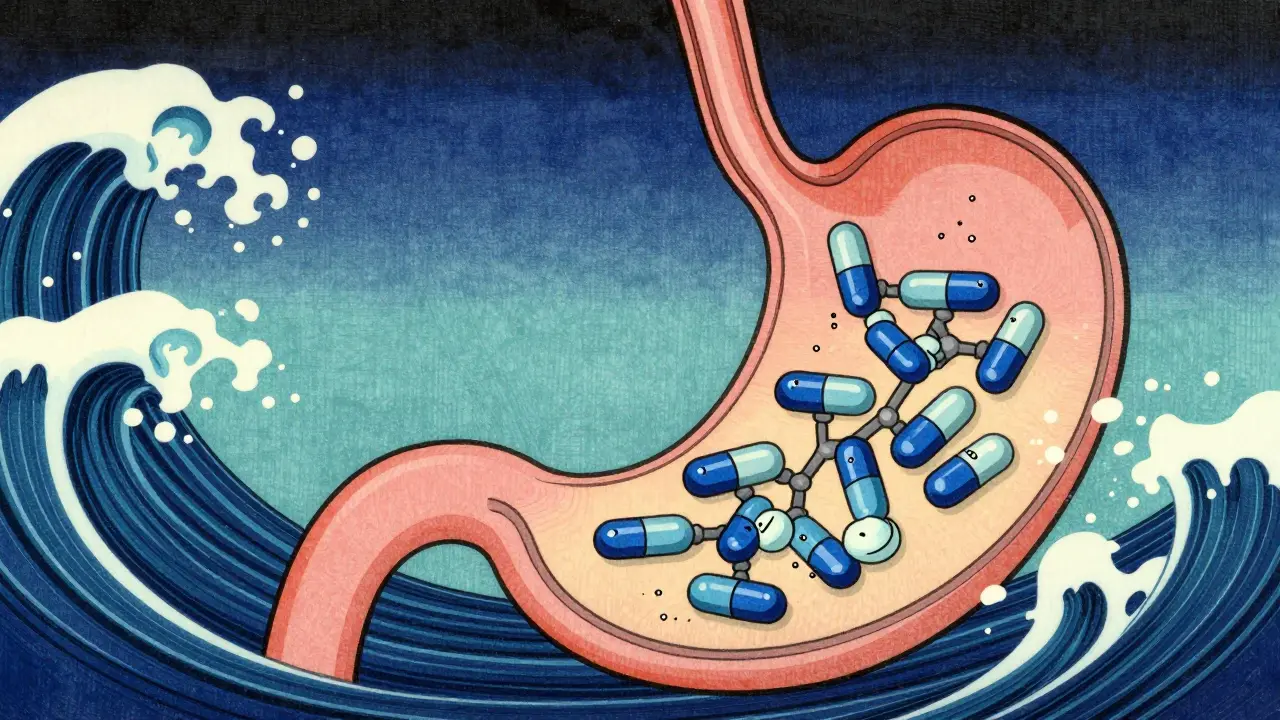
Imagine swallowing your morning pill for an infection, only to take a tablet for heartburn ten minutes later. It feels like responsible self-care, but you might just be flushing your medicine down the drain. This isn't a hypothetical nightmare; it is a daily reality for millions of people. The interaction between antacids and antibiotics is one of the most common yet overlooked causes of treatment failure in outpatient care. When these two types of drugs meet in your stomach, they often cancel each other out before your body can even use them.
You are not alone if you’ve struggled with this. Research shows that about 35% of patients prescribed antibiotics also use antacids at the same time. That is more than one in three people potentially sabotaging their own recovery. The good news? You don’t need to stop taking either medication. You just need to change when you take them. Let’s break down exactly how to time your doses so you actually get better.
Why Antacids Block Antibiotic Absorption
To understand why timing matters, you have to look at what happens inside your stomach. It sounds simple-swallow a pill, absorb the drug-but chemistry makes it complicated. There are two main ways antacids mess up antibiotic absorption: chelation and pH alteration.
Chelation is the big culprit here. Many antacids contain metals like aluminum, magnesium, or calcium. These metals act like magnets. When certain antibiotics enter your stomach, the metal ions bind directly to the antibiotic molecules. They form a solid, insoluble clump-a complex-that your intestines cannot absorb. Instead of entering your bloodstream to fight bacteria, the drug sits in your gut and leaves your body unchanged. A study published in Pharmacotherapy (2018) found that improper timing can reduce antibiotic bioavailability by anywhere from 20% to 80%, depending on the specific drugs involved.
The second issue is pH alteration. Your stomach is naturally acidic, which helps dissolve many pills. Antacids do exactly what they say on the tin: they neutralize acid. For some antibiotics, a higher pH (less acid) means the pill doesn’t dissolve properly. If it doesn’t dissolve, it can’t be absorbed. Doxycycline, a popular tetracycline antibiotic, sees its absorption drop by about 30% when taken with antacids because of this combined effect of chelation and pH changes (Journal of Antimicrobial Chemotherapy, 2019).
Which Antibiotics Are Most Affected?
Not all antibiotics suffer equally from this interaction. Some are practically immune, while others are severely compromised. Knowing which class your prescription belongs to is the first step in protecting your health.
| Antibiotic Class | Common Examples | Absorption Reduction | Required Separation Time |
|---|---|---|---|
| Fluoroquinolones | Ciprofloxacin, Levofloxacin | 75-90% | 4 hours after OR 2 hours before antacid |
| Tetracyclines | Doxycycline, Tetracycline | 50-70% | 2-3 hours separation |
| Beta-Lactams | Amoxicillin, Cephalexin | 15-25% | 1-2 hours separation |
| Macrolides | Azithromycin, Clarithromycin | Minimal | 2 hours precautionary |
| Nitroimidazoles | Metronidazole | No significant interaction | None required |
As you can see, Fluoroquinolones are the most sensitive. Drugs like ciprofloxacin can lose up to 90% of their effectiveness if taken with antacids containing aluminum or magnesium. The NHS guidelines explicitly state that these should never be taken simultaneously. Tetracyclines are also high-risk, especially for treating acne or Lyme disease, where consistent blood levels are crucial. On the flip side, beta-lactams like amoxicillin are much tougher. While there is still a slight reduction in absorption, it rarely leads to clinical failure unless you are immunocompromised.
The Golden Rule: Timing Your Doses
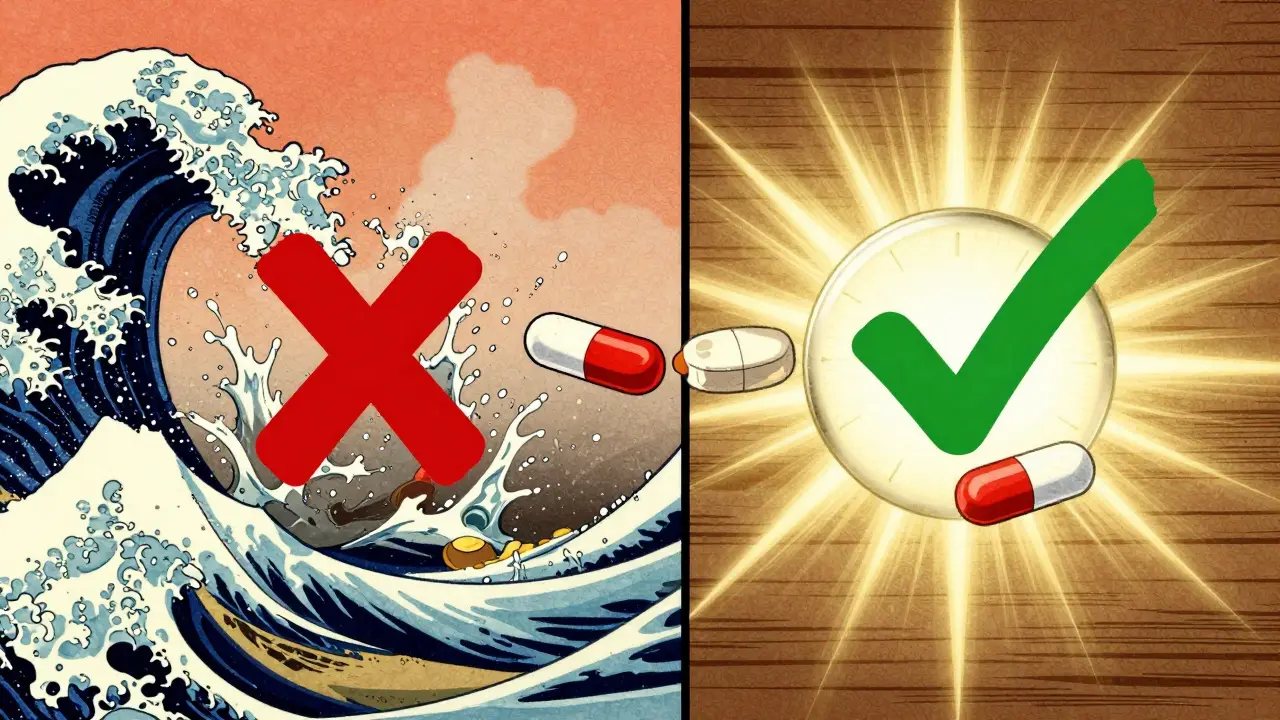
So, how do you actually schedule this? You don’t need a degree in pharmacology, just a watch and a bit of planning. The general rule of thumb recommended by the Cleveland Clinic and other major health bodies is to create a buffer zone.
- Identify your risk level: Check if your antibiotic is a fluoroquinolone or tetracycline. If yes, you need maximum separation.
- The "Before" Strategy: Take your antibiotic at least 2 hours before you take your antacid. This allows the antibiotic to pass through the stomach and into the small intestine, where most absorption happens, before the antacid arrives.
- The "After" Strategy: If you’ve already taken an antacid, wait at least 4 hours before taking your antibiotic. This gives your stomach time to process the antacid and return to a more normal state.
Dr. Sarah Thompson, Director of Clinical Pharmacology at Johns Hopkins University, calls failure to separate these doses "one of the top 10 preventable causes of antibiotic treatment failure." It’s that critical. For fluoroquinolones specifically, the Infectious Diseases Society of America recommends administering them at least 2 hours before or 4 hours after antacids containing polyvalent cations (like calcium, magnesium, or aluminum).
Real-World Scenarios and Patient Stories
Theory is one thing, but living with this schedule is another. Patients often struggle with the logistics, especially those managing multiple conditions. On Reddit’s r/medicine forum, a physician shared a story about five patients with recurrent urinary tract infections (UTIs). All had failed standard ciprofloxacin treatments. The common denominator? They were all taking Tums (calcium carbonate) for heartburn at the same time as their antibiotic. Once they separated the doses by four hours, every single patient cleared the infection.
This isn’t just anecdotal. A review of over 1,200 patient comments on Drugs.com showed that 68% reported initial treatment failure that resolved simply by adjusting the timing. However, compliance is hard. WebMD reviews highlight that 42% of negative feedback comes from elderly patients who find the complex scheduling difficult to remember. One user wrote, "I kept forgetting the window. My pharmacist saved me by setting up a reminder app."
Speaking of apps, technology is helping bridge this gap. Apps like MyMedSchedule now include specific warnings for antacid-antibiotic interactions. A Mayo Clinic study found that using visual aids or digital reminders reduced timing errors by 37%. If you are prone to forgetting, set two alarms: one for the antibiotic and one for the antacid, spaced appropriately apart.
Alternatives to Traditional Antacids
If strict timing is too difficult for your lifestyle, talk to your doctor about switching your acid-reducing medication. Not all stomach relief works the same way.
- H2 Blockers: Drugs like famotidine (Pepcid) reduce acid production rather than neutralizing existing acid with metals. They generally have fewer interactions with antibiotics.
- Proton Pump Inhibitors (PPIs): Medications like omeprazole (Prilosec) also work by blocking acid pumps. While they can affect the absorption of some drugs, they typically do not cause the severe chelation issues seen with calcium/magnesium antacids.
A 2023 study in the Journal of Clinical Pharmacy and Therapeutics showed that switching patients from traditional antacids to H2 blockers or PPIs reduced antibiotic treatment failure rates from 27% down to 9%. This is a strategic move worth discussing with your healthcare provider, especially if you require frequent acid relief.

Future Trends and New Formulations
The pharmaceutical industry is aware of this problem. We are seeing new developments aimed at solving this without requiring complex schedules. In 2023, the FDA approved a novel formulation called Cipro XR-24. This extended-release version of ciprofloxacin was designed specifically to minimize antacid interactions. Clinical trials showed it only lost 8% of its absorption when taken with antacids, compared to the staggering 90% loss of the standard version (New England Journal of Medicine, May 2023).
Additionally, researchers are looking into personalized timing based on genetics. A study from the University of Pittsburgh identified genetic variants that affect gastric emptying time. In the future, your DNA might tell you exactly how long to wait between pills, moving us away from generic "2-hour" rules toward precision medicine.
Summary Checklist for Safe Dosing
To keep things simple, here is your quick-reference guide:
- Check your label: Look for warnings about "multivalent cations," "aluminum," "magnesium," or "calcium."
- High Risk (Ciprofloxacin, Doxycycline): Separate by 2-4 hours minimum.
- Medium Risk (Amoxicillin): Separate by 1-2 hours to be safe.
- Low Risk (Metronidazole): No special timing needed.
- Use Tools: Set phone alarms or use medication apps to enforce the gap.
- Ask for Alternatives: If timing is impossible, ask your doctor about H2 blockers or PPIs.
Getting sick is stressful enough without adding ineffective medication to the mix. By respecting the chemistry of your stomach and giving your antibiotics the space they need to work, you ensure that your treatment does what it’s supposed to do: cure you.
Can I take antacids and antibiotics at the same time?
Generally, no. Taking them simultaneously can significantly reduce the absorption of the antibiotic, making it less effective or completely useless. Most guidelines recommend separating the doses by at least 2 to 4 hours.
Which antibiotics interact most dangerously with antacids?
Fluoroquinolones (like ciprofloxacin and levofloxacin) and tetracyclines (like doxycycline) are the most affected. They can lose up to 90% and 70% of their absorption respectively when taken with antacids containing aluminum, magnesium, or calcium.
Does this apply to all types of antacids?
It primarily applies to antacids containing polyvalent cations such as aluminum hydroxide, magnesium hydroxide, and calcium carbonate. Simethicone-based gas relievers usually do not have this interaction, but always check the active ingredients.
How long should I wait between taking an antibiotic and an antacid?
For high-risk antibiotics like fluoroquinolones, wait at least 2 hours before taking the antibiotic or 4 hours after. For tetracyclines, a 2-3 hour separation is recommended. For safer antibiotics like amoxicillin, 1-2 hours is usually sufficient.
What if I forget and take them together?
Don’t panic, but don’t double your dose. Monitor your symptoms closely. If your infection doesn’t improve or gets worse, contact your doctor immediately. They may need to adjust your treatment plan or prescribe a different antibiotic.
Brian Lee
May 10, 2026 AT 11:46thats really good info thanks for sharing it with us everyone
Jake Williams
May 10, 2026 AT 15:30Look, I don't know why anyone is surprised by this. It's basic chemistry, not rocket science. If you can't figure out how to space your pills two hours apart, maybe you shouldn't be self-medicating in the first place. People are so lazy these days, expecting a magic bullet while ignoring the instructions right on the bottle. It's pathetic, honestly. Just read the label before you swallow whatever garbage you found online.
Nilesh Mandani
May 12, 2026 AT 04:15I think we often overlook how our daily habits impact our health in subtle ways. The body is a complex system, and respecting its rhythms is key. Taking time to understand these interactions shows a deeper respect for ourselves.
Kenny Pines
May 12, 2026 AT 10:03Haha, Jake needs to chill 😂 But seriously, this post is gold. I always forget about the chelation part. Thanks for the reminder! 🙌
Brian Fibelkorn
May 14, 2026 AT 03:14The epistemological framework of patient compliance is fundamentally flawed when relying on anecdotal digital reminders. One must consider the ontological weight of pharmacokinetic variance. It is morally imperative that individuals engage with their pharmaceutical regimens with rigorous intellectual discipline, rather than succumbing to the superficial allure of app-based notifications which lack substantive clinical validation.
David Rangkhal
May 15, 2026 AT 16:03let's keep the discussion respectful please 🌸 i think we all just want to get better without side effects
Chelsea Grdina
May 17, 2026 AT 01:43In my experience working with diverse communities across different cultural backgrounds, I have observed that medication adherence is deeply tied to trust in the healthcare system. When we take the time to explain the 'why' behind the timing, such as the chemical binding process described here, patients from all walks of life tend to comply much more readily because they feel empowered rather than controlled. It is essential that we approach this topic with empathy and understanding, recognizing that memory issues or complex schedules are not signs of negligence but rather challenges that require compassionate support systems. We must create an inclusive environment where asking questions about drug interactions is normalized and encouraged, ensuring that no one feels ashamed for needing clarification on something as critical as antibiotic efficacy. This holistic approach not only improves individual health outcomes but also strengthens the communal fabric of care.
Sarah Kwiatkowski
May 17, 2026 AT 21:41This is super helpful! I was wondering if the type of antacid matters too? Like, does Tums count the same as generic calcium carbonate?
Brian LeClercq
May 18, 2026 AT 03:16You are all missing the forest for the trees. The real issue isn't the timing; it's the overprescription of antibiotics in the first place. Our immune systems have been neutered by a culture of convenience and pharmaceutical dependency. Why are we even taking these drugs for minor ailments? The solution isn't better scheduling; it's rejecting the entire paradigm of quick-fix medicine. Wake up, sheeple. Your stomach acid is trying to help you, and you're neutralizing it with chalky rocks while poisoning your gut biome with broad-spectrum chemicals. It’s a tragedy of modern existence.
Frances Kendall
May 19, 2026 AT 18:55As a pharmacist, I see this interaction constantly. Sarah, yes, Tums contains calcium carbonate, which is a polyvalent cation, so it absolutely counts. The brand doesn't matter, only the active ingredient. Please ensure you check the label for aluminum, magnesium, or calcium specifically. Fluoroquinolones are particularly sensitive, so do not cut corners there. Your health depends on proper absorption.
Natali Brown
May 20, 2026 AT 22:39I completely agree with Frances here, and I really appreciate her clarity on this matter. It can be so confusing navigating all these medical guidelines, especially when you're already feeling unwell and vulnerable. Knowing that the specific ingredient is what matters gives me a lot of peace of mind, and I plan to double-check my own medications tonight. Thank you both for adding such valuable perspective to this conversation, it really helps demystify the process for those of us who aren't experts in pharmacology. Let's keep supporting each other with accurate information! :)